
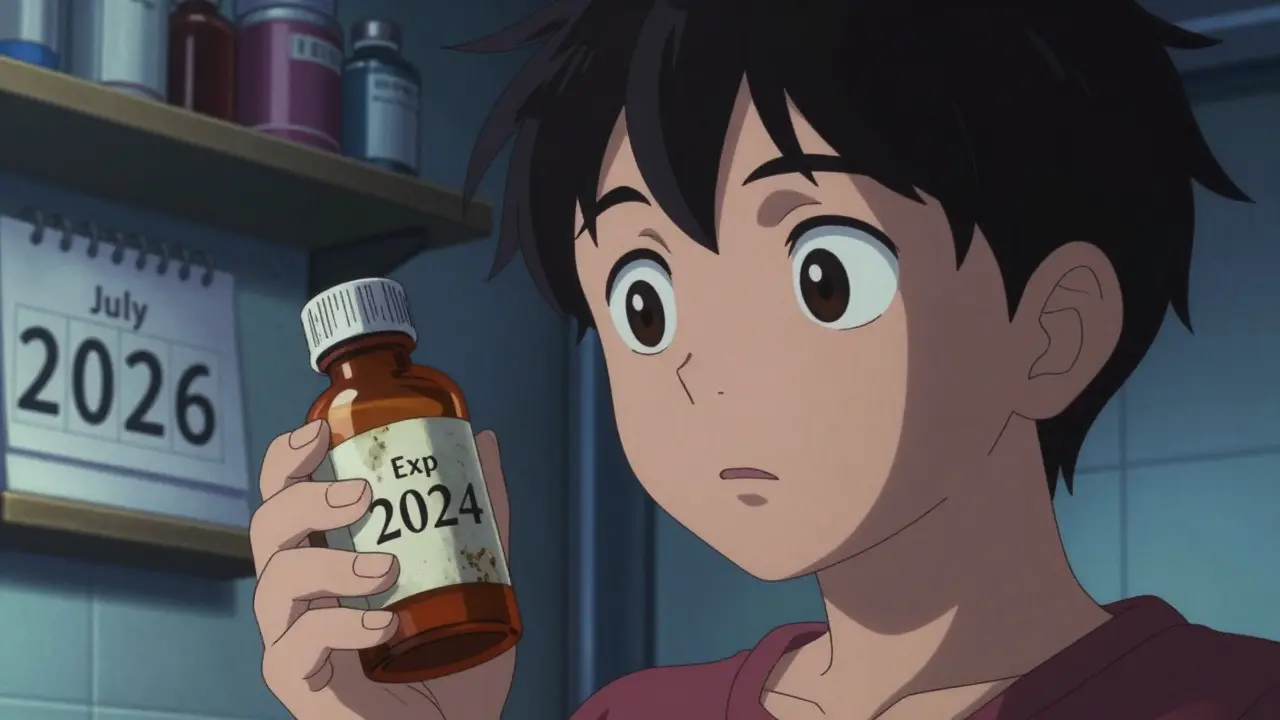
You check the bottle. It says "Exp 2024." Today is July 2026. Do you toss it in the bin, or do you swallow it? This is a dilemma most of us face at least once a year. We treat expired medications like they have turned into poison the very second the clock strikes midnight on their expiry date. But the reality is far more complex-and scientifically fascinating-than a simple binary switch from "safe" to "toxic."
Medications don't suddenly lose their power overnight. Instead, they undergo a slow, steady process of chemical breakdown that starts the moment they are manufactured. Understanding why this happens, and how fast it occurs, can save you money, reduce waste, and help you make smarter decisions about your health. Let's look at what actually happens inside that pill bottle.
The Myth of the Expiration Date Cliff
We need to clear up a major misconception first. The expiration date printed on your medicine box isn't a magic cutoff point where the drug becomes dangerous. Think of it as a manufacturer's guarantee. According to standards set by the United States Pharmacopeia (USP), a drug must retain at least 90% of its labeled potency until that specific date, provided it has been stored correctly.
This system was formalized in 1979 when the U.S. Food and Drug Administration (FDA) mandated expiration dating for all prescription and over-the-counter drugs. Before that, there was no consistent rule. So, when you see a date two years from now, the company is promising that the active ingredient will still be potent enough to work as intended. It doesn't mean the drug is useless the day after. In fact, research suggests many solid pills remain effective for years beyond that date if kept in ideal conditions.
How Chemical Degradation Actually Works
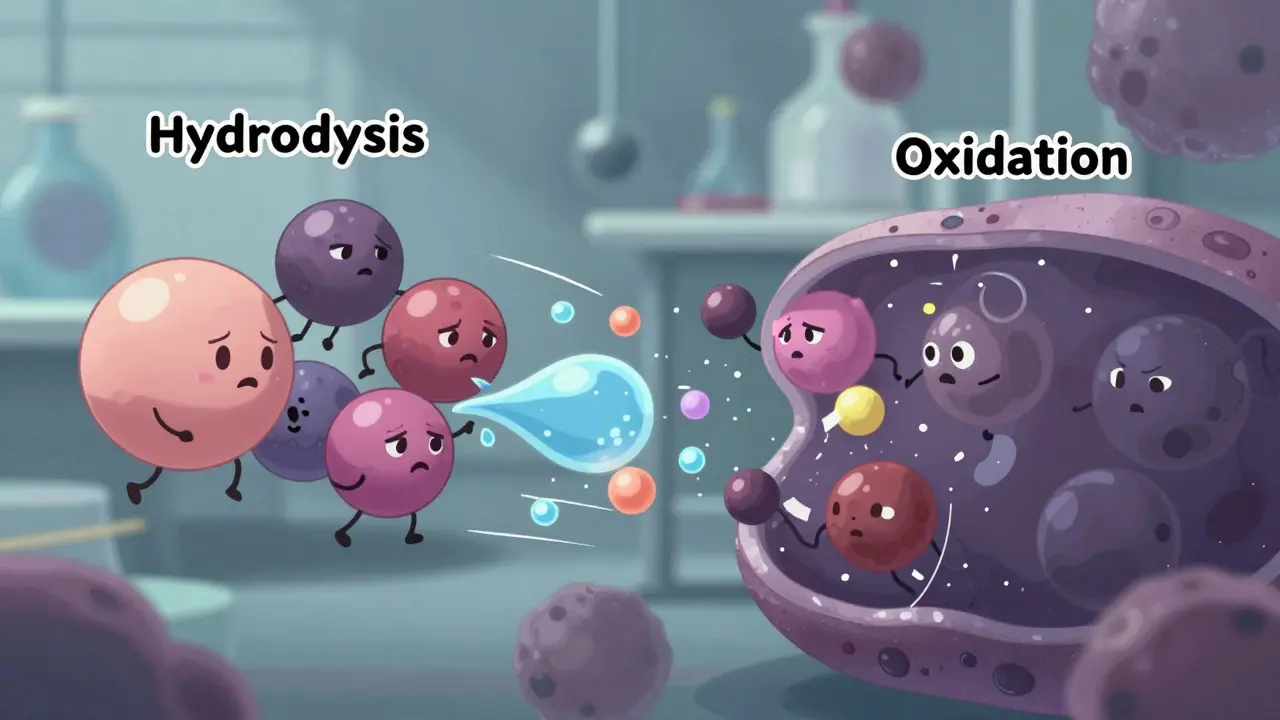
So, what is happening inside the tablet? It’s chemistry class, but with real-world consequences. The active pharmaceutical ingredients (APIs) in your medication are unstable molecules. They want to react with their environment. Over time, these molecules break down through processes like hydrolysis (reaction with water), oxidation (reaction with oxygen), or photolysis (breakdown by light).
Imagine a 200 mg ibuprofen tablet. By its expiration date, USP rules say it must contain at least 180 mg of active ibuprofen. That missing 20 mg hasn't vanished; it has transformed into other compounds. These degradation products are usually harmless impurities, but in some cases, they can be irritating or even toxic. A review of FDA recall data between 2007 and 2012 showed that 400 lots of drugs were recalled specifically because of degradation issues, including the formation of crystals or foreign particles.
The rate of this breakdown depends heavily on the drug's formulation. Solid dosage forms, like tablets and capsules, are generally stable. They have less surface area exposed to air and moisture compared to liquids. Liquid formulations, especially those that need to be reconstituted with water (like amoxicillin suspension), degrade much faster. Once you add water, you create a perfect storm for hydrolysis and bacterial growth.
Environmental Factors: The Silent Killers
If chemistry is the engine of degradation, the environment is the gas pedal. You might store your meds perfectly, but if your home environment is harsh, they won't last. Three main factors accelerate the loss of potency: heat, humidity, and light.
- Heat: High temperatures speed up nearly every chemical reaction. If you leave your car parked in the sun during summer, the temperature inside can soar well above 40°C (104°F). This accelerates the breakdown of APIs significantly.
- Humidity: Moisture is the enemy of most pills. It facilitates hydrolysis. This is why bathroom medicine cabinets are terrible storage spots. The steam from showers creates fluctuating humidity levels that can degrade medications 30-50% faster than storing them in a dry bedroom drawer.
- Light: Ultraviolet light causes photodegradation. Drugs like tetracyclines are particularly sensitive to light, which is why they often come in amber bottles.
A study on medications stored aboard the International Space Station (ISS) highlighted this dramatically. Even in a controlled space environment, certain drugs failed quality guidelines before their expiration dates due to radiation and temperature fluctuations. On Earth, the difference between a cool, dark closet and a hot, damp bathroom can mean the difference between a fully effective dose and a sub-potent one.
Which Drugs Are Most Unstable?
Not all medications degrade at the same rate. Some are robust; others are fragile. If you are considering using an old stash of medicine, knowing which types are risky is crucial.
| Medication Type | Stability Level | Risk After Expiration |
|---|---|---|
| Solid Tablets (e.g., Ibuprofen) | High | Low potency loss; safe for minor pain if stored well. |
| Liquid Suspensions (e.g., Amoxicillin) | Low | High risk of bacterial growth and rapid potency loss. |
| Epinephrine Auto-injectors (EpiPen) | Moderate/Low | Critical risk; reduced bioavailability can be life-threatening. |
| Nitrates (Nitroglycerin) | Low | High volatility; loses potency quickly, even in glass vials. |
| Insulin | Low | Protein structure degrades; unpredictable blood sugar control. |
For example, a study by Simons found that EpiPens showed reduced bioavailability when used 1 to 90 months after expiration. For someone having a severe allergic reaction, a partially working injector is not just inconvenient-it’s dangerous. Similarly, mefloquine (used for malaria) and nitroglycerin (for heart chest pain) are known to degrade quickly. On the flip side, ibuprofen has shown remarkable stability, passing tests even years past expiration in controlled studies.
The Military Exception: Shelf Life Extension Program
You might hear people cite the military's Shelf Life Extension Program (SLEP) as proof that expired drugs are fine. Started in 1986, SLEP tested stockpiled military medications. Surprisingly, about 88% of these drugs were found to be effective well beyond their labeled expiration dates, with some lasting up to 15 years.
However, there is a catch. These drugs were stored in ideal, climate-controlled warehouses. They weren't sitting in your glovebox or bathroom cabinet. The Department of Defense saved an estimated $2.1 billion between 2006 and 2016 by extending these shelf lives, but this success doesn't translate directly to consumer habits. Your storage conditions are rarely as perfect as a military depot. Without lab testing to verify each individual bottle's stability, assuming your expired aspirin is as good as new is a gamble.
Regulatory Standards and Safety Margins
Why do manufacturers play it safe? Because liability and safety margins matter. Pharmaceutical companies spend roughly $1.2 billion annually on stability testing. They use accelerated aging techniques, exposing drugs to high heat (40°C) and humidity (75% RH) to simulate two years of shelf life in just six months.
The FDA's official stance remains cautious. Their 2023 guidance warns that "once the expiration date has passed, there is no guarantee that the medicine will be safe and effective." The biggest fear isn't just that the drug won't work; it's that sub-potent antibiotics might fail to kill bacteria, leading to serious illness or antibiotic resistance. For critical therapies, a 10% drop in potency could mean the difference between recovery and complication.
Best Practices for Storage and Disposal
To maximize the lifespan of your medications, focus on controlling the environment. Keep them in a cool, dry place away from direct sunlight. Avoid the bathroom and the kitchen counter near the stove. Original packaging is best because it often includes desiccants (packets that absorb moisture) and protective blister packs.
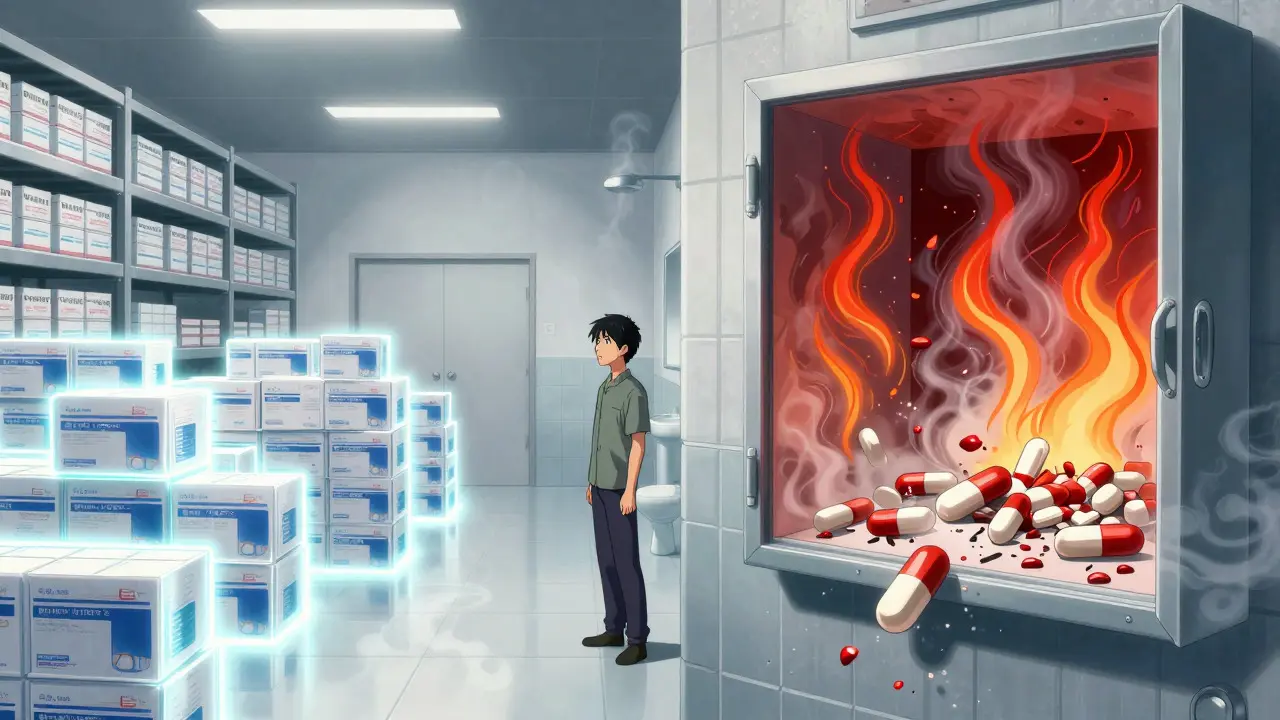
When it's time to dispose of expired meds, don't just flush them (unless the label specifically says so, as with some opioids to prevent misuse). Take them to a local pharmacy take-back program. This prevents environmental contamination and keeps them out of reach of children or pets.
Future Innovations in Drug Stability
The industry is moving toward smarter solutions. Research into "smart packaging" with advanced moisture and oxygen barriers could extend shelf lives by 25-40%. New analytical methods like HPLC-MS can detect degradation products at incredibly low concentrations (0.05%), allowing for more precise expiration dating. While personalized expiration dates based on your specific storage conditions are still in early research stages, the goal is clear: reduce waste without compromising safety.
Until then, the safest bet is to respect the expiration date, especially for critical medications. For occasional painkillers stored properly, the risk is lower, but always prioritize verified potency when your health is on the line.
Do medications become poisonous after expiration?
Generally, no. Most medications simply lose potency, meaning they become less effective rather than toxic. However, rare exceptions exist, such as tetracycline antibiotics, which can form harmful compounds if degraded significantly. The primary risk is treatment failure, not poisoning.
Can I take expired ibuprofen?
Ibuprofen is one of the more stable drugs. Studies suggest it retains significant potency years past expiration if stored in a cool, dry place. However, for consistent pain relief, fresh medication is recommended. Check the pill for any changes in color, smell, or texture before taking it.
Why shouldn't I store medicine in the bathroom?
Bathrooms experience frequent fluctuations in temperature and humidity due to showers and baths. This moisture accelerates chemical degradation, particularly hydrolysis, causing pills to break down faster than they would in a stable, dry environment like a bedroom drawer.
What is the 90% potency rule?
The United States Pharmacopeia (USP) requires that a drug maintain at least 90% of its labeled strength until its expiration date. This ensures that patients receive a therapeutically effective dose throughout the product's guaranteed shelf life.
Are liquid antibiotics safe after expiration?
Liquid antibiotics, especially those mixed with water, are highly unstable. They can lose potency rapidly and are prone to bacterial contamination. It is strongly advised to discard liquid antibiotics once their short expiration window (often 7-14 days after mixing) has passed.