

Every time you fill a prescription, there’s a quiet decision happening behind the scenes: will you get the brand-name drug your doctor wrote, or a cheaper generic version? Most of the time, pharmacists are allowed to swap in a generic. But sometimes, they’re not. That’s when a prescription says Do Not Substitute.
What Does 'Do Not Substitute' Really Mean?
A 'Do Not Substitute' (DNS) prescription - also called 'Dispense as Written' or DAW - is a clear instruction from your doctor telling the pharmacist: give me exactly what I wrote, no replacements. It’s not a suggestion. It’s a legal directive. This isn’t about brand loyalty or doctor preference. It’s about safety and effectiveness. While most generic drugs work just as well as their brand-name counterparts, there are specific cases where even tiny differences can matter - and those are the cases where DNS is used.When Is a Brand Drug Really Necessary?
Not all drugs are created equal when it comes to substitution. The FDA approves generics based on bioequivalence: they must deliver the same amount of active ingredient into your bloodstream at the same rate as the brand. For most medications, that’s fine. But for drugs with a narrow therapeutic index (NTID), the margin for error is razor-thin. Think of it like this: if you’re taking warfarin (a blood thinner), levothyroxine (for thyroid issues), or phenytoin (for seizures), your body needs the exact same dose every single day. A 5% variation in absorption - something that might be perfectly acceptable for an antibiotic - could mean your blood clots when it shouldn’t, or your thyroid goes haywire, or you have a seizure. Studies show that 38% of all DNS prescriptions are for these kinds of drugs. Then there are patients who’ve had real reactions to generics. Maybe the filler, dye, or coating in a generic pill triggered nausea, a rash, or dizziness - even though the active ingredient is identical. That’s not rare. About 29% of DNS cases come from documented patient intolerance to generic excipients. If you’ve ever said, ‘This generic makes me feel weird,’ and your doctor took you seriously, that’s why DNS exists. And don’t forget delivery systems. If your drug comes in a special inhaler, injector, or timed-release capsule, the FDA and most states (43 of them) prohibit substitution - even if the chemical is the same. Why? Because changing the device changes how the drug gets into your body. That’s not a generic swap. That’s a different medicine.How Much More Does It Cost?
There’s no sugarcoating it: DNS prescriptions cost more. A 2022 study found brand-name drugs with DNS directives cost, on average, $487 per prescription. Generics? Around $144. That’s a 237% price jump. For many people, that’s a shock at the pharmacy counter. A Kaiser Family Foundation survey showed 68% of patients didn’t realize their prescription was locked to the brand until they saw the bill. And when they found out, 42% said they’d have asked for the generic - if they’d known it was an option. But here’s the catch: sometimes, that higher cost prevents a bigger expense. One FDA analysis found 1,247 cases where switching to a generic led to therapeutic failure - hospitalizations, emergency visits, or worsening conditions. That’s not just money. That’s risk.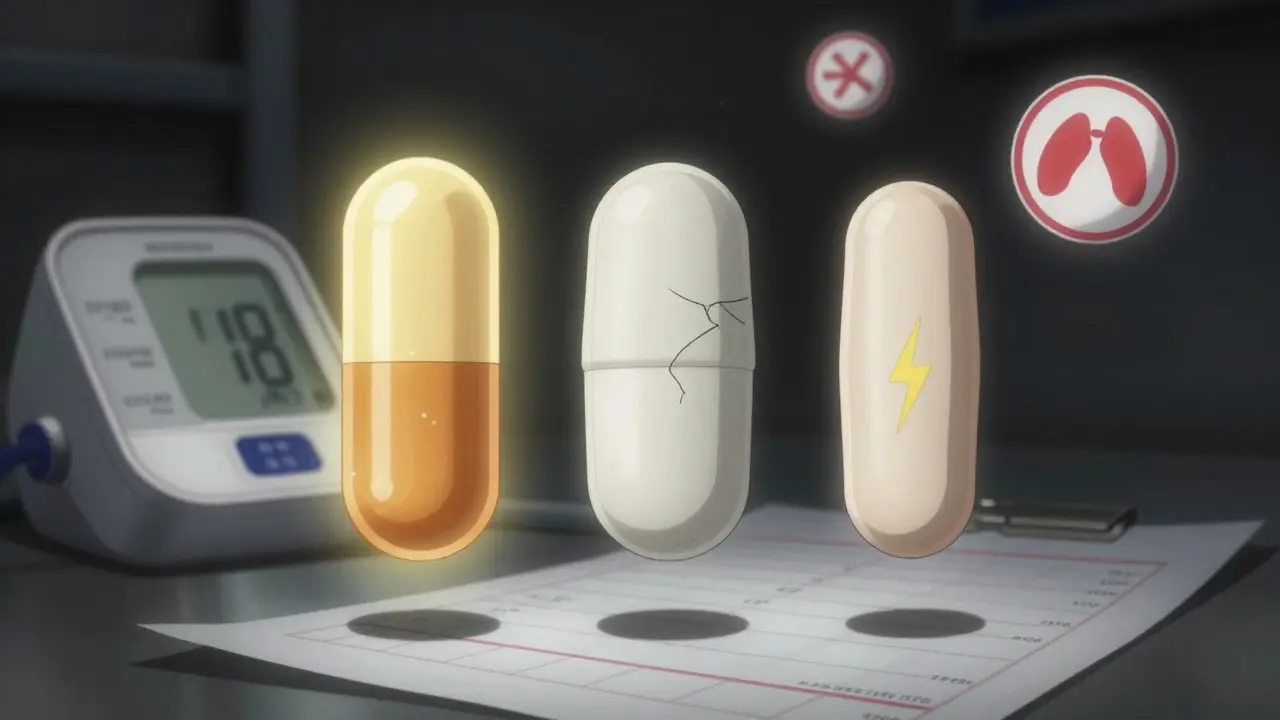
Why Don’t All Doctors Use It?
You might wonder: if generics are so safe, why do some doctors use DNS so often? The answer isn’t always medical. The American College of Physicians says inappropriate DNS use adds $15.7 billion to U.S. healthcare costs every year. Some prescribers use it out of habit, or because a pharmaceutical rep told them the brand is ‘better.’ Harvard Medical School’s Dr. Aaron Kesselheim points out that in some drug classes, DNS rates are hitting 25-30% - way above the 8-12% that clinical evidence supports. The FDA has reviewed over 1.5 million bioequivalence studies since 2010. Their conclusion? 99.5% of generics perform just like the brand. That’s not a fluke. That’s science. But for NTIDs, and for patients with known sensitivities, the science says: stick with the brand. That’s where DNS is justified. The problem is, it’s often used when it’s not needed.How Is It Written? It’s Not Just a Note
You can’t just scribble ‘no generics’ on a prescription. Each state has its own rules. In New York, you must write ‘Dispense as Written’ and sign your initials. In California, you can check a box on an electronic form - but you still need to log in with your credentials. Thirty-eight states require some form of authentication. Electronic health records make this harder, not easier. Many systems default to allowing substitution. So even if your doctor meant to block it, the software might override them. One report found 32% of DNS orders in Epic systems require manual fixes. And insurance? Sometimes they reject DNS prescriptions outright. Pharmacists report that 15-20% of DNS claims get flagged or denied by payers - even when they’re perfectly legal. That means delays, phone calls, and frustration for everyone.What About Biologics and Biosimilars?
Biologics - drugs made from living cells, like Humira or Enbrel - are a whole different story. They’re complex. Even small changes in manufacturing can affect how they work. The FDA doesn’t call these ‘generics.’ They’re called ‘biosimilars.’ And for a biosimilar to be substituted automatically, it must be designated ‘interchangeable.’ As of late 2023, only 12 out of hundreds of biosimilars had that status. So if your doctor writes DNS for a biologic, they’re not being overly cautious. They’re following the law. Thirty-two states require interchangeable status before substitution is allowed. And most doctors know: switching a biologic without that label is risky.
What Should You Do If You Get a DNS Prescription?
If your prescription says ‘Do Not Substitute,’ don’t panic. But do ask questions.- Ask your doctor: ‘Why is this brand necessary? Is it because of my condition, or because of a past reaction?’
- Ask your pharmacist: ‘Is there a generic version? If not, why?’
- Ask your insurer: ‘Can you explain why this is more expensive? Is there a prior authorization I need?’
The Bigger Picture: Cost vs. Safety
The U.S. spends over $1.8 trillion a year on prescription drugs. Generics save us about $313 billion annually. That’s huge. But savings shouldn’t come at the cost of safety. The goal isn’t to eliminate DNS. It’s to use it correctly. The FDA, the AMA, and state pharmacy boards all agree: DNS should be reserved for cases where science says it matters - not for convenience, habit, or marketing. New laws are starting to reflect that. In 2023, 18 states introduced bills to limit DNS use to only clinically justified cases. Seven states now require prior authorization before insurers pay for brand-name drugs when a generic exists. And the FDA is investing $50 million over the next five years to improve bioequivalence testing for NTIDs. That could mean fewer DNS prescriptions in the future - not because generics are less safe, but because we’ll know even better when they’re truly interchangeable.Bottom Line: Trust, But Verify
Most generics are safe. Most of the time, they’re the smart choice. But for certain drugs and certain patients, the brand name isn’t a luxury - it’s a medical necessity. If your doctor writes ‘Do Not Substitute,’ it’s not arbitrary. It’s based on science, experience, and sometimes, your own history. But that doesn’t mean you shouldn’t ask why. Understanding the reason helps you make better decisions - and ensures you’re not paying more than you need to.When it comes to your health, the right drug - at the right dose - matters more than the price tag. But you deserve to know why.
10 Responses
This is why America’s healthcare is broken. Big Pharma pays doctors to write DNS prescriptions so they can keep charging $500 for a pill that costs $2 to make. They don’t care if you go bankrupt. They just want your money. And the FDA? They’re in bed with them too. You think this is about safety? No. It’s about profit. Wake up.
Interesting analysis. The bioequivalence data cited-99.5% of generics performing identically-is statistically robust. However, the narrow therapeutic index drugs like warfarin and levothyroxine are legitimate exceptions. The key is distinguishing evidence-based DNS use from routine overuse, which appears to be the real issue.
I’ve been on levothyroxine for 12 years and switched generics three times-each time I felt foggy, tired, my heart raced. My doctor finally put me on DNS and everything stabilized. I didn’t even know generics could cause that. I thought they were all the same. Turns out, the fillers and dyes matter more than we think. If you’ve ever felt ‘off’ after a refill, don’t ignore it. Talk to your doc. You’re not imagining it.
As someone who grew up in India where generics are the norm and still had my dad on brand-name insulin for decades, I’ve seen both sides. In the U.S., we treat meds like luxury goods. In India, we treat them like lifelines. The science is the same. But access? That’s where the real inequality lies. DNS isn’t always about safety-it’s about who can afford to play the game.
Simple truth: if your drug is for thyroid, epilepsy, or blood thinning, stick with the brand. No guesswork. If it’s for high blood pressure or antibiotics, generic is fine. Don’t overthink it.
My mom got a DNS for her seizure meds after a bad reaction to a generic. She was dizzy for weeks. We thought it was stress. Turns out, the coating in the generic made her stomach reject it. Doctor said: ‘Some people just can’t handle the fillers.’ So now we pay more. Worth it. Her life matters more than the bill.
The distinction between generics and biosimilars remains poorly understood by the public. Biosimilars are not generics. They are complex biological products derived from living systems. Substitution without interchangeability status is clinically unjustified. Regulatory frameworks must reflect this biological reality, not chemical simplification.
Hey, just wanted to say thanks for this post. I used to think DNS was just doctor laziness. Now I get it. My cousin’s kid has seizures and switched generics once-had a seizure within hours. That’s not a coincidence. I’m gonna tell my uncle to ask his doc about his blood thinner. Maybe he’s paying too much for no reason. But if it’s needed? Totally worth it.
99.5%? That’s the FDA’s number. And who controls the FDA? Big Pharma. The studies are funded by them. The ‘bioequivalence’ tests are designed to pass. Real-world outcomes? Never measured. DNS is the only thing keeping people alive. The system is rigged. They want you to believe generics are safe. They’re not. They’re just cheaper.
You know what’s wild? The fact that 68% of people didn’t even know their prescription was locked to brand until they got the bill. That’s not a flaw in the system-it’s a failure of communication. We need plain language on prescriptions. Not legalese. Not fine print. Just: ‘This costs more because your doctor says it’s critical for you.’ Simple. Clear. Human.