

Every year in the U.S., more than 1.5 million people end up in the emergency room because of problems with their medications. Many of these cases aren’t accidents-they’re preventable. Medication safety isn’t just a hospital policy or a checklist for nurses. It’s the system that keeps you from taking the wrong pill, the wrong dose, or a drug that could harm you because it clashes with something else you’re taking. And it matters just as much for someone on a single daily pill as it does for someone managing five or more medications.
What Exactly Is Medication Safety?
Medication safety means making sure you get the right drug, in the right amount, at the right time, in the right way-and that no harm comes from it. It’s not just about doctors writing prescriptions correctly. It covers every single step: how the drug is ordered, filled, stored, given to you, and monitored after you take it. The National Patient Safety Foundation defines it as being free from accidental injury due to errors during any part of this process.
Think of it like a chain. If one link breaks-say, a pharmacist misreads a handwritten note, or a nurse administers insulin at the wrong time-that’s when things go wrong. And those mistakes aren’t rare. According to The Joint Commission, prescribing errors make up 38% of all medication errors. Administration errors-like giving the wrong dose or route-are another 26%. These aren’t just numbers. They’re real people: a child given 10 mg of Xanax instead of 1 mg because of sloppy handwriting, an elderly patient confused by multiple bottles, or someone skipping doses because they can’t afford them.
Why Do Medication Errors Happen?
Medication errors don’t usually happen because someone is careless. They happen because systems are flawed. A doctor is rushed. A pharmacy is understaffed. A patient doesn’t understand the instructions. A label says "0.5 mL" but the syringe only has markings for whole milliliters. Or worse-two drugs look almost identical in packaging.
Some medications are riskier than others. These are called high-alert medications. Insulin is one of them. It’s involved in 17% of serious medication errors. Opioids? 14%. Anticoagulants? 12%. Even something as common as IV oxytocin during childbirth has caused harm when dosed incorrectly. These aren’t obscure drugs-they’re used every day in hospitals, clinics, and homes.
And it’s not just about what’s given. It’s also about what’s not given. Missing a needed medication can be just as dangerous as giving the wrong one. That’s why medication safety includes checking for drug interactions, allergies, and whether the treatment still makes sense for your current condition.
Who’s Most at Risk?
You might think medication errors only happen in big hospitals. But the truth is, the most vulnerable aren’t always in the hospital-they’re at home.
Children under 12 account for 20% of all adverse drug events. Their bodies process drugs differently, and dosing errors are common, especially with liquid medications where measuring cups aren’t precise. Elderly patients-those 65 and older-make up half of all ADE-related hospitalizations. Why? Because they often take multiple drugs for different conditions, and their kidneys and liver don’t clear medications as quickly. They’re also more likely to forget doses, mix up pills, or stop taking meds because of side effects or cost.
Pregnant women face another layer of risk. Certain drugs can harm a developing baby, even if they’re safe for anyone else. Yet, not all providers fully understand these risks, and patients aren’t always warned.
And then there’s the silent problem: self-induced errors. A 2023 survey found that 42% of older adults skip doses, cut pills in half, or stop taking medications without telling their doctor. Why? Cost. Confusion. Fear of side effects. That’s not rebellion-it’s a failure of communication.
How Technology Helps-And Sometimes Hurts
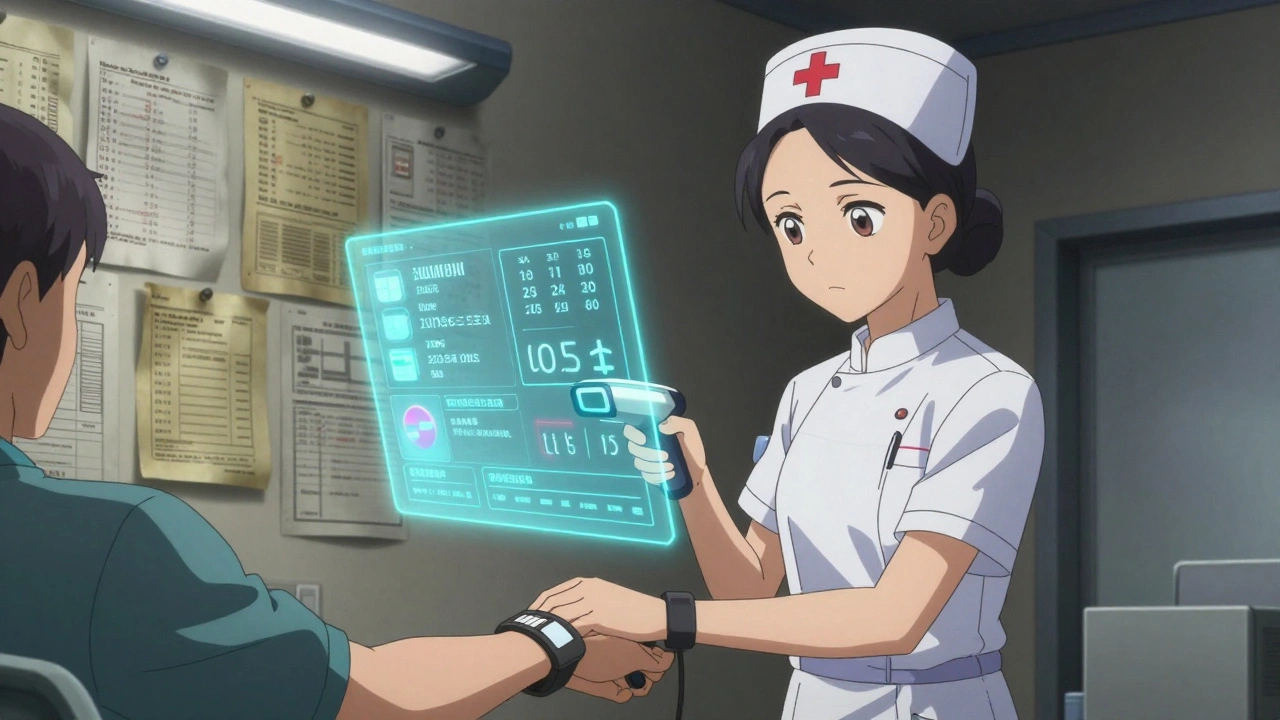
Technology has changed medication safety dramatically. Electronic health records (EHRs) with built-in alerts can catch a dangerous drug interaction before it happens. Barcode systems that scan your wristband and the medication before giving it have cut administration errors by 65% in hospitals.
But there’s a catch. Too many alerts can make providers ignore them. If a nurse gets 25 or more pop-up warnings during one shift, they start tuning them out. That’s called alert fatigue-and it reduces the system’s effectiveness by up to 30%. It’s like crying wolf too many times. Eventually, no one believes you.
And while EHRs help, not every hospital uses them well. Only 55% of U.S. hospitals have fully integrated clinical decision support. The rest are still using paper, outdated software, or half-built systems. That gap means safety isn’t consistent. It depends on where you live, which hospital you go to, or even which doctor you see.
What You Can Do to Protect Yourself
Medication safety isn’t just the job of doctors and pharmacists. You have power too. Here’s how to use it:
- Keep a current list of everything you take. That includes prescription drugs, over-the-counter meds, vitamins, supplements, and herbal remedies. Update it every time something changes.
- Bring your list to every appointment. Don’t rely on memory. Show it to your doctor, pharmacist, or nurse. Ask: "Is this still right for me?"
- Ask questions. Why am I taking this? What does it do? What happens if I miss a dose? What side effects should I watch for? Don’t be shy. These are basic safety questions.
- Use pill organizers or blister packs. If you take multiple pills daily, these help prevent mix-ups. Studies show they improve adherence by 60%.
- Check the label every time. Does the name match what your doctor told you? Is the dose correct? Is the expiration date still good? If something looks off, speak up.
- Don’t share meds. Even if your friend has the same symptom, their body and history are different. What’s safe for them could be dangerous for you.
The CDC’s "Keep a List" campaign found that patients who used a simple written or digital list reduced medication errors during hospital transitions by 45%. That’s not magic. That’s awareness.

The Bigger Picture: Why This Matters Beyond the Hospital
Medication safety isn’t just about avoiding harm. It’s about getting the most benefit from your treatment. When systems work right, patients recover faster, spend less time in the hospital, and have fewer complications.
Studies show that comprehensive medication safety programs can reduce errors by 50% to 80%. That’s huge. And the return on investment? Every dollar spent on safety saves $4.20 in avoided hospital stays, emergency visits, and long-term care.
But progress isn’t automatic. It requires culture change. Too many hospitals still punish staff for reporting errors instead of fixing the system behind them. Only 35% of healthcare organizations have truly non-punitive reporting systems. That means mistakes get hidden, not fixed.
Global efforts like the WHO’s "Medication Without Harm" campaign are pushing for a 50% reduction in preventable harm by 2027. Countries that joined are already seeing 15% to 25% drops in serious harm within two years. That’s proof it’s possible.
What’s Next?
The future of medication safety is smarter systems. AI is being tested to predict which patients are most likely to have an adverse reaction based on their history, genetics, and current meds. Blockchain is being used to track drug supply chains and stop counterfeit pills from reaching patients.
The FDA is now requiring all prescription labels to use clear numeric dosing-no more "0.5 mL" written in messy handwriting. Pilot programs showed a 32% drop in decimal point errors.
But none of this matters if patients aren’t involved. Medication safety isn’t something that happens to you. It’s something you help build-by asking questions, staying informed, and speaking up when something doesn’t feel right.
Because in the end, the most powerful tool in medication safety isn’t a barcode scanner or an electronic record. It’s you.
What counts as a medication error?
A medication error is any preventable mistake that leads to inappropriate use of a drug or patient harm. This includes prescribing the wrong drug, giving the wrong dose, giving it at the wrong time, giving it by the wrong route (like oral instead of IV), or failing to check for allergies or interactions. Even not giving a needed medication counts. The key is that it’s preventable.
How common are adverse drug events?
In the U.S., more than 1.5 million emergency department visits each year are due to adverse drug events (ADEs). Of those, about 400,000 are preventable and happen in hospitals alone. These events cost the healthcare system roughly $42 billion annually. ADEs include allergic reactions, side effects, overdoses, and interactions.
Which medications are the most dangerous?
High-alert medications carry a higher risk of serious harm if used incorrectly. These include insulin (responsible for 17% of serious errors), opioids (14%), anticoagulants like warfarin (12%), and intravenous oxytocin used in labor. Even common drugs like sedatives or diabetes medications can be dangerous if dosed wrong or combined improperly.
Can I really prevent errors on my own?
Yes. Patients who keep an updated list of all their medications-including supplements and OTC drugs-and bring it to every appointment reduce medication errors by up to 45% during care transitions. Asking questions about why a drug is prescribed, checking labels before taking it, and using pill organizers significantly lowers your risk. You’re not just a patient-you’re part of the safety team.
Why do doctors and pharmacists make these mistakes?
Most errors aren’t due to negligence. They’re caused by system failures: rushed appointments, poor handwriting, confusing drug names, understaffed pharmacies, lack of clear communication between providers, or outdated technology. Even well-trained professionals can make mistakes when the system doesn’t support them. That’s why safety programs focus on fixing systems, not blaming people.
What should I do if I think I’ve been given the wrong medication?
Don’t take it. Call your pharmacist or doctor right away. If you’re already taking it and feel unwell, seek medical help immediately. Bring the medication bottle with you. Write down what happened-when you took it, what you felt, and what you were told. Reporting it helps prevent others from making the same mistake. You’re not causing trouble-you’re helping improve safety.
13 Responses
Just read this and had to share - I used to skip my blood pressure meds because they made me dizzy and I thought it was fine until I ended up in the ER. Now I keep a little notebook in my purse with every pill I take. It’s dumb simple but it saved my life.
Don’t let pride or fear stop you from asking questions. You’re not being annoying - you’re being smart.
While the systemic failures in medication safety are well documented and undeniably concerning, it is also worth noting that the burden of responsibility has been disproportionately shifted onto the patient, particularly in contexts where healthcare access is fragmented and digital literacy is uneven. The suggestion that patients should maintain updated lists and interrogate every prescription assumes a level of cognitive bandwidth, temporal availability, and educational capital that is not universally distributed. This is not to dismiss the utility of patient engagement, but rather to interrogate the structural inequities that render such advice functionally inaccessible to many of those most at risk.
Man I never thought about how scary it is when your grandma’s got 8 different bottles and the labels are all faded. My abuela almost took her neighbor’s heart med last year cause they looked the same.
Got her a pill organizer with big letters and now she takes pics of her meds every morning. It’s not perfect but it’s way better than before.
Also why do pharmacies still use tiny fonts???
I work in a clinic and see this every day. Patients are terrified to ask questions because they think they’ll sound stupid. But honestly? The best thing you can do is walk in with your list and say ‘I’m confused - can you help me understand why I’m taking this?’
Most providers will breathe a sigh of relief. They’re tired of guessing too.
And if you’re on insulin or blood thinners? Don’t even think about skipping doses. That’s not ‘being tough’ - that’s playing Russian roulette with your kidneys.
Oh wow another ‘you’re responsible for your own safety’ lecture. Because clearly the problem isn’t that we’re paying $600 for a 30-day supply of metformin and the doctor doesn’t even check if we can afford it.
My mom died because they gave her the wrong chemo dose and nobody noticed until it was too late. Now you want me to ‘speak up’? Like that helps when your voice doesn’t matter in a system that treats you like a billing code.
Oh look, the CDC’s ‘Keep a List’ campaign - the same folks who told us masks were useless and then said they were magic. Also, 45% reduction? Where’s the peer-reviewed study? And why is this post written like a pharmaceutical ad with 17 bullet points?
Also, ‘you’re the most powerful tool’? Cute. I’m supposed to be a medical detective now? I just want to live without getting poisoned by my own prescriptions.
Let’s be clear: the real issue isn’t patient ignorance - it’s the commodification of healthcare. When your provider has 7 minutes per patient and the pharmacy is understaffed because shareholders demand quarterly profits, no amount of pill organizers will fix that.
Also, ‘high-alert medications’? That’s corporate speak for ‘we know these drugs kill people but we’re still selling them because they’re profitable.’
Stop putting the burden on the patient. Fix the system. Or stop pretending you care.
From a clinical perspective, the integration of clinical decision support systems (CDSS) remains suboptimal across 45% of U.S. healthcare institutions, which significantly undermines the efficacy of patient-facing interventions. Without interoperable EHRs and real-time pharmacovigilance, the onus on patient self-advocacy becomes a form of epistemic injustice - particularly for non-English speakers, elderly populations, and those with low health literacy.
Moreover, the absence of standardized medication reconciliation protocols during care transitions constitutes a critical failure point in the safety chain.
Did you know the FDA is in bed with Big Pharma? They’ve been suppressing data on drug interactions for decades. That ‘insulin error’ stat? It’s a cover-up. They want you scared so you keep buying more meds.
My cousin’s friend’s neighbor took a supplement and got a heart attack - they never even told the doctor. Now the government wants you to keep lists? That’s just more control.
Truth is, your body knows what it needs. Ditch the pills. Eat kale. Trust your intuition. They don’t want you to know that.
It is, regrettably, an observation of considerable pertinence that the present discourse, while ostensibly well-intentioned, exhibits a marked tendency towards the romanticisation of individual agency within a context of profound institutional dysfunction. The suggestion that patients may mitigate systemic failures through the maintenance of written medication lists, however commendable in principle, constitutes a form of moralising that implicitly absolves the healthcare apparatus of its fundamental obligations. One is compelled to inquire: why must the burden of error prevention rest not with the architect of the system, but with its most vulnerable recipients?
Anyone who thinks ‘just ask questions’ is a solution hasn’t spent time in a clinic. Most doctors don’t even know what’s in their own EHR. And ‘pill organizers’? For someone with dementia? Please. This is performative safety. You’re not protecting anyone - you’re making yourself feel better about doing nothing real.
Also, ‘you’re the most powerful tool’? That’s not empowerment. That’s gaslighting with a healthcare logo.
Of course it’s preventable - if you’re rich, white, and have a personal nurse. For everyone else, it’s just luck. My sister got prescribed 10x the right dose because the computer auto-filled it. The pharmacist didn’t notice. The nurse didn’t notice. Her kid had to call 911. No one got fired. No one apologized. Just a ‘we’re sorry for the inconvenience’ email.
So yeah, keep your list. And pray.
They say ‘you’re the most powerful tool’ - but they never mention that your power is completely dependent on whether your doctor likes you, whether your insurance covers your meds, and whether you can afford to miss work to go to a 3-hour appointment just to ask why you’re taking a pill that makes you feel like you’re being slowly poisoned.
Also, I saw a guy get given a blood thinner while on antibiotics. He died. The hospital called it a ‘rare adverse event.’
Don’t trust the system. Don’t trust the labels. Don’t trust the ‘safety campaigns.’
Just don’t take anything unless you’ve cross-checked it with three different sources and a priest.