
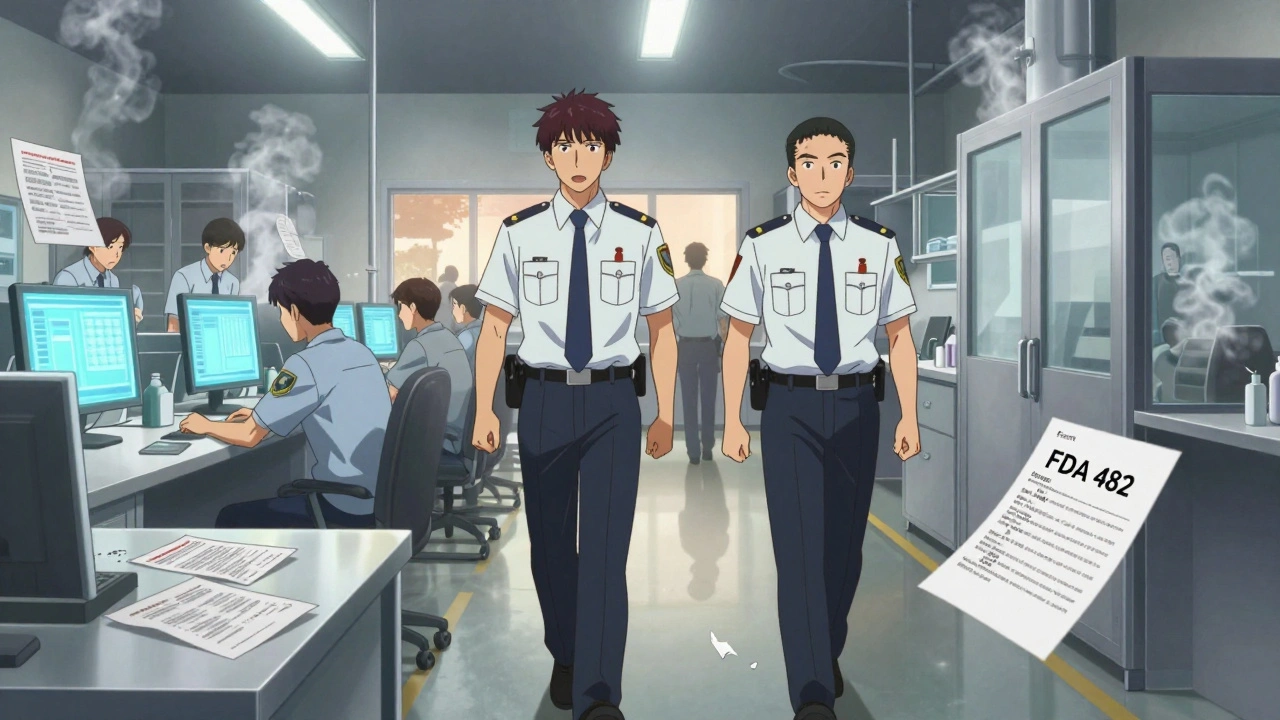
When the FDA shows up at your door without warning, it’s not a random check. It’s a targeted move designed to catch real problems-before they reach your medicine cabinet or dinner plate. Since May 2025, the U.S. Food and Drug Administration has been conducting unannounced inspections at foreign manufacturing facilities for the first time ever. That means if you’re making pills, medical devices, or packaged food anywhere in the world-and it ends up in the U.S.-you’re now subject to the same surprise visits as a factory in Ohio or California.
Why Surprise Visits Exist
The whole point of an unannounced inspection is simple: to see what’s really happening, not what’s been cleaned up for the audit. If you know inspectors are coming, you can polish the floors, fix the paperwork, and get your staff ready. But real compliance isn’t about appearances. It’s about systems. It’s about whether your operators follow procedures every day, whether your records are accurate, and whether your sterile room stays sterile-even when no one’s watching. The FDA doesn’t do this to punish companies. They do it because they’ve seen the results. Before 2025, when foreign facilities got advance notice, inspectors still found serious problems more than twice as often as during domestic inspections. That gap told them something: advance notice wasn’t just a courtesy-it was giving bad actors time to hide violations.How Unannounced Inspections Work
There’s no phone call. No email. One day, two FDA investigators walk in, show their badges, and hand you Form FDA 482-the official Notice of Inspection. They don’t ask for permission. They don’t wait for the CEO to return from lunch. They start asking for records, observing processes, and interviewing staff. The inspection could last a few hours or several days, depending on how complex the operation is. They’ll look at your Standard Operating Procedures (SOPs). They’ll pull manufacturing logs. They’ll check your cleaning records, your equipment maintenance schedules, your training files. For pharmaceutical makers, they’ll test whether your sterile environment is actually sterile. For food producers, they’ll trace ingredients back to their source. If something’s off-even if it’s a small inconsistency-they’ll write it down. That’s called a Form 483 observation. And if they find fraud, falsified records, or deliberate concealment, they can shut you down.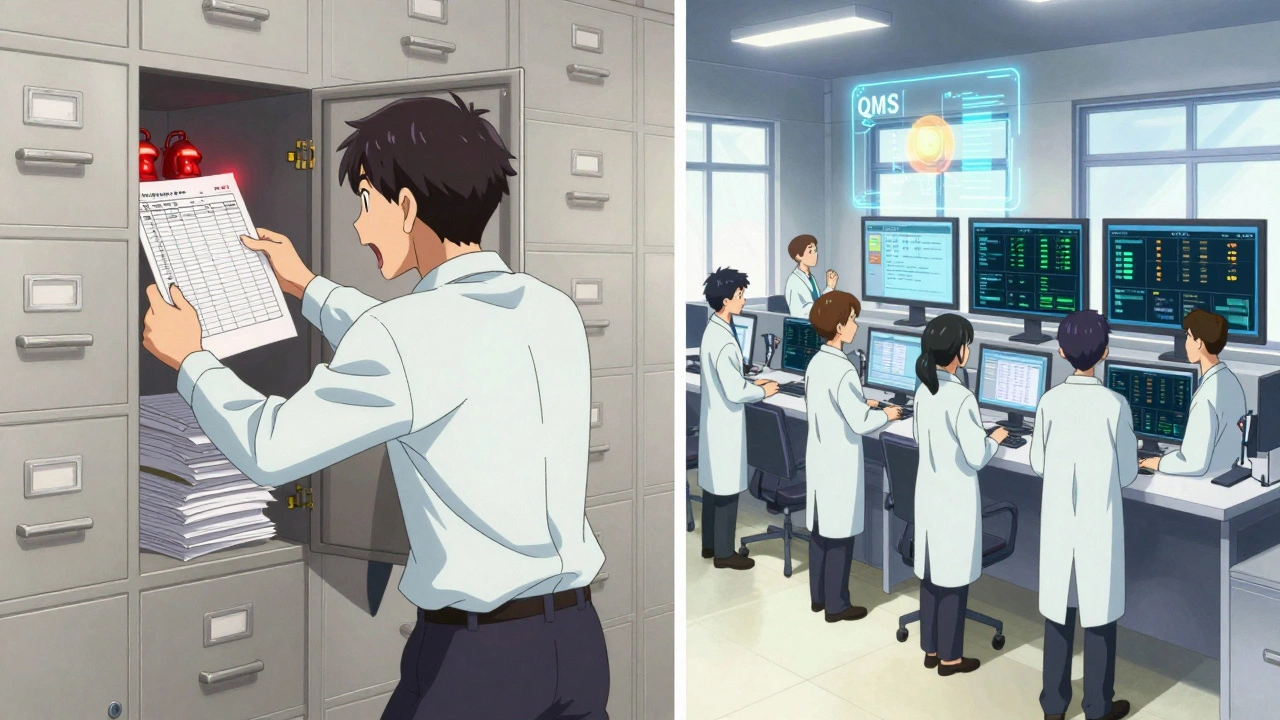
The Big Change: Foreign Facilities Now Get the Same Treatment
Before May 2025, there was a double standard. Domestic facilities almost always got unannounced visits. Foreign ones? They usually got weeks of notice. That was supposed to help with logistics-arranging translators, coordinating with local regulators, booking flights. But it also gave companies time to stage their operations. The FDA called it a loophole. And they closed it. Now, every facility-whether it’s in China, India, Germany, or Mexico-faces the same risk of a surprise visit. The FDA conducted pilot programs in India and China before rolling this out globally. Now, it’s standard practice for all 3,000+ foreign inspections they do every year across more than 90 countries. This isn’t just about fairness. It’s about safety. Around 40% of finished drugs and 80% of the active ingredients in those drugs come from overseas. If those facilities aren’t held to the same standard as U.S. ones, American consumers are at risk.What Happens If You’re Not Ready?
A lot of companies panic when they hear about unannounced inspections. But panic won’t help. Preparation will. If your quality management system (QMS) is a patchwork of Excel sheets and sticky notes, you’re already behind. The FDA doesn’t care how nice your office looks on inspection day. They care if your procedures are followed every shift, every day. If your digital records are outdated, your training logs are incomplete, or your staff can’t explain why they’re doing something a certain way-you’re vulnerable. One manufacturer in India told industry reporters that during an unannounced visit, inspectors asked to see the last 10 batches of a sterile injectable. The company had digital records for eight, but the other two were still on paper. That’s a red flag. Not because paper is illegal-but because it suggests inconsistency. And inconsistency suggests risk. The FDA has made it clear: they’re authorized to refuse entry, delay inspections, or even seize products if a company tries to block or delay them. That’s not a threat. It’s the law.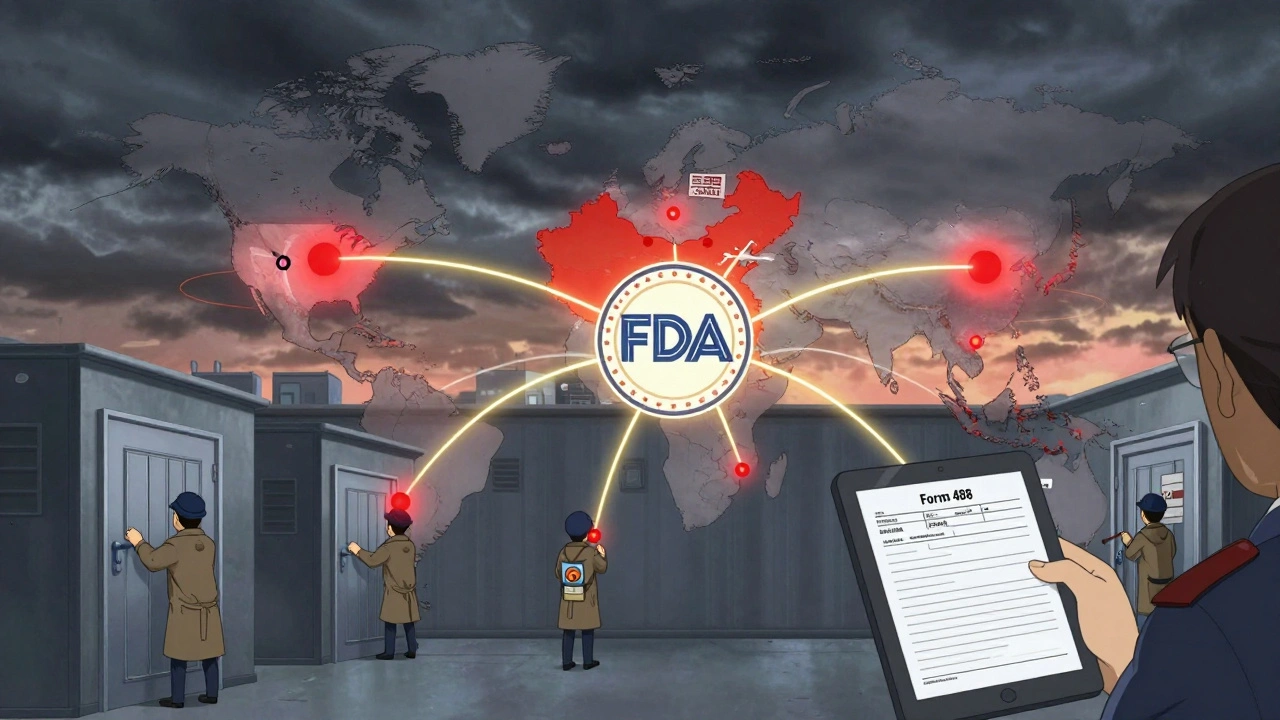
How to Get Ready
You don’t need a huge budget to be ready. You need discipline.- Run mock inspections every quarter. Pretend the FDA is coming tomorrow. See where your gaps are.
- Assign clear roles: who answers the door? Who retrieves records? Who speaks to inspectors?
- Keep all records digital, searchable, and backed up. No more filing cabinets in the basement.
- Train every employee-not just QA-to understand why compliance matters. If the person filling the vials doesn’t know why the cleanroom gowning procedure exists, you’re one mistake away from a shutdown.
- Use QMS software with built-in guardrails. Tools that flag missing signatures, expired training, or unapproved changes can save you from a Form 483.
What’s Next?
The FDA says this is just the beginning. They plan to increase the frequency of unannounced inspections at foreign sites. They’re also working on how to handle international coordination-like whether they’ll still notify foreign regulators before showing up. That’s still unclear. But one thing is certain: the era of advance notice for foreign manufacturers is over. The global supply chain is no longer a gray zone. The FDA is watching. And they’re not waiting for an appointment. If you’re in manufacturing-domestic or foreign-your only real defense is a system that never sleeps. Because the FDA’s inspectors don’t either.Are FDA inspections always unannounced?
No, not always. Most inspections are unannounced, especially for quality system reviews and follow-ups. But there are exceptions. For example, inspections for Class II or III medical devices are often scheduled every two years. Also, if the FDA needs specialized staff, translators, or records that aren’t available on short notice, they may give advance notice-but that’s becoming rare, especially for foreign facilities.
Can the FDA inspect without warning in any country?
Yes. Since May 2025, the FDA can conduct unannounced inspections at any foreign manufacturing facility that supplies products to the U.S., regardless of local laws or customs. While the agency used to coordinate with foreign regulators before visits, it’s no longer required. The FDA has the legal authority to enter any facility producing food, drugs, or devices for the American market.
What happens if a company refuses entry to FDA inspectors?
Refusing entry is a serious violation. The FDA can take immediate action, including issuing a warning letter, blocking imports, seizing products, or even pursuing criminal charges. Under U.S. law, obstructing an FDA inspection is a federal offense. Companies that delay, deny, or limit access risk having their products barred from entering the U.S. market.
Do unannounced inspections only target pharmaceutical companies?
No. Unannounced inspections apply to all FDA-regulated products: pharmaceuticals, medical devices, biologics, food, dietary supplements, and cosmetics. Any facility producing these items for the U.S. market is subject to surprise visits. Food manufacturers, especially those producing high-risk products like infant formula or ready-to-eat meats, are increasingly targeted under this policy.
How often do foreign facilities get inspected now?
There’s no fixed schedule. The FDA uses a risk-based model. High-risk facilities-those with past violations, complex processes, or a history of non-compliance-are inspected more frequently. Since the May 2025 policy change, the agency has increased the number of unannounced visits to foreign sites. Some high-risk manufacturers may now face inspections every 12 to 18 months, compared to every 3 to 5 years before.
11 Responses
Unannounced inspections? Of course. Any facility that thinks they can game the system with staged clean rooms and fake logs deserves to get shut down. The FDA isn’t here to be nice. They’re here to keep you from swallowing rat poison disguised as insulin. And if you’re still using paper logs in 2025? You’re not just behind-you’re dangerous.
AMERICA FIRST!! Why are we letting foreign plants get away with anything?? We’ve been doing surprise inspections for DECADES and now they’re finally catching up?? I say we send armed agents with body cams and confiscate everything that’s not FDA-approved!! #MakeInspectionsGreatAgain
The notion that unannounced inspections are a novel or revolutionary tactic is deeply misleading. This has been standard practice in regulated industries for over thirty years in jurisdictions with functional governance structures. The FDA’s belated adoption of baseline international norms reflects systemic institutional decay, not innovation. The real scandal is not the lack of surprise visits-it’s that it took until 2025 to align with global best practices.
YESSSS!! This is HUGE!! 🙌 The FDA finally got it right!! No more playing games with paper logs and fake SOPs!! I’ve seen too many small manufacturers panic when inspectors show up-now they’ll be ready because they’ve been training right all along!! If your system works every day, you won’t fear the knock-you’ll welcome it!! Keep pushing, FDA!! 💪
Wait, so you’re telling me they just walk in and start asking for records? No call? No warning? That’s insane. What if the CEO’s on vacation? What if the IT guy’s out sick and the backups are corrupted? This isn’t enforcement-it’s a trap. You’re setting people up to fail. And don’t even get me started on how many foreign plants don’t even have decent internet. How are they supposed to comply?
They’re not really inspecting for safety. They’re just looking for excuses to block imports and protect American pharma profits. The real reason they’re doing this now is because domestic production can’t keep up. This isn’t about consumer safety-it’s about protectionism disguised as regulation.
Unannounced inspections? Funny. I wonder how many of those inspectors are on the payroll of Big Pharma. Ever heard of the 2012 New England Compounding Center scandal? The FDA had advance notice of that one. They knew. They did nothing. Surprise visits are theater. The real problem is the revolving door between regulators and the companies they’re supposed to police.
OH MY GOD I JUST REALIZED-WHAT IF THE FDA SHOWS UP WHILE I’M WEARING MY SWEATPANTS?? I’M A SMALL BATCH SUPPLIER AND I’M SURE MY CLEANROOM GOWNING PROCEDURES ARE FINE BUT WHAT IF THEY SEE MY COFFEE MUG ON THE WORKBENCH?? I’M GOING TO BE SHUT DOWN AND MY KIDS WILL LOSE THEIR COLLEGE FUND!! THIS IS A NIGHTMARE!!
While the policy shift is overdue, it is critical to recognize that compliance is not merely about technical adherence to protocols. It is about cultivating a culture of integrity, where every employee-from the line worker to the quality lead-understands that safety is non-negotiable. Training must be continuous, accessible, and grounded in real-world consequences. Systems fail when people are treated as compliance checkboxes rather than stewards of public health.
Boom! 🔥 This is the kind of move that separates the pros from the amateurs. If your QMS is still running on Excel and hope, it’s time to upgrade. Use tools with guardrails-automated alerts, digital signatures, audit trails. Don’t wait for the knock. Run a mock inspection tomorrow. Your future self will thank you. #QualityFirst #FDAReady
I’ve worked in a facility that got hit with an unannounced visit. We were ready-not because we were perfect, but because we treated compliance like breathing. Every day. No exceptions. I remember one of the inspectors said, 'You didn’t try to hide anything-you just did your job.' That’s all they want. Just do your job, every day. It’s not about fear. It’s about pride.