
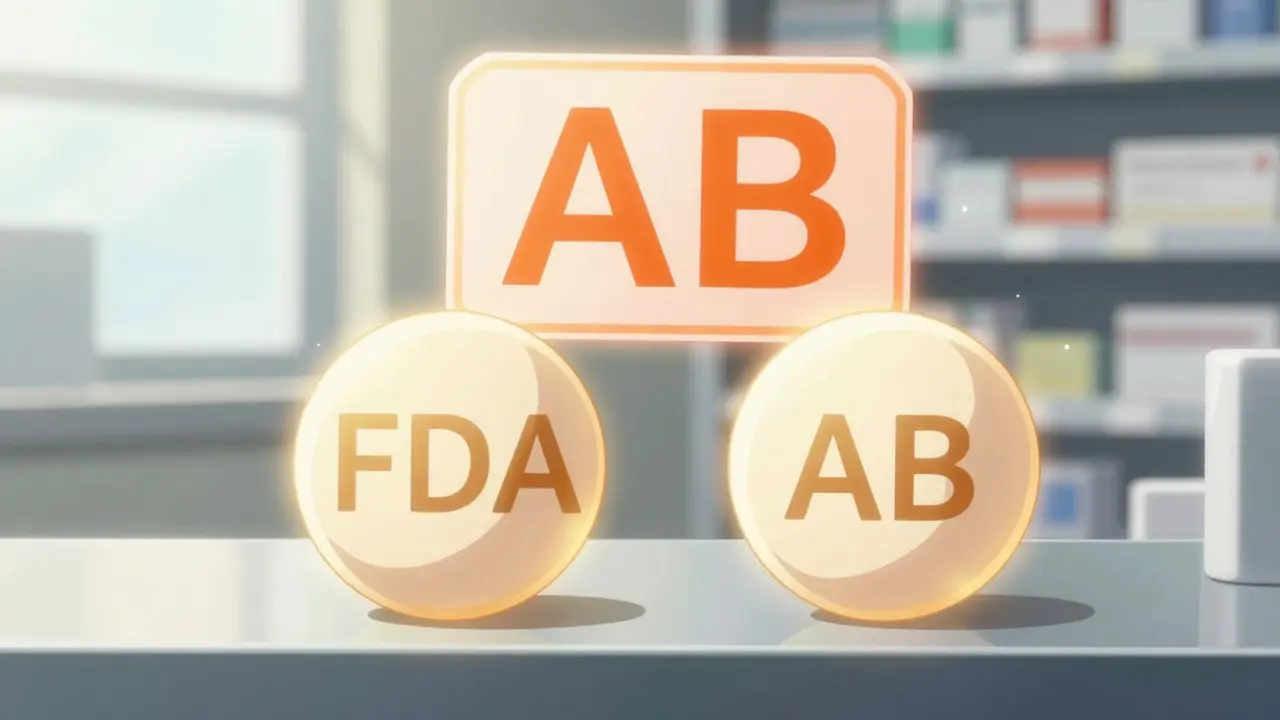
When your doctor prescribes a medication, you might not think about whether it’s the brand name or a generic version. But that choice matters more than you realize-especially when it comes to your safety. Therapeutic equivalence is the science behind why you can trust a $5 generic pill to work just like its $50 brand-name counterpart. It’s not just about cost. It’s about making sure the medicine in your hand does exactly what it’s supposed to do-without surprises.
What therapeutic equivalence actually means
Therapeutic equivalence isn’t a marketing term. It’s a strict scientific standard set by the U.S. Food and Drug Administration (FDA). Two drugs are considered therapeutically equivalent if they contain the same active ingredient, in the same amount, delivered the same way (like a pill or injection), and they work the same way in your body. That means they produce the same clinical effect and carry the same safety profile.That’s different from just being “pharmaceutically equivalent.” Two pills might have the same active ingredient but different fillers, coatings, or shapes. That doesn’t guarantee they’ll behave the same inside you. Therapeutic equivalence goes further. It requires proof that your body absorbs the drug at the same rate and to the same extent. That’s called bioequivalence.
The FDA uses a simple two-letter code in its Orange Book to show this. If a generic drug has an “AB” rating, it’s been tested and approved as interchangeable with the brand-name version. That’s the gold standard. An “A” rating means it’s considered equivalent. A “B” rating? That’s a red flag. It means there’s not enough proof the drug works the same way-and it shouldn’t be swapped without a doctor’s approval.
How bioequivalence is tested-and why it’s not just a guess
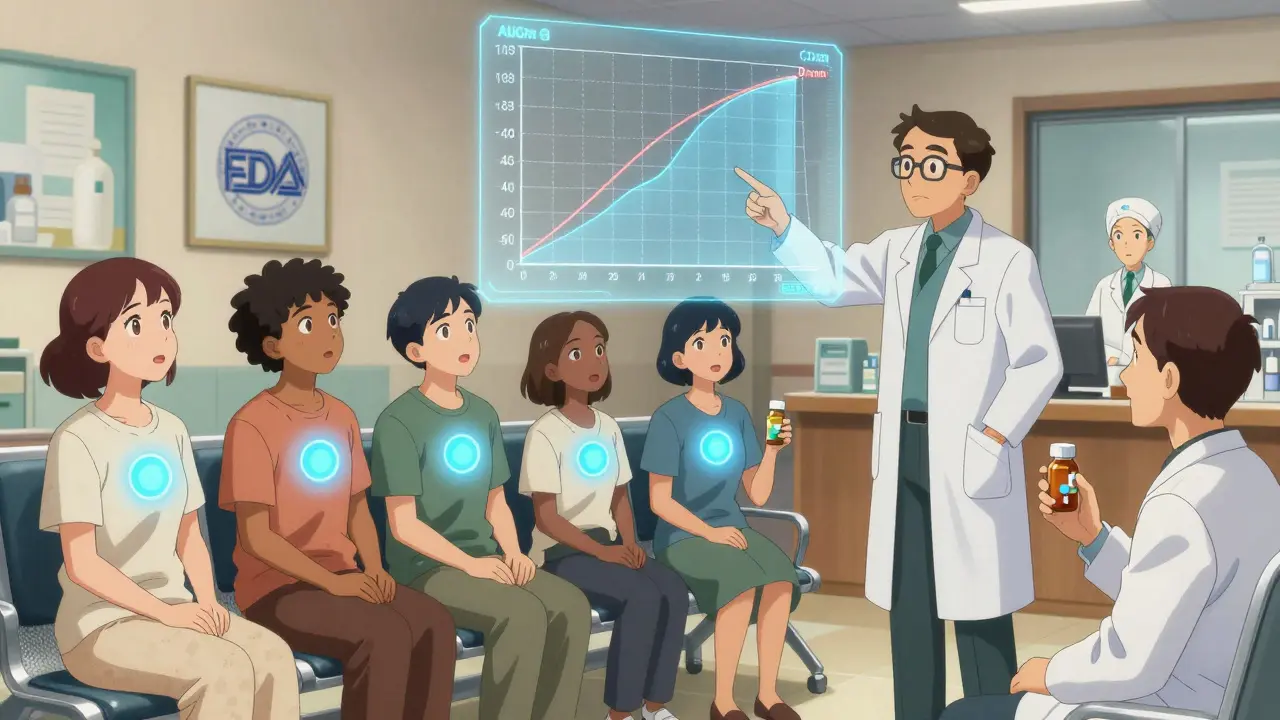
You might wonder: how do they know a generic drug behaves like the brand? It’s not guesswork. The FDA requires controlled clinical studies, usually with healthy volunteers. They measure how much of the drug enters your bloodstream and how fast-using two key numbers: AUC (area under the curve) and Cmax (peak concentration).The standard rule? The generic’s AUC and Cmax must fall within 80% to 125% of the brand-name drug’s values. That’s a 20% margin, and it’s based on decades of data showing that within this range, patients don’t experience meaningful differences in effectiveness or side effects. For most drugs, this works perfectly.
But there are exceptions. For drugs with a narrow therapeutic index-like warfarin, levothyroxine, or lithium-even small changes can be dangerous. That’s why the FDA applies tighter standards here. For these drugs, the acceptable range shrinks to 90% to 110%. The agency knows that if your thyroid hormone level shifts by just a fraction, your heart rate, weight, or mood can swing wildly. That’s not theoretical. Real patients have been affected.
Why this matters for everyday patients
Most people switch to generics without even noticing. In 2022, 90.7% of all prescriptions filled in the U.S. were generics. That’s over 4 billion prescriptions. And the savings? Around $158 billion a year. That’s money kept in people’s pockets and out of insurance premiums.But here’s what most don’t realize: this system only works because of therapeutic equivalence. Without it, pharmacists couldn’t safely substitute generics. Doctors couldn’t confidently prescribe them. Patients wouldn’t trust them.
A 2022 survey of 12,500 UnitedHealthcare patients found that 87% reported no difference in how they felt after switching to a therapeutically equivalent generic. Only 3.2% blamed the switch for any side effects. That’s a strong track record.
Still, stories circulate online-Reddit threads, Facebook groups-where someone says, “My generic made me feel weird.” Often, those cases turn out to be misattributed. The Institute for Safe Medication Practices reviewed 127 reports of possible generic-related issues between 2018 and 2022. Only 17 involved drugs with an “AB” rating. The rest? Either the drug wasn’t rated as equivalent, or the issue was anxiety, a new illness, or a different medication entirely.
Where the system gets tricky
Therapeutic equivalence works brilliantly for simple pills and capsules. But it hits walls with complex drugs. Inhalers, topical creams, eye drops, and injectables don’t always behave predictably in the body. The active ingredient might be the same, but how it’s delivered matters. A different propellant in an inhaler can change how deeply the drug reaches your lungs. A thicker cream might absorb slower.The FDA admits this. In 2023, they released draft guidance acknowledging that traditional bioequivalence tests aren’t enough for these products. They’re now funding research to develop better methods-including using artificial intelligence to predict how formulation changes might affect outcomes. A $2.3 million project with MIT is looking at how tiny differences in excipients (inactive ingredients) could lead to real-world differences in patient response.
That’s why you won’t see many “AB” ratings for inhalers yet. The system is catching up. Until then, pharmacists are told to avoid automatic substitution for these products unless the prescriber specifically allows it.
What healthcare providers need to know
Doctors and pharmacists are on the front lines. They’re the ones who actually decide whether to swap a brand for a generic. But not everyone knows how to read the Orange Book. The two-letter codes aren’t obvious. “A” doesn’t mean “better.” “B” doesn’t mean “bad.” It’s about evidence.Forty-nine U.S. states let pharmacists substitute therapeutically equivalent generics without asking the doctor. But 11 states require the prescriber to write “dispense as written” if they don’t want a swap. That’s a big gap. A patient in Alabama might get a generic without a second thought. In New York, they might get the brand unless they ask for the cheaper version.
The FDA offers free 90-minute training modules for providers. After completing them, 85% of participants improved their ability to correctly interpret therapeutic equivalence codes. That’s not just paperwork-it’s patient safety.

Therapeutic equivalence vs. therapeutic interchange
Don’t confuse therapeutic equivalence with therapeutic interchange. The first means two drugs are identical in active ingredient and performance. The second means two drugs are in the same class-like switching from one statin to another-but aren’t the same molecule.That’s a dangerous mix-up. A 2019 JAMA Internal Medicine study found that therapeutic interchange led to 32% more adverse events than substitution based on therapeutic equivalence. Why? Because different drugs-even in the same class-have different side effect profiles, interactions, and dosing needs. Swapping a lisinopril for an losartan might seem harmless. But for some patients, it triggers a cough, dizziness, or kidney changes.
Therapeutic equivalence avoids that. It’s precise. It’s specific. It’s science-backed. Therapeutic interchange is more of a guess.
What’s next for therapeutic equivalence
The system isn’t perfect, but it’s improving. The FDA’s Generic Drug User Fee Amendments (GDUFA) III, running through 2027, includes $65 million specifically for better testing of complex drugs. They’re also working on standards for biosimilars-newer, biologically complex drugs that aren’t exact copies but are designed to act like the original.For now, therapeutic equivalence remains the backbone of safe, affordable medication access. It’s why millions of Americans can afford their prescriptions. It’s why hospitals can stretch budgets without risking care. And it’s why you can trust that the little white pill you pick up at the pharmacy won’t suddenly turn your treatment into a gamble.
The science is solid. The data is clear. And the stakes? Your health.
Are generic drugs really as safe as brand-name drugs?
Yes-when they’re rated as therapeutically equivalent by the FDA. The agency requires generics to meet the same strict standards for quality, strength, purity, and performance as brand-name drugs. Over 90% of prescriptions in the U.S. are filled with generics, and studies show they work the same way with the same safety profile. The only exceptions are drugs with a narrow therapeutic index, where the FDA applies tighter bioequivalence rules.
What does an AB rating mean on the FDA Orange Book?
An AB rating means the generic drug is considered therapeutically equivalent to the brand-name drug. The “A” means it’s expected to have the same clinical effect and safety profile. The “B” means it’s not considered equivalent. So AB = safe to substitute. BB or B with no second letter? Don’t swap without checking with your doctor.
Can I switch from a brand to a generic without telling my doctor?
In most states, yes-if the generic has an AB rating. Pharmacists are legally allowed to substitute without asking. But if your doctor wants you to stay on the brand-for example, if you’re on warfarin or levothyroxine-they can write “dispense as written” on the prescription. Always check with your pharmacist if you’re unsure, especially if you’ve had reactions to past switches.
Why do some people say their generic made them feel worse?
Sometimes, it’s not the drug-it’s the switch. Changing pills-even to an equivalent one-can cause anxiety or nocebo effects, where people expect side effects and then feel them. Other times, the generic isn’t actually rated AB. Some products are mislabeled or misclassified. A review of 127 adverse event reports found only 17 involved drugs with true therapeutic equivalence. Most were due to non-equivalent substitutions or unrelated health changes.
Are all generics the same?
No. Different manufacturers can make generics of the same brand. But if they’re all rated AB by the FDA, they’re considered interchangeable. That doesn’t mean they’re identical in color, shape, or taste-they’re not. But they’re identical in how they work in your body. If you switch between two AB-rated generics and notice a change, tell your doctor. It’s rare, but it can happen.
9 Responses
Wow this actually made me feel better about my generic blood pressure med. I was scared to switch but now I get it. Thanks for breaking it down so simply 😊
Therapeutic equivalence hinges on bioequivalence metrics AUC and Cmax within 80-125% CI per FDA guidelines AB rated generics meet these pharmacokinetic parameters with statistical significance p<0.05 which translates to clinical interchangeability without increased adverse events
The FDA’s 80-125% bioequivalence range is scientifically indefensible for drugs with narrow therapeutic windows. The data shows clear patient harm in levothyroxine and warfarin cases. This isn’t just bureaucratic laziness-it’s systemic negligence disguised as cost-saving.
Man in India we got generics that cost like 20 cents and work just fine. But sometimes the fillers mess with your gut if you’re sensitive. I switched from one AB-rated generic to another and got bloated for a week. Not the drug-the filler. My body’s weird like that. Just sayin’
They let pharmacists swap my thyroid med without telling me. I gained 15 pounds. My anxiety spiked. My doctor didn’t even know. This isn’t science-it’s a lottery and I lost. How many more people are suffering in silence?
People like you who just trust the system are the reason this country is falling apart. The FDA is corrupted by Big Pharma. They approve generics that are barely similar and then pretend it’s safe. You think your $5 pill is the same? Wake up. You’re being used as a lab rat.
Stop being afraid of generics. They saved my life. I was on $600/month brand-name insulin. Switched to AB-rated generic-same results, $40/month. I’m alive because of this system. Don’t let fear-mongers scare you out of affordable care. This isn’t a gamble-it’s justice.
My pharmacist switched my generic last month and I felt off for a week. I asked if it was the same AB rating and she said yes. Still felt weird. Should I go back to brand? Or is it just me?
Look I’ve been a pharmacist for 22 years and I’ve seen this play out a thousand times. Most people who say generics made them feel worse are either experiencing the nocebo effect or they got a B-rated drug by mistake. The system works. The data proves it. But yeah sometimes the inactive ingredients cause minor GI issues or allergic reactions-those are real but rare. The real issue is that most patients don’t know how to read the Orange Book. That’s on us. We need better education. Not fear. Not blame. Just clarity. And yeah the complex drugs like inhalers? Totally valid concern. FDA’s working on AI models with MIT to fix that. It’s not perfect but it’s moving forward. Don’t throw the baby out with the bathwater.