
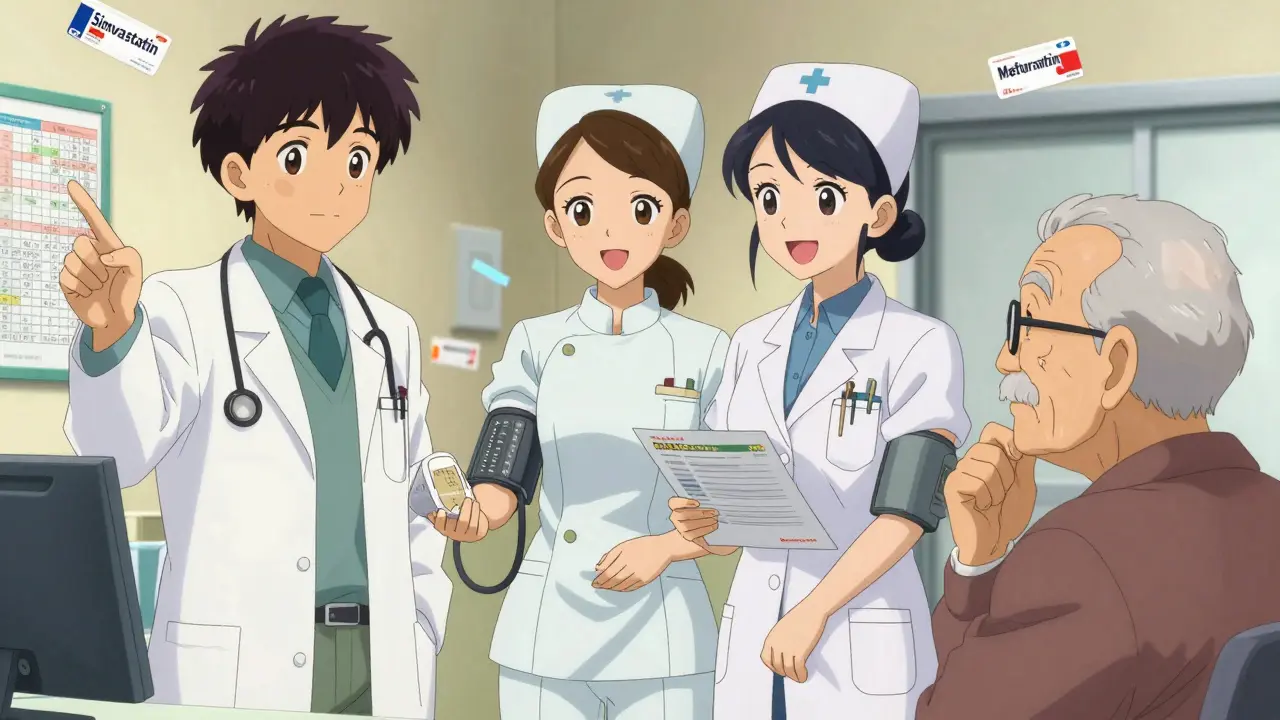
When it comes to prescribing medications, especially generics, the old model of one doctor making decisions alone doesn’t cut it anymore. Too many patients are stuck with confusing pill regimens, expensive brand-name drugs they can’t afford, or dangerous interactions that slip through the cracks. But in practices that have shifted to team-based care, something powerful happens: pharmacists, nurses, care coordinators, and physicians work together - not just in the same building, but as a true unit - to get the right meds to the right people at the right cost.
Why Team-Based Care Changes Everything for Medication Decisions
Before team-based care became widespread, prescribing was mostly a solo act. A doctor sees a patient, writes a script, and moves on. But what if that patient is on five different medications for diabetes, high blood pressure, and cholesterol? What if one of those drugs interacts badly with a supplement they started taking? What if they’re paying $300 a month for a brand-name pill when a generic works just as well? These aren’t rare problems - they’re everyday realities for millions.
Team-based care flips that model. Instead of one person carrying the whole burden, responsibilities are shared based on expertise. Physicians focus on diagnosis and complex treatment plans. Pharmacists dive deep into every medication the patient takes - checking for duplicates, interactions, and cost-saving opportunities. Nurses monitor how patients are doing between visits. Care coordinators make sure everyone’s on the same page.
This isn’t theory. In 2013, research from the National Center for Biotechnology Information showed that when pharmacists are embedded in care teams, medication errors drop by 67%. That’s not a small number. That’s life-saving. And it’s not just about avoiding mistakes - it’s about making smarter choices. Generic drugs aren’t second-rate. They’re chemically identical to brand-name versions, approved by the FDA, and often cost 80% less. But many patients never even hear about them unless someone on their care team brings it up.
Who Does What in a Medication Team?
Every team is a little different, but the core roles are consistent. Here’s how it usually breaks down:
- Pharmacists: They’re the medication experts. They run comprehensive medication reviews, spot unnecessary drugs, flag interactions, and recommend generic alternatives. In team-based models, they don’t just fill prescriptions - they actively change them. Many now have Collaborative Practice Agreements (CPAs) that let them adjust dosages or switch drugs under agreed-upon protocols, without waiting for a doctor’s signature every time.
- Physicians: They still lead, but their role has shifted. Instead of spending hours on medication reconciliation or chasing down pharmacy calls, they focus on complex cases - like when a patient’s condition isn’t improving or when multiple chronic diseases overlap. They trust the data the team brings to them.
- Nurses and Medical Assistants: They handle chronic disease monitoring. A nurse might check a diabetic patient’s blood sugar trends, ask about side effects from their meds, and flag if someone’s not refilling their insulin. They’re the eyes and ears between visits.
- Care Coordinators: These are the glue. They make sure lab results reach the right person, schedule follow-ups, and help patients navigate insurance hurdles. If a patient can’t afford a drug, the coordinator finds a patient assistance program or switches them to a lower-cost generic.
This structure isn’t just efficient - it’s safer. A 2022 analysis by ThoroughCare found that practices using this model reduced hospital readmissions by 17.3%. Why? Because someone was watching the whole picture, not just one piece of it.
The Real Win: Generic Substitution Done Right
Generic drugs are one of the biggest untapped tools in healthcare. But simply switching a patient to a generic isn’t enough. You have to do it right.
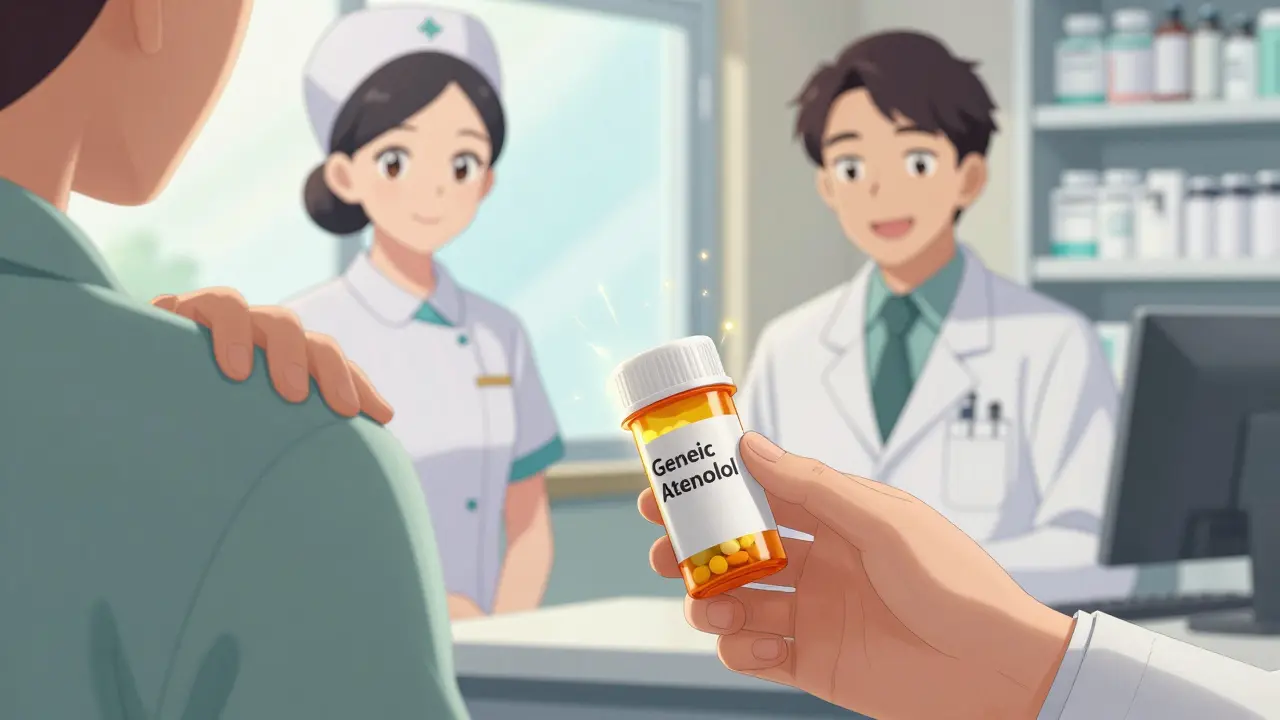
Take a 68-year-old woman with hypertension, type 2 diabetes, and high cholesterol. Her doctor prescribed a brand-name statin because it was the one he remembered. But her pharmacist, reviewing her file during a team huddle, noticed the generic version - atenolol for blood pressure, metformin for diabetes, and simvastatin for cholesterol - were all equally effective and cost her $220 less per month. The pharmacist flagged it, the doctor agreed, and the switch was made. No new appointment. No disruption. Just savings and peace of mind.
This kind of thing happens daily in well-run teams. A 2023 case study from SICHC found that when nurses did “warm handoffs” - literally walking the patient to the pharmacist during the visit - 42% more patients accepted generic switches. Why? Because trust matters. When a patient hears from two different professionals - their doctor and their pharmacist - that a generic is safe, they’re far more likely to go with it.
And the numbers don’t lie. PureView Health Center found team-based medication management saves $1,200 to $1,800 per patient per year. Most of that comes from switching to generics and avoiding preventable hospital stays.
Where It Falls Short - And Why
It’s not magic. Team-based care has real challenges.
Setting it up costs between $85,000 and $120,000 per practice. That’s a huge barrier for small clinics. Electronic health records often don’t talk to each other. Pharmacists in one system can’t see what a nurse in another system entered. And not all doctors are ready to share control. Some fear losing authority. Others just don’t know how to work with a team.
There’s also the risk of miscommunication. A Commonwealth Fund review of 350 patient reviews found 12% mentioned confusion after team members changed a med without clear handoffs. One patient on Reddit said, “My pill schedule changed twice in a week, and no one told me why.” That’s a failure of process, not the model.
And while pharmacists are trained to make these calls, a 2021 JAMA editorial warned that without strong physician oversight, even well-intentioned teams can make mistakes - especially in complex patients with liver or kidney problems. The key isn’t to remove doctors from the loop. It’s to make sure they’re in the loop - with better information.
How Practices Actually Make It Work
Successful teams don’t just add a pharmacist to the staff. They rebuild their workflow.
According to the AMA’s 2023 guide, the best practices follow a six-month rollout:
- Months 1-2: Define roles. What can the pharmacist change? What needs a doctor’s approval? Write it down.
- Months 3-4: Fix the tech. Make sure the EHR lets pharmacists document recommendations and lets doctors approve them in one click.
- Month 5: Train everyone. Pharmacists need 16-24 hours of training on team protocols. Nurses need to know how to flag high-risk patients.
- Month 6: Pilot it. Start with five patients with multiple chronic conditions. Track outcomes. Adjust.
Every successful team has three habits:
- Daily 15-minute huddles - no longer, no shorter.
- Standardized medication review forms everyone uses.
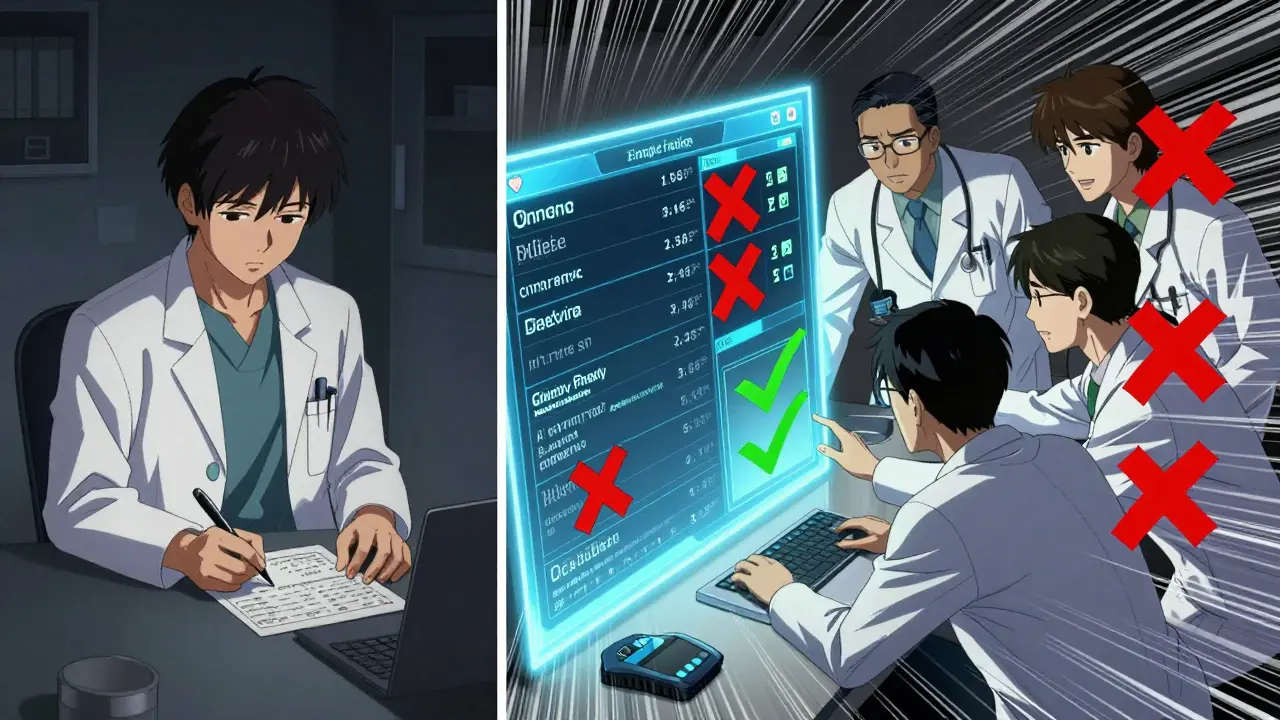
- An EHR that auto-populates drug interaction alerts and generic alternatives.
One practice in Birmingham cut medication reconciliation time by 35% just by doing this. That’s 10 extra hours a week for the whole team.
The Bigger Picture: Where This Is Heading
This isn’t a niche trend. It’s becoming standard.
Medicare Part D now serves over 12 million people through Medication Therapy Management (MTM) programs - and 87% of those plans contract directly with pharmacists. In 2023, CMS lowered the eligibility threshold from five medications to four, opening up team-based care to millions more.
Telepharmacy is growing fast. Rural patients who used to drive two hours to see a pharmacist can now video-chat with one during their primary care visit. AI is starting to help, too. Mayo Clinic’s pilot program used AI to suggest generic switches - and it increased appropriate use by 22% while cutting adverse events by 9.3%.
Healthcare executives are betting on this. 92% of them plan to expand team-based medication services in the next two years. The question isn’t whether this model will last - it’s whether your practice is ready to join.
What Patients Are Saying
Real people notice the difference.
One Healthgrades review from March 2023 said: “The pharmacist caught three medication interactions my doctor missed and switched me to generics that saved me $200 monthly.” Another wrote: “I finally feel like my care team actually talks to each other.”
But it’s not just about savings. It’s about confidence. When a patient knows their meds are being watched by more than one expert, they’re more likely to take them - and less likely to end up in the ER.
Can pharmacists really change prescriptions without a doctor’s approval?
Yes - but only under formal Collaborative Practice Agreements (CPAs). These are legally binding documents between pharmacists and physicians that outline exactly what changes a pharmacist can make - like switching to a generic, adjusting a dose, or refilling a chronic medication. They’re not a free-for-all. They’re a structured delegation of authority, backed by training and oversight. CPAs are now standard in Medicare Advantage plans and are required for pharmacists to bill for medication management services.
Are generic drugs as safe and effective as brand-name ones?
Absolutely. The FDA requires generics to have the same active ingredient, strength, dosage form, and route of administration as the brand-name drug. They must also meet the same strict manufacturing standards. The only differences are in inactive ingredients (like fillers or dyes), which rarely affect how the drug works. Studies consistently show generics perform just as well - and often cost 80% less. For most patients, especially those with chronic conditions, generics are the smarter, safer choice.
Why don’t all doctors use team-based care?
It’s a mix of habit, cost, and fear. Many physicians were trained to work alone and worry about losing control. Others can’t afford the upfront investment - which can exceed $100,000 for tech, training, and staffing. Small practices often lack the infrastructure to support team workflows. But the biggest barrier is cultural: changing how care is delivered takes time, and not every practice is ready to make that leap.
Who qualifies for team-based medication management?
Under Medicare Part D, patients qualify if they have three or more chronic conditions (like diabetes, heart disease, or asthma), take five or more prescription medications, and have annual drug costs over $4,000. As of 2023, CMS lowered the medication threshold to four or more, opening eligibility to millions more. Private insurers often use similar criteria. The goal is to target patients most at risk for medication errors or financial strain.
Is team-based care only for older adults?
No. While Medicare patients are the most common users, the model works for anyone on multiple medications - including younger adults with complex conditions like lupus, epilepsy, or mental health disorders. In fact, pediatric and adolescent clinics are starting to adopt team-based care for ADHD and asthma management. The key isn’t age - it’s complexity. If a patient’s medication regimen is hard to manage, a team can help.
What Comes Next?
If you’re a provider wondering whether to join this shift, the answer is simple: you don’t have to do it alone. Start small. Train one pharmacist. Pilot with five patients. Track your results. You’ll likely find that your team works faster, your patients are happier, and your costs go down. The future of prescribing isn’t about who writes the script - it’s about who makes sure it’s the right one.
8 Responses
Team-based care is the future, no debate. I’ve seen it firsthand in my clinic - pharmacists catching interactions I missed, nurses flagging non-adherence before it becomes a crisis. It’s not rocket science, it’s just common sense. Why are we still pretending one doctor can handle all this?
While I appreciate the data presented, I must emphasize the importance of structured communication protocols. Without standardized documentation and interprofessional accountability, even well-intentioned teams risk fragmentation. The success of collaborative practice agreements hinges on clear, documented boundaries - not just goodwill.
OMG YES 😍 This is the kind of healthcare I can get behind - pharmacists as heroes, nurses as the real MVPs, and doctors finally stepping back to do what they actually trained for. No more ‘I’m the boss’ nonsense. Teamwork makes the dream work, people! 💪🩺
Been doing this for 3 years now and let me tell ya - the daily 15-min huddles changed EVERYTHING. We went from chaos to calm. My doc used to spend 2 hours a day just calling pharmacies. Now? He’s out with patients. We saved over $40k last year just on generics. And yeah, I misspell sometimes - but my patients? They’re alive and paying less. That’s what matters.
Everyone’s acting like this is some revolutionary breakthrough, but let’s be real - this is just a cost-cutting scheme disguised as ‘patient care.’ Pharmacists aren’t doctors. Letting them change scripts? That’s malpractice waiting to happen. And don’t even get me started on how lazy this makes physicians. It’s a slippery slope.
This post is just corporate fluff. Where’s the data on patient outcomes beyond cost savings? How many people got worse after switching to generics? Who’s tracking adverse events? You’re glorifying a system that prioritizes profit over safety.
Oh wow, another feel-good article from the healthcare-industrial complex. Let me guess - the ‘team-based care’ model is funded by Big Pharma who just got their generics patent extension? And now they’re pushing this as ‘innovation’? Classic. The real win? Lawyers drafting CPAs and EHR vendors selling overpriced integration modules.
Team-based care? More like team-based confusion. My cousin tried this ‘model’ and got 3 different pill schedules in 1 week. No one told her why. She ended up in ER. This isn’t progress - it’s chaos with a PowerPoint.