
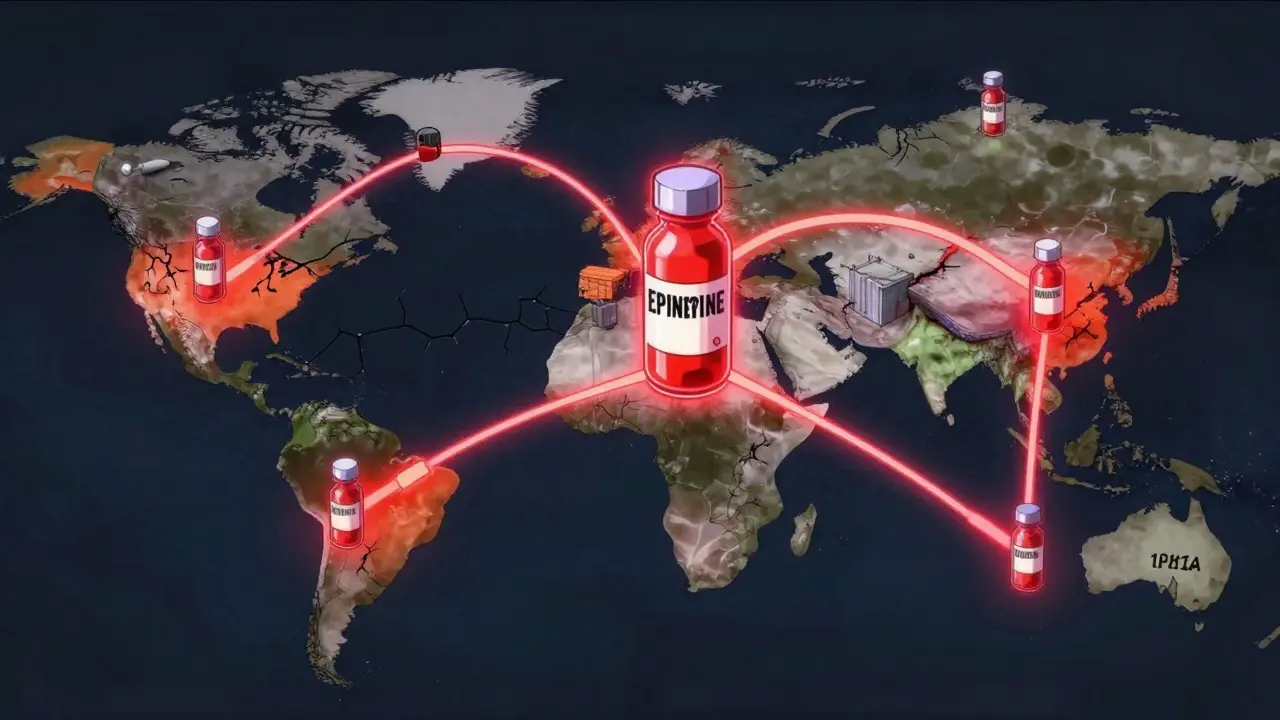
When you pick up a generic pill at your pharmacy, you probably don’t think about how it got there. But behind that simple transaction is a fragile, high-stakes supply chain that’s under more pressure than ever. Generic drugs make up over 90% of prescriptions in the U.S., yet they account for less than 20% of total drug spending. That’s the paradox: cheap medicine, but an expensive and risky way to deliver it.
The Cost-Pressure Trap in Generic Drug Supply Chains
Generic drug manufacturers compete on price. That’s the whole point - to offer the same active ingredient as a brand-name drug at a fraction of the cost. But when every penny counts, companies cut corners. They reduce inventory. They consolidate manufacturing to one or two plants. They skip backup suppliers. And that’s where things break. In 2023, 73% of drug shortages involved low-margin generics. Why? Because when a factory in India or China shuts down for maintenance - or gets hit by a flood, a power outage, or a regulatory inspection - there’s no spare capacity to pick up the slack. Eighty percent of the world’s active pharmaceutical ingredients (APIs) come from just three countries: India, China, and the U.S. That’s not diversity. That’s a single point of failure. The result? Average EBITDA margins for generic distributors have dropped from 12.5% in 2018 to just 8% today. And for smaller players, that’s not sustainable. Companies that can’t improve efficiency are getting squeezed out. Meanwhile, the big three - McKesson, AmerisourceBergen, and Cardinal Health - control 85% of the U.S. market. They’re investing in technology. Smaller distributors? Not so much.What Efficiency Really Looks Like in Generic Distribution
Efficiency isn’t just about moving boxes faster. It’s about getting the right drug, to the right place, at the right time - without overstocking or running out. Top performers use the economic order quantity formula: Q = √(2KD/G). Sounds technical? It’s not. It’s just math to balance how often you order against how much it costs to store inventory. Leading distributors cut stockouts by 30-45% using this method. That means fewer patients go without their meds, and fewer drugs sit in warehouses gathering dust. They also track performance with three key metrics:- Overall Equipment Effectiveness (OEE) - how well a manufacturing line runs. Top distributors hit above 85%. The industry average? 68-72%.
- Perfect Order Percentage - the percentage of orders that are on time, complete, undamaged, and correctly documented. Leaders hit 95%+. Most hover around 80%.
- Order cycle time - how long it takes from when a pharmacy places an order to when it’s delivered. The best cut this down to under 24 hours.
Technology Is the Real Game-Changer
You can’t manage what you can’t see. That’s why cloud-based ERP systems are no longer optional. These platforms give distributors real-time visibility across their entire supply chain - from raw material suppliers to pharmacy shelves. IoT sensors track temperature and humidity during transport. Why? Because 45% of generic drugs need climate-controlled shipping. A single batch of insulin or epinephrine that gets too hot can be ruined - and it’s not just a financial loss. It’s a public health risk. AI-powered forecasting tools are making the biggest difference. Traditional methods used past sales data. That’s like driving a car by only looking in the rearview mirror. AI looks at hospital admission trends, flu outbreaks, insurance formulary changes, and even social media chatter about drug shortages. One distributor, Teva, cut inventory carrying costs by 32% after rolling out AI forecasting. Another, Cardinal Health, reduced forecast errors by 37% with their new ‘DemandSignal’ platform. The catch? These tools cost money. Implementing a full system can run $15-28 million and take 12-18 months. That’s why adoption is split: 42% of the top 50 generic distributors use AI tools. Only 15% of smaller ones do. The gap is widening.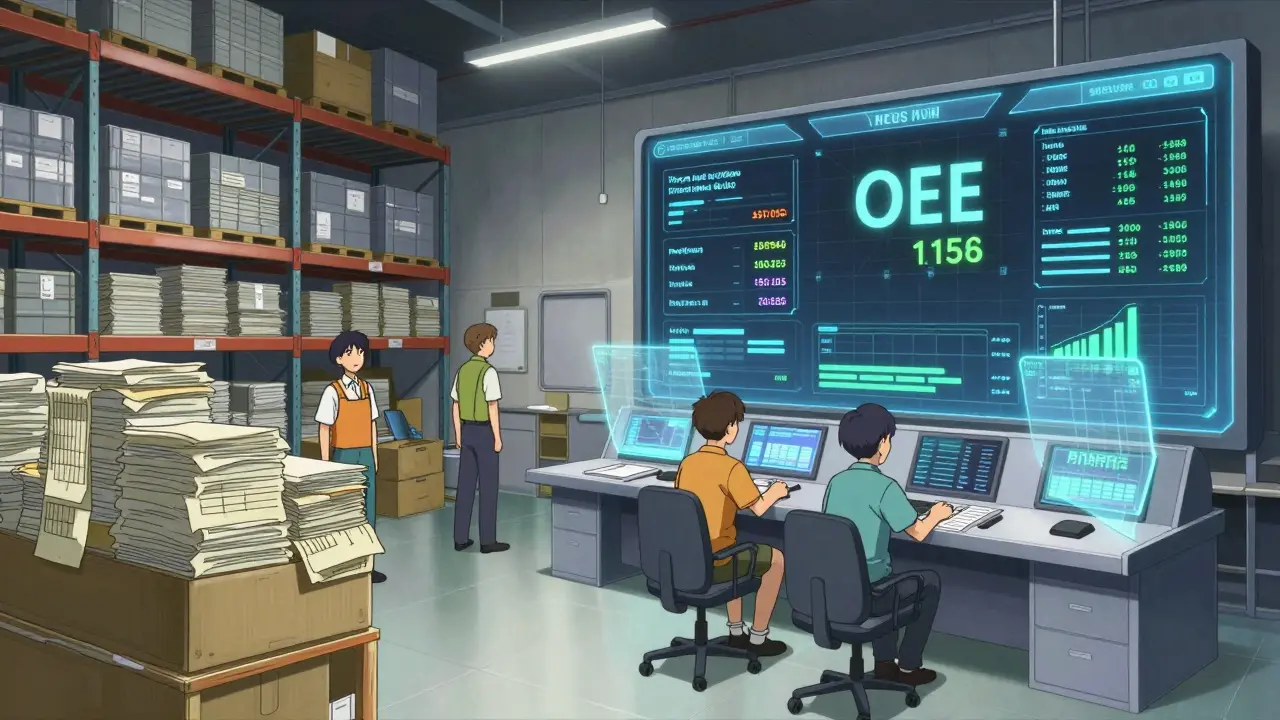
Just-in-Time vs. Just-in-Case: The Inventory Dilemma
There are two ways to handle inventory in generic distribution: just-in-time (JIT) and just-in-case (JIC). JIT means ordering only what you need, when you need it. It cuts storage costs by 22-35%. Sounds perfect, right? But it also increases stockout risk by 15-20% during disruptions. In 2022, a single supplier delay caused a nationwide shortage of metformin - the most common diabetes drug. That happened because no one had extra stock. JIC means keeping buffers. More inventory. Higher holding costs - up to 28% more. But it slashes stockouts by 40-60%. A 2023 Supply Chain Dive survey found that 68% of distributors who eliminated all safety stock faced severe shortages. The smartest companies don’t choose one or the other. They use a hybrid: keep small buffers for critical drugs (like epinephrine, insulin, antibiotics) and use JIT for everything else.Regulations Are Adding Pressure - and Cost
The FDA’s Drug Supply Chain Security Act (DSCSA) and the EU’s Falsified Medicines Directive require full electronic tracking of every pill from manufacturer to patient. That’s not a suggestion. It’s the law. And it’s expensive. Compliance adds 5-8% to operational costs in the U.S. and 6-10% in Europe. For a small distributor, that’s a huge burden. But for those who invest in blockchain or secure digital ledgers, it’s a competitive edge. It builds trust. It reduces counterfeits. And it helps trace problems faster when they happen. The FDA is now accelerating approval for generic drugs that prove they have resilient supply chains. That’s a game-changer. It’s no longer enough to be cheap. You have to be reliable.What Happens If You Don’t Adapt?
The data is clear. Distributors in the top quartile - those with OEE above 85%, perfect order rates above 95%, and AI-driven forecasting - are pulling away. They’re growing market share by 12-15% annually. The laggards? They’re losing 3-5% each year. By 2025, if you haven’t hit 85% OEE and 95% perfect order rates, you’re at risk of losing 15-20% of your market share. That’s not a prediction. That’s what McKinsey’s roadmap says. And by 2027, the leaders will be running digital twins of their entire supply chains - virtual models that predict disruptions before they happen. The future belongs to those who see supply chains not as cost centers, but as strategic assets. The ones who use data to anticipate demand, not just react to it. The ones who invest in technology, even when margins are thin.
Where to Start: A Practical Roadmap
If you’re a distributor trying to improve, here’s how to begin - without spending millions upfront:- Start with forecasting. Replace spreadsheets with a cloud-based demand tool. Even basic AI models can reduce errors by 25%.
- Identify your critical drugs. Which ones cause the most shortages? Build a 15-20% safety stock for those - no exceptions.
- Track OEE and perfect order rates. If you’re not measuring them, you can’t improve them.
- Partner with suppliers. Share forecasts. Align inventory plans. Collaborative planning cuts lead times and reduces waste.
- Phase your tech rollout. Don’t try to do everything at once. Start with inventory. Then add tracking. Then add AI.
What Users Are Saying
Distributors who’ve made the shift report real wins:- “Cloud systems gave us real-time data. We cut inventory turns from 8.3x to 12.7x.” - Cardinal Health manager
- “Too many approvals slowed us down. We cut approval layers and reduced expedited shipping by 22%.” - McKesson operations lead
- “We kept our buffer stock for insulin. When the factory went down, we didn’t miss a single order.” - Regional distributor, Midwest
The Bottom Line
Generic drugs aren’t going away. In fact, demand is growing - the global market is projected to hit $700 billion by 2028. But the old way of running the supply chain is collapsing under its own weight. Efficiency isn’t about being the cheapest. It’s about being the most reliable. The most responsive. The most data-driven. If you’re still relying on phone calls, faxes, and guesswork to manage your inventory - you’re already behind. The winners aren’t the ones with the lowest prices. They’re the ones who know exactly what’s in their warehouse, where it’s going, and why it might not get there. The next five years will see massive consolidation. The survivors won’t be the ones who cut the most corners. They’ll be the ones who invested the most in visibility, resilience, and intelligence.Why are generic drug shortages so common?
Generic drug shortages happen because manufacturers cut costs to compete on price. They rely on one or two factories, often overseas, with no backup. When one plant shuts down - for maintenance, regulation, or disaster - there’s no spare capacity. Over 80% of active ingredients come from just three countries, creating a single point of failure. Low margins mean no money for safety stock, so even small disruptions cause nationwide shortages.
What’s the difference between JIT and JIC inventory models?
Just-in-time (JIT) means ordering only what you need, when you need it. It lowers storage costs by 22-35% but increases stockout risk by 15-20% during disruptions. Just-in-case (JIC) means keeping extra inventory as a buffer. It raises holding costs by 18-28% but cuts stockouts by 40-60%. The best approach is a hybrid: use JIT for non-critical drugs and JIC for essential ones like insulin, epinephrine, or antibiotics.
How much does supply chain technology cost for generic distributors?
Full implementation of cloud ERP, AI forecasting, and IoT tracking can cost $15-28 million and take 12-18 months. Smaller distributors often start with just forecasting software, which can cost under $100,000 annually. Blockchain systems for traceability run $2.5-4 million. Many companies phase in tech - starting with inventory management before adding AI or real-time tracking.
What metrics matter most in generic drug distribution?
The top three are: Overall Equipment Effectiveness (OEE), which measures manufacturing efficiency; Perfect Order Percentage, which tracks on-time, complete, undamaged, and correctly documented shipments; and order cycle time - how fast orders move from pharmacy to delivery. Top performers hit 85%+ OEE, 95%+ perfect order rates, and under 24-hour cycle times.
Can small distributors compete with big players like McKesson?
Yes - but not by competing on price. Small distributors can win by focusing on niche markets, offering faster delivery in their region, or specializing in hard-to-source generics. They can also partner with other small players to share tech costs. The key is agility. Big players move slowly. Small ones can pilot AI tools or new logistics routes faster. The market is shifting toward reliability, not just low cost - and that’s where small players can outmaneuver giants.
How will FDA regulations affect generic distribution?
The FDA’s DSCSA requires full electronic traceability of every drug package by 2023. This adds 5-8% to operational costs. But it’s also a competitive advantage. Distributors who comply early gain trust from hospitals and pharmacies. The FDA now accelerates approvals for generics with proven resilient supply chains. Compliance isn’t just a cost - it’s a pathway to market access.
What’s the future of generic drug supply chains?
By 2027, top distributors will use digital twins - virtual models of their entire supply chain - to predict disruptions before they happen. Forecast accuracy will hit 95%+, and inventory costs will drop by 50%. The winners will be those who use data to anticipate demand, not just react to it. The losers will be those still using spreadsheets and phone calls. The era of cheap and fragile is over. The future is intelligent and resilient.
8 Responses
This post hits hard. I've seen firsthand how a single factory shutdown in India can ripple through pharmacies here in South Africa. No one talks about the human cost - patients skipping doses because their metformin ran out. We need better systems, not just cheaper pills.
The economic order quantity formula is one of those beautiful, underappreciated tools that should be taught in every supply chain 101 class. It's not magic - it's just math that respects the tradeoff between carrying cost and ordering cost. Most distributors still use gut feel or Excel hacks from 2008. The fact that top performers are hitting 30-45% fewer stockouts using Q = √(2KD/G) proves that sometimes the simplest solutions are the most powerful. And yes, OEE above 85%? That's not a target - it's the bare minimum for survival in 2025.
In the grand tapestry of global health, the generic drug supply chain is a thread fraying at both ends - one pulled by profit motives, the other by bureaucratic inertia. We have engineered a system where the most essential medicines are treated as disposable commodities, yet their absence can be fatal. The irony is not lost: we live in an age of AI, quantum computing, and satellite internet, yet millions rely on insulin that travels across continents on a single fragile pipeline. Resilience is not a buzzword - it is a moral imperative. The future belongs not to those who optimize for cost, but to those who optimize for human dignity.
Let’s be real - this whole system is a scam. The FDA ‘accelerating approvals’ for companies with ‘resilient supply chains’? That’s just a fancy way of saying they’re rewarding the big three who already own 85% of the market. And AI forecasting? Please. Those models are trained on data that’s already biased toward corporate profits. Meanwhile, small pharmacies are getting crushed by compliance costs while Big Pharma and McKesson laugh all the way to the bank. And don’t get me started on the 80% of APIs coming from China and India - do you really think those governments have our best interests at heart? This isn’t efficiency - it’s controlled collapse.
You don’t need a $28 million ERP system to start getting better. Just pick one critical drug - insulin, maybe - and build a 20% buffer. Track your order cycle time for a month. Talk to your top 5 pharmacy clients and ask what keeps them up at night. Small wins compound. I’ve seen regional distributors turn things around in under a year by doing exactly that. The tech helps, but the mindset shift? That’s free.
I work in a small clinic in Kerala and we’ve been using a simple Google Sheet + WhatsApp alert system for our top 3 meds. It’s not fancy but it’s kept us from running out when the big distributors failed. The hybrid model works - we keep buffer for insulin and antibiotics, JIT for everything else. Also, sharing forecasts with our supplier? Huge difference. They started calling us before stock ran out. Small players can win if we work together.
I love how this post breaks it down without jargon overload. The OEE and perfect order metrics? Game changers. We started tracking them last year and our warehouse team actually got excited - they could see their impact. One guy said, ‘We’re not just moving boxes, we’re keeping people alive.’ That hit me hard. And yeah, the tech is expensive, but even a $50k cloud forecasting tool cut our errors by 30%. No magic, just better visibility. The future isn’t about being the cheapest - it’s about being the most dependable.
The most important line here: 'The winners aren’t the ones with the lowest prices. They’re the ones who know exactly what’s in their warehouse, where it’s going, and why it might not get there.' That’s not just logistics - that’s leadership. We’ve spent decades treating supply chains as back-office noise. But when a child misses their asthma inhaler because of a delayed shipment, it’s no longer a cost center. It’s a public health emergency. The data is clear. The path is clear. What’s missing is the will to act - not just for profit, but for people.