
What Steroid Eye Drops Do and When They’re Used
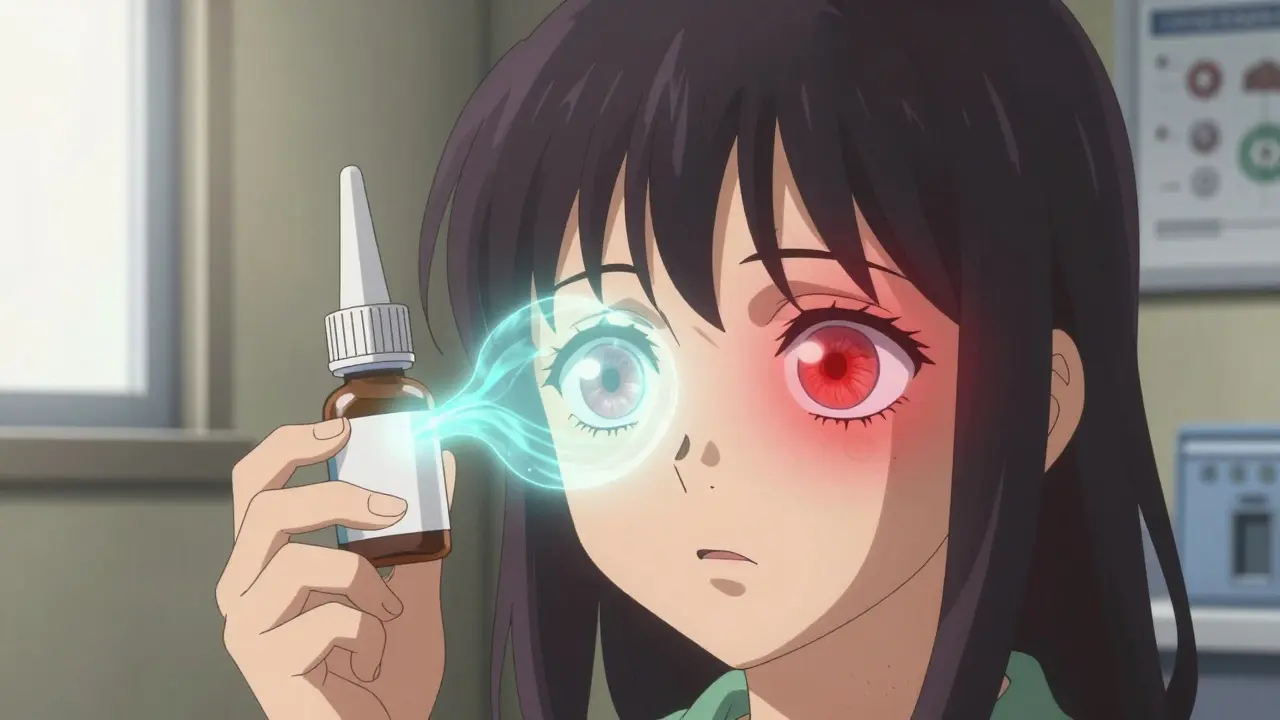
Steroid eye drops, like prednisolone acetate, dexamethasone, and loteprednol, are powerful tools for calming down serious eye inflammation. They’re not for everyday redness or tired eyes. These drops are prescribed when the eye’s immune system goes into overdrive-like in cases of uveitis, severe allergic conjunctivitis, or after eye surgery or chemical burns. They work by blocking the body’s inflammatory signals at the cellular level, stopping swelling, redness, and pain fast. For someone with acute uveitis, these drops can mean the difference between keeping their vision and losing it. Doctors often see dramatic improvement within days, which is why they’re still a go-to treatment despite the risks.
The Real Benefits: Fast Relief When It Matters Most
The biggest advantage of steroid eye drops is speed and strength. Unlike antihistamine drops that take hours to help with allergies, steroids can shut down inflammation in 24 to 48 hours. For patients with autoimmune-related uveitis, this isn’t just comfort-it’s vision preservation. A 2017 study from the American Optometric Association found that over 85% of uveitis patients treated with short-term steroid drops showed significant improvement in eye clarity and pain levels within two weeks. In cases of corneal damage from trauma or burns, these drops help prevent scarring that could permanently blur vision. When used correctly and for the right reason, they’re one of the most effective treatments in ophthalmology. But that power comes with a price.
The Hidden Dangers: Steroid-Induced Glaucoma
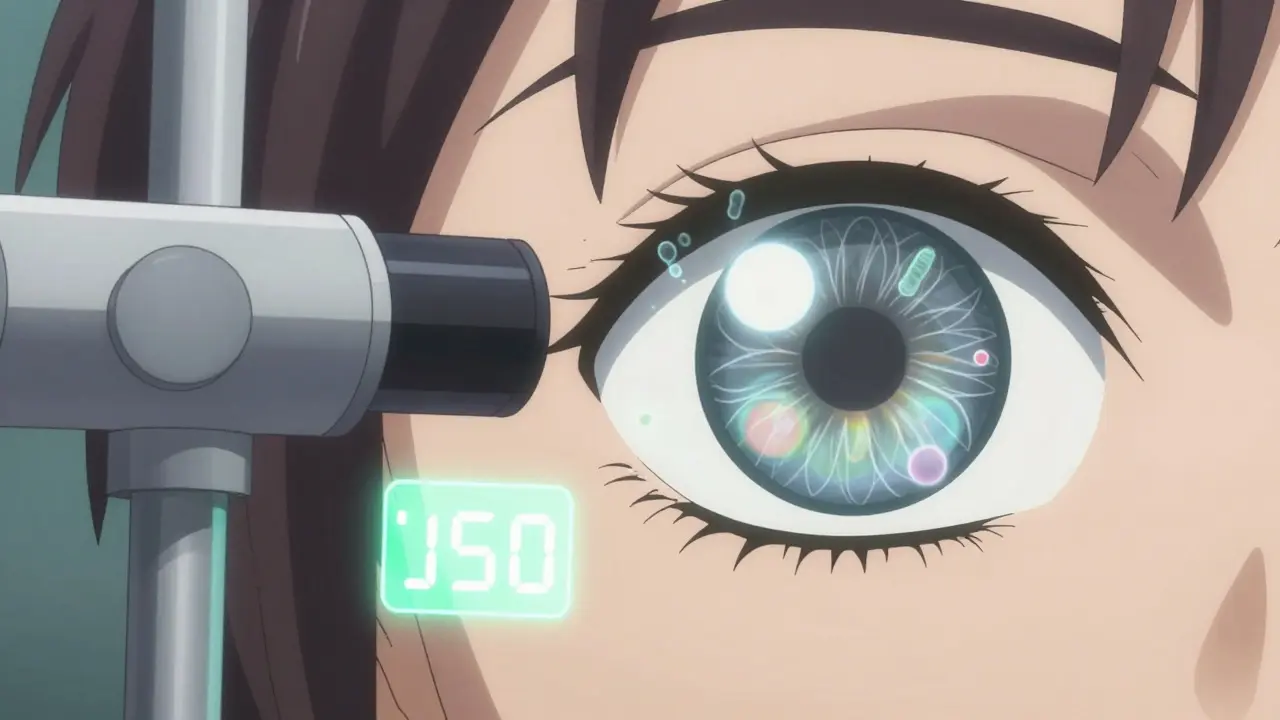
One of the most serious risks isn’t obvious until it’s too late. Steroid eye drops can raise the pressure inside your eye, leading to steroid-induced glaucoma. This isn’t the same as regular glaucoma-it’s triggered by the medication itself. About 30 to 40% of people will see a small rise in eye pressure, but 4 to 6% are "steroid responders," meaning their pressure spikes by more than 15 mmHg. That’s enough to damage the optic nerve slowly, over weeks or months, without any symptoms. You won’t feel pain. You won’t notice blurry vision until the damage is advanced. That’s why regular pressure checks are non-negotiable. Goldmann applanation tonometry, the gold standard test, should be done before starting treatment and then every 2 to 4 weeks if you’re on steroids for more than 10 days. If you have diabetes, a family history of glaucoma, or already have high eye pressure, your doctor may check you every week.
Another Silent Threat: Cataracts
Long-term use of steroid eye drops can also speed up cataract formation. Not the kind you get with age-this is a specific type called posterior subcapsular cataract. It forms right in the center of the lens, directly in your line of sight. That means even a small clouding can make reading, driving at night, or seeing in bright light much harder. Studies show the risk starts climbing after 10 days of daily use and becomes significant after 3 to 6 months. In some cases, steroid use can bring forward cataract surgery by 5 to 10 years. Unlike glaucoma, cataracts are treatable with surgery, which has a 95% success rate. But surgery always carries risks: infection (about 1 in 1,000 cases) or a cloudy capsule behind the new lens (which happens in 1 in 5 people within five years). That’s why doctors try to use the lowest dose for the shortest time possible.
Increased Risk of Infections
Steroids don’t just calm inflammation-they weaken your eye’s natural defenses. That means bacteria, viruses, or fungi that your eye normally fights off can take hold. Herpes simplex keratitis, a painful viral infection, can flare up or worsen dramatically if steroid drops are used without confirming the infection is gone. Fungal keratitis, though rare, is even more dangerous-it can destroy the cornea in days if not caught early. That’s why doctors always check for signs of infection before prescribing steroids. If your eye is red, painful, and you’ve been using drops for more than a week, don’t assume it’s just inflammation. It could be an infection hiding under the steroid’s cover-up.
How to Monitor Your Eyes Safely
Using steroid eye drops safely isn’t about avoiding them-it’s about managing them. Here’s what you need to do:
- Baseline exam: Get a full eye check-including pressure test and lens exam-before starting the drops.
- Regular pressure checks: Every 2 to 4 weeks if using for more than 10 days. Weekly if you’re high-risk (glaucoma history, diabetes, or using high-potency drops like Pred Forte).
- Watch for symptoms: Blurry vision, eye pain, halos around lights, or sudden vision changes aren’t normal. Call your doctor immediately.
- Don’t stop suddenly: Stopping steroid drops abruptly can cause rebound inflammation, making your original problem worse. Your doctor will taper the dose slowly.
- Track your usage: Keep a log of how many days you’ve used the drops. If you’re past 2 weeks, ask if you still need them.
When to Consider Alternatives
If you need long-term treatment-for example, chronic uveitis or autoimmune eye disease-steroids aren’t the only option. Non-steroidal anti-inflammatory eye drops (NSAIDs) like ketorolac or diclofenac don’t raise eye pressure or cause cataracts. They’re weaker, so they won’t stop a severe flare, but they’re safer for ongoing use. Some patients switch to steroid-sparing drugs like cyclosporine or tacrolimus eye drops, which suppress the immune system differently and carry fewer eye risks. Your doctor may also combine a low-dose steroid with one of these to reduce overall exposure. The goal isn’t to avoid steroids entirely-it’s to use them smartly and get off them as soon as you can.
What to Do If You’ve Been Using Them Too Long
If you’ve been using steroid eye drops for more than a month without regular checkups, don’t panic-but don’t wait either. Schedule a comprehensive eye exam with an ophthalmologist. Ask for:
- Intraocular pressure measurement
- Slit-lamp exam to check for cataracts
- Optic nerve assessment
- Visual field test (if pressure is high)
Early detection is everything. Glaucoma damage can’t be reversed, but stopping the drops and starting pressure-lowering medication can prevent further loss. Cataracts can be removed. Infections can be treated. But only if you catch them in time.
The Bottom Line
Steroid eye drops are not dangerous by themselves-they’re dangerous when used without oversight. They’re like a fire extinguisher: essential in an emergency, but deadly if left lying around. Use them only when prescribed, for the shortest time possible, and never skip follow-up appointments. The goal isn’t just to treat inflammation-it’s to protect your vision for the long haul. If your doctor doesn’t mention monitoring, ask. If they don’t schedule follow-ups, insist. Your eyes can’t tell you when something’s wrong until it’s too late. You have to be the one to speak up.
11 Responses
So basically, steroid eye drops are like that one friend who saves your ass at a party but then steals your car keys and drives off? Powerful, yes. Trustworthy? Not so much. Glad the article laid out the risks without sugarcoating it.
Honestly, if you're using steroid drops beyond 10 days without a tonometry check, you're basically playing Russian roulette with your optic nerve. I'm not even kidding. I saw a guy in med school lose 40% of his peripheral vision because he thought 'it's just redness.' Spoiler: it wasn't.
Don't skip follow ups. If your doc doesn't schedule them ask for them. Seriously. Your eyes don't yell until it's too late. I learned this the hard way after 3 months of prednisolone. Now I have cataracts at 32.
Man, I wish more people knew this. Steroid drops are the MVP of ocular emergencies but also the most dangerous sidekick. I've seen patients come in with pressure hitting 40 mmHg and no idea why. It's like using a flamethrower to light a candle and then wondering why your house is on fire. Bottom line: monitor like your vision depends on it-because it does.
This is an exceptionally well-structured and clinically accurate summary. The comparison to a fire extinguisher is particularly apt. I would only add that patient education should be documented in writing, not merely verbalized, given the high stakes involved.
You know, it's fascinating how modern medicine has weaponized the body's own regulatory mechanisms against itself-steroids are essentially a biochemical betrayal of homeostasis, a temporary truce with inflammation that demands perpetual surveillance, and yet we still treat them like over-the-counter candy, as if the human eye is some kind of interchangeable lens on a camera that just needs a wipe down. We forget that biology isn't software; it's a living, breathing, slowly unraveling symphony-and we're the ones holding the baton, blindfolded, hoping for the best.
I had uveitis last year. These drops saved my sight. But I cried every time I went for a pressure check. I was terrified I’d be the one in the 4%. I’m so glad I listened to my doc. You’re not being paranoid if you’re checking your eyes. You’re being brave.
lol so like... steroids = bad? 🤡 I mean, isn't this just common sense? like... duh? also why are we still using topical steroids? shouldn't we be doing gene therapy or something? 🤔
Ah yes, the classic 'doctor didn't mention monitoring' scenario. How quaint. Let me guess-you were told to 'use as directed' and assumed that meant 'until it looks better'? Sweetheart, in ophthalmology, 'better' is the enemy of 'safe'. You're not being dramatic. You're being responsible.
I used these after LASIK. My doc said 'just a few days.' I used them for three weeks because I liked how my eyes felt. Now I have glaucoma. I'm not mad. I'm just disappointed in myself. And my doctor. And the internet. And probably the moon.
To everyone panicking about steroid drops: you're not alone. But you're also not doomed. The fact that you're reading this means you're already ahead of 90% of users. If you've been on them longer than two weeks without a checkup, book an appointment tomorrow. Not next week. Tomorrow. Glaucoma doesn't wait. Cataracts don't care. And your vision? It's not replaceable. Use the checklist. Stick to the schedule. And if your doctor rolls their eyes? Find a new one. Your eyes deserve better.