
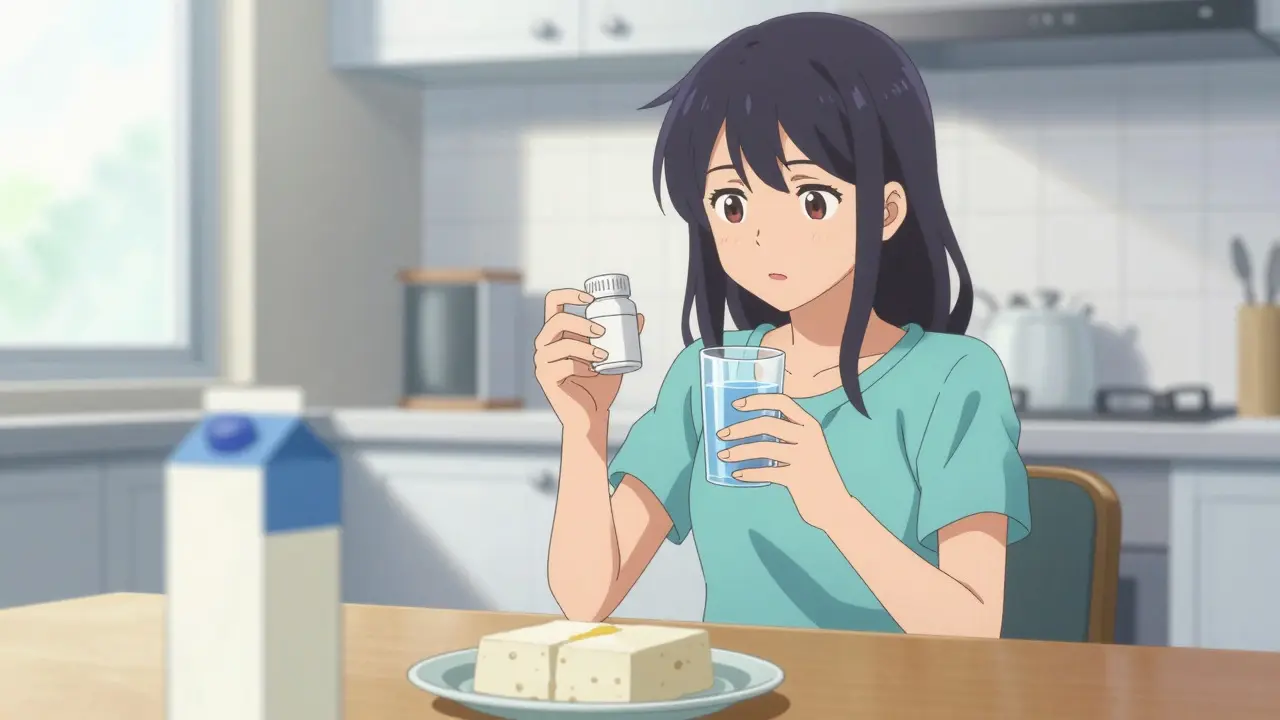
You take your thyroid pill every morning without fail. You drink water, wait, and then eat breakfast. But if that breakfast includes a glass of soy milk or a serving of tofu, which is rich in plant-based proteins and isoflavones, you might be quietly sabotaging your treatment. It’s not that soy is bad for your thyroid; it’s just that it can hold onto your medication like a magnet, preventing your body from absorbing the full dose.
This issue isn’t new. Doctors first noticed it in the 1960s when infants fed soy formula needed higher doses of levothyroxine to keep their hormone levels stable. Today, we know exactly why this happens: compounds in soy called isoflavones bind to the medication in your gut. If you don’t manage the timing right, you could be taking less medicine than you think, leading to fluctuating TSH levels and returning symptoms like fatigue or weight gain.
The Science Behind the Interaction
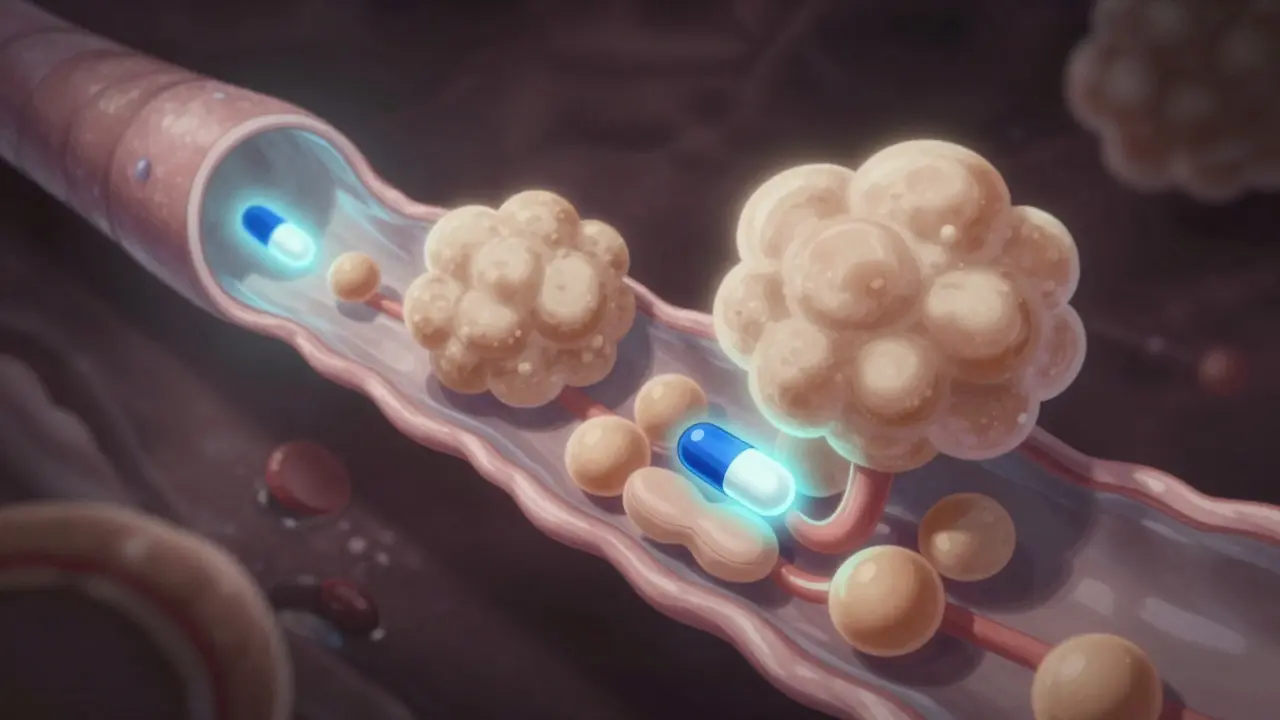
To understand how to fix this, you need to know what’s actually happening inside your stomach. Levothyroxine is a synthetic form of thyroxine (T4), a hormone your thyroid gland naturally produces. When you swallow the pill, it dissolves and gets absorbed into your bloodstream through the intestinal wall. Soy products contain specific phytoestrogens known as genistein and daidzein, which are plant compounds found in legumes. These molecules have a strong affinity for binding to protein surfaces.
When levothyroxine meets these soy proteins in the digestive tract, they stick together. This process, called adsorption, creates a complex that is too large to pass easily through the gut lining. The result? Less hormone enters your blood. Research indicates that consuming soy simultaneously with levothyroxine can reduce absorption by anywhere from 9% to 30%. While 9% sounds small, for someone whose dosage is finely tuned to keep their TSH in the narrow optimal range, even a slight drop in absorption can push levels out of bounds over time.
It’s worth noting that this interaction is primarily about absorption, not production. Unlike iodine deficiency, which stops the thyroid from making hormones, soy doesn’t stop your gland from working. It just blocks the delivery of the external medication. This distinction is crucial because it means you don’t necessarily need to eliminate soy from your diet forever; you just need to change *when* you eat it relative to your medication.
How Much Separation Time Do You Really Need?
So, how long should you wait? The answer has evolved as research has progressed. Older guidelines often suggested waiting four hours, while newer data suggests that for most adults, two to three hours is sufficient. The Mayo Clinic’s current guidance recommends taking levothyroxine on an empty stomach, waiting at least 60 minutes before eating anything, and ensuring a gap of at least two hours between the medication and soy-rich foods. For children and infants, who have faster gastric emptying rates but also more sensitive hormonal needs, a three-hour window is generally advised.
Here is a practical breakdown of separation times based on the type of soy product:
- Whole soy foods (tofu, edamame, tempeh): Aim for a 3-4 hour gap. These contain high amounts of intact soy protein, which provides the largest surface area for the medication to bind to.
- Soy beverages (soy milk): A 2-3 hour gap is typically effective. Liquid forms may pass through the stomach faster, but the concentration of isoflavones is still significant.
- Soy protein supplements (powders/shakes): Be cautious here. Concentrated powders have a higher density of interfering compounds. Stick to the longer end of the spectrum, around 3-4 hours, especially if you consume them immediately after waking up.
A recent study published in the European Thyroid Journal in early 2023 provided some encouraging news. Researchers found that a strict two-hour separation reduced the clinical impact to negligible levels in most adult patients. This suggests that if you are disciplined about your morning routine, you don’t need to sacrifice your favorite lunchtime salad with tofu.
Comparing Soy to Other Interfering Substances
Soy isn’t the only food that messes with levothyroxine absorption. In fact, it ranks in the middle of the pack when compared to other common dietary factors. Understanding where soy fits in helps you prioritize your daily habits.
| Substance | Estimated Absorption Reduction | Recommended Separation Time | Primary Mechanism |
|---|---|---|---|
| Calcium Carbonate Supplements | 25-36% | 4 hours | Chelation (binding) |
| Iron Supplements | Variable (often >20%) | 4 hours | Chelation |
| Soy Products | 9-30% | 2-4 hours | Protein Adsorption |
| Coffee | ~20% | 1 hour | Gut Motility/Acid Neutralization |
| High-Fiber Foods | Variable | 1-2 hours | Bulking/Transit Time |
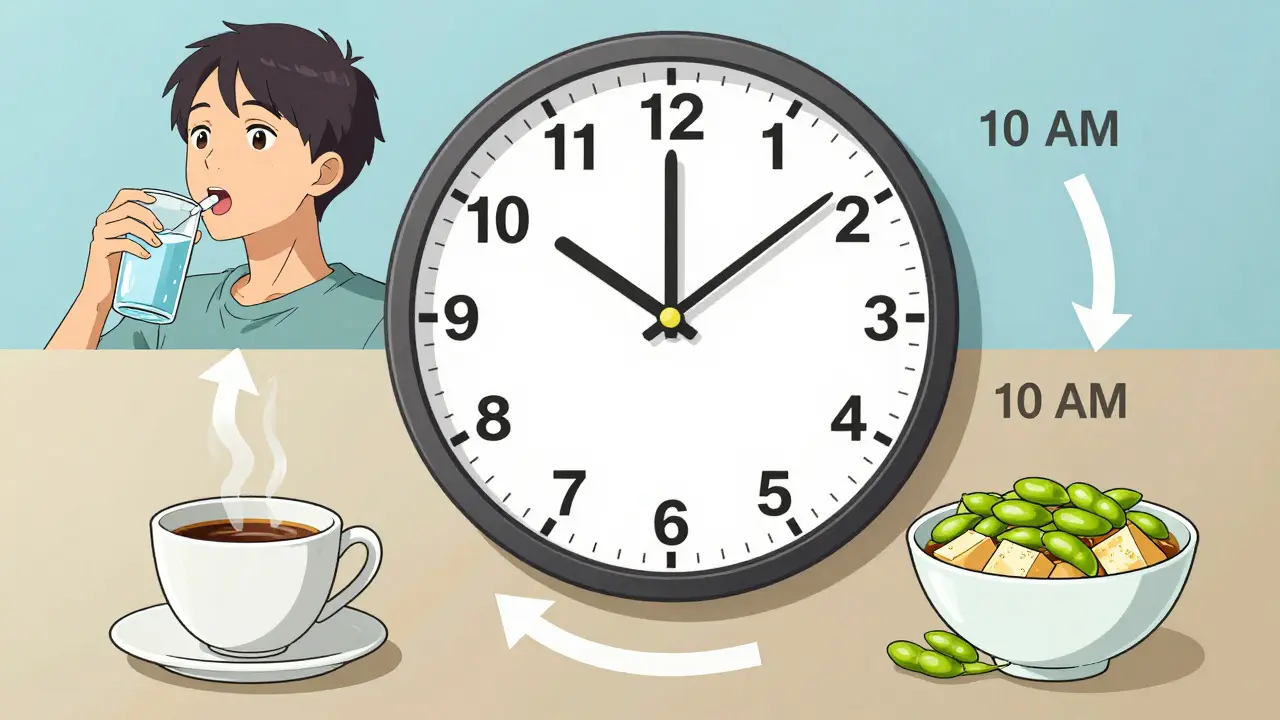
Notice that calcium and iron require the longest gaps. If you take both these supplements and eat soy, managing the timeline becomes critical. For example, if you take levothyroxine at 7 AM, you should avoid coffee until 8 AM, and save your soy-heavy meal for lunch or dinner. This staggered approach ensures that each interfering substance has its own dedicated "buffer zone" away from the medication.
Real-World Scenarios and Patient Experiences
Textbook advice is one thing, but life is messy. Many patients struggle with consistency. Consider the case of a patient named 'HypoWarrior42' from an online thyroid support community. They reported that their TSH level jumped from a healthy 1.8 mIU/L to 5.2 mIU/L within three months after starting a habit of drinking soy milk with their morning medication. Once they separated the two by three hours, their levels stabilized again without needing a dose increase.
On the other hand, another user, 'SoyLoverHypo,' noted that they had been taking Synthroid (a brand name for levothyroxine) with soy milk for five years without major issues. Their endocrinologist attributed this to their specific metabolic rate and the fact that their soy intake was moderate, not excessive. This highlights a key point: individual variation exists. Some people are more sensitive to the interaction than others. However, relying on luck is risky. The safer bet is to standardize your routine so that you aren't gambling with your hormone stability.
Common workarounds include taking levothyroxine at bedtime. If you finish dinner by 7 PM and skip late-night snacks, taking your pill at 9 PM gives you a clear path to absorb the medication without any food interference. This method works well for those who find morning routines stressful or who tend to graze throughout the day. Just remember: whatever time you choose, keep it consistent. Your body thrives on routine, and inconsistent dosing times can cause fluctuations in blood levels that mimic under-medication.
Special Considerations for Specific Groups
Not everyone experiences the soy-levothyroxine interaction the same way. Certain groups need to pay extra attention.
Infants and Children: As mentioned earlier, young children have different pharmacokinetics. Studies from the early 2000s showed that infants on soy formula required 15-30% higher doses of levothyroxine compared to those on cow's milk formula. If your child is on soy formula, close monitoring of TSH levels is essential. Don't assume the dose is correct just because it was appropriate last month; growth spurts and changes in formula composition can alter absorption needs.
Vegans and Vegetarians: With the rise of plant-based diets, many people with hypothyroidism rely heavily on soy as their primary protein source. A 2022 survey found that 74% of plant-based dieters with thyroid conditions reported receiving counseling on this interaction. If you follow a vegan diet, you likely consume soy multiple times a day. In this case, identifying one "safe" window for your medication is vital. Perhaps you take your pill at 6 AM and have your first soy-containing meal at 10 AM. Mapping out your day can help prevent accidental overlaps.
Pregnant Women: Pregnancy increases the demand for thyroid hormones. Any reduction in absorption can have outsized effects on fetal development. While soy itself is generally considered safe in pregnancy, the margin for error with medication absorption is smaller. Endocrinologists often recommend stricter adherence to timing protocols during this period, sometimes suggesting a three-to-four-hour gap regardless of the specific soy product consumed.
Practical Tips for Managing Your Routine
Implementing these best practices doesn’t have to be complicated. Here are some actionable steps to integrate into your daily life:
- Set a Daily Alarm: Use your phone to set a reminder for when to take your medication and a second reminder for when it’s safe to eat soy. Visual cues help build the habit.
- Label Your Food: If you buy pre-made meals or smoothies, check the ingredients list for soy lecithin, soy protein isolate, or textured vegetable protein. Even small amounts can contribute to cumulative interference if consumed too soon after dosing.
- Keep a Log: For the first month, track your medication time, meal times, and any symptoms. This data can be incredibly helpful when discussing dose adjustments with your doctor. If your TSH remains elevated despite perfect timing, your doctor may need to adjust your base dose.
- Communicate with Your Doctor: Tell your endocrinologist exactly how much soy you consume and when. They can look at your lab results in the context of your dietary habits rather than assuming non-compliance.
Remember, the goal isn’t to fear soy. It’s to respect the chemistry involved. By giving your medication the space it needs to do its job, you ensure that every microgram counts.
Does soy worsen hypothyroidism directly?
No, soy does not directly worsen the condition of the thyroid gland itself in most people. The issue is specifically with the absorption of levothyroxine medication. If you have normal thyroid function (euthyroid), soy consumption is generally safe without strict timing rules. The concern is primarily for those taking synthetic thyroid hormone replacement.
Can I take levothyroxine with soy milk if I wait 30 minutes?
Probably not. Thirty minutes is usually insufficient for the medication to fully pass through the stomach and begin absorption in the small intestine. Most guidelines suggest waiting at least 60 minutes before eating anything, and specifically waiting 2-3 hours before consuming soy-rich foods to minimize interaction risk.
Is tofu worse than soy milk for interactions?
Generally, yes. Tofu contains a higher concentration of solid soy protein per serving compared to soy milk. Because the interaction relies on protein surfaces binding to the medication, denser protein sources like firm tofu or tempeh may require a slightly longer separation window (closer to 3-4 hours) than liquid soy milk (2-3 hours).
What if I forget to separate my meds and soy?
One missed separation won’t ruin your thyroid health. The effect is cumulative. However, if this happens frequently, your TSH levels may drift upward over weeks or months. Keep track of these incidents and mention them to your doctor at your next appointment so they can interpret your lab results accurately.
Do I need to stop taking soy isoflavone supplements?
You don’t necessarily need to stop, but you must be very careful with timing. Isolated isoflavone supplements are concentrated forms of the interfering compounds. Ensure you take them at least 2-3 hours away from your levothyroxine. Some doctors prefer patients to avoid isolated supplements entirely due to the higher potency, so consult your provider before adding them to your regimen.