
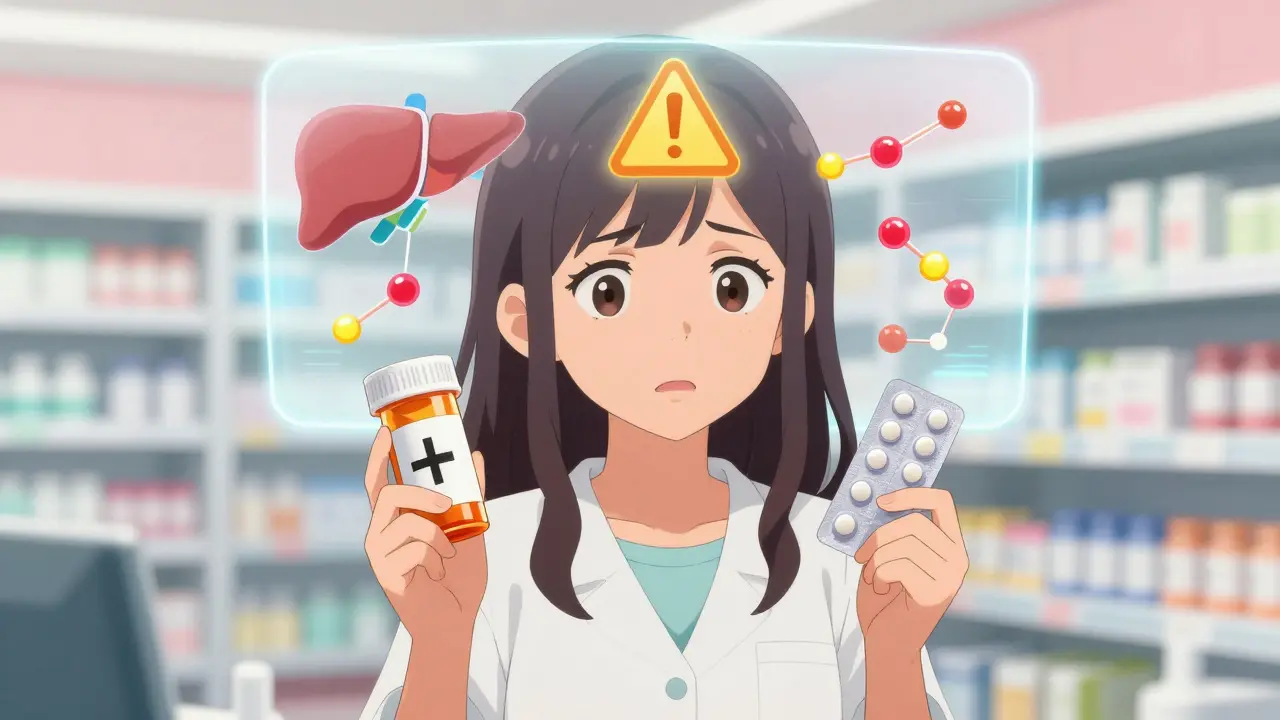
Rifampin & Birth Control Interaction Checker
Recommended Action:
You might have heard the old warning that any antibiotic can make your birth control pill stop working. It’s a common fear, but it isn’t quite true. The reality is much more specific, and for some people, far more dangerous. Rifampin is a powerful antibiotic used primarily to treat tuberculosis (TB) and certain staphylococcal infections. Unlike most other antibiotics, rifampin has conclusive scientific evidence showing it significantly reduces the effectiveness of hormonal contraceptives. If you are taking this medication, understanding this interaction is not just about convenience-it is about preventing unintended pregnancy.
This article breaks down exactly why this happens, which other drugs share this risk, and what you should do if you are prescribed rifampin while relying on hormonal birth control.
The Myth of All Antibiotics vs. Birth Control
For decades, patients were told to use backup contraception whenever they took any antibiotic. This advice was largely based on anecdotal reports rather than hard science. In the UK, between 1970 and 1999, the Committee on Safety of Medicines received 117 reports of contraceptive failure linked to antibiotics like penicillin and tetracycline. However, prospective studies have consistently failed to show that these drugs actually increase ovulation rates or reduce hormone levels in a clinically significant way.
The American Academy of Family Physicians and the American College of Obstetricians and Gynecologists (ACOG) now agree on one crucial point: non-rifamycin antibiotics do not reduce oral contraceptive effectiveness. You generally do not need to worry about your pill failing if you are taking azithromycin, amoxicillin, or erythromycin. The exception is ketoconazole, an antifungal medication that can actually *increase* hormone levels by inhibiting liver enzymes, but that is a different mechanism entirely. The real danger lies with a specific class of drugs called rifamycins.
How Rifampin Breaks Down Hormonal Contraceptives
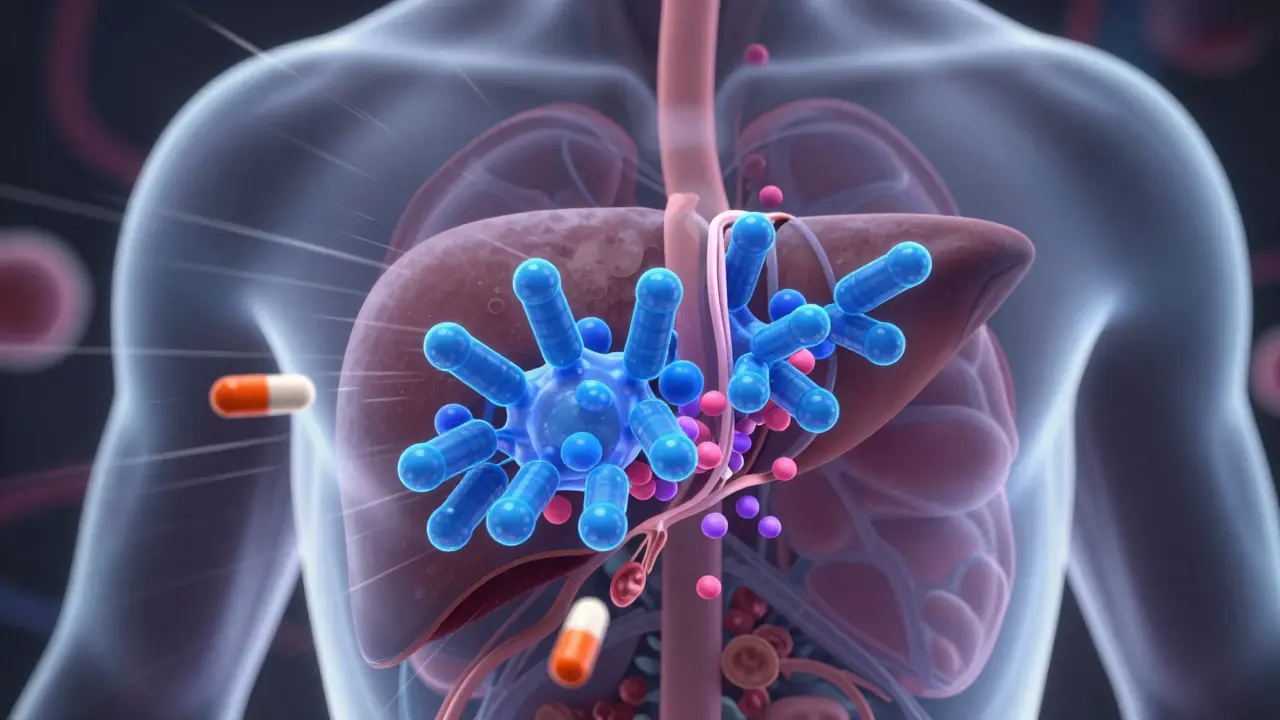
To understand why Rifampin is so disruptive, we need to look at how your body processes hormones. Your liver uses a group of enzymes known as cytochrome P450, specifically the CYP3A4 enzyme, to break down medications and natural hormones. Oral contraceptives rely on maintaining steady levels of estrogen and progestin in your blood to prevent ovulation.
Rifampin acts as a potent inducer of these liver enzymes. When you start taking standard 600mg daily doses of rifampin, it signals your liver to produce more CYP3A4 enzymes within 24 to 48 hours. By day seven of therapy, this induction reaches its peak. With more enzymes present, your liver metabolizes the estrogen and progestin in your birth control pills much faster than usual. Pharmacokinetic studies show that rifampin can reduce the bioavailability of ethinyl estradiol by up to 67% and progestin concentrations by up to 52%. These drops push hormone levels below the therapeutic threshold required to suppress ovulation, leading to breakthrough bleeding, spotting, or full contraceptive failure.
Rifabutin: A Lesser but Still Significant Risk
Rifampin is not the only drug in its class. Rifabutin, another rifamycin antibiotic often used for Mycobacterium avium complex (MAC) prophylaxis, also interacts with birth control, though less severely. At standard 300mg daily doses, rifabutin induces liver enzymes moderately, reducing contraceptive hormone levels by approximately 20-30%. While this is less drastic than rifampin, it is still enough to compromise efficacy in many women. Clinical data suggests that rifampin causes presumed ovulation in up to 50% of subjects in controlled studies, whereas rifabutin shows minimal impact on ovulation rates. Nevertheless, medical consensus treats both as high-risk interactions requiring caution.
| Antibiotic Class | Effect on Liver Enzymes | Impact on Contraceptive Efficacy | Backup Method Needed? |
|---|---|---|---|
| Rifampin | Potent Inducer (CYP3A4) | High Risk (Reduces hormone levels by up to 60%) | Yes, Mandatory |
| Rifabutin | Moderate Inducer | Moderate Risk (Reduces hormone levels by 20-30%) | Yes, Recommended |
| Penicillins / Tetracyclines | No Significant Effect | No Clinically Significant Interaction | No |
| Azithromycin / Erythromycin | No Significant Effect | No Clinically Significant Interaction | No |
What You Should Do: Practical Guidelines
If you are prescribed rifampin, the Centers for Disease Control and Prevention (CDC) categorizes combined hormonal contraceptives as Category 4-meaning unacceptable health risk-when used concurrently. Here is the step-by-step approach recommended by experts:
- Switch Methods Immediately: Do not wait for your next pack of pills. Start using a non-hormonal backup method immediately upon starting rifampin. The CDC recommends copper IUDs or condoms.
- Continue Backup During Therapy: Use the backup method for the entire duration of your rifampin treatment. Whether you are taking it for three months for TB or longer, the risk persists as long as the drug is in your system.
- Extend Protection After Stopping: This is the most commonly overlooked step. Even after you stop taking rifampin, the induced liver enzymes remain active for weeks. You must continue using backup contraception for 28 days after your last dose of rifampin. The enzyme induction effects linger long after the drug itself has cleared your bloodstream (which takes only 3-4 hours).
Consider permanent or long-acting reversible contraceptives (LARCs) if possible. Emerging evidence suggests that newer hormonal implants like Nexplanon may maintain efficacy during rifampin therapy due to higher progestin doses. A 2023 study showed no pregnancies in 47 women using etonogestrel implants during rifampin treatment. However, because sample sizes are small, the WHO currently recommends copper IUDs or implants as first-line options for women requiring rifampin-containing regimens.

Why Is Counseling So Often Missed?
Despite clear guidelines, patient education remains a weak link. A 2022 study found that 63% of women prescribed rifampin received inadequate contraceptive counseling. Many primary care physicians mistakenly advise backup contraception for all antibiotics, creating unnecessary anxiety, while others fail to emphasize the unique severity of the rifampin interaction. Only 42% of doctors consistently counsel patients correctly on this specific issue. This gap is particularly concerning in regions with high TB prevalence, such as sub-Saharan Africa, where limited access to alternative contraceptives exacerbates reproductive health challenges.
The stakes are high. Tuberculosis affects 10 million people annually worldwide. For women undergoing treatment, the disruption of family planning can have profound social and economic consequences. Regulatory agencies like the FDA and EMA now require specific interaction warnings in prescribing information for all hormonal contraceptives, and manufacturers must test new formulations against rifampin challenge-a process that adds significant time and cost to development.
Frequently Asked Questions
Does rifampin cause immediate contraceptive failure?
Not immediately. Rifampin induces liver enzymes within 24-48 hours, with maximal effect by day 7. However, because the reduction in hormone levels can be substantial (up to 60%), you should assume protection is compromised from the very first dose and use backup contraception immediately.
Do I need backup contraception when taking Amoxicillin?
No. Current medical consensus states that non-rifamycin antibiotics like amoxicillin, penicillin, and azithromycin do not reduce the effectiveness of oral contraceptives. You do not need a backup method for these drugs unless you experience vomiting or severe diarrhea, which can affect pill absorption independently.
How long after stopping Rifampin should I use backup birth control?
You should use backup contraception for 28 days after your last dose of rifampin. Although the drug leaves your body quickly, the increased production of liver enzymes persists for several weeks, continuing to break down contraceptive hormones rapidly.
Is Rifabutin safe to take with the birth control pill?
It carries a moderate risk. Rifabutin reduces contraceptive hormone levels by 20-30%. While less severe than rifampin, it is still significant enough that most clinicians recommend using a backup method or switching to a non-hormonal contraceptive like a copper IUD.
Can I use the contraceptive patch or ring with Rifampin?
No. The patch and vaginal ring deliver hormones through the skin or mucous membranes, but they still enter the bloodstream and are metabolized by the liver's CYP3A4 enzymes. Rifampin will accelerate their breakdown just as it does with oral pills, rendering them ineffective.
Are there any antibiotics that increase birth control effectiveness?
Ketoconazole, an antifungal medication, can inhibit CYP3A4 enzymes, potentially increasing hormone levels. However, this is not typically considered a clinical problem for contraception, as higher hormone levels do not usually cause adverse effects in healthy individuals. The primary concern remains drugs that lower hormone levels.