

Imagine finding someone unresponsive on the couch after a party, or realizing your toddler just swallowed a handful of colorful pills. Your heart races. The clock is ticking. Do you dial Poison Control, or do you scream for an ambulance? This split-second decision can mean the difference between a manageable scare and a life-altering tragedy. Most people freeze because they don't know the rules of engagement for these two critical lifelines.
You are not alone in this confusion. In the United States, America's Poison Centers handles approximately 2.1 million human exposure cases annually. Yet, only about 4.7% of all 911 calls involve potential poisoning or overdose situations. The system is designed so that you don't always need an ambulance-but knowing when to skip the call center and go straight to emergency services is vital. Let’s break down exactly how to make that call with confidence.
The Golden Rule: Stability Determines the Path
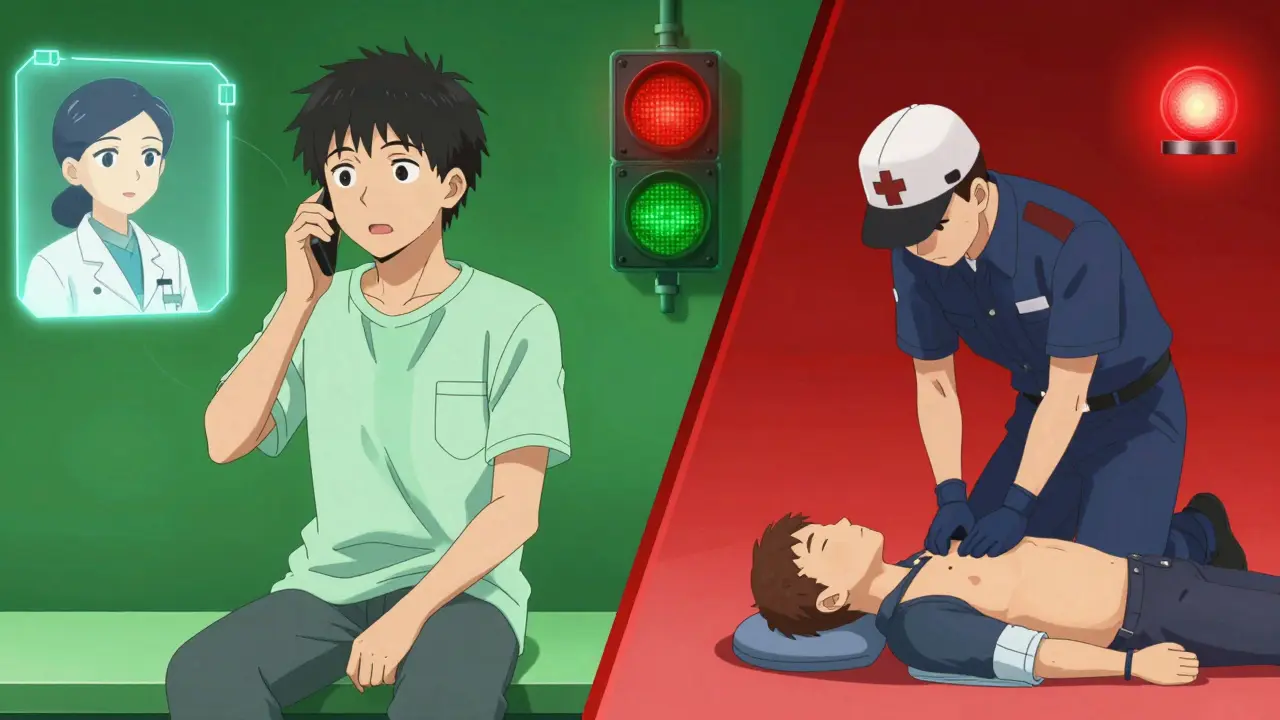
The most important factor in deciding who to call is the patient’s current physical state. Think of it as a traffic light system. If the person is stable-awake, breathing normally, and responsive-you likely have time for expert guidance from Poison Control. If they are unstable-struggling to breathe, unconscious, or seizing-you need immediate emergency intervention.
Poison Control specialists are medical experts available 24/7 via the national hotline 1-800-222-1222. They provide free, confidential advice tailored to specific substances. Their goal is often to prevent unnecessary trips to the emergency room, which saves healthcare systems billions and keeps ambulances available for true emergencies. However, they cannot perform CPR, administer oxygen, or give intravenous medication. That is where Emergency Medical Services (EMS) come in.
If you are unsure, err on the side of caution. But understanding the specific red flags will help you act faster when seconds count.
When to Call 911 Immediately
Do not waste time looking up information online if you observe any of these life-threatening symptoms. These signs indicate that the body’s vital functions are failing, and professional medical intervention is required within minutes.
- Respiratory distress: Is the person breathing slowly, irregularly, or not at all? Respiratory arrest is documented in nearly 30% of fatal poisoning cases. If their lips or fingertips are turning blue, call 911 now.
- Unresponsiveness: Can you wake them up? Shake them hard, pinch their shoulder, or apply pressure to the sternum. If they do not respond to painful stimuli (a Glasgow Coma Scale score of 8 or lower), they need immediate transport.
- Seizures: Are they having a tonic-clonic seizure that lasts longer than five minutes? This is a medical emergency known as status epilepticus.
- Cardiovascular instability: Signs include extreme dizziness, fainting, or a systolic blood pressure below 90 mmHg. If you don’t have a blood pressure monitor, look for pale, clammy skin and weak pulses.
- Vomiting repeatedly: If they cannot keep fluids down and are showing signs of dehydration or weakness, they may need IV support.
Special attention must be paid to high-risk groups. Infants under one year old and adults over 79 years old have different metabolic rates and organ functions. Data shows these populations experience 37% higher mortality from identical exposures compared to healthy adults. For these age groups, bypass Poison Control and call 911 immediately for any significant ingestion.
When to Call Poison Control First
Poison Control is incredibly effective for situations where the threat is present but not yet critical. Calling them first can save you a costly ER visit and reduce stress for everyone involved. You should call 1-800-222-1222 if:
- The patient is alert and stable: They are talking, walking, and breathing normally.
- The exposure was recent: It happened less than two hours ago, and no symptoms have appeared yet.
- It was an accidental double-dose: For example, a child accidentally taking two vitamins instead of one, or an adult forgetting they already took their painkiller.
- You need specific antidote advice: Specialists can tell you if activated charcoal is appropriate or if you should induce vomiting (which is rarely recommended nowadays).
In 2022, pharmaceuticals accounted for 44.6% of all exposures handled by Poison Control. Many of these were minor incidents resolved with home observation. For instance, acute acetaminophen ingestions below 150 mg/kg in healthy adults can often be managed at home after consultation, whereas higher doses require ER transport based on the Rumack-Matthew nomogram criteria.
The Opioid Overdose Exception
Opioid overdoses require a slightly different approach due to the rapid onset of respiratory depression. If you suspect an opioid overdose (signs include pinpoint pupils, slow breathing, and unresponsiveness), follow this protocol:
- Administer Naloxone: If you have Narcan or another naloxone nasal spray, use it immediately. This drug reverses the effects of opioids temporarily.
- Call 911: Even if the person wakes up, call 911. Naloxone wears off faster than many synthetic opioids like fentanyl. The person could slip back into respiratory arrest.
- Contact Poison Control for guidance: While waiting for EMS, you can call Poison Control for real-time instructions on positioning the patient and monitoring for relapse.
In New Mexico, for example, the Narcan/Naloxone Helpline provides real-time guidance that has reversed thousands of overdoses. Remember, naloxone is a bridge, not a cure. Professional medical evaluation is still necessary.
What Information to Have Ready
Whether you call 911 or Poison Control, being prepared speeds up the response. Chaos increases error. Before you dial, gather these details if possible:
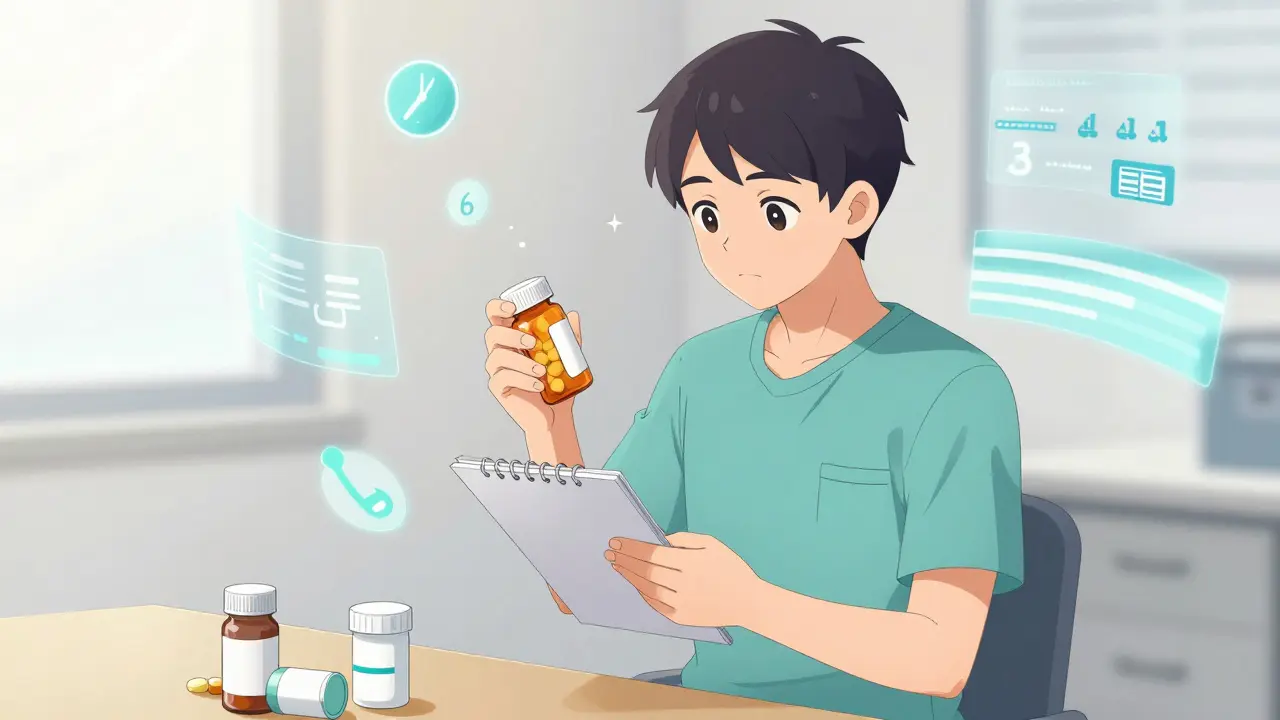
- Product name and concentration: Look at the bottle label. Exact names matter. "Pain reliever" is vague; "Ibuprofen 200mg tablets" is precise.
- Quantity ingested: Estimate how many pills or milliliters were taken. Errors in home estimates occur in 27% of cases, so try to be as accurate as possible.
- Time of exposure: When did it happen? Toxicity depends heavily on timing. An ingestion 30 minutes ago is treated differently than one from 6 hours ago.
- Patient’s weight: Dosing for antidotes and toxicity thresholds is often calculated per kilogram of body weight. If you don’t know the exact weight, estimate it.
- Current symptoms: Note when they started and how they have changed.
Keep the pill bottles or containers nearby. Formulation matters. Extended-release pills release toxins slowly over hours, while immediate-release pills hit the bloodstream quickly. This distinction changes the treatment plan entirely.
| Feature | Poison Control | Emergency Services (911) |
|---|---|---|
| Primary Role | Expert triage and advice | Immediate life-saving intervention |
| Best For | Stable patients, minor ingestions | Unconscious, seizing, breathing difficulties |
| Response Time | Seconds to minutes (phone) | Minutes (ambulance arrival) |
| Capabilities | Guidance, decontamination advice | CPR, oxygen, IV meds, transport |
| Cost | Free | Varies by insurance/location |
Special Populations and High-Risk Substances
Not all poisons behave the same way. Some substances cause delayed reactions that catch people off guard. Calcium channel blockers and beta-blockers, for example, can cause delayed cardiovascular collapse. A Medscape survey found that 68% of emergency physicians reported patients arriving at ERs after inappropriate Poison Control consultations for these high-risk drugs.
If the ingestion involves:
- Multiple substances: Mixing drugs creates unpredictable interactions. Intentional overdoses involving multiple substances require immediate 911 activation.
- Carbon monoxide: Even mild symptoms like headache or nausea require immediate 911 activation. Delayed neurological sequelae occur in 42.7% of cases with initial mild presentations.
- Children under 6: While many pediatric ingestions are minor, certain medications like clonidine or sulfonylureas are toxic in tiny amounts. Always consult Poison Control immediately for any child ingestion.
Geriatric patients over 75 also face higher risks due to polypharmacy. With 83% of adults over 75 taking five or more medications, the risk of dangerous interactions is significantly higher. Any significant exposure in this group warrants immediate ER evaluation.
Technology and Access
You don’t always have to pick up the phone. webPOISONCONTROL handles nearly 30% of consultations. This online tool uses a structured 12-step interface to guide you through triage. It is validated against physician assessments with 97.2% agreement. However, it cannot be used for intentional exposures, multiple substance ingestions, or symptomatic patients.
If you are using the web tool and the system flags your situation as high-risk, it will direct you to call 911 or Poison Control immediately. Never ignore these warnings. The mobile app provides offline first aid instructions but lacks real-time consultation, which can lead to errors in self-management for high-risk exposures.
Final Thoughts on Decision Making
Knowing when to call Poison Control versus Emergency Services is about assessing stability and risk. If the person is breathing and awake, Poison Control offers expert, free guidance that can prevent unnecessary panic and costs. If they are struggling to breathe, unconscious, or seizing, every second counts-call 911 immediately. Keep both numbers saved in your phone. Prepare the product labels. Stay calm. Your quick, informed action can save a life.
Is Poison Control free?
Yes, calling Poison Control at 1-800-222-1222 is completely free and confidential. There are no charges for the consultation or advice provided by the specialists.
Can I use webPOISONCONTROL for an opioid overdose?
No. webPOISONCONTROL cannot be used for intentional exposures, multiple substance ingestions, or patients with symptoms. If you suspect an opioid overdose, administer naloxone if available and call 911 immediately.
What if my child ate a non-medication item like a battery?
Button batteries are a medical emergency due to the risk of severe tissue damage. Call Poison Control immediately for guidance, but be prepared that they may direct you to the ER for X-rays and removal.
How long does it take for Poison Control to answer?
The median response time for Poison Control is 28 seconds. Specialists are available 24 hours a day, 365 days a year.
Should I make my child vomit?
Generally, no. Inducing vomiting can cause more harm, especially if the substance is corrosive or if there is a risk of aspiration. Always follow the specific instructions given by Poison Control or emergency responders.