
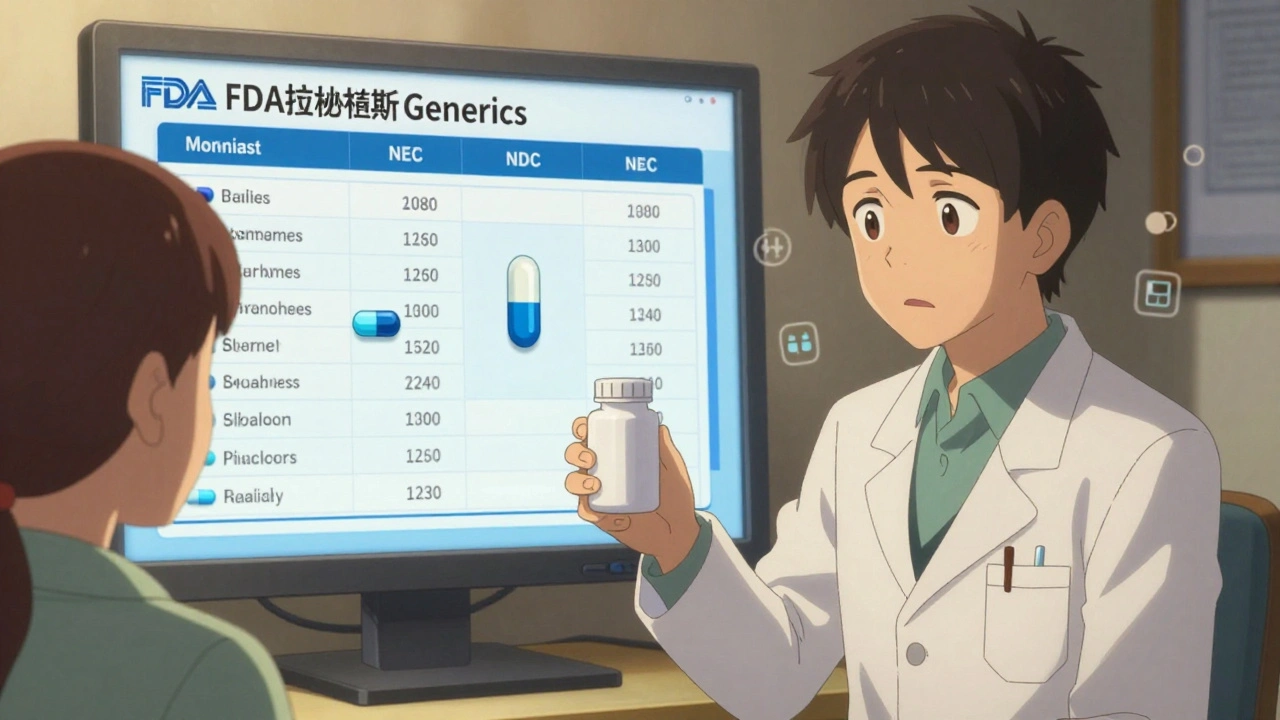
When a patient walks into the pharmacy with a prescription for a brand-name drug, the pharmacist’s first thought shouldn’t just be about cost-it should be about consistency. Many patients don’t realize that the pill they’ve been taking for years might look completely different tomorrow, even though it’s supposed to be the same medicine. That’s where authorized generics come in. They’re not just cheaper versions of brand-name drugs. They’re the exact same pills, made by the same company, in the same factory, with the same ingredients. And for some patients, that makes all the difference.
What Exactly Is an Authorized Generic?
An authorized generic is the brand-name drug, but without the brand name on the label. It’s made by the original manufacturer-say, Pfizer or Merck-or under their direct permission-and sold under a different name or packaging. The active ingredient? Identical. The inactive ingredients? Identical too. That includes fillers, dyes, coatings, and even the gelatin in capsules. This is different from regular generics, which must meet FDA bioequivalence standards but can use different inactive ingredients.
For example, if a patient takes Lipitor (atorvastatin), the authorized generic is still atorvastatin made by Pfizer, just without the Pfizer branding. It might be a different color or shape, but inside? Same molecule. Same chemistry. Same effect.
The FDA has required a public list of authorized generics since 1999. As of September 2023, there were 257 authorized generics on that list-about 5% of all brand-name drugs with generic alternatives. Most are oral tablets or capsules. And they’re not rare. In fact, 75% of them launched after the first regular generic hit the market, meaning they’re often introduced to compete with cheaper generics-not to replace them.
When Should a Pharmacist Recommend an Authorized Generic?
Not every patient needs an authorized generic. But for certain groups, it’s not just a smart choice-it’s a safety issue.
1. Patients With Allergies or Dietary Restrictions
Regular generics often use different inactive ingredients. A patient with celiac disease might be fine on the brand-name version because it uses cornstarch. But the generic? It might contain wheat starch. A Muslim patient avoiding pork-derived gelatin might be prescribed a brand-name capsule that uses bovine gelatin, but the generic uses porcine gelatin. These aren’t hypotheticals. They happen.
Authorized generics eliminate this risk. Because they’re identical to the brand, they preserve the same formulation. If the patient tolerated the brand, they’ll tolerate the authorized generic. No guesswork. No hidden allergens.
2. Narrow Therapeutic Index (NTI) Drugs
Some medications have a razor-thin margin between effective and toxic. Warfarin, levothyroxine, phenytoin, and lithium fall into this category. Even tiny differences in absorption can cause serious problems-blood clots, seizures, thyroid storms.
Studies show that 3-5% of patients on NTI drugs experience therapeutic issues after switching from brand to regular generic. That’s not a small number. It’s a real clinical risk. Authorized generics remove that uncertainty. They’re not just "similar enough." They’re the same. No bioequivalence testing needed-because they’re identical.
3. Modified-Release Formulations
Drugs designed to release slowly over time-like extended-release metformin or verapamil-are tricky. The FDA’s bioequivalence standards don’t always capture how well a generic mimics the brand’s release profile. Some patients report feeling the medication "kick in" faster or slower after switching. That’s not just perception. It’s measurable.
Authorized generics avoid this entirely. If the brand works well for a patient, the authorized version will too. No surprises. No adjustment period.
4. When Patients Report New Side Effects or Reduced Effectiveness
A 2021 survey of 1,200 community pharmacists found that 12% of patients reported unexpected side effects or reduced effectiveness after switching to a regular generic. Often, the patient says: "It just doesn’t feel the same."
That’s not all in their head. Inactive ingredients can affect how the drug is absorbed. An authorized generic is the perfect solution here. Switch them back to the exact same formulation-just cheaper-and symptoms often disappear.
How to Spot an Authorized Generic
It’s not always obvious. The pill looks different. The bottle says a different name. The price is lower. But how do you know it’s authorized?
Start with the FDA’s quarterly list of authorized generics. It’s free, updated every three months, and lists the brand name, the authorized generic name, the manufacturer, and the launch date. You can find it at fda.gov.
Check the National Drug Code (NDC). Authorized generics share the same active ingredient and strength as the brand, but the labeler code will match the brand manufacturer-or a company they’ve licensed, like Prasco or Greenstone. If the labeler code is a traditional generic company like Teva or Mylan, it’s not authorized.
And remember: packaging changes. The brand might be a white oval. The authorized generic might be a blue capsule. That’s normal. Patients need to be told this upfront.

Insurance and Cost: The Hidden Catch
Authorized generics usually cost 20-80% less than the brand. That’s huge. But here’s the problem: many pharmacy benefit managers (PBMs) don’t treat them as generics. In fact, 63% of PBMs classify authorized generics under the brand-name tier in their formularies.
That means a patient might pay $50 for an authorized generic when the regular generic costs $10. The medication is identical. The cost to the pharmacy is similar. But the patient pays more. And they’re confused.
Always check the patient’s plan before substituting. Call the pharmacy benefit manager if needed. Sometimes, you can appeal or switch to a different generic. But if the patient has a history of intolerance or NTI concerns, the authorized version may still be the best-even if it’s not the cheapest on paper.
What Patients Need to Know
Patients panic when their medication looks different. A 2022 study found that 27% stopped taking their drug after a change in appearance-unless the pharmacist explained why.
Here’s what to say:
- "This is the same medicine you’ve been taking. The company that made your brand-name pill made this one too. Only the label changed."
- "The ingredients are identical. No changes to what works in your body."
- "You’re saving money-sometimes up to 80%-without changing how the drug works."
- "If you’ve ever had a reaction to the brand, this version is safe for you because it’s the same."
Don’t assume they’ll read the leaflet. Say it. Show them the FDA list if needed. Write it down. Patients remember what you tell them-not what they read.

Legal and Documentation Requirements
In 42 U.S. states, pharmacists can substitute a brand for an authorized generic without prescriber approval-as long as the prescription doesn’t say "Do Not Substitute."
But 18 states require you to notify the prescriber for any generic substitution, including authorized generics. Check your state’s rules. Document everything. Use the "DA" modifier in billing systems to show substitution occurred.
And keep records. If a patient has an adverse reaction, you’ll need to prove you substituted with an authorized generic-and that it was therapeutically equivalent. The FDA considers them equivalent by default. But your pharmacy’s documentation is your proof.
What You Can’t Do
Don’t assume all generics are equal. Don’t substitute an authorized generic for a brand if the patient has had a documented reaction to the authorized version itself-though that’s rare. Don’t use it as a cost-cutting tool for patients who are doing fine on the brand with no issues. And don’t skip counseling just because the price is lower.
Also, not every brand has an authorized generic. Only about 5% do. So you can’t always offer it. But when you can? It’s often the best option.
The Future of Authorized Generics
The number of authorized generics has grown 18% per year since 2010. More are coming. Consumer searches for "authorized generics" rose 47% between 2021 and 2022. Patients are starting to ask for them.
Pharmacists are now being asked to lead the conversation-not just fill prescriptions. The American Pharmacists Association is updating its guidelines in 2024 to give clearer direction on when and how to recommend them.
As healthcare shifts toward value-based care, your role as a medication expert matters more than ever. Choosing the right generic isn’t about price alone. It’s about matching the right formulation to the right patient. Authorized generics aren’t just a cost-saving trick. They’re a precision tool. And in the right hands, they prevent harm, improve adherence, and restore trust.
12 Responses
I’ve had patients cry because their pill changed color and they thought the medicine stopped working. One woman with epilepsy switched generics and had a seizure-turned out the filler was different. Authorized generics saved her. I wish more pharmacists knew this.
so like… if the brand is lipitor and the generic is just ‘atorvastatin’ but same maker, its still legit? i always thought generics were like knockoffs lol
OMG YES 🙌 I had a patient with celiac switch to a generic and ended up in the ER because of gluten. The authorized generic fixed everything. I wish we had a sticker on the bottle like ‘SAME AS BRAND’ so patients don’t panic. Also, can we PLEASE get this info on the pharmacy app? 🥺
As a pharmacist in India, we rarely see authorized generics. Most patients use local generics and are fine. But I agree-when it comes to NTI drugs or allergies, consistency matters. This is a good reminder that ‘generic’ doesn’t always mean ‘identical.’
From a pharmacokinetic standpoint, the distinction between bioequivalent generics and authorized generics is clinically significant, particularly in populations with polymorphic CYP450 metabolism or compromised GI mucosal integrity. The elimination of variability in excipient composition reduces inter-individual pharmacodynamic variance-especially critical in polypharmacy regimens where adherence is already compromised. This isn’t just cost arbitrage; it’s therapeutic fidelity.
So you're telling me big pharma just makes the same pill and calls it 'generic' to make more money? Classic scam. They're just tricking people into paying more for the exact same thing. And the FDA? In on it.
THIS IS THE MOST IMPORTANT THING I’VE READ ALL YEAR. 🙏 I just had a 78-year-old man tell me he stopped taking his thyroid med because it looked ‘weird’-he was about to go into atrial fibrillation. We switched him to the authorized generic. He cried. He said he felt like himself again. We need to teach this in pharmacy school. Like, yesterday.
Authorized generics? LOL. Big Pharma and the FDA are just trying to keep us hooked. They don’t want us saving money. They want us dependent. Next thing you know, they’ll patent the pill bottle. 🤡
Stop scrolling. Read this. Share this. Your grandma, your kid with epilepsy, your uncle on warfarin-they need this info. Pharmacists are the unsung heroes of healthcare. Let’s stop pretending generics are all the same. Authorized = same pill. Different label. Same life. Let’s get this out there.
My mom’s on levothyroxine. She switched to a regular generic and started having panic attacks. We switched back to the authorized version-boom, back to normal. I didn’t even know this was a thing until I read this. Thank you. I’m printing this out and giving it to my local pharmacy.
While the clinical rationale for authorized generics is ostensibly sound, the systemic implications of their promotion-particularly within the context of PBM-driven formulary structures-reveal a deeper pathology in pharmaceutical commodification. One cannot help but observe that the very entities responsible for the monopolistic pricing of branded agents are now monetizing their own generics under a veneer of therapeutic benevolence. The regulatory architecture, in this light, appears less as a safeguard and more as a legitimizing apparatus for profit retention.
So… what you’re saying is we pay more for the same pill… because the label says ‘Pfizer’ instead of ‘Teva’? And you’re surprised people are confused? 🤦♂️