
Opioid & Antidepressant Interaction Risk Checker
Drug Interaction Checker
Check the risk of serotonin syndrome when combining your medications. This tool is based on clinical evidence from the article above.
Interaction Results
Risk Level:
Loading...Safer Alternatives
No safer alternatives available for this combination.
It’s not just about pain relief. When you take an opioid for back pain or after surgery, you might not realize you’re also mixing chemicals that can push your brain into a dangerous overdrive. Serotonin syndrome isn’t rare - it’s quietly happening in homes, clinics, and ERs every day. And the worst part? Many people don’t even know they’re at risk.
What Exactly Is Serotonin Syndrome?
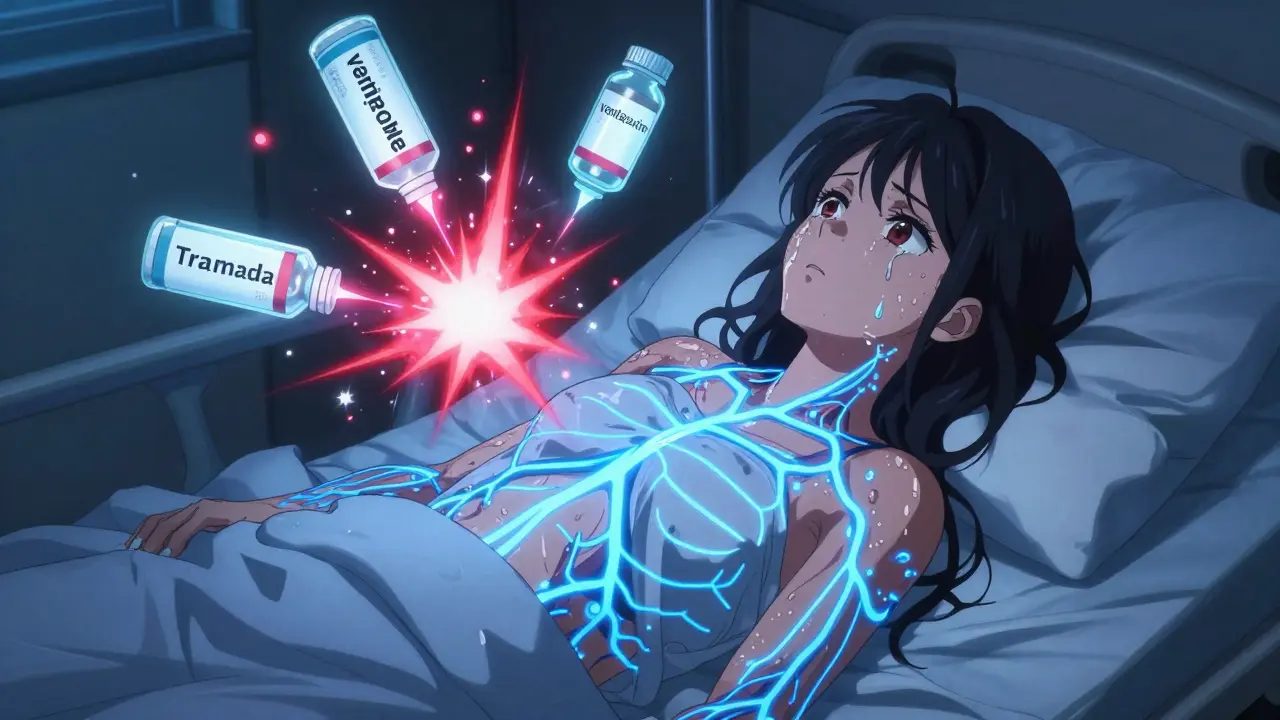
Serotonin syndrome happens when too much serotonin builds up in your nervous system. It’s not just a side effect - it’s a medical emergency. Think of serotonin as your brain’s natural mood and movement regulator. Too little, and you feel low. Too much, and your body goes into overdrive. Symptoms show up fast: confusion, shivering, high fever, muscle stiffness, rapid heartbeat, and even seizures. In severe cases, it can kill you within hours.
This isn’t just about antidepressants. For years, doctors focused on SSRIs and MAOIs as the main culprits. But now, opioids are showing up in nearly one-third of reported cases. The problem isn’t one drug - it’s the combo. Someone on fluoxetine for depression takes tramadol for a flare-up of arthritis. Within days, they’re in the ER. No one warned them.
Not All Opioids Are the Same
Here’s where things get tricky. You can’t say “all opioids cause serotonin syndrome.” Some do. Others barely touch it. The difference isn’t random - it’s built into their chemistry.
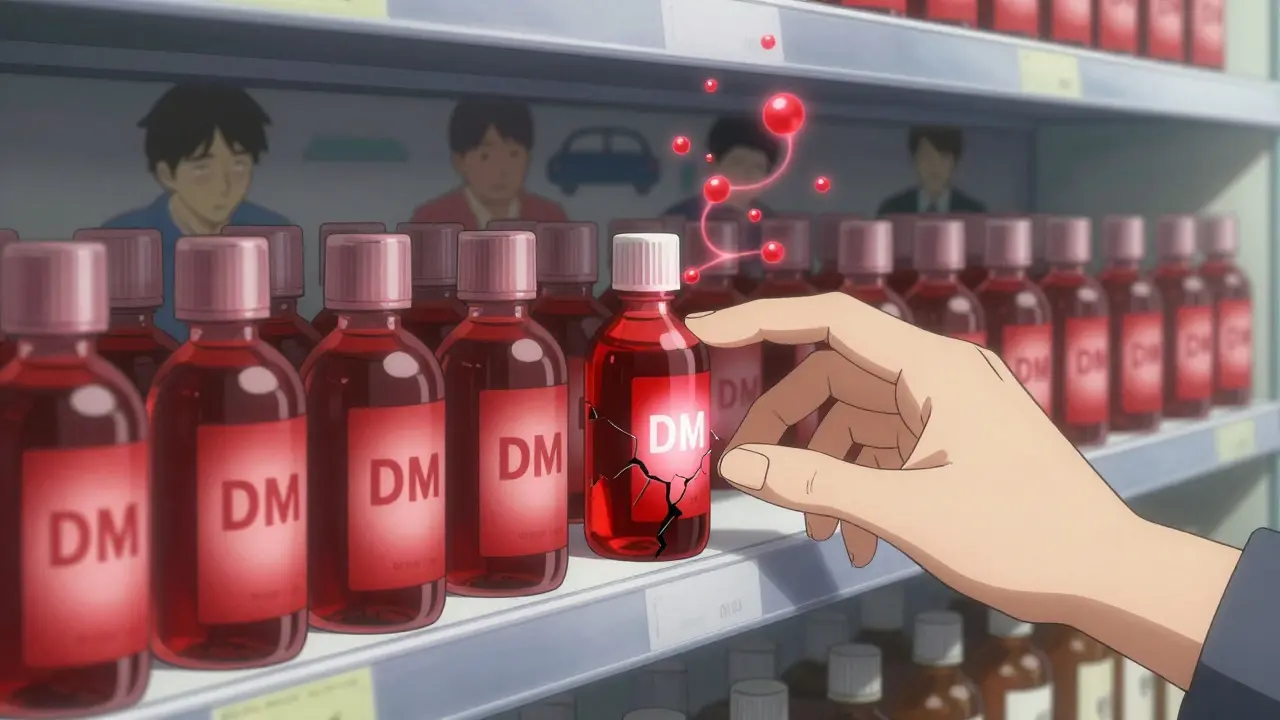
- High-risk opioids: Tramadol, meperidine (pethidine), and dextromethorphan (found in cough syrup) are the worst offenders. Tramadol blocks serotonin reuptake like an SSRI - it’s basically an antidepressant in disguise. Dextromethorphan? A common OTC cough medicine. One bottle, taken daily with an SSRI, has killed people.
- Medium-risk opioids: Fentanyl and methadone. These don’t block serotonin reuptake as strongly, but they still activate serotonin receptors. Fentanyl’s risk spikes during surgery, where doses are much higher. Methadone’s case is confusing - it inhibits serotonin uptake, yet its risk is lower in opioid substitution therapy. Why? Its slow metabolism and complex interactions muddy the waters.
- Low-risk opioids: Morphine, oxycodone, hydrocodone, and hydromorphone. These don’t touch serotonin reuptake in lab tests. They’re the safer choices if you’re already on an antidepressant.
Studies show tramadol increases serotonin syndrome risk by 6.7 times compared to morphine. That’s not a small difference - it’s a red flag.
Real Cases, Real Consequences
A 42-year-old woman started tramadol for chronic pain while already taking venlafaxine. Two days later, she had a fever of 40.1°C, couldn’t move her limbs, and was confused. She ended up in the ICU. That’s not an outlier - it’s a pattern.
A 2019 study of 127 cases found:
- Tramadol: 63 cases (49.6%)
- Meperidine: 28 cases (22.0%)
- Methadone: 19 cases (14.9%)
- Dextromethorphan: 14 cases (11%) - and 3 of those were fatal.
One woman took 30mg of dextromethorphan daily - the amount in a standard cough syrup bottle - with her SSRI. She didn’t overdose. She didn’t take extra. Just her normal dose. It was enough.
Even codeine, long thought to be safe, triggered serotonin syndrome in a patient taking venlafaxine and rizatriptan. Polypharmacy doesn’t need to be extreme to be deadly.
Why Do Some Drugs Make This Worse?
It’s not just the opioids. It’s what else you’re taking.
SSRIs like fluoxetine and paroxetine block the CYP2D6 enzyme. That enzyme breaks down tramadol into its active form. When it’s blocked, tramadol builds up - and so does serotonin. Same with codeine: it turns into morphine through CYP2D6. Block that, and you get less pain relief - and more risk of toxicity.
Methadone is metabolized by CYP3A4 and CYP2B6. Fluvoxamine, an SSRI, blocks those too. So methadone levels can jump 50% - and so can serotonin activity. That’s a double hit.
And then there’s genetics. New research from the University of Toronto found people with certain variations in the SLC6A4 gene (which controls serotonin transporters) are far more likely to develop serotonin syndrome when exposed to these drugs. One person’s “safe” combo might be another’s death sentence.
What Should You Do?
If you’re on an antidepressant and need pain relief, here’s what matters:
- Don’t assume all opioids are equal. Tramadol and dextromethorphan are not safe. Avoid them completely if you’re on an SSRI, SNRI, or MAOI.
- Ask for alternatives. Morphine, oxycodone, or hydromorphone are your best bets. They’re effective for pain without the serotonin risk.
- Check your OTC meds. Dextromethorphan is in more than 150 cough and cold products. Read labels. Look for “DM” on the bottle.
- Know the signs. Muscle rigidity, high fever, confusion, fast heartbeat - if these show up after starting a new drug, get help immediately.
- Don’t stop antidepressants cold. If you’re switching opioids, work with your doctor. Abruptly stopping SSRIs can cause withdrawal and make things worse.
The American Pain Society and American Society of Anesthesiologists both say: avoid tramadol and meperidine entirely if you’re on serotonergic drugs. Period. No exceptions.
The Bigger Picture
Since 2020, tramadol use in the U.S. has dropped 18% - and serotonin syndrome cases linked to opioids are starting to fall too. That’s progress. But dextromethorphan? It’s still everywhere. 28 million OTC bottles sold each year in the U.S. Most people have no idea it’s a serotonergic drug.
The FDA added a Black Box Warning to tramadol-SSRI combos in January 2023. The EMA did the same in 2022. That’s the highest level of drug safety alert. It means: this combination can kill you. And doctors are still prescribing it.
One study found opioid-antidepressant interactions account for 34% of all serotonin syndrome admissions to toxicology units. That’s more than half of all cases. And it’s rising.
We’re not talking about rare accidents. This is predictable. Preventable. And it’s happening because we assume pain meds are harmless. They’re not. Not when mixed with antidepressants.
What If You’re Already Taking Both?
If you’re on an SSRI and tramadol right now - don’t panic. But don’t ignore it either.
- Call your doctor. Ask: “Is this combo safe for me?”
- Get a list of your meds - including supplements and OTC drugs.
- Watch for symptoms. If you feel unusually stiff, hot, or confused, go to the ER. Don’t wait.
- Don’t stop either drug on your own. Withdrawal from antidepressants or opioids can be dangerous. Work with a professional.
There’s no magic pill to reverse this. But cyproheptadine - a serotonin blocker - can help in severe cases. And if caught early, stopping the drugs and supportive care (cooling, fluids, monitoring) is often enough.
Final Thought
Pain is real. So is depression. But the drugs we use to treat them can collide in ways no one warns you about. You’re not being careless if you didn’t know. The system didn’t tell you.
Now you do. And that changes everything.
Can tramadol cause serotonin syndrome even if I’m not on an antidepressant?
Yes, but it’s rare. Tramadol alone can trigger serotonin syndrome in high doses or in people with genetic vulnerabilities. Most cases involve a combination with another serotonergic drug, like an SSRI, SNRI, or even dextromethorphan. Still, it’s not safe to assume tramadol is harmless on its own.
Is dextromethorphan really dangerous in cough syrup?
Absolutely. Dextromethorphan is a potent serotonin reuptake inhibitor. Even at normal OTC doses (30mg daily), it’s been linked to fatal serotonin syndrome in people taking SSRIs. Many people don’t realize it’s in their cold medicine - labels don’t always make it obvious. Look for “DM” on the bottle.
What should I do if I think I have serotonin syndrome?
Go to the emergency room immediately. Symptoms like high fever, muscle rigidity, confusion, or rapid heartbeat are red flags. Don’t wait. Early treatment - stopping the drugs, cooling, and fluids - can save your life. In severe cases, doctors may give cyproheptadine to block serotonin receptors.
Are there any opioids that are completely safe with SSRIs?
Morphine, oxycodone, hydromorphone, and hydrocodone have minimal to no effect on serotonin pathways. These are the safest opioid choices if you’re on an SSRI or SNRI. They’re just as effective for pain and don’t carry the same risk. Always confirm with your doctor before switching.
Why do some doctors still prescribe tramadol with SSRIs?
Because many doctors aren’t aware of the risk - or they assume it’s low. Tramadol was once thought to be “safer” than other opioids. But data since 2018 shows it’s one of the top causes of serotonin syndrome. The FDA added a Black Box Warning in 2023. If your doctor doesn’t know this, ask for updated guidelines or get a second opinion.
8 Responses
Tramadol is a trap. I was on it for years after my back surgery, never knew it was serotonergic. My doc just said, 'It's not a real opioid.' Turns out, it's an SSRI in disguise. I ended up in the ER with a 103 fever and muscle spasms. No one warned me. Now I'm on oxycodone - no issues. If you're on antidepressants, avoid tramadol like it's poison. Period.
And stop saying 'it's rare.' It's not. It's just underreported because doctors don't connect the dots.
As a pharmacist, I see this every week. Patients come in with dextromethorphan in one hand and an SSRI script in the other. They don’t even realize NyQuil has it. We have to manually check every OTC med - and most patients don’t think to mention it.
The real problem? The FDA warning is buried in fine print. If you’re on fluoxetine and grab a bottle of Robitussin DM, you’re playing Russian roulette. No one’s putting warning stickers on the shelf. That’s negligence.
Bottom line: morphine, oxycodone, hydromorphone - safe. Tramadol, dextromethorphan, meperidine - avoid. Period. And if your doctor doesn’t know this, get a second opinion. Your life isn’t a gamble.
yo so like i read this whole thing and i gotta say… tramadol is literally just an ssri with a side of pain relief?? like why is this even a thing??
also dextromethorphan is in EVERY cough syrup bro. like i took 3 bottles last winter and i was on citalopram. i thought i was just tired. turns out i was one step away from a seizure. thanks for the heads up.
also my doc prescribed me tramadol and i didnt even know. he just said 'here's your pain med.' no mention of serotonin. that's wild. we need better labeling. like, put a skull on the bottle. seriously.
Let me be clear: this is not a coincidence. This is a pharmaceutical conspiracy. The FDA, the AMA, the CDC - they all knew. They knew tramadol and dextromethorphan were serotonergic agents. They knew the risks. And they allowed them to be sold OTC and prescribed without warnings.
Why? Because drug companies make billions. Tramadol is cheap. Dextromethorphan is in 150+ products. Billions. And the public? They’re kept in the dark. This isn’t negligence. It’s profit-driven malfeasance.
And don’t tell me about 'genetic vulnerabilities.' That’s a distraction. The real issue is systemic corruption. If you’re on an SSRI and take ANY opioid, you’re being experimented on. Wake up.
Next time you see a prescription, ask: 'Who profits from this?'
Wow. So basically, if you're not a medical professional, you're just supposed to memorize a whole chart of which opioids are safe? And read every single OTC label like a forensic chemist? How is that even fair? I have depression and chronic pain. I shouldn't have to become a pharmacologist just to not die.
Also, why is this even allowed? This feels like a scam. Someone's making money off people getting poisoned.
From India: we rarely see this issue because tramadol is strictly controlled here. But I've seen patients on SSRIs get prescribed codeine for pain - and they're fine. Why? Because the dose is low and monitored. The real danger is polypharmacy without oversight.
Also - genetic testing for SLC6A4? In the US? Most people can't afford that. This problem isn't just medical - it's economic. If your doctor doesn't know, and you can't afford a specialist - you're screwed.
Simple fix: ban tramadol and dextromethorphan from OTC. Make every pain med require a prescription. No exceptions.
This is why I always ask my pharmacist before taking anything new. I have anxiety and chronic pain - I can't risk this. I switched from tramadol to oxycodone last year and I feel like a new person. No weird zaps, no overheating, no confusion.
Also - if you're on antidepressants, don't take cold meds without checking. I learned the hard way. Read labels. Ask. Double-check. It's not extra work - it's survival.
You got this. Stay safe. You're not alone.
Let me break this down like I'm talking to a 5-year-old: Tramadol = disguised antidepressant. Dextromethorphan = poison in cough syrup. Doctors = oblivious. Pharma = laughing all the way to the bank.
This isn't a medical issue - it's a murder-by-oversight epidemic. People are dying because no one cares enough to label a bottle properly. And now? The FDA slapped a black box on it - after decades of deaths.
Who gets sued? Who goes to jail? No one. Because this isn't malpractice - it's policy. And policy protects corporations, not people.
Next time you're prescribed an opioid, ask: 'Who benefits if I die?'
And if they hesitate? Walk out.