
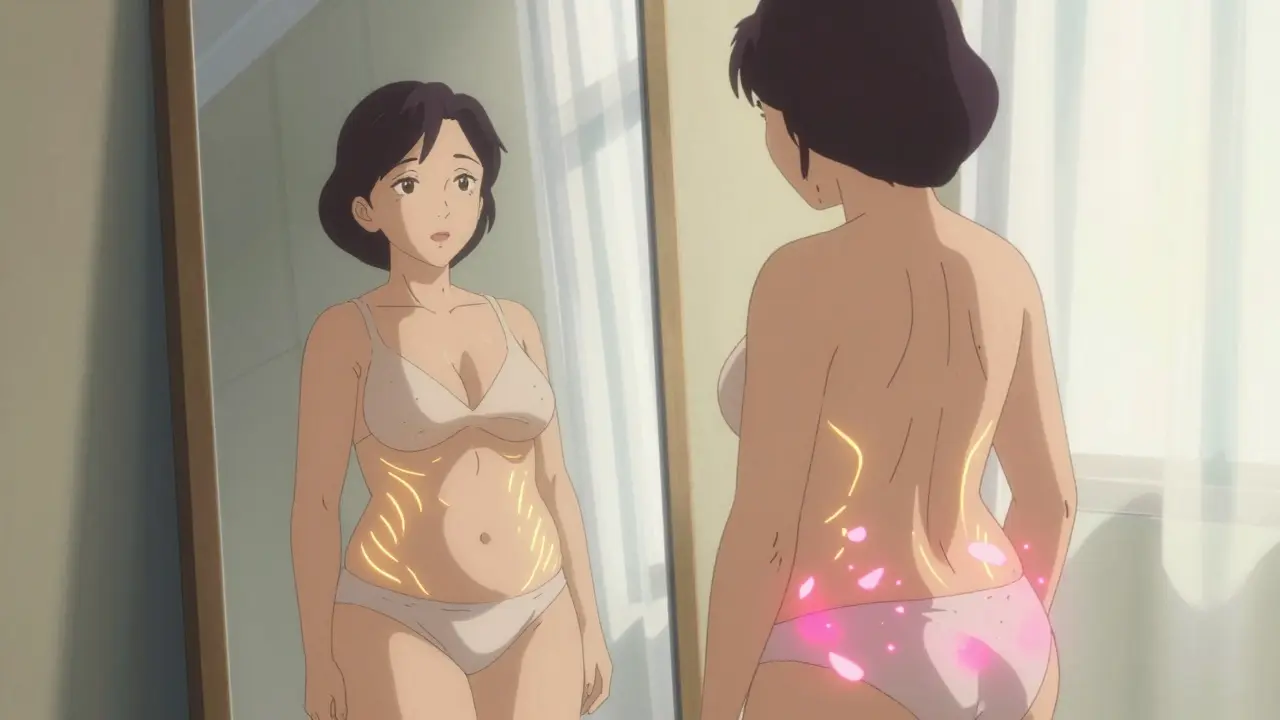
By the time most women hit their late 40s or early 50s, something unexpected happens: the scale creeps up, the jeans won’t zip, and no matter how hard you try, the old diet-and-exercise routine just doesn’t work like it used to. It’s not laziness. It’s not bad willpower. It’s biology. Menopause weight gain isn’t just about eating too much-it’s about your hormones shifting, your muscle melting away, and your body rewriting its rules without asking you first.
Why Your Body Changes After Menopause
Before menopause, your body stores fat mostly in your hips, thighs, and buttocks. That’s estrogen at work. It tells fat cells where to hang out-and it keeps them out of your belly. But when estrogen levels drop by 60-70% during the menopausal transition, that rulebook gets torn up. Suddenly, fat doesn’t want to stay on your hips. It moves to your abdomen. And not just any belly fat-the dangerous kind that wraps around your organs, called visceral fat. This isn’t cosmetic. Visceral fat is metabolically active. It pumps out inflammatory chemicals that make your body resistant to insulin. That means your blood sugar spikes more easily, your fat burns slower, and your risk of heart disease, type 2 diabetes, and stroke jumps. Postmenopausal women are nearly five times more likely to develop abdominal obesity than they were before menopause. And here’s the kicker: you might not even be eating more. Studies like the SWAN study, which tracked over 3,300 women for more than 20 years, found that women gained 1.5 kilograms (3.3 pounds) per year during perimenopause-even when they kept the same calories and activity levels. That’s not overeating. That’s your metabolism slowing down because of hormones and muscle loss.The Hidden Culprit: Muscle Loss
You lose muscle every year after 30. About 3-8% per decade. But menopause speeds that up. By the time you’re in your 50s, you could be losing an extra 1-2% of muscle mass each year. That’s not just about getting weaker. Muscle burns calories-even when you’re sitting still. Every pound of muscle you lose drops your resting metabolic rate by about 2-3% per decade. So even if you’re eating the same as you did at 35, your body now has fewer calorie-burning engines running. Add to that the hormonal shift: as estrogen falls, testosterone becomes relatively higher. That doesn’t mean you turn into a man. But it does mean your body starts storing fat more like one-around the waist. And when your muscles shrink, your body has less capacity to use glucose efficiently. That leads to more fat storage, especially in your midsection. It’s not just about being out of shape. It’s about your body’s chemistry changing in ways you can’t control with willpower alone.Why Diets Stop Working
If you’ve tried cutting calories or going low-carb and it didn’t work, you’re not alone. Sixty-seven percent of women in a University Hospitals survey said diets that worked before menopause suddenly stopped working. Why? First, your body isn’t just storing fat-it’s holding onto it. Lower estrogen reduces leptin, the hormone that tells you you’re full. At the same time, poor sleep from hot flashes and night sweats spikes ghrelin, the hunger hormone. So you feel hungrier, even if you’re eating enough. Second, your metabolism is slower. You’re burning fewer calories at rest. A calorie deficit that used to drop your weight by a pound a week now might not budge the scale at all. Third, your body is trying to protect itself. When you cut calories too much, your body thinks it’s starving. It slows down even more. That’s why extreme diets backfire. They make your metabolism cling tighter to fat.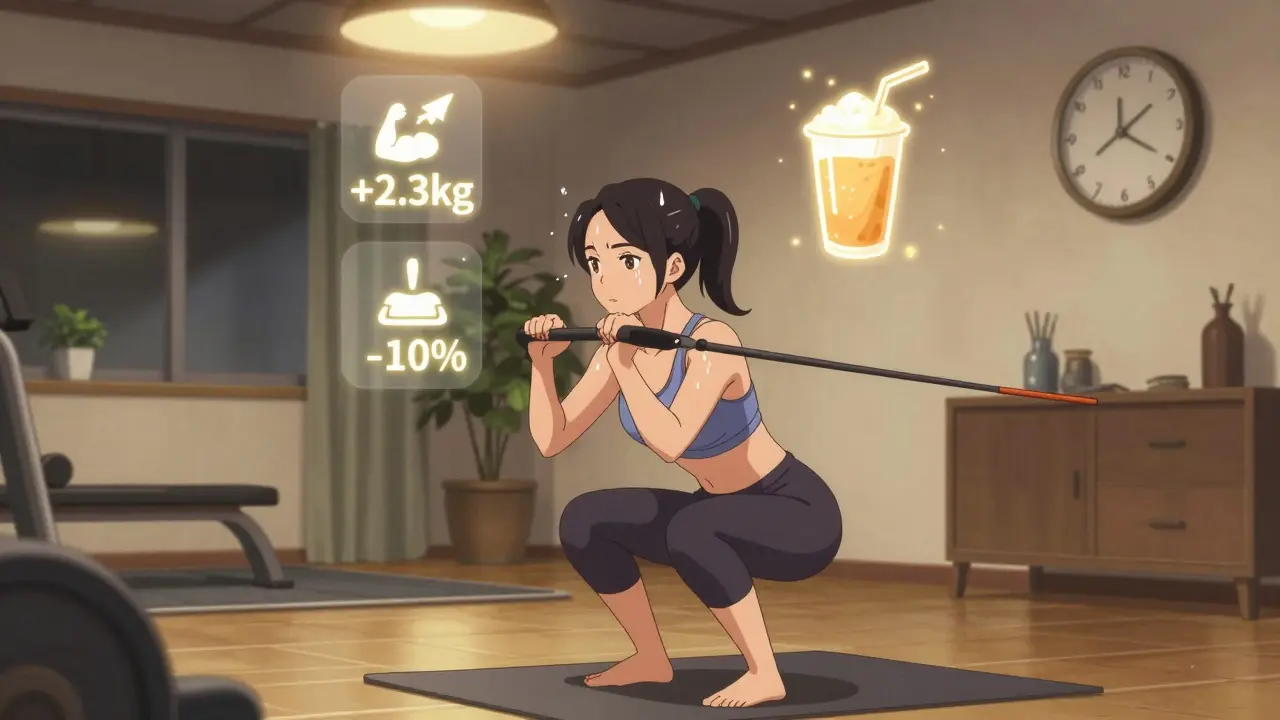
The Only Strategy That Actually Works
There’s no magic pill. But there is a proven strategy-and it’s not about starving yourself or running marathons. Strength training is non-negotiable. Lifting weights or doing bodyweight resistance exercises 2-3 times a week is the single most effective way to fight menopause weight gain. A 2022 clinical trial showed that women who lifted weights 3 times a week for six months gained 1.8-2.3 kg of muscle and lost 8-12% of belly fat-without changing their diet. Why? Because muscle rebuilds your metabolic engine. More muscle means more calories burned all day, even when you’re watching TV. And resistance training helps your body respond better to insulin, which reduces fat storage. Protein is your new best friend. You need more protein than you think-1.2 to 1.6 grams per kilogram of body weight daily. That’s about 25-30 grams of protein per meal. Eggs, chicken, fish, tofu, Greek yogurt, lentils, and whey protein all work. Protein helps rebuild muscle, keeps you full longer, and reduces cravings. Move more, but not just cardio. Walking is great. But if you want to change your body composition, you need intensity. Add 1-2 sessions of high-intensity interval training (HIIT) per week-like 30 seconds of sprinting followed by 90 seconds of walking, repeated 6-8 times. HIIT boosts metabolism for hours after you finish and helps burn visceral fat more effectively than steady-state cardio. Sleep isn’t optional-it’s medicine. If you’re waking up drenched in sweat three times a night, your hunger hormones are out of control. Aim for 7-8 hours of quality sleep. Cool your bedroom, avoid caffeine after 2 p.m., and try magnesium or black cohosh if hot flashes are bad. Better sleep lowers ghrelin by 15-25% and improves leptin sensitivity by 20-30%.What Doesn’t Work (And Why)
Keto diets? Intermittent fasting? Detox teas? These might help some people, but they don’t fix the root problem: muscle loss and hormonal imbalance. In fact, fasting can make muscle loss worse if you’re not getting enough protein. Keto can cause fatigue and worsen sleep in some women, making hot flashes harder to manage. Cardio alone won’t cut it. Running 5 miles a day might keep your heart healthy, but it won’t rebuild muscle or stop visceral fat from piling up. You need resistance training to reverse the damage. And don’t fall for the myth that this is just “getting older.” Aging plays a role-but it’s the combination of aging + hormonal shift + inactivity that creates the problem. You can slow, stop, or even reverse it.What Your Doctor Should Be Checking
Most doctors still treat menopause as a hot flash problem. But the real danger is metabolic. The North American Menopause Society now recommends that all women in perimenopause get their waist circumference measured. If it’s over 88 cm (35 inches), you’re at higher risk for heart disease and diabetes. Ask your doctor for a basic metabolic panel-check fasting glucose, insulin, triglycerides, and HDL cholesterol. These numbers tell you if your body is starting to struggle with insulin resistance. Some clinics, like Mayo Clinic’s new menopause metabolic testing program, now test 17 hormonal and metabolic markers to create personalized plans. If your doctor dismisses your weight gain as “normal,” ask for a referral to a menopause specialist or a registered dietitian who understands hormonal metabolism. Only 17% of primary care physicians feel trained to handle this-so you might need to push.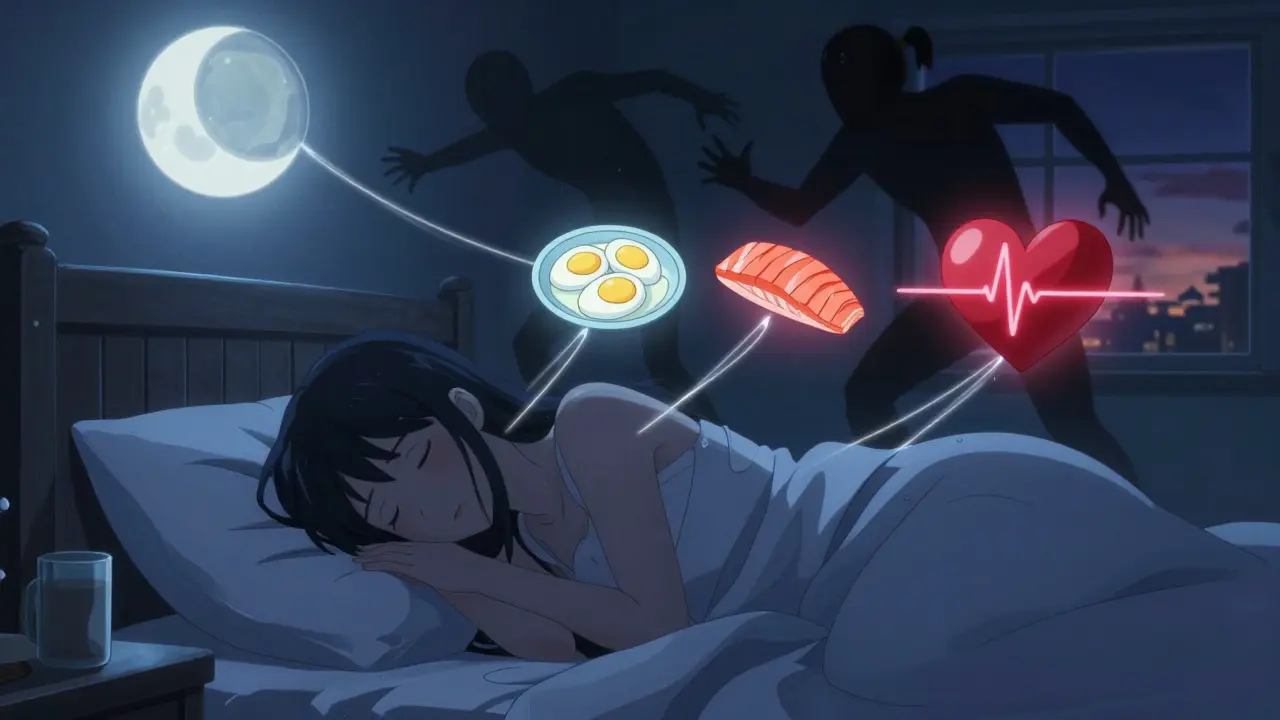
Real Women, Real Results
On Reddit’s r/menopause community, users like ‘MidlifeMama’ post about gaining 25 pounds in three years despite doing the same workouts for two decades. But others are turning things around. One woman in Birmingham, 52, started lifting weights three times a week, ate 30 grams of protein at breakfast (scrambled eggs with smoked salmon), and cut her evening snacks. In six months, she lost 11 pounds of fat, gained 4 pounds of muscle, and her waist shrunk by 5 cm. She didn’t starve. She didn’t run marathons. She just lifted and ate enough protein. Another woman, 56, struggled with sleep and cravings. She started taking magnesium before bed, switched to protein-rich dinners, and added two 20-minute HIIT sessions a week. Within four months, her hot flashes got better, her energy returned, and her jeans fit again. These aren’t outliers. They’re women who understood the science and acted on it.What’s Coming Next
Science is catching up. In September 2023, the FDA approved bimagrumab for Phase 3 trials-a drug that increases muscle mass by 5-7% and reduces fat mass by 8-10% in just 24 weeks. The NIH is funding a five-year study called EMPOWER to see if early hormone therapy can prevent the shift to abdominal fat. But you don’t have to wait. The tools are here now: strength training, protein, sleep, and smart movement. You don’t need a pill. You need a plan.Start Here: Your 30-Day Action Plan
- Week 1-2: Start lifting weights 2x a week. Use dumbbells, resistance bands, or bodyweight. Squats, lunges, push-ups, rows, and planks are enough.
- Week 3-4: Add 1-2 HIIT sessions. 10 minutes of sprint-walk intervals is enough. Do it after your strength day or on off days.
- Every day: Eat 25-30g of protein at breakfast and dinner. Try eggs, Greek yogurt, lentils, chicken, or a protein shake.
- Every night: Get 7+ hours of sleep. Cool your room, avoid screens after 9 p.m., and skip alcohol after dinner.
Why am I gaining weight even though I eat the same as before?
Your metabolism slows down because of falling estrogen and muscle loss. Estrogen drop reduces your resting metabolic rate by 2-3% per decade, and losing muscle means your body burns fewer calories at rest. Even if your food intake hasn’t changed, your body now needs fewer calories to function. This is why diets that worked before stop working after menopause.
Is abdominal fat after menopause dangerous?
Yes. Visceral fat-the kind that wraps around your organs-is metabolically active and releases inflammatory chemicals that increase insulin resistance. Postmenopausal women with abdominal fat have a 3.2 times higher risk of metabolic syndrome and a 25-30% higher risk of heart disease, even if their overall BMI is normal.
Should I take hormone therapy to stop weight gain?
Hormone therapy isn’t a weight loss treatment, but early estrogen therapy may help prevent the shift to abdominal fat in some women. It’s not for everyone-risks include blood clots and breast cancer in certain cases. Talk to a menopause specialist about your personal risk factors before considering it.
How much protein do I really need after menopause?
Aim for 1.2 to 1.6 grams of protein per kilogram of body weight daily. For a 70kg (154lb) woman, that’s about 85-110 grams per day. Spread it across meals: 25-30g per meal. This helps fight muscle loss and keeps you full longer.
Can I lose weight after menopause without going to the gym?
Yes-but it’s harder. Walking, gardening, and daily movement help, but without resistance training, you’ll continue losing muscle and your metabolism will keep slowing. You can start with bodyweight exercises at home: squats, wall push-ups, step-ups, and planks. Consistency matters more than equipment.
Why does sleep matter so much for menopause weight gain?
Poor sleep spikes ghrelin (the hunger hormone) by 15-25% and lowers leptin (the fullness hormone) by 20-30%. Hot flashes and night sweats disrupt sleep, which makes you crave carbs and sugar. Fixing sleep doesn’t just help your mood-it directly reduces fat storage and improves insulin sensitivity.
Menopause weight gain isn’t your fault. It’s a biological shift-but it’s not unstoppable. With the right strategy, you don’t just lose weight. You regain control, strength, and energy. And that’s worth more than any number on a scale.
11 Responses
Protein intake is non-negotiable. 1.6g/kg is the floor, not the goal. Most women are eating half that and wondering why they’re losing muscle while gaining fat. Fix the protein first.
I cried reading this. 😭 I gained 30 lbs in 2 years and thought I was just lazy. Turns out my body betrayed me. Strength training changed everything. I lift 3x a week now and my jeans fit again. Thank you for saying this out loud.
You know, I’ve spent years watching my wife struggle with this, and honestly? It’s heartbreaking. She’s not lazy. She’s not failing. She’s fighting biology that no one warned her about. The fact that she’s still showing up-lifting weights, eating protein, trying to sleep-despite the hot flashes and the exhaustion… that’s not just discipline. That’s quiet heroism. We need to stop calling it ‘middle age spread’ and start calling it what it is: a systemic metabolic shift that demands a new kind of care. And honestly? The medical system is failing these women. Not because they’re uncaring, but because they’re trained on outdated models. We need more specialists. More research. More empathy. This isn’t just about weight-it’s about dignity.
Let’s be real: this isn’t ‘hormonal shift’-it’s cultural decay. Women today are raised to believe that ‘just move more’ is enough. But the body doesn’t care about your Instagram fitness aesthetic. It cares about testosterone-to-estrogen ratios, lean mass retention, and insulin sensitivity. You want to fix this? Stop chasing cardio marathons and start lifting heavy. Stop drinking ‘wellness’ lattes and start eating real food. The science is clear. The problem isn’t menopause-it’s the wellness industrial complex selling you placebo solutions while your visceral fat grows. It’s time to stop being polite and start being biologically literate.
Oh my god, I’ve been here. I gained 40 pounds. My husband said I looked ‘softer’-like that was a compliment. I cried in the shower every night for months. I tried keto, I tried intermittent fasting, I tried yoga, I tried juice cleanses. Nothing worked. I felt like my body was a broken machine I couldn’t fix. Then I found a women’s strength group at the Y. First time I did a dumbbell row, I cried again-but this time because I felt strong. Like, actually strong. Not ‘I lost 5 pounds’ strong. ‘I can carry my grandkid up the stairs’ strong. And now, two years later, I’m not ‘thin’-but I’m healthy. I sleep better. I don’t crave sugar. I don’t hate my reflection. And I don’t care if my waist isn’t 24 inches anymore. I care that I can still lift my groceries without my back screaming. This post? It’s the first time I’ve ever felt seen.
Of course you’re gaining weight. You’re 50 and still thinking you can eat like you’re 25. Wake up. Your metabolism isn’t broken-it’s just matured. You don’t need more protein. You need less junk. You don’t need HIIT. You need to stop eating dessert every night. This isn’t science. It’s denial wrapped in a fitness influencer’s marketing pitch. The truth? You just need to stop being a child with your food. Grow up. Eat less sugar. Move more. Simple. Not sexy. But true.
There’s something deeply human here-not just about weight, but about how we treat aging women. We tell them to ‘just exercise more’ like it’s a moral failing, when in reality, their bodies are undergoing a hormonal earthquake. And then we sell them detox teas and keto shakes as if they’re broken appliances. But here’s the thing: your body doesn’t need fixing. It needs understanding. Strength training isn’t a ‘hack’-it’s a reclamation. Protein isn’t a trend-it’s a lifeline. Sleep isn’t a luxury-it’s medicine. This isn’t about shrinking. It’s about becoming more whole. And if we stop framing this as a battle against fat, and start framing it as a partnership with biology… maybe we stop hating our bodies and start honoring them. That’s the real transformation.
Chris Kauwe’s comment is aggressive but not wrong. The wellness industry has weaponized ‘self-care’ to sell products to women who are already exhausted. But Jacob Paterson’s take? That’s toxic. You don’t get to shame someone for trying to heal. I’ve seen women in their 50s start lifting for the first time-some with arthritis, some with PTSD, some after divorce-and the change isn’t just physical. It’s spiritual. They stand taller. Speak louder. Reclaim their space. This isn’t about aesthetics. It’s about autonomy. If you’re not helping people find that, you’re part of the problem.
Everyone’s talking about protein and weights like it’s the answer. But what about the women who can’t lift? Who have chronic pain? Who can’t afford a gym? Or whose doctors told them to avoid exercise? This post feels like it’s written for privileged, able-bodied women with time and money. Where’s the compassion for the rest of us?
Oh please. Another ‘menopause is just biology’ fairy tale. Let’s not pretend this isn’t about privilege. The women who can afford personal trainers, protein powder, and sleep trackers are the same ones who get to say ‘I beat menopause.’ Meanwhile, single moms working two jobs, women without healthcare, and those on Medicaid? They’re just told to ‘eat less and move more.’ This article is a luxury. And it’s insulting to pretend it’s universal.
I lost 28 lbs but gained 15 lbs of muscle. My waist shrunk 6 inches. I didn’t lose weight-I became a different person. And no, I didn’t starve. I just ate eggs. Every. Single. Morning. 🍳