

Most people think skin cancer is always dangerous, but Melanoma is different because it spreads faster than almost any other cancer. You might hear doctors say it represents only 1% of all skin cancer cases, yet it causes the vast majority of deaths linked to skin conditions. That sounds scary until you realize that catching it early changes everything. When doctors find it while it is still in the earliest stage, your chance of surviving five years exceeds 99%. But if it spreads to other parts of your body, that number drops to roughly 35%. The difference between those two numbers isn't luck; it depends on paying attention to your skin.
What Is Melanoma?
Before you worry, it helps to understand exactly what we are talking about. Melanoma is a serious form of skin cancer that begins in pigment-producing cells called melanocytes within the epidermis layer. It was first described clinically in 1824, but rates started rising sharply in the mid-20th century as outdoor activities increased. Unlike basic skin cancers, this type has four main subtypes that behave differently.
- Superficial spreading: Accounts for about 70% of cases and spreads along the skin surface before growing deep.
- Nodular: Makes up 15% to 30% of cases and grows quickly into deeper tissue.
- Lentigo maligna: Found often in older adults, making up 10% to 15% of diagnoses.
- Acral lentiginous: Appears on palms or soles and affects darker-skinned people more frequently.
The danger lies in how silently these spots can change. Many people ignore dark marks under their nails or on the soles of their feet because they assume melanoma only appears on pale arms or shoulders. Recent guidelines from the American Academy of Dermatology emphasize checking everywhere, including hard-to-see areas like the scalp or between toes.
Preventing Exposure Before It Starts
You cannot remove the sun from the sky, but you can block the damage it causes. Research shows approximately 90% of cases link directly to ultraviolet radiation exposure. This means your daily choices matter more than genetics alone. While genetics play a role in who gets aggressive forms, environmental damage drives the bulk of diagnoses.
Indoor tanning is a major red flag. Data from 2023 meta-analyses indicates users face a 58% higher risk compared to non-users. It doesn't matter if you go once a month or weekly; even brief bursts of high-intensity UV damage DNA in skin cells. If you want protection, look at these practical steps:
- Apply broad-spectrum sunscreen with SPF 30 or higher every morning.
- Wear clothing that covers your arms and legs during peak hours (usually 10 AM to 4 PM).
- Avoid tanning beds completely. They emit harmful UVA rays similar to artificial sunlamps.
- Use UV index apps to check daily risk levels in your area.
Education remains a gap here. Despite knowing the risks, only 14.3% of high school students consistently use sunscreen. Cost is often the barrier, with low-income respondents citing price as a reason to skip protection. Public health strategies are shifting to integrate weather alerts with UV warnings to reach millions of users via smartphones.
Detection Using the ABCDE Rule
Spotting the warning signs early saves lives. Doctors rely on a simple checklist called the ABCDE framework to evaluate moles and spots. You can learn this method during a monthly self-exam, which takes about 10 to 15 minutes after a shower.
| Criteria | What to Look For |
|---|---|
| Asymmetry | One half of the mole does not match the other half. |
| Border | Edges are irregular, scalloped, or blurred rather than smooth. |
| Color | Variation in shades of brown, black, red, white, or blue. |
| Diameter | Spots larger than 6 millimeters (the size of a pencil eraser). |
| Evolving | Changes in size, shape, color, or symptoms like itching. |
Advanced tools help confirm suspicion. Dermoscopy improves diagnostic accuracy from 65% to 90%, allowing specialists to see structures beneath the surface without cutting immediately. In 2025, AI-assisted dermoscopy tools like VisualizeAI received approval to support clinicians with 93.2% sensitivity. However, these technologies complement, rather than replace, the human eye and regular self-checks.

Stages and Diagnostic Procedures
Once a suspicious lesion is found, the next step determines severity. Staging tells the doctor how deep the tumor grew and whether it spread. Early-stage disease involves surgical excision with specific margin widths. For in situ cancer (Stage 0), surgeons typically remove the spot plus 0.5 to 1 cm of healthy skin. Thicker tumors require wider margins, sometimes reaching 2 cm.
For thicker lesions, a sentinel lymph node biopsy becomes necessary. This procedure checks if cancer cells reached nearby nodes, which is crucial for deciding on further care. Studies show that patients with early stages (IA) have a 97% five-year survival rate. Conversely, advanced cases need more aggressive intervention.
Diagnostic imaging plays a huge role now. Reflective confocal microscopy offers 94% sensitivity, helping doctors distinguish between benign nevi and malignant growths before performing invasive surgery. Total body photography captures images of your entire skin surface, creating a baseline record. Follow-up scans compare future changes against this initial map.
Treatment Options Explained
Treatment varies wildly depending on the stage. Early removal through surgery is often curative, removing the threat entirely. When cancer returns or spreads, medications take over. Modern medicine moved away from traditional chemotherapy toward immunotherapy and targeted therapy.
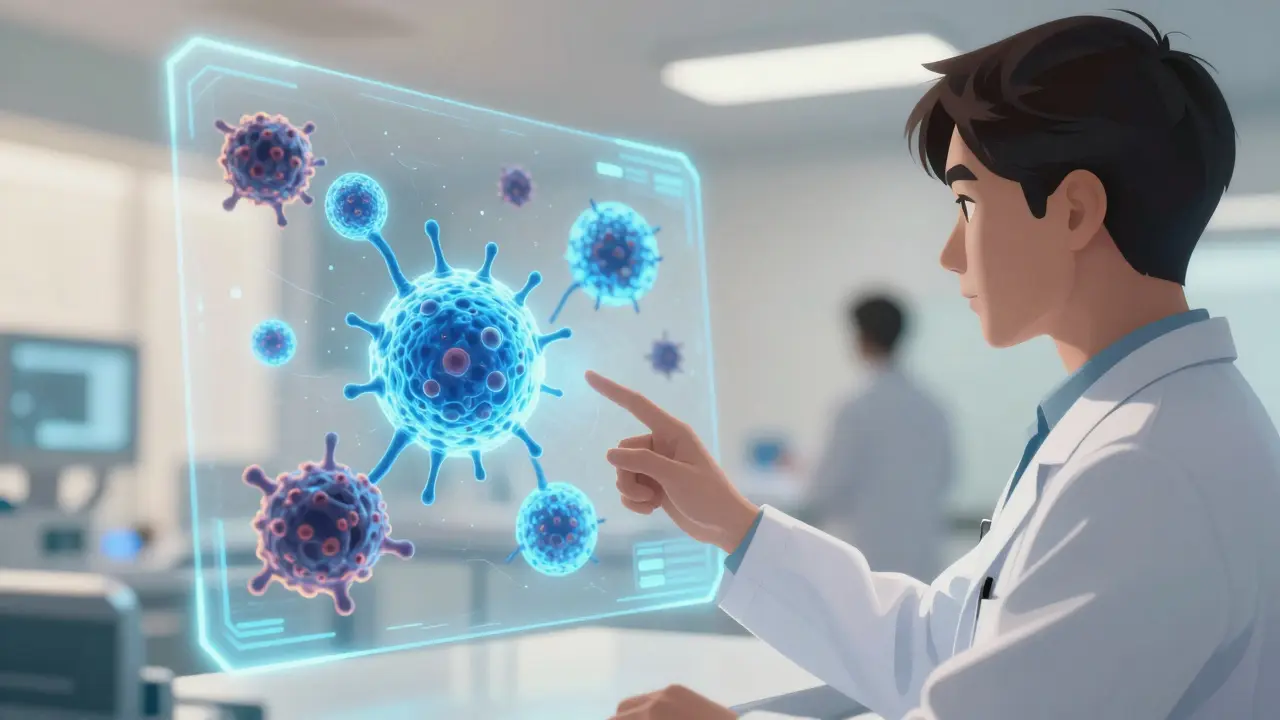
Immunotherapy agents like Pembrolizumab and Keytruda stimulate your own immune system to attack cancer cells. These drugs have doubled long-term survival rates for late-stage patients since 2010. Another approach uses targeted therapy against specific mutations. About 50% of cutaneous melanomas harbor BRAF mutations. Drugs like dabrafenib combined with trametinib target these specific genetic errors.
The trade-off between these methods involves side effects versus speed. Immunotherapy generally has better safety profiles with fewer severe adverse events (14% grade 3-4 events) compared to targeted therapy (57% grade 3-4 events). However, targeted drugs often shrink tumors faster initially. Your oncologist will weigh these factors based on your bloodwork and overall health.
New developments keep emerging. In early 2025, regulators approved mRNA-based vaccines that reduce recurrence risk by 44% when paired with checkpoint inhibitors. These neoantigen vaccines train the immune system to recognize unique proteins on a patient's specific tumor cells.
Cost, Access, and Support
Medical bills remain a significant barrier for many families. Treatments involving newer biologics can cost between $150,000 and $200,000 annually. Even with insurance, out-of-pocket expenses create stress. Patient forums reveal financial toxicity affecting 42% of discussions, with some documenting thousands in infusion costs despite coverage.
Geographic location impacts care quality significantly. Rural areas face longer wait times for specialist appointments. On average, patients wait nearly 29 days nationally, but rural waits stretch to 63 days. Telemedicine has helped bridge this gap, achieving 87% diagnostic accuracy compared to 92% for in-person visits.
Care continues beyond the hospital. Survivors join communities where peer support matters as much as clinical follow-up. Online groups track progress and share coping strategies for fatigue or psychological impacts. Organizations like the Cure Melanoma Foundation push for increased funding, noting that prevention budgets lag far behind treatment spending.
Frequently Asked Questions
How often should I check my skin?
Experts recommend performing a full-body self-exam once a month. High-risk individuals should also schedule professional dermatology exams every 3 to 6 months according to current guidelines.
Can indoor tanning cause melanoma?
Yes, using indoor tanning devices increases risk significantly. Studies show a 58% higher risk for users compared to those who never tan indoors, regardless of age.
Is melanoma curable in late stages?
While challenging, modern immunotherapy has improved survival rates. Five-year survival for metastatic disease stands around 35%, and ongoing trials aim to push this percentage higher with new vaccines.
Does sunscreen actually prevent cancer?
Using broad-spectrum sunscreen blocks UV rays that damage DNA. Consistent use reduces risk, though avoidance of direct midday sun and protective clothing provides the best defense.
What tests diagnose melanoma accurately?
Doctors use dermoscopy for visual assessment and biopsy for confirmation. Reflective confocal microscopy offers 94% sensitivity and helps visualize skin layers without immediate cutting.
13 Responses
We really need to stop ignoring our own skin for a second every morning. The statistics here are wild regarding survival rates dropping so fast. It feels like the best thing we can do is stay vigilant about changes. Catching it early makes such a massive difference for the outcome. Sunscreen should be part of the daily routine regardless of the weather. We know UV rays damage DNA even when we cannot feel the heat. Sharing this info helps everyone keep their guard up against these risks. Prevention truly works better than fighting a serious battle later on.
The ABCDE rule is absolutely non-negotiable for survival rates.
Dermoscopic evaluation significantly improves sensitivity metrics compared to naked eye inspection alone. Reflective confocal microscopy provides sub-cellular visualization prior to invasive procedures. Sentinel lymph node biopsy remains critical for determining metastatic potential in thicker lesions. Immunotherapy agents targeting PD-1 checkpoints demonstrate superior tolerability profiles versus traditional cytotoxic chemotherapy regimens. BRAF mutation status dictates the efficacy of combination targeted therapy approaches. Baseline total body photography establishes longitudinal mapping for surveillance intervals. Early excision margins correlate inversely with recurrence probability in localized disease states.
It is genuinely alarming how few people understand the nuance of skin checks. My family dealt with similar issues back in the late nineties. We noticed the spot changing color slowly over time. The doctor suggested we monitor it closely instead of acting immediately. This approach saved us from unnecessary surgical scarring. Early intervention remains the cornerstone of successful management. Everyone needs to prioritize their monthly self-examination routine. Neglecting the harder areas like the scalp creates significant risk. Professional guidance helps identify what truly warrants concern. We cannot rely on intuition alone when medical science exists. Financial barriers should not prevent anyone from seeking care. Public health initiatives focus heavily on prevention strategies now. Education spreads awareness much better than fear-based messaging ever did. Community support groups provide vital emotional strength throughout recovery. Hope continues to exist even for those facing advanced diagnoses.
This is vital information!!! We cannot be complacent about protection measures!!
Routine screenings save lives!!! Consistency matters!!
Ignore this at your own peril!!!
In many regions like India, outdoor work happens under direct sun daily without adequate gear. We often forget that high altitude or proximity to the equator increases intensity significantly. Protection habits vary greatly depending on cultural norms regarding skin exposure. It would be wonderful if workplaces mandated better safety protocols for workers outdoors. Small steps like hats and shirts make a world of difference for everyone. Awareness campaigns need to address specific geographic risks clearly.
So true! 😌 The heat doesn't hurt but the radiation is invisible. We should share this with neighbors. 🙏 Stay safe out there friends! ☀️🧴
Most individuals lack the basic discipline required for consistent application anyway. Expensive treatments follow inevitably due to ignorance of simple preventative hygiene standards. It is surprising that cost becomes the primary excuse rather than education gaps. People simply prefer comfort over long term biological preservation generally speaking.
Let us all focus on supporting each other instead of blaming 😊 🤝 Knowledge is power but empathy is essential ❤️ Spread love not shame!
Things are improving constantly with new vaccine approvals and drug therapies. Keeping morale high helps patients push through difficult treatment phases. There is always something working on the horizon to improve odds significantly. Staying positive really influences recovery speed and resilience. Let us celebrate these small wins together.
Sunsceren probaly works better if you slather it on thick though. Most ppl dont realize how easy it is to skip reapplying every two hours. I thnk the cost barrier is huge for families earning low wages. Telemedicine is getting real good at catching spots early now. We should all get checked more often than we do.
How could anyone ignore the urgency?!?! The numbers are devastating!!!!!!! Ignoring signs is incredibly dangerous!!! Survival drops drastically without action!!! We must act now!!!!!!!!
Surprising that insurance companies actually cover this new stuff without fighting claims endlessly. Patients should read the fine print before celebrating progress easily.