
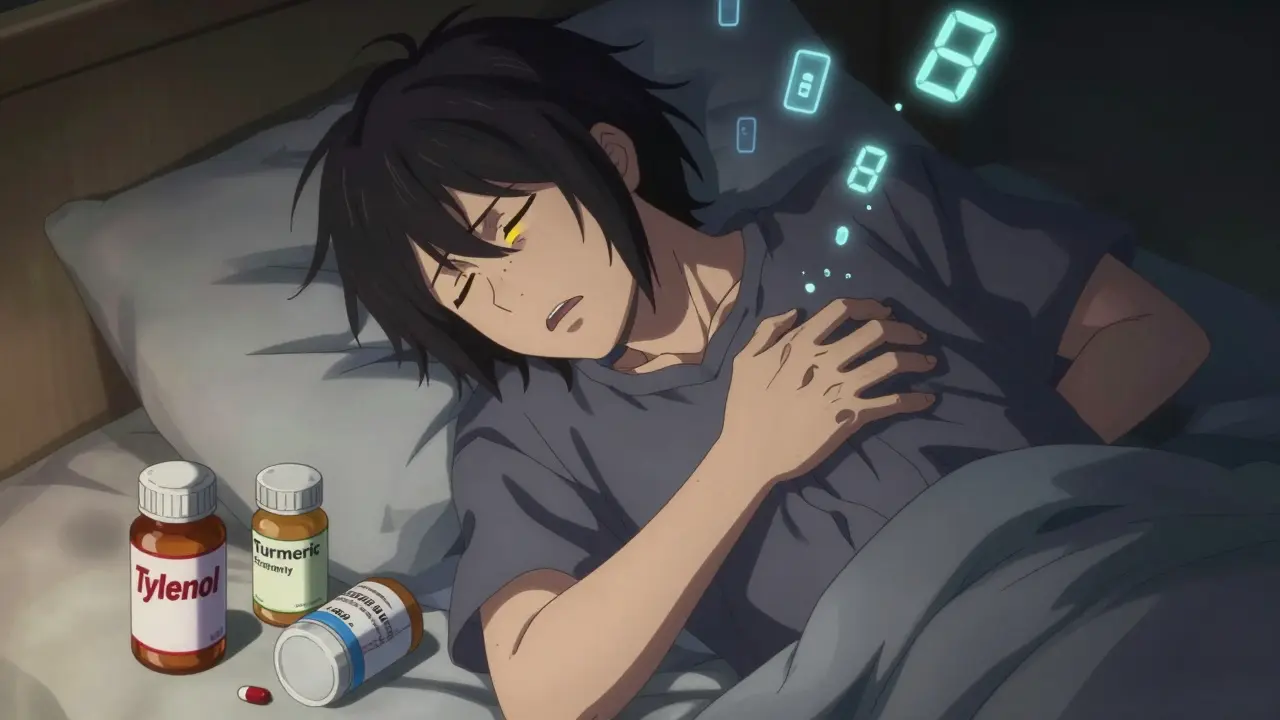
More people than you think are at risk of liver damage from everyday medications - even those sold over the counter or labeled as "natural." Drug-induced liver injury, or DILI, isn’t rare. It’s one of the top causes of sudden liver failure in the UK and the US, and it often flies under the radar until it’s too late. The truth? You don’t need to be on dozens of pills to be at risk. A single antibiotic, a daily turmeric capsule, or even too much paracetamol can trigger serious harm - and the first signs are easy to miss.
What Does Medication-Related Liver Damage Actually Look Like?
Unlike viral hepatitis, DILI doesn’t come with a fever or a clear trigger like a bad meal. It creeps in quietly. One day you feel off - tired, itchy, a little nauseous. The next, your skin turns yellow. By then, your liver enzymes may already be five, ten, or even fifteen times higher than they should be.
There are three main patterns doctors look for:
- Hepatocellular injury: Your ALT (alanine aminotransferase) shoots up - often over 1,000 IU/L. This is what happens with isoniazid (used for TB) or too much acetaminophen. The liver cells are literally dying.
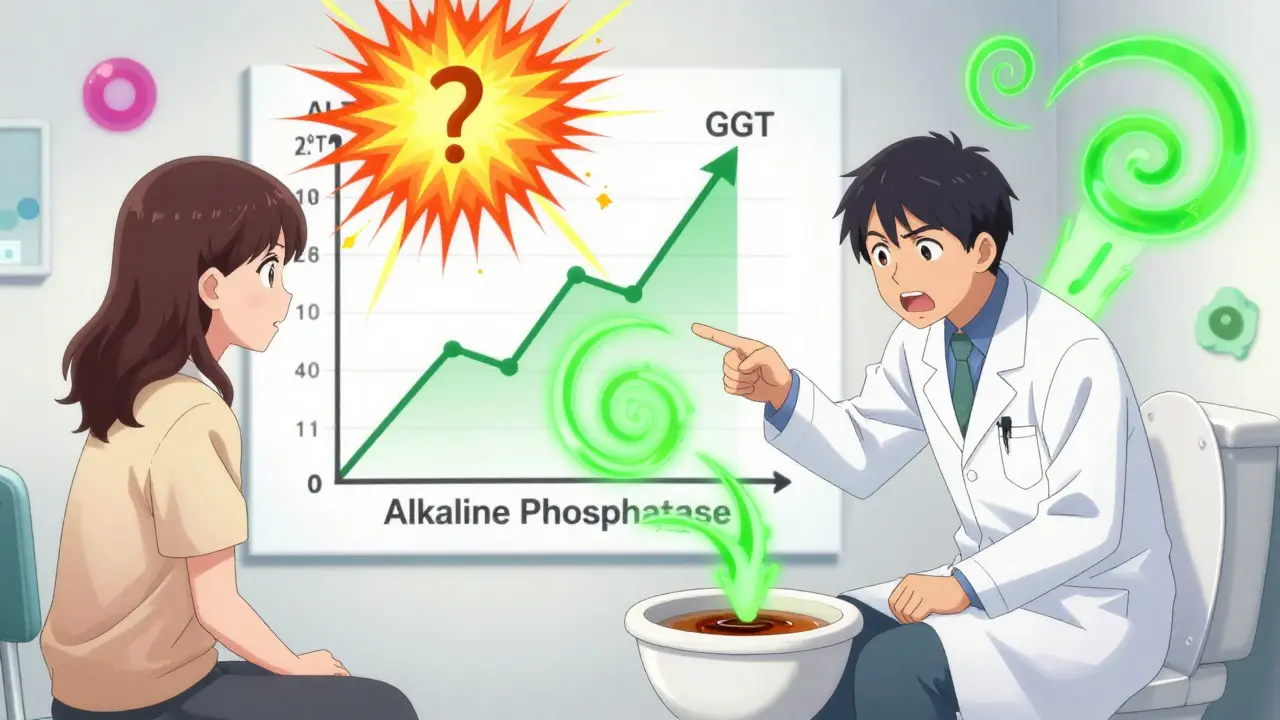
- Cholestatic injury: Your alkaline phosphatase and GGT levels climb. This is common with amoxicillin-clavulanate or statins. Bile can’t flow properly, leading to intense itching and dark urine.
- Mixed pattern: Both ALT and alkaline phosphatase are elevated. This is the trickiest - and most common - form, often linked to herbal supplements or antibiotics.
It’s not about how many pills you take. It’s about your body’s reaction. Some people develop damage after just a few days. Others take months. That’s why it’s so easy to blame fatigue on stress or a cold.
The Top Culprits You Might Not Realize Are Dangerous
Antibiotics are the biggest single cause of DILI - especially amoxicillin-clavulanate. One in six cases traced back to this common prescription. But here’s what most people don’t know: the damage doesn’t always show up while you’re still taking it. Symptoms often appear days or even weeks after you’ve finished the course.
Then there’s acetaminophen (paracetamol). It’s in hundreds of cold and flu remedies. The FDA says healthy adults shouldn’t take more than 3,000 mg a day. But if you’re taking Tylenol for a headache, a cough syrup with acetaminophen, and a sleep aid that also contains it - you’re over the limit without even trying.
Herbal supplements? They’re the fastest-growing cause of liver injury in the UK. Green tea extract alone accounts for nearly 4 out of 10 supplement-related cases. Turmeric, kava, aloe vera, and weight-loss teas are all on the list. Many people think "natural" means safe. It doesn’t. The British Liver Trust found that 20% of all DILI cases in the UK come from supplements - and 76% of those users had no idea they were risking their liver.
Statins? The story here is mixed. The FDA says they can cause liver damage in up to 2% of users. But European experts say serious injury is extremely rare - less than 1 in 10,000. Still, if you’re on a statin and start feeling unusually tired or notice your eyes turning yellow, don’t wait.
Red Flags: When Your Body Is Screaming for Help
There are five signs you should never ignore - especially if you started a new medication in the last 8 weeks:
- Yellow skin or eyes (jaundice) - This is the most obvious warning. It means bilirubin is building up because your liver can’t process it.
- Dark urine - Like tea or cola. It’s not dehydration. It’s your liver leaking.
- Severe itching - Not just a rash. This is bile acids building up in your skin. It can be unbearable.
- Pain under your right ribs - A dull ache or sharp stab. Your liver is swollen and pressing against your ribcage.
- Unexplained nausea or vomiting - Especially if it’s new and you’re not pregnant or sick with the flu.
If you have jaundice plus any two of the other four, you need emergency care now. Waiting another day could mean the difference between recovery and a liver transplant.
Acetaminophen overdose is a race against time. If you take too much, N-acetylcysteine - the antidote - works best if given within 8 hours. Every hour you wait cuts effectiveness by 10%. By 24 hours, it’s often too late.
Why Doctors Miss It - And How to Make Sure You’re Heard
Here’s the hard truth: 68% of people with DILI are initially misdiagnosed. Doctors think it’s the flu, stress, a stomach bug, or even depression. One patient in a 2023 survey said, “I had itching for two weeks on amoxicillin. My GP said it was just a reaction. I didn’t know it could be my liver.”
The problem isn’t ignorance - it’s complexity. There’s no single blood test that confirms DILI. Doctors have to rule out everything else: hepatitis A, B, C; autoimmune disease; gallstones; alcohol damage. That takes time. And if you don’t mention every supplement you’re taking - including the ones from the health food store - they won’t know what to look for.
Use the RUCAM score - it’s the gold standard tool doctors use to assess if a drug caused your liver damage. It looks at timing, symptoms, and whether the problem improved after stopping the drug. You don’t need to know the math. But you can ask: “Could this be caused by something I’m taking?”
What to Do Right Now - Before It’s Too Late
Don’t wait for symptoms. If you’re on a high-risk medication - antibiotics, anticonvulsants, isoniazid, or even long-term NSAIDs - get a simple blood test every 4 to 6 weeks. Liver enzymes are cheap. A quick liver function test (LFT) can catch trouble before you feel anything.
Keep a medication log. Write down everything you take - prescription, over-the-counter, herbal, vitamins, teas. Include doses and start dates. Show it to your doctor every visit. Many people forget supplements. But supplements are now responsible for more liver damage than many prescription drugs.
If you take acetaminophen, read every label. Don’t combine it with alcohol. That triples your risk. And never take more than 2,000 mg a day if you have any liver condition, even mild fatty liver.
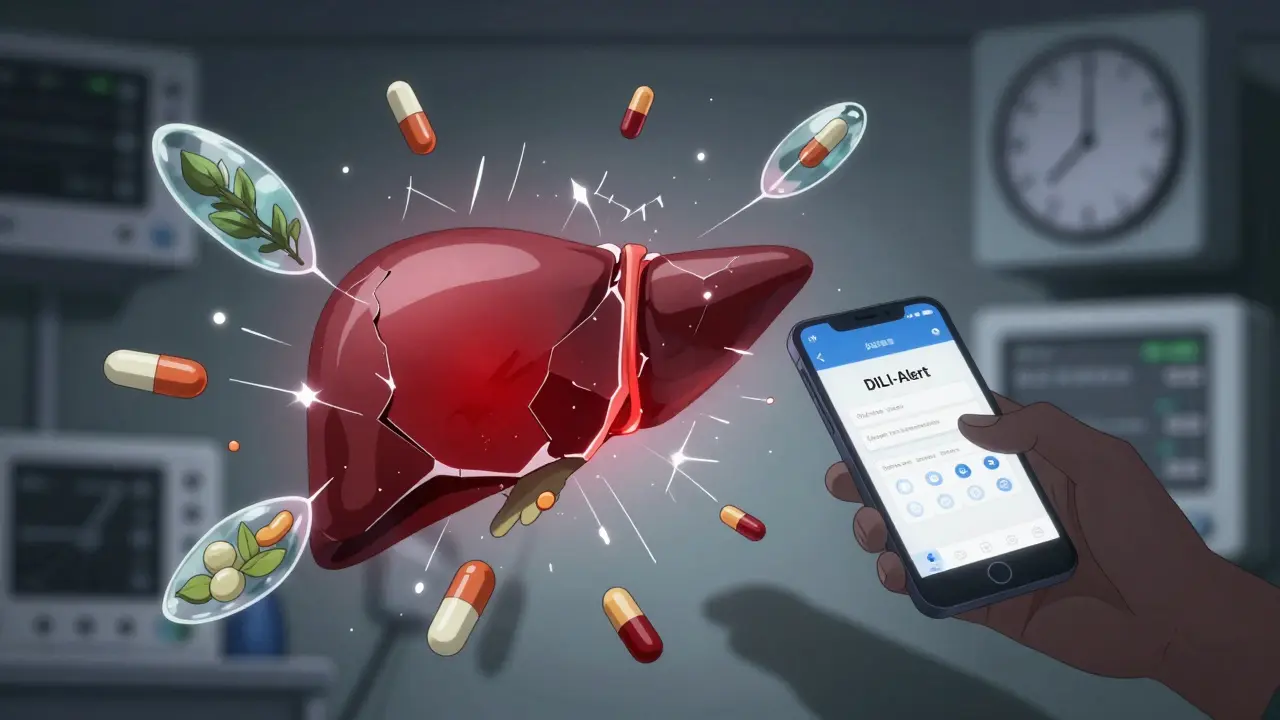
There’s a new tool called DILI-Alert - a free app that scans your meds against a database of 1,200 known liver-toxic substances. It’s not perfect, but it’s a second pair of eyes. If you’re on multiple drugs, it’s worth downloading.
What Happens After Diagnosis?
Stop the offending drug - immediately. That’s step one. In most cases, your liver will heal on its own if caught early. Studies show 90% of patients recover fully within 3 to 6 months after stopping the medication.
But if it’s advanced - if you’re jaundiced, confused, or bleeding easily - you might need hospitalization. In the worst cases, a transplant is the only option. That’s why timing matters.
Don’t try to “detox” with more supplements. That’s what one Reddit user did after her liver enzymes spiked from turmeric. Her naturopath told her it was “just detoxing.” She ended up in intensive care.
Recovery isn’t about special diets or juices. It’s about rest, hydration, and avoiding anything that stresses your liver - alcohol, extra pills, unregulated herbs.
The Bigger Picture: Why This Is Getting Worse
DILI cases have jumped 27% in Europe since 2015. In the US, hospitalizations have gone up by nearly 50% in the last decade. Why? Because more people are taking supplements - and fewer know the risks.
Regulators are catching up. The FDA now requires black box warnings on antibiotics for liver damage. The EU mandates clear labeling on herbal products. But enforcement is patchy. You’re still buying risky supplements online with no warning labels.
Genetics play a role too. Some people carry a gene (HLA-B*57:01) that makes them 80 times more likely to get liver damage from flucloxacillin. We don’t test for it routinely - yet.
The future may hold better tools. A blood marker called microRNA-122 can detect liver damage within hours - before enzymes rise. AI systems are already cutting diagnosis time by a third in pilot programs. But none of that helps if you don’t act when your body first signals trouble.
Medication-related liver damage isn’t a myth. It’s a silent epidemic. And it’s preventable - if you know the signs, know your meds, and don’t wait for jaundice to appear.
11 Responses
Y’all need to stop treating supplements like candy. I had a friend take ‘turmeric for inflammation’ and ended up in the ER with liver enzymes through the roof. She thought ‘natural’ meant ‘harmless.’ Nope. That stuff is pharmacologically active - and unregulated. I keep a spreadsheet of everything I take, even gummy vitamins. If your liver’s not screaming yet, it’s just biding its time.
Get a basic LFT every 6 weeks if you’re on anything long-term. It’s cheaper than a transplant.
So let me get this straight - the same people who scream about Big Pharma are now drinking green tea extract like it’s kombucha and blaming their liver failure on ‘toxins’?
Bro. The liver doesn’t care if it’s a pill or a powder. It just cares if you’re dumb enough to overdose on ‘natural’ stuff. I’ve seen 20-year-olds with cirrhosis from ‘detox teas.’
Also, acetaminophen is fine if you don’t combine it with 3 other meds and a six-pack. Common sense isn’t dead yet. Just buried under influencer marketing.
EVERYTHING is toxic. The FDA is in bed with Big Pharma. They don’t want you to know that your liver is fine until they sell you a $10k test. I stopped all meds after reading this - even my blood pressure pill. Now I just drink apple cider vinegar and sunlight. My liver’s glowing. I’ve been off the grid for 8 months and my bloodwork? Perfect.
They’re hiding the truth. The real cause of liver damage? 5G towers and chemtrails. You think your enzymes are high from turmeric? Nah. It’s the government. They want you weak.
Also, I’m not taking any more vaccines. My cousin’s dog got liver failure after a rabies shot. Coincidence? I think not. 🤡
Why are you all so scared of medicine? In India we take 10 pills a day and still run marathons. This is just Western anxiety. Your liver is strong. You just need to stop being weak.
Also why are you reading about this? Go outside. Eat spicy food. Drink chai. Stop worrying. Your liver doesn’t need a spreadsheet. It needs a good laugh.
And stop blaming supplements. The real problem? Too much sitting. And too much Netflix.
Also I saw a guy on YouTube who took 10 turmeric capsules and was fine. So you guys are just drama queens. 😴
Interesting piece - and deeply concerning. I’ve worked in NHS clinics for 15 years and seen more than a few cases where patients dismissed itching as ‘allergy’ or ‘dry skin.’ By the time they came in, it was too late.
What’s missing here is the cultural angle. In the UK, herbal remedies are often bought from corner shops with no labels, no warnings, no pharmacist advice. People trust the ‘local expert’ - who’s usually just someone who read a blog.
Education needs to start in schools. Not just ‘don’t smoke,’ but ‘don’t assume natural = safe.’ It’s not just medical - it’s systemic.
Let’s be precise: the RUCAM score isn’t just a ‘tool’ - it’s a validated, evidence-based causality assessment system with inter-rater reliability >0.85 in peer-reviewed studies. It’s not anecdotal. It’s quantitative.
Also, the 20% figure for supplement-related DILI in the UK? That’s from the British Liver Trust’s 2022 surveillance report, which analyzed 1,200+ confirmed cases. The data is robust.
And yes - microRNA-122 is a promising biomarker, but it’s still not FDA-approved for routine use. The AI systems you mention? They’re in pilot phases at Johns Hopkins and UCL, not in your GP’s office yet.
Stop conflating hope with reality. This is medicine. Precision matters.
I appreciate how thorough this is. I’m a nurse in Portland and I see this all the time - people taking 6 different OTC meds with acetaminophen and thinking they’re fine because ‘it’s just Tylenol.’
My advice? Always ask: ‘What’s the active ingredient?’ Write it down. Cross-check with your pharmacist. Don’t assume. Don’t guess.
Also - if you’re on statins and feel weird, say something. Don’t wait for yellow eyes. Fatigue and nausea are early signals. Your doctor can’t read your mind.
And yes, supplements are risky. But let’s not demonize them. Some people benefit. The issue is lack of labeling and oversight. We need better regulation, not fear.
Why are you all so obsessed with Western medicine? In India, we’ve been using turmeric for 5,000 years. It’s sacred. Your liver is weak because you eat processed food and sit on chairs all day. You think your liver can’t handle a little spice? Pathetic.
Also, your ‘FDA’ and ‘EU’ are just tools of colonial control. They want you dependent on pills. We don’t need your science. We have ancient wisdom.
And why are you scared of ‘herbal supplements’? They’re from nature. Nature doesn’t lie. Your fear is a sign of your spiritual decay.
Stop listening to white doctors. They don’t know anything. 🙄
Bro I took 10 turmeric capsules a day for 3 months and my skin glowed 😍
Then I got jaundice 😭
Went to doc - they said ‘stop the turmeric’
I did 😌
Now I’m fine 🙌
But I still take the green tea extract 🤫
It’s ‘detoxing’ 😘
Also my cousin’s dog took a pill and died 💀
So yeah. Trust your gut. Not the docs. 🐶💊
Oh please. This is just fearmongering dressed up as ‘public health.’
You’re telling people to get blood tests every 6 weeks like they’re diabetic? Who has the time? Who has the insurance? This isn’t prevention - it’s profit-driven surveillance.
And the ‘DILI-Alert’ app? That’s just another Silicon Valley scam. You’re monetizing anxiety.
Meanwhile, the real problem? Corporate greed. The FDA approves drugs based on 6-month trials. Supplements aren’t regulated? Newsflash - neither are most pharmaceuticals.
Stop scaring people. Start holding corporations accountable.
Also - I took 2000mg of acetaminophen daily for a year. My liver’s fine. Your fear is toxic. 💅
Medication-induced liver injury is a profound example of the fragility of human physiology - and the hubris of assuming that modern pharmacology can be divorced from biological consequence.
The liver, an organ of astonishing regenerative capacity, is nonetheless vulnerable to subtle, cumulative insult. What we call ‘natural’ is often merely unpatented - not benign.
The cultural shift toward self-medication, fueled by digital misinformation and the erosion of clinical trust, has created a perfect storm. We have access to more information than ever - yet less wisdom.
Perhaps the truest intervention is not the blood test, nor the app, nor the warning label - but the quiet, disciplined practice of self-awareness: knowing what you consume, why you consume it, and when to pause.
Recovery is not about detoxes. It is about humility.