

Imagine waking up with a strange tingling sensation in your fingertips and around your lips, or suddenly experiencing muscle cramps that feel like an electric shock. For people living with Hypoparathyroidism is a rare endocrine disorder where the parathyroid glands don't produce enough parathyroid hormone (PTH), these aren't just random occurrences-they are signs that blood calcium levels have dropped too low. This condition creates a tricky biological paradox: your body needs calcium to function, but without PTH to regulate it, adding calcium can sometimes lead to kidney stones or other complications. Managing this "calcium rollercoaster" requires a precise balancing act between supplementation and monitoring.
Quick Summary: Key Management Goals
- Target Calcium: Maintain serum calcium in the lower half of the normal range (typically 2.00-2.25 mmol/L) to prevent symptoms while protecting the kidneys.
- Vitamin D Strategy: Use active analogues like calcitriol instead of standard Vitamin D3 to bypass the need for PTH.
- Phosphate Control: Keep phosphorus levels stable by limiting processed meats and sodas.
- Kidney Protection: Monitor 24-hour urinary calcium to avoid hypercalciuria and kidney stones.
Why Calcium and Vitamin D Aren't Enough on Their Own
In a healthy body, the parathyroid glands act like a thermostat for calcium. When levels drop, they release PTH, which tells the kidneys to stop flushing calcium out in urine and tells the gut to absorb more of it. In hypoparathyroidism, that thermostat is broken. This is why simply taking a generic multivitamin doesn't work. You need Calcitriol, which is an active form of vitamin D. Unlike the standard Vitamin D3 you find at the grocery store, calcitriol doesn't need PTH to be activated by the kidneys. It goes straight to work helping your intestines absorb the calcium you take.
However, there is a catch. Because PTH is missing, your kidneys can't "reabsorb" calcium efficiently. This means that if you take too much calcium to stop the muscle twitches, the excess often leaks directly into your urine. This condition, known as hypercalciuria, significantly increases the risk of kidney stones and can even lead to chronic kidney disease over a decade of treatment.
The Daily Supplement Protocol
Managing this condition usually involves a lifelong regimen of pills. Most patients start with a foundation of 1,000 to 2,000 mg of calcium daily. According to clinical protocols from the Cleveland Clinic, Calcium Carbonate is often preferred because it contains about 40% elemental calcium, providing more "bang for your buck" per tablet. To make this more manageable and reduce gastrointestinal issues like constipation, many find success in splitting the dose-taking smaller amounts 4 to 5 times a day rather than two large doses.
The timing of these doses is critical. Calcium should be taken with meals for two reasons: it improves absorption and helps bind phosphate in your food, preventing your phosphorus levels from spiking. Meanwhile, active vitamin D analogues, such as calcitriol or alfacalcidol, are typically started at 0.25-0.5 mcg daily. To keep the system balanced, a small dose of standard Vitamin D3 (400-800 IU) is often added to maintain a baseline level of 25-hydroxyvitamin D in the blood.
| Supplement Type | Elemental Calcium % | Best Use Case | Key Consideration |
|---|---|---|---|
| Calcium Carbonate | ~40% | Standard daily maintenance | Must be taken with food for absorption |
| Calcium Citrate | ~21% | Patients with low stomach acid | Can be taken without food |
| Magnesium Oxide | N/A | Correcting low magnesium | Essential for PTH action |
Dietary Do's and Don'ts
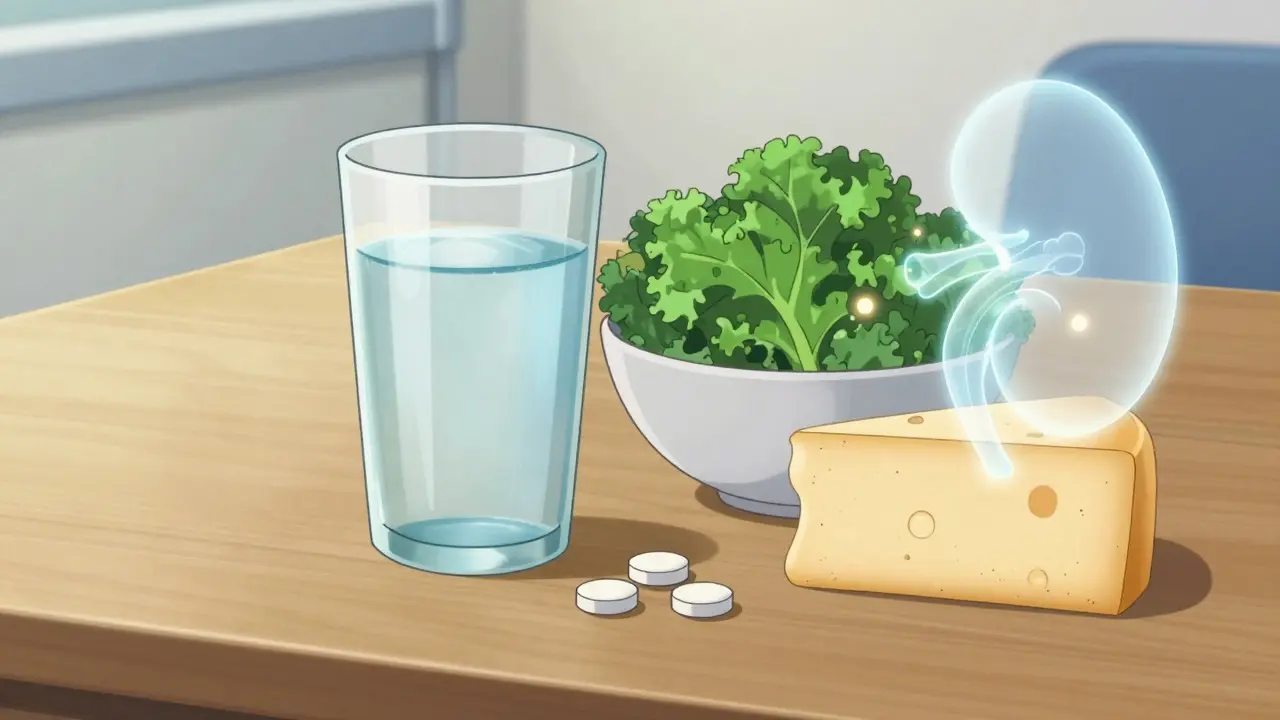
Supplements do the heavy lifting, but your diet can either stabilize or sabotage your levels. The goal is to eat plenty of calcium while keeping phosphorus in check. Foods like kale, broccoli, and dairy products are excellent choices. A serving of dairy can provide around 300 mg of calcium, while a cup of kale offers about 100 mg.
On the flip side, you have to be careful with phosphorus. High phosphate levels can push calcium levels even lower, worsening your symptoms. To keep phosphorus between 2.5 and 4.5 mg/dL, it's wise to avoid carbonated beverages (which are loaded with phosphoric acid) and processed meats. Hard cheeses are also high in phosphorus and should be eaten in moderation.
When Conventional Therapy Isn't Enough
For about 25-30% of patients, the standard pill-based approach just doesn't cut it. You might find yourself needing more than 2 grams of calcium or 2 micrograms of active vitamin D a day just to feel normal. This is where the "treatment burden" becomes a real problem-some people end up taking 6 to 10 pills a day and still feel the effects of the calcium rollercoaster.
In these complex cases, doctors may consider hormone replacement. Teriparatide or recombinant human PTH(1-84) act more like the natural hormone. While these can reduce the need for calcium and vitamin D supplements by 30-40%, they come with a steep price tag and require daily injections. Newer options like TransCon PTH are showing promise in trials by providing a longer-acting version of the hormone, potentially making the daily routine much simpler.
Monitoring and Warning Signs
You cannot manage this condition by "feel" alone. Regular blood work is non-negotiable. In the beginning, you'll likely see your endocrinologist every few weeks for dose titration. Once stable, a few visits a year usually suffice. The most critical test is the 24-hour urinary calcium check. If you're leaking too much calcium, your doctor might suggest a sodium-restricted diet (less than 2,000 mg per day) or a mild diuretic like hydrochlorothiazide to help your kidneys hold onto the calcium.
It is also vital to keep an eye on magnesium. If your magnesium levels drop below 1.7 mg/dL, your body becomes resistant to whatever PTH is left in your system, making your hypocalcemia much harder to treat. Maintaining magnesium levels above 1.9 mg/dL has been shown to reduce the frequency of calcium crashes.
Every person with hypoparathyroidism should have an emergency plan. If you feel the onset of perioral numbness or severe muscle cramps, the standard rescue protocol is to chew 2 to 3 calcium tablets (providing 500-1,000 mg of elemental calcium) immediately to bring levels back up and avoid a full-blown tetanic crisis.
Why can't I just take regular Vitamin D supplements?
Standard Vitamin D (cholecalciferol) requires the kidneys to convert it into an active form using the parathyroid hormone (PTH). Since people with hypoparathyroidism lack PTH, they cannot perform this conversion. Active analogues like calcitriol are already converted, allowing the body to absorb calcium immediately without needing the missing hormone.
What is the "calcium rollercoaster"?
This refers to the volatile fluctuation of serum calcium levels. Because supplements are absorbed at different rates and the body lacks a natural regulator, patients often swing from hypocalcemia (causing numbness and fatigue) to mild hypercalcemia or high urinary calcium (increasing kidney risk), making it difficult to feel stable throughout the day.
Can I stop taking these medications once my levels are normal?
No. In most cases, especially postsurgical hypoparathyroidism, the condition is lifelong. Stopping supplementation will lead to a rapid drop in blood calcium, which can cause dangerous seizures or laryngospasms.
Does my diet really affect my calcium levels?
Yes, but phosphorus is the key. High-phosphorus foods (like soda and processed meats) can bind to calcium and lower your blood levels. Focusing on low-phosphorus, calcium-rich greens and dairy helps stabilize the environment for your medications to work.
How do I know if my dose is too high?
You often can't tell by symptoms alone. The primary indicator of an excessive dose is hypercalciuria-too much calcium in your 24-hour urine sample. This is why regular kidney monitoring is essential even if you feel great.
Next Steps for Stability
If you are currently struggling with daily symptoms, start by reviewing your dosing schedule with your doctor. Moving toward a split-dose regimen (smaller doses more frequently) often smooths out the peaks and valleys. Also, ask your provider to check your magnesium and 25-hydroxyvitamin D levels; optimizing these two markers can often reduce the number of hypocalcemic episodes you experience.
13 Responses
Splitting the doses definitely helps with the stomach issues. It's a game changer for anyone struggling with that heavy feeling after a large calcium pill.
Too many pills.
The biological imperative here is the restoration of homeostasis, yet most people fail to realize that the 'calcium rollercoaster' is merely a manifestation of the body's struggle against a systemic void. One must contemplate the irony of needing a synthetic analogue to perform a function that nature designed as autonomous. It is quite evident that the reliance on Calcium Carbonate, while efficient in elemental percentage, ignores the subtle nuances of bioavailability that a more sophisticated mind would prioritize. We are essentially attempting to patch a leaky dam with scotch tape and prayers. The obsession with the 24-hour urinary calcium check is the only rational part of this entire pharmaceutical charade, as the kidneys are the ultimate arbiters of our metabolic failure. Without a rigorous adherence to the stoichiometry of these supplements, the patient is simply accelerating their own renal decline under the guise of stability. It is a tragedy of modern medicine that we treat the symptom and call it management.
Typical pharmaceutical push. Why are they so obsessed with these 'analogues' and 'recombinant' hormones? It sounds like they're just trying to get us hooked on expensive daily injections for life. I bet the 'rare' nature of this disorder is just a way to justify the insane price tags of TransCon PTH. Follow the money, people. They create the dependency, then sell you the solution that barely works unless you're on a dozen different pills. It's all about control and profit margins, not actually fixing the glands.
Oh sure, because taking ten pills a day is just a walk in the park. Truly a pinnacle of medical achievement here.
You must persevere with the protocol! I strongly insist that every patient maintains a rigorous schedule of blood work and does not deviate from the physician's orders. Discipline is the only path to stability in this matter.
Ugh, imagine having a doctor who doesn't even suggest the newest hormone therapy immediately! 🙄 The struggle is literally so real when you're just stuck on basic carbonates like some peasant 💅✨
Maybe just try some kale and a smile!!! 🥬✨ It's all about the vibes anyway!!!! 🌈💖
God bless the land of the free where we can just pop a handful of rocks and call it a health plan. Absolutely peak efficiency right there. It's almost poetic how we've replaced actual organs with a chemical cocktail of 'analogues'. Just pure, unadulterated genius.
Your energy is so blocked if you think pills are the only way... you need to align your chakras to absrob the calcium better. The boddy knows how to heal if u just stop fighting it with chemicles.
My life is basically a pharmacy at this point! Every single morning I'm just staring at this pile of supplements wondering if I'm a person or just a human-shaped pill organizer! The drama of a 'calcium crash' is actually terrifying though!
I've always found that sharing the burden of chronic illness with a community makes the process so much more bearable, and while the regimen seems daunting at first, it's really just about creating a new rhythm in your life that incorporates these health needs into your daily ritual, much like how different cultures have different traditional wellness practices that require patience and long-term commitment to see a real difference in one's quality of life.
It is imperative that you do not succumb to frustration! You must dominate this condition with unwavering consistency and a strict adherence to the magnesium levels mentioned. Failure to do so is simply not an option!