
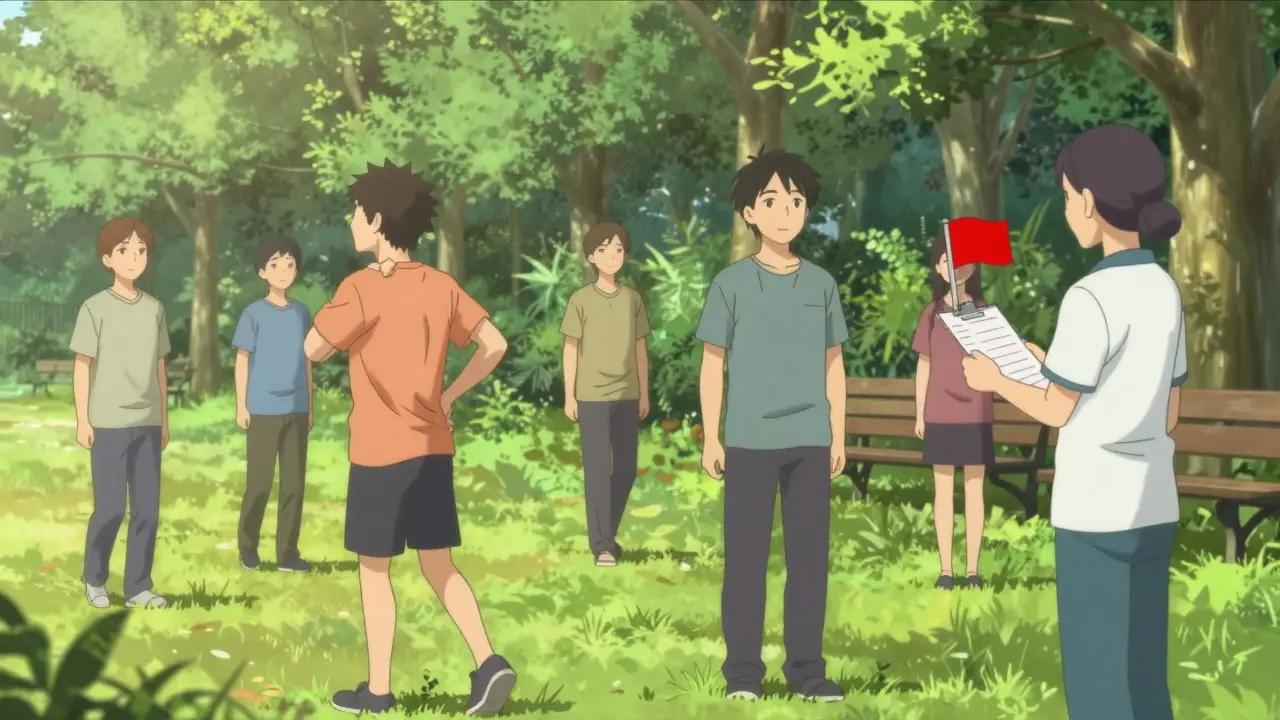
Most people will experience low back pain at some point in their life. It’s not rare-it’s normal. But not all back pain is the same. Some cases are just stiff muscles from sitting too long or lifting wrong. Others? They’re warning signs. And if you miss those signs, you could be risking serious damage. The good news? Most low back pain gets better on its own. The better news? You can do something about it-without scans, without surgery, without pills.
What’s Normal and What’s Not
Eight out of ten adults will have low back pain at least once. But here’s the thing: 97% of those cases have no serious cause. They’re mechanical. Think muscle strain, poor posture, or a sudden twist. These don’t need MRIs or X-rays. They need time and movement. The other 3%? That’s where things get serious. These are the cases with hidden dangers: cancer, infection, broken bones, or nerve damage. That’s why knowing the difference isn’t optional-it’s essential.
Red flags aren’t just symptoms. They’re clues that point to something deeper. And not all red flags are created equal. Some are strong. Others? Not so much. For example, if you’ve had cancer before and now your back hurts, that’s a major red flag. Unintentional weight loss? Another one. But if you’re 58 and your back aches after gardening? Age alone doesn’t mean cancer. A 2023 update to UK guidelines removed "age over 55" as a red flag because research showed it doesn’t predict serious illness. Yet, many doctors still order scans for older patients out of habit. That’s not just wasteful-it’s risky.
Red Flags You Can’t Ignore
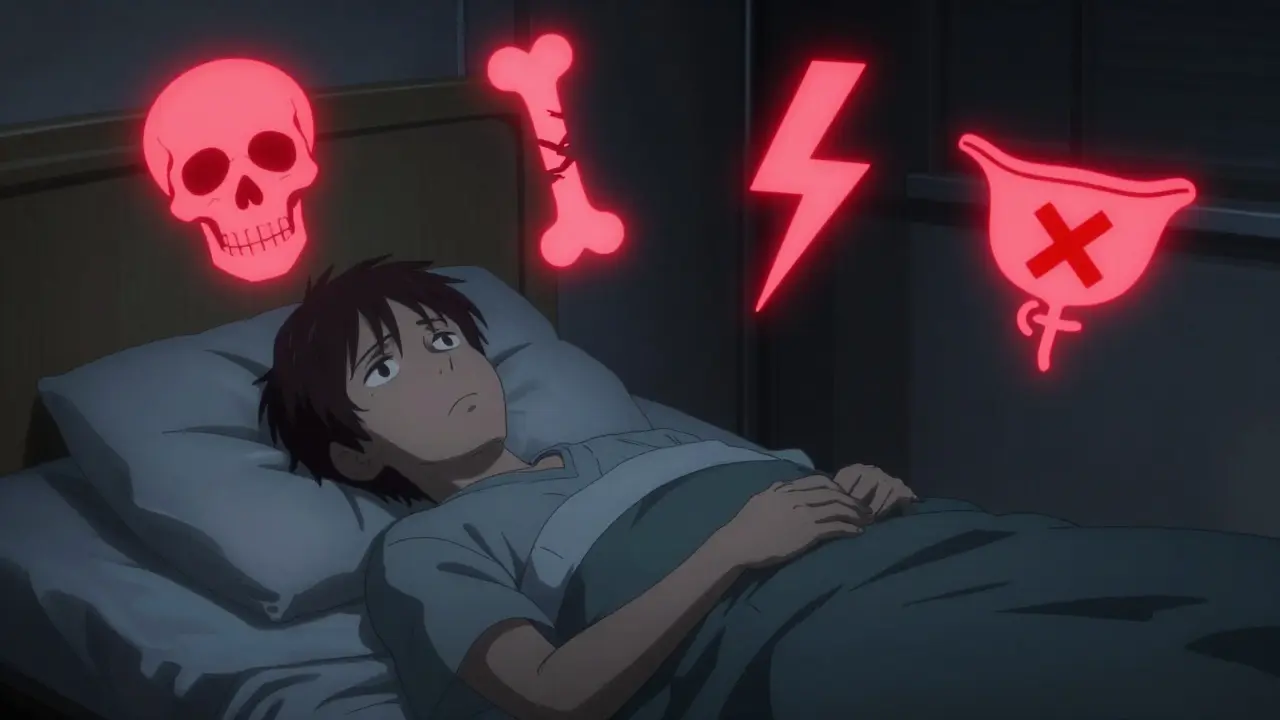
There are four big categories of danger when it comes to low back pain: cancer, fracture, infection, and nerve damage (cauda equina syndrome). Each has its own warning signs.
For cancer, look for:
- A personal history of cancer (especially breast, lung, prostate, or kidney)
- Unexplained weight loss-more than 10 pounds in a few months
- Pain that gets worse at night or while resting
- Constant pain that doesn’t improve with position changes
For fracture, watch for:
- Major trauma-car crash, fall from height, or direct blow to the back
- Long-term steroid use (like prednisone)
- Severe osteoporosis (especially if you’ve had a prior fracture)
For infection, signs include:
- Fever or chills
- IV drug use
- Recent spinal surgery or injection
- Back pain with tenderness when you tap on your spine
And for cauda equina syndrome-the most urgent-look for:
- Loss of bladder or bowel control
- Numbness in the saddle area (buttocks, inner thighs, genitals)
- Difficulty starting urination or feeling like your bladder won’t empty
- Weakness in both legs or foot drop
Here’s the scary part: if you have urinary retention with over 200cc left in your bladder after peeing, plus saddle numbness, your chance of having cauda equina syndrome jumps to 92%. And if surgery doesn’t happen within 48 hours? You’re looking at permanent nerve damage. No second chances.
When Imaging Makes Sense-and When It Doesn’t
Let’s clear this up: X-rays and MRIs don’t fix back pain. They just show pictures. And most of the time, those pictures show things that have nothing to do with your pain. Degenerative discs? Bulging discs? Everyone over 30 has those. Finding them doesn’t explain why your back hurts today.
Guidelines from the American College of Radiology, the Canadian Family Physicians Association, and the UK’s NICE all say the same thing: don’t image unless there’s a red flag. For acute back pain (under 4 weeks), imaging is inappropriate 9 out of 10 times. Even for chronic pain (over 12 weeks), X-rays are rarely useful unless you’re showing clear danger signs.
When imaging is needed:
- For suspected cauda equina syndrome → MRI without contrast
- For possible infection → Bone scan with SPECT/CT or contrast CT
- For possible cancer → MRI without contrast
And here’s the kicker: a 2022 survey found that 43% of primary care doctors still order X-rays for acute back pain with no red flags. Why? Time pressure. Most visits last 12 minutes. But a proper assessment? It needs 18 to 22. So doctors skip the red flag check. And patients get scans they don’t need. That’s not just expensive-it’s dangerous. Unnecessary scans lead to more scans, more biopsies, more anxiety, and sometimes even unnecessary surgery.
Exercise Therapy: The Most Effective Treatment
If you’ve been told to rest your back, stop. Resting longer than a day or two actually makes things worse. Your muscles weaken. Your spine stiffens. Your pain lingers. Movement isn’t just okay-it’s the treatment.
A 2020 Cochrane Review looked at 97 studies with nearly 20,000 people. The result? Exercise therapy cuts pain and improves function more than any other non-drug treatment. The numbers don’t lie: pain dropped by an average of 6.6 points on a 100-point scale. Function improved by 6.7 points. That’s not minor. That’s life-changing.
Not all exercises are equal. The strongest evidence supports:
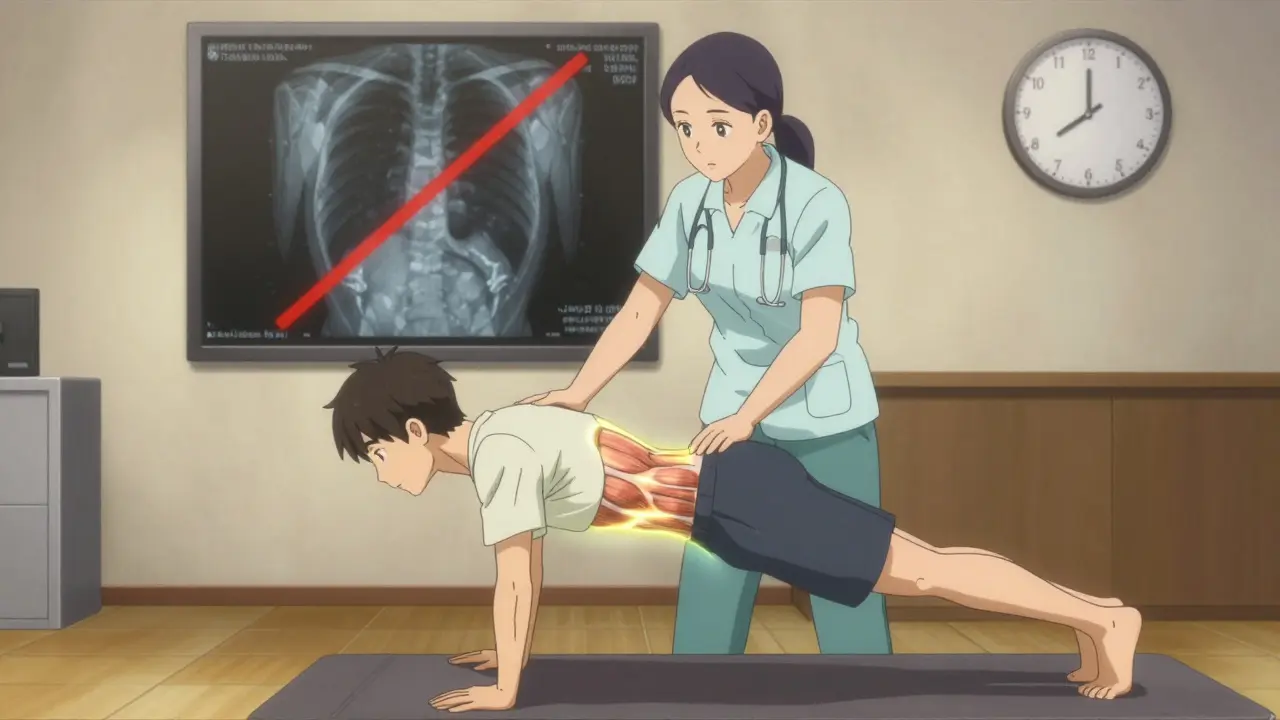
- Motor control exercises-focusing on deep core muscles like transverse abdominis and multifidus. These help stabilize your spine. Effect size: 0.61.
- Graded activity-gradually increasing movement and load. No "no pain, no gain." It’s about pacing. Effect size: 0.52.
- Combined programs-mixing strength, aerobic, and flexibility. Effect size: 0.58.
Here’s how to do it right:
- Start with 2-3 sessions per week under supervision
- Progress to a home program after 4-6 weeks
- Strength exercises: begin at 40-60% of your one-rep max, build up to 70-85% over 8-12 weeks
- Aerobic work: 20-30 minutes, 3-5 times a week, at 60-80% of your max heart rate (talk test: you should be able to speak in short sentences, not sing)
Adherence is everything. If you skip more than half the sessions, benefits drop sharply. That’s why group classes or telehealth coaching work better than handouts. You need accountability.
Why Most People Get It Wrong
Here’s what happens in real life: someone lifts a suitcase. Their back hurts. They go to the doctor. The doctor asks, "How long has it been?" "A week." "Any fever? Weight loss? Bladder issues?" "No." "Okay, let’s get an X-ray."
That’s not care. That’s reflex. And it’s expensive. In the U.S. alone, unnecessary imaging for back pain costs $3 billion a year. In the UK, the NHS spends millions on scans that change nothing. Meanwhile, people who get proper exercise therapy recover faster, stay active, and avoid future episodes.
Doctors aren’t to blame entirely. Time is tight. Training is uneven. Guidelines are complex. But tools like the "Red Flag Decision Tool"-a simple 3-step checklist-are helping. One trial cut unnecessary imaging by 28%. That’s not magic. That’s better systems.
And here’s something new: AI is stepping in. A 2022 study showed an AI tool boosted red flag detection from 73% to 89% accuracy. That means fewer missed cases and fewer false alarms. The future isn’t replacing doctors-it’s helping them do their job better.
What You Can Do Today
If you have low back pain:
- Don’t panic. Most cases aren’t dangerous.
- Check for red flags. If you have any of the serious signs (bladder issues, unexplained weight loss, fever, trauma), go to urgent care or the ER. Don’t wait.
- If no red flags? Move. Walk. Stretch. Do light bodyweight exercises. Avoid bed rest beyond 48 hours.
- Find a physiotherapist or certified trainer who specializes in back pain. Get a 6-8 week exercise plan. Stick with it.
- Don’t ask for an X-ray or MRI unless your provider specifically says it’s needed.
Low back pain isn’t a disease. It’s a signal. Listen to it. Don’t rush to scan it. Move it. Train it. And let your body heal.
Is low back pain always serious?
No. About 97% of low back pain cases are caused by simple mechanical issues like muscle strain or poor posture. These are not dangerous and usually improve with movement, time, and simple exercises. Only 1-3% of cases involve serious conditions like cancer, infection, or nerve damage.
Should I get an MRI if my back hurts?
Only if you have red flags like loss of bladder control, unexplained weight loss, fever, recent trauma, or a history of cancer. For most people with simple low back pain, MRIs don’t help and can even lead to unnecessary treatments. Guidelines from NICE, ACR, and AAFP all recommend against routine imaging for acute back pain without warning signs.
Can exercise make back pain worse?
Only if you push too hard too soon. Gentle movement-like walking, stretching, or light core exercises-helps reduce pain and stiffness. Avoid high-impact activities or heavy lifting until your pain improves. A structured program, supervised by a physiotherapist, ensures you progress safely. Studies show exercise reduces pain by an average of 6.6 points on a 100-point scale.
What’s the best type of exercise for low back pain?
The strongest evidence supports motor control exercises (targeting deep core muscles), graded activity (gradually increasing movement), and combined programs that include strength, aerobic, and flexibility training. Motor control has the highest effect size (0.61), meaning it’s the most effective for reducing pain. Aim for 2-3 sessions per week for 8-12 weeks, then continue with a home routine.
Is age a red flag for serious back pain?
No. Age alone is not a reliable indicator of serious spinal disease. The UK’s NICE guidelines removed "age over 55" as a red flag in 2023 because research showed it has almost no predictive value. Other factors-like cancer history, weight loss, or neurological symptoms-are far more important than age.