
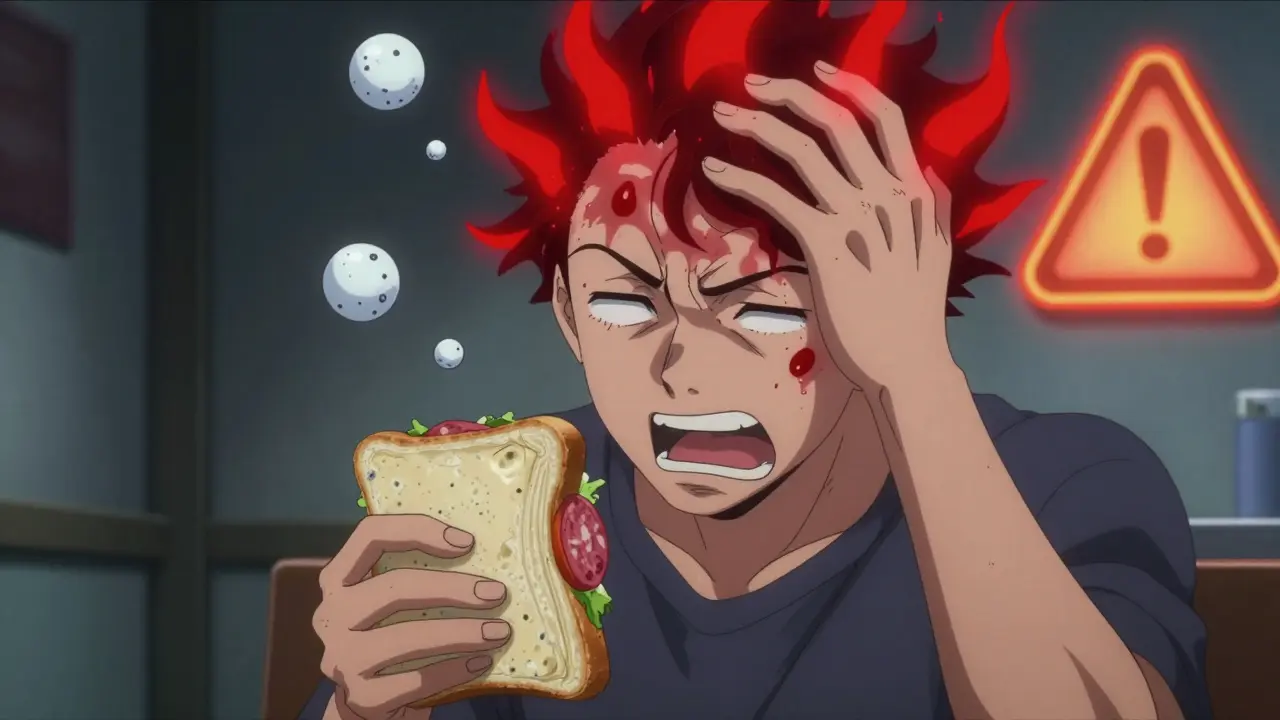
When you're prescribed linezolid, you're getting a powerful antibiotic for serious infections like MRSA or VRE. But there's something most people don't tell you until it's too late: what you eat could send your blood pressure soaring - fast.
Why Linezolid Isn't Just Another Antibiotic
Linezolid works differently from most antibiotics. It doesn't just kill bacteria. It also blocks an enzyme in your body called monoamine oxidase (MAO). This is the same enzyme that breaks down tyramine, a naturally occurring compound in certain foods. When linezolid shuts down MAO, tyramine builds up. And when tyramine piles up, your body releases a flood of norepinephrine - a chemical that tightens blood vessels and spikes your blood pressure.This isn't theoretical. The FDA has documented cases where patients taking linezolid had systolic blood pressure jump 30 to 50 mmHg within just an hour or two after eating high-tyramine foods. That's enough to trigger a hypertensive crisis - a medical emergency that can lead to stroke, heart attack, or organ damage.
What Foods Are Dangerous?
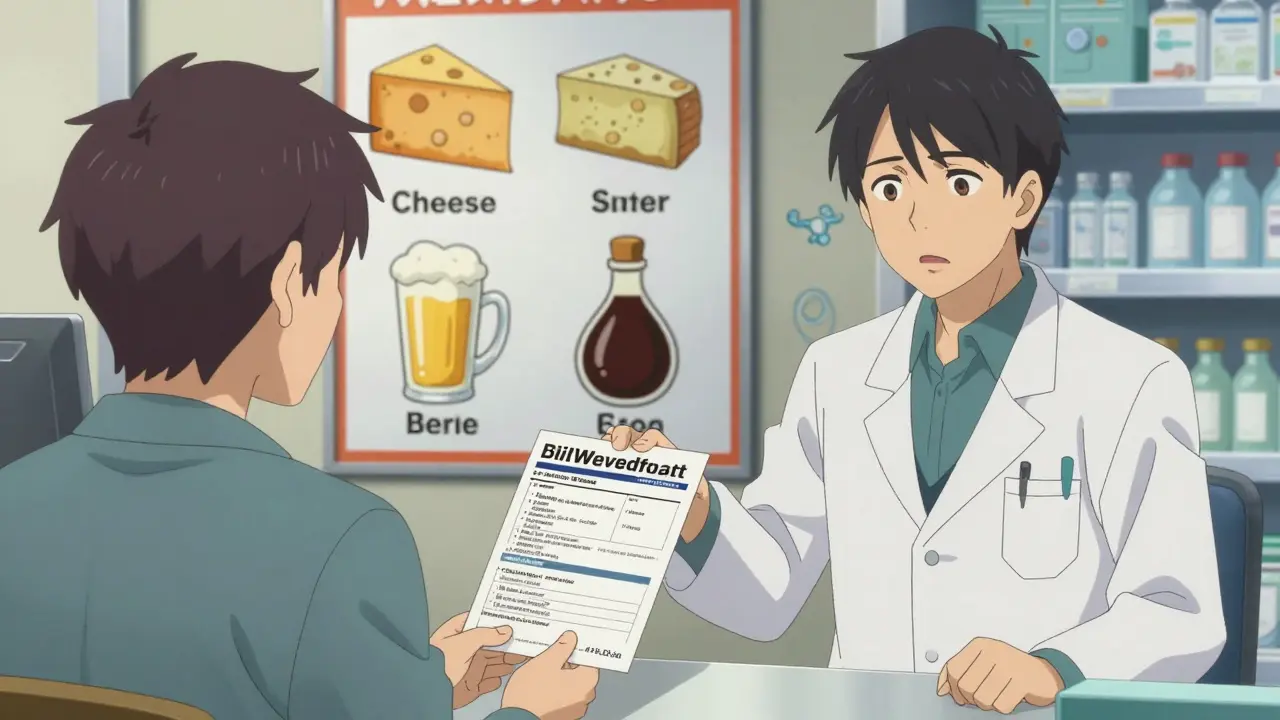
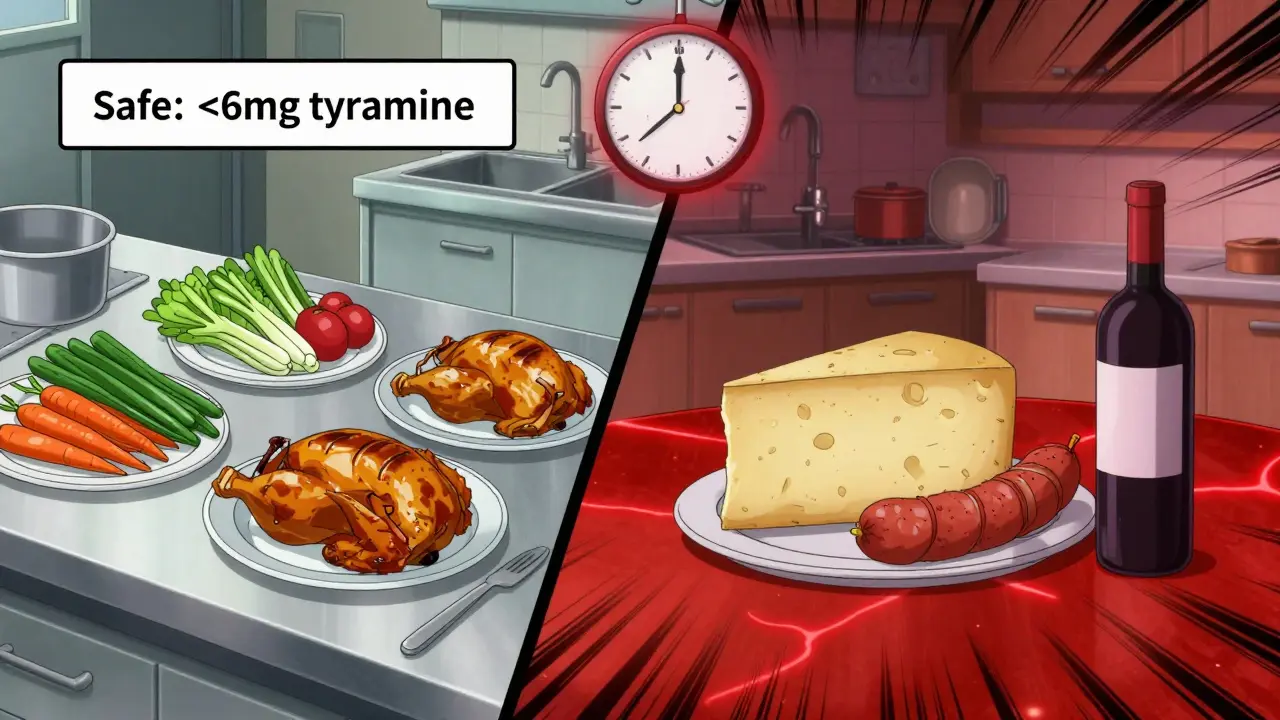
Not all foods are risky. The danger comes from aged, fermented, spoiled, or improperly stored protein-rich foods. Tyramine forms when proteins break down over time. Here’s what you need to avoid while on linezolid:- Aged cheeses - cheddar, blue cheese, gouda, parmesan, brie (50-400 mg of tyramine per 100g)
- Dry fermented sausages - pepperoni, salami, summer sausage (50-200 mg/100g)
- Tap beer, craft beer, bottled or canned ales - even small amounts can add up (8-70 mg/100ml)
- Red wine, champagne, vermouth, liqueurs, homemade wine - all are off-limits
- Liver, pâté, game meats - especially if not freshly prepared
- Soy sauce, miso, fermented tofu - 6-30 mg/100ml
- Overripe bananas, fava beans, yeast extracts - often overlooked
Some foods are safe in moderation: plain crisps, decaffeinated coffee or tea, small amounts of white wine (1 unit), and a little chocolate. But even chocolate can be risky if you eat more than a few squares - it contains trace tyramine, and it adds up.
Hospital Patients Don’t Need to Starve
If you're in the hospital on linezolid, you might be surprised to learn you don’t need a strict diet. A 2010 study from NewYork-Presbyterian Hospital found that standard hospital meals contain less than 6 mg of tyramine per meal - far below the 100 mg threshold that triggers danger. Most hospitals now follow NHS guidelines: no need to ban all cheese or meat. Just avoid the big offenders - aged cheeses, fermented meats, and alcohol.This shift saved U.S. hospitals about $18 million a year in unnecessary food service costs. It also reduced confusion among staff and patients. The key? Hospitals control the food. You don’t get to pick your lunch. That’s why the risk is so low.
Outpatients Are at Higher Risk
If you're taking linezolid at home, you’re on your own. You decide what to eat. And that’s where things go wrong.A 2019 survey found only 45% of outpatients received proper dietary counseling when prescribed linezolid. That means more than half were left guessing - and some paid the price. One patient reported a 45 mmHg blood pressure spike after eating blue cheese. Another had a severe headache and blurred vision after drinking a craft IPA.
Here’s the hard truth: if you’re taking linezolid at home, you need to treat it like a psychiatric MAOI. That means no aged cheese, no fermented sausage, no homebrewed beer. No exceptions. Even one bite of a high-tyramine food can be enough.
How Long Do You Have to Wait After Stopping Linezolid?
You can’t just stop the antibiotic and go back to your old diet. Linezolid binds to MAO enzymes in a way that lasts long after the drug is gone. Even though linezolid clears your system in about 5 hours, your enzyme activity doesn’t bounce back immediately.Experts now agree: you must wait 14 days after your last dose before eating any high-tyramine foods. This isn’t a suggestion. It’s based on pharmacokinetic studies showing MAO activity returns to normal around that time.
And here’s the kicker - 78% of adverse events happen when people resume their old diets too soon. They feel fine after finishing the pills. They think they’re safe. Then they have a burger with blue cheese and a beer. Boom. Blood pressure spikes. ER visit.
What If You Accidentally Eat Something Risky?
If you eat something high in tyramine by mistake - say, you didn’t realize your sandwich had salami - watch for these signs:- Sudden, severe headache
- Blurred vision
- Chest pain or rapid heartbeat
- Profuse sweating
- Nausea or vomiting
- Extreme anxiety or confusion
These can start within 30 minutes. If you notice any of these, call emergency services immediately. Don’t wait. Don’t try to sleep it off. A hypertensive crisis can kill within hours.
There’s no antidote. Treatment is supportive: IV medications to lower blood pressure, monitoring in ICU, and sometimes sedation. Prevention is the only real cure.
Who’s Responsible for Your Safety?
This isn’t just your job. It’s a team effort.Your doctor should explain the risks. Your pharmacist should hand you a printed list of foods to avoid. Your dietitian - if you have one - should help you plan meals. But too often, none of that happens.
In the U.S., 100% of outpatient linezolid prescriptions now come with dietary counseling, thanks to prescription audit data from 2024. But in the UK and elsewhere, it’s patchy. Don’t assume you’ve been warned. Ask. Show up to your pharmacy and say: “I’m on linezolid. What foods can’t I eat?”
And if you’re a caregiver - parent, spouse, nurse - make sure you know this too. You might be the one who buys the cheese or pours the beer. You’re the first line of defense.
Why This Matters Beyond the Diet
Linezolid is a last-resort antibiotic. It’s expensive. It’s powerful. It’s one of the few drugs left that can kill drug-resistant infections. But if people don’t follow the diet rules, they risk serious harm - and that makes doctors hesitant to use it.Every time someone has a hypertensive crisis because they ate blue cheese, it reinforces the myth that linezolid is too dangerous to use. That’s not true. It’s safe - if you follow the rules.
And those rules are simple: avoid aged, fermented, spoiled protein. No alcohol. No soy sauce. Wait 14 days after the last pill. That’s it.
Bottom Line: No Guesswork
Linezolid saves lives. But it can also end them - not because of the infection, but because of what you ate.If you’re on this drug, treat it like a chemical time bomb. One wrong bite, one sip of craft beer, one piece of leftover salami - and your body could react violently. You don’t need to live like a monk. Just avoid the obvious traps.
When in doubt, skip it. When you’re done with the pills, wait two weeks. And if you’re unsure about a food, Google it - or better yet, ask your pharmacist. They’ve seen this before. They know what’s safe.
Your health isn’t worth risking for a snack. This isn’t about discipline. It’s about survival.
Can I drink coffee while taking linezolid?
Yes, but only decaffeinated coffee. Regular coffee contains small amounts of tyramine and caffeine, which can raise blood pressure on its own. The combination with linezolid increases risk. Stick to decaf to stay safe.
Is red wine the only alcohol I need to avoid?
No. All alcohol is risky. Red wine is the worst because it’s high in tyramine, but bottled or canned beer, ales, champagne, vermouth, liqueurs, and homemade wines are also dangerous. Even white wine should be limited to one small glass (1 unit) if you must have it. Better yet - skip it entirely.
What if I only eat a small amount of blue cheese?
Even a small amount can be dangerous. A single slice of blue cheese can contain over 100 mg of tyramine - the exact amount known to trigger a pressor response. There’s no safe threshold for most people on linezolid. Avoid it completely.
Can I eat fresh meat and vegetables?
Yes. Fresh meat, poultry, fish, and all fresh fruits and vegetables are safe. Tyramine forms during aging or fermentation. If it’s freshly cooked and not stored for days, it’s fine. Stick to what’s in the produce section, not the deli counter.
How do I know if a food has tyramine?
Look for aging, fermentation, or spoilage. If it’s aged (cheese), fermented (sausage, soy sauce), smoked, dried, or stored for days, assume it has tyramine. When in doubt, check the NHS MAOI Diet Sheet or ask your pharmacist. Don’t rely on labels - they rarely list tyramine content.
Do I need to avoid chocolate?
You can have small amounts - one or two squares of plain chocolate. But avoid large portions, chocolate bars with added ingredients, or chocolate drinks. Cocoa contains trace tyramine, and too much can add up, especially with other foods.
What if I forget and eat something risky?
Monitor yourself closely for 2 hours. Watch for headache, chest pain, rapid heartbeat, or blurred vision. If any symptoms appear, call emergency services immediately. Do not wait. There’s no home remedy. This is a medical emergency.
Why do hospitals not restrict diets for linezolid patients?
Because hospital meals are controlled and typically contain less than 6 mg of tyramine per meal - far below the 100 mg danger threshold. Outpatients have access to risky foods, so restrictions are critical at home. Hospitals avoid unnecessary restrictions to reduce costs and confusion.
How long does linezolid stay in my system?
The drug clears from your blood in about 5 hours. But its effect on MAO enzymes lasts much longer. It takes 14 days for enzyme activity to return to normal. That’s why you must wait two weeks after your last dose before eating high-tyramine foods.
Is linezolid still used today?
Yes. It’s a critical antibiotic for resistant infections like MRSA and VRE. Global sales reached $1.2 billion in 2023. Doctors use it sparingly to preserve its effectiveness, but it remains a vital tool - if patients follow the dietary rules.
13 Responses
I had no idea cheese could be this dangerous. I ate blue cheese last week and didn't think twice. Guess I'm lucky. Thanks for the warning.
Wow, so the FDA actually has to spell this out like we're toddlers? 😂 Meanwhile in Europe, people just eat salami with their wine and live to 90. America needs a nap.
so like... can i have a little bit of cheddar if i dont eat anything else that day?? like just one bite??
The pharmacokinetic data supporting the 14-day washout period is robust. MAO inhibition is irreversible, and enzyme resynthesis occurs at a rate consistent with hepatic turnover. Clinical guidelines from the American College of Clinical Pharmacology align with this timeline. Deviation increases risk exponentially.
This isn't just about food. It's about trust. Trust that your doctor cares. Trust that your pharmacy isn't just printing a brochure and calling it a day. Trust that your loved ones won't accidentally poison you with a sandwich. 🤍 We're not just patients-we're people trying to survive a system that forgets to warn us.
In South Africa, we use linezolid for TB complications. No one ever told us about tyramine. We just eat biltong and red wine. If you get sick, you go to clinic. You don't get a dietitian. This is why Western medicine thinks it owns the truth.
i think its kinda crazy how we fear food so much now like i mean sure avoid the big stuff but what if you just have one bite of cheese? life is short and linezolid is for serious infections so maybe dont stress too much? 🙏
so like... if the drug clears in 5 hours but the enzyme takes 14 days... does that mean i'm basically a zombie for two weeks? like my body's just sitting there waiting for the magic to come back? 🤔
Americans treat antibiotics like they're magic beans. Meanwhile in India we use ciprofloxacin for everything and no one dies from cheese. This is why your healthcare costs are insane.
I took linezolid last year. Ate a slice of pizza with pepperoni. Felt fine. Guess I'm one of the lucky ones. Still don't drink beer though. Not worth it.
so i just read this and now i’m scared to eat anything ever again 😭 like i thought i was being careful but now i’m wondering if my hummus has tyramine??
The 14-day rule is arbitrary. MAO activity varies by individual metabolism. Why assume everyone is the same? This is medical dogma dressed as science.
I just want to say... thank you. Seriously. I'm a nurse, and I've seen three patients in the ER because they thought 'a little bit' wouldn't hurt. Please, please, please share this. Someone's life could depend on it. 🙏💖