
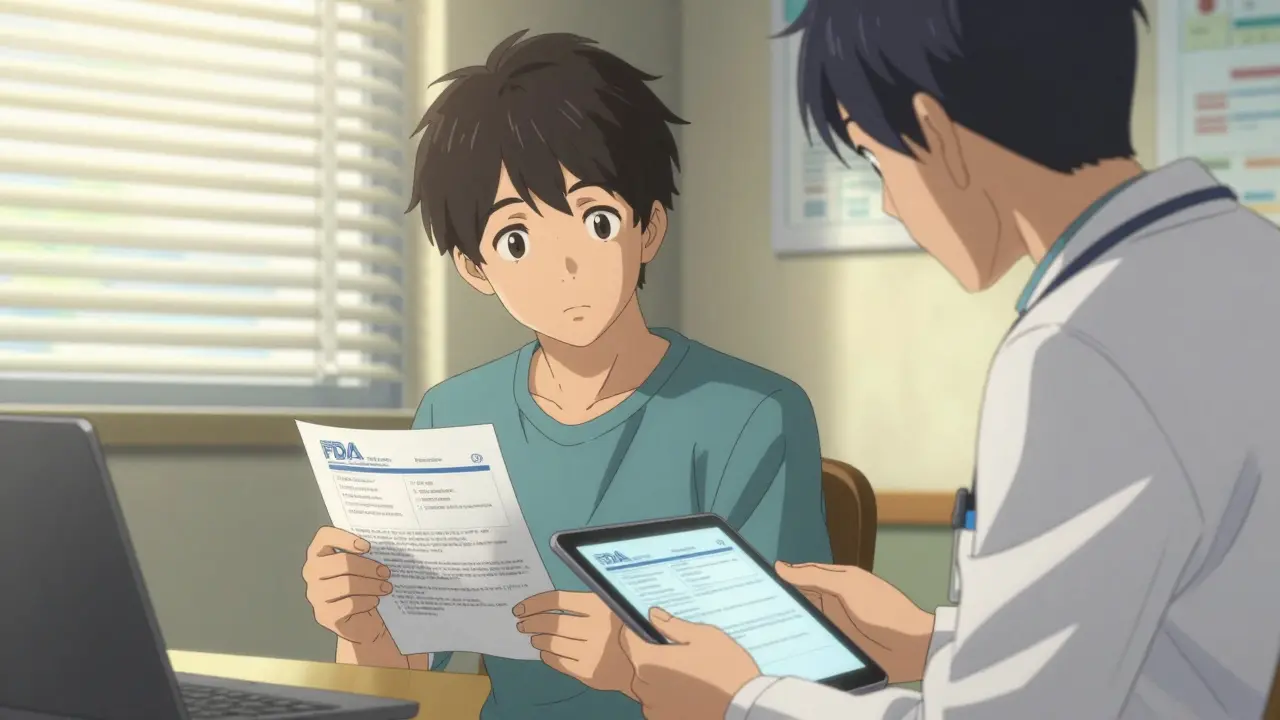
It’s 2025. You’re taking a medication that’s been working fine for months-until you see a headline: new safety alert for your drug. Your heart sinks. Is this serious? Should you stop taking it? Who do you even talk to? You don’t want to panic, but you also don’t want to ignore something that could affect your health. The truth is, you’re not alone. Every year, thousands of patients in the UK and US find themselves in the same spot: holding a printed alert from the FDA or the UK’s Drug Safety Update, unsure how to bring it up with their doctor without sounding alarmist-or worse, like they’re questioning their care.
What a Drug Safety Alert Really Means
A drug safety alert isn’t a recall. It’s not always a warning to stop taking your medicine. It’s a notification that new evidence has surfaced about a potential risk. These alerts come from regulatory bodies like the U.S. Food and Drug Administration (FDA) or the UK’s Commission on Human Medicines. They’re based on real data-thousands of patient reports, clinical studies, or long-term monitoring of medications after they’ve been approved. For example, in May 2023, the FDA issued a safety alert about ADHD stimulants, updating boxed warnings to include risks of misuse, addiction, and overdose. In July 2025, opioid manufacturers were told to revise prescribing guidelines for long-term use. In August 2025, the FDA removed a strict monitoring program (REMS) for Clozapine, a powerful antipsychotic, because newer data showed the risks were lower than previously thought. These aren’t random guesses. They’re the result of pharmacovigilance-ongoing monitoring of drugs after they’re on the market. Clinical trials involve a few thousand people. Real-world use involves millions. That’s where hidden risks show up: rare side effects, dangerous interactions with other meds, or problems that only appear after years of use.Why Doctors Sometimes Miss These Alerts
Your doctor isn’t ignoring you. They’re overwhelmed. Studies show that doctors override up to 96% of electronic safety alerts in hospital systems because they’re too frequent, too vague, or don’t fit the patient in front of them. One 2021 study found only 37% of primary care doctors regularly check for new drug safety updates between visits. The FDA sends out hundreds of alerts a year. Most are sent to clinics via email or integrated into electronic health records-but they’re buried under hundreds of other notifications. And here’s the catch: not every alert applies to you. An alert about a risk in older adults doesn’t matter if you’re 32. A warning about liver damage might not apply if your liver tests are normal. That’s why your doctor needs context-not panic.How to Prepare Before Your Appointment
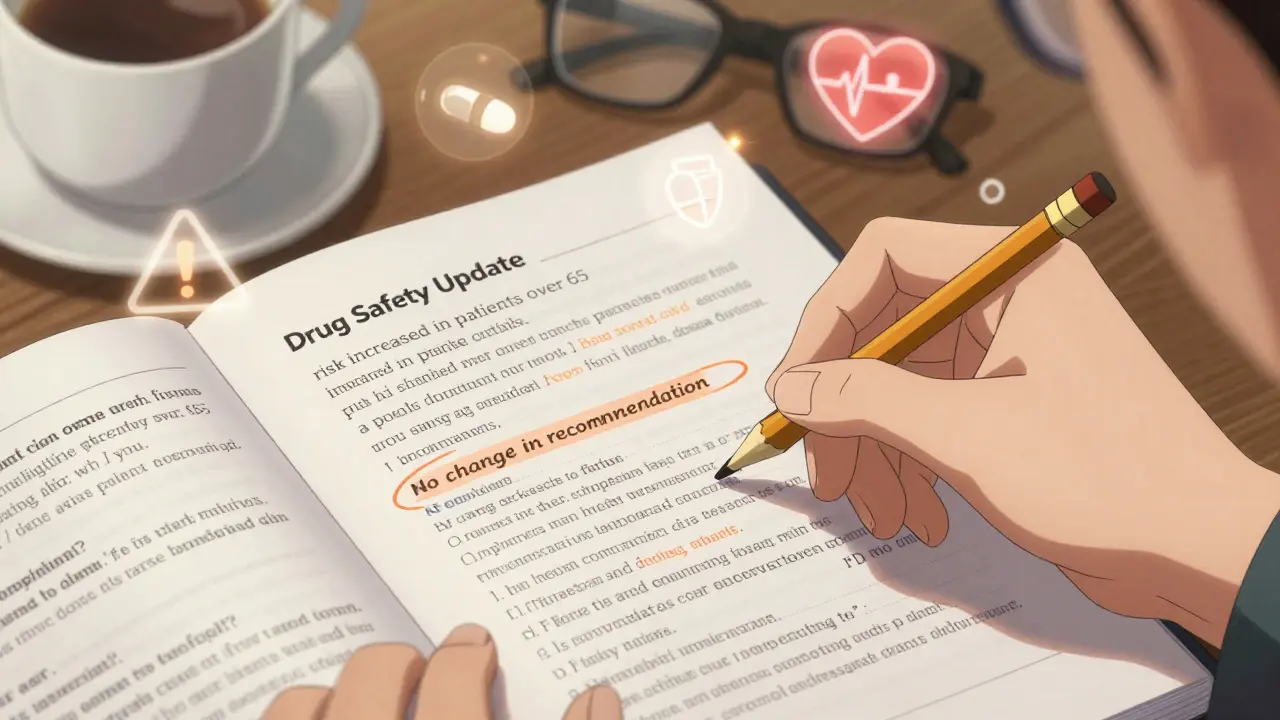
Don’t walk in with a screenshot from Facebook or a YouTube video titled “This Drug Could Kill You.” That’s not helpful. It’s noise. Instead, go to the official source: the FDA Drug Safety Communications page (or the UK’s Drug Safety Update). Search for your medication by name. Find the exact alert you saw. Print it out. Read the whole thing-not just the headline. Alerts often say things like: “Risk is increased in patients over 65,” or “Only applies to those taking more than 50mg daily,” or “No change in recommendation for patients with normal kidney function.” Write down three questions:- Does this alert apply to me, based on my age, other meds, or health conditions?
- Is there a safer alternative if this risk is real for me?
- Do I need any new tests or monitoring because of this?
How to Bring It Up in the Appointment
Timing matters. Don’t wait until the last two minutes. Raise it in the first few minutes, when your doctor is fresh. Say this:“I read an FDA safety alert about my medication, [medication name], dated [date]. I wanted to understand if it affects me and what we should do next.”
That’s it. No yelling. No “This drug is dangerous!” Just facts, calm, and curiosity. Research shows that patients who use this exact phrasing are 68% more likely to have a productive conversation. Those who say “I saw online that this drug causes heart attacks” are more likely to be dismissed. Your doctor isn’t offended you did your homework. They’re relieved. Most wish patients would come prepared like this.What to Do If Your Doctor Dismisses It
Sometimes, a doctor will say: “That alert is outdated,” or “We’ve seen this before,” or “It doesn’t apply to you.” That’s not always wrong. But it’s not always right either. If you feel brushed off, ask: “Can you show me the evidence that this doesn’t apply to me?” Or: “Could we get a second opinion from a specialist?” You have the right to understand your care. If your doctor won’t engage, ask for a referral to a pharmacist. Many hospitals have clinical pharmacists who specialize in drug safety. They can review your full list of meds, check for interactions, and explain the alert in plain terms.What If the Alert Means You Need to Change Meds?
Sometimes, the answer is yes-switching medications is the safest move. But not always. For example, if you’re on Clozapine for treatment-resistant schizophrenia, the 2025 alert removing the REMS program actually made it easier to access-less paperwork, fewer blood tests. That’s good news. Or if you’re on Leqembi for Alzheimer’s, the August 2025 alert recommending earlier MRI monitoring means you’ll need more scans-but it also means your care team can catch brain swelling early, before it becomes dangerous. The goal isn’t to stop all risky drugs. It’s to manage risk smartly.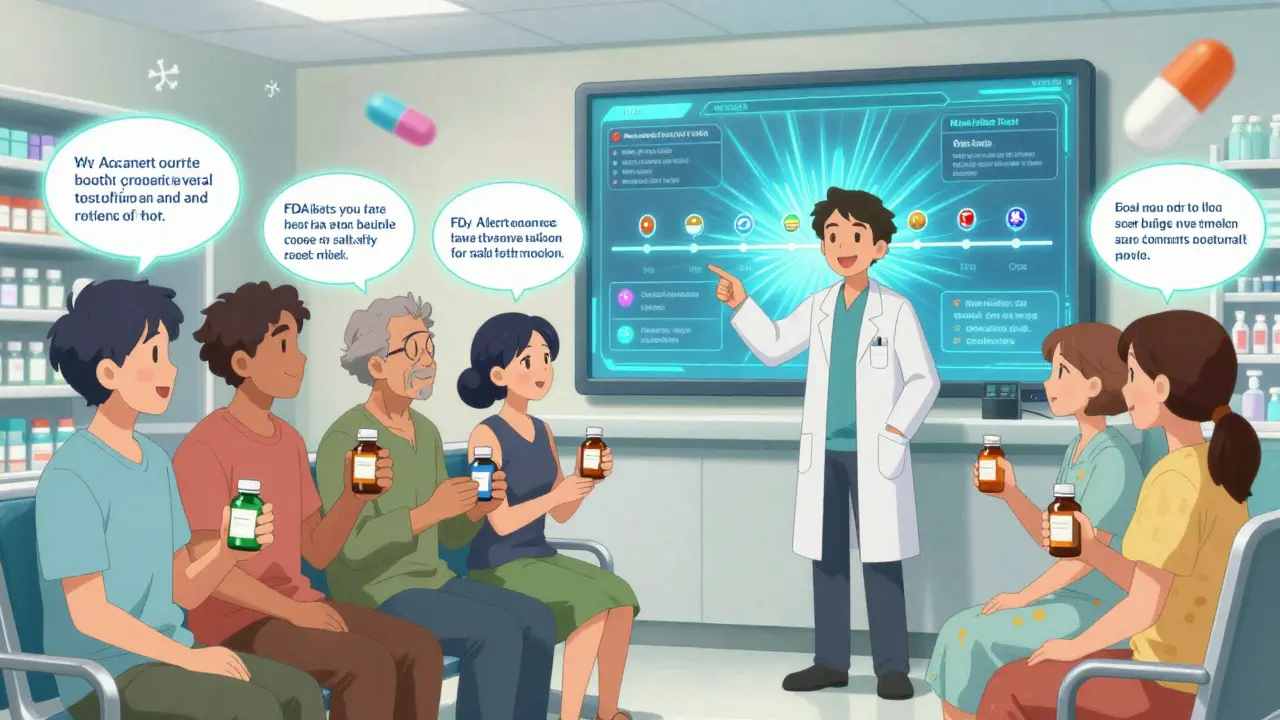
13 Responses
Just read this after my last visit. I printed the FDA alert on my blood pressure med and handed it to my doctor. She actually paused, read it, and said, 'You're right, we should check your kidney function next month.' Feels good to be heard.
OMG I LOVE THIS. Finally someone who gets it. No more 'I saw a TikTok' nonsense. Go straight to the FDA. Print it. Bring it. Don't be shy. Your doctor secretly wants you to do this. I'm telling you, it's the secret sauce of modern healthcare.
As someone who’s been managing diabetes and hypertension for over a decade, I can’t stress this enough: don’t wait for the headline. Every time I get a new med, I go to the FDA site and bookmark the safety page for it. I keep a little notebook in my wallet with all my meds, doses, and alert dates. My pharmacist knows me by name now. We even have a little system. And guess what? I’ve caught two potential interactions before they became problems. It’s not hard, it’s just consistent. If you’re on more than three meds, you owe it to yourself to do this. You’re not being difficult-you’re being smart. And if your doctor rolls their eyes? Take it as a sign you need a better one. Seriously. Your life is worth the 10 minutes it takes to read a government alert.
Wow. So the solution to our broken healthcare system is... printing out PDFs? I’m shocked. 🙃
It’s funny how we treat meds like magic pills. We take them for years, never question them, then panic when a 300-word government notice drops. But we’ll spend hours researching a new phone. Why? Because we think our phones are disposable. Our bodies? We treat them like they’re not even ours.
Classic. Another post telling people to be responsible while ignoring that most people don’t have time, access, or the mental bandwidth to chase FDA alerts. My doctor’s office still uses fax machines. The 'official source' is buried under 12 layers of hospital portal nonsense. Also, I’m on 7 meds. You want me to read 7 different safety alerts every month? Good luck with that. This isn’t empowerment. It’s guilt-tripping with a PubMed link.
THEY’RE LYING TO US. 😱 I’ve been on sertraline for 5 years. The FDA alert says 'possible increased risk of suicidal ideation in young adults'... but I’m 38. So why is my doctor still pushing it? Coincidence? I think NOT. Big Pharma is hiding something. 🤫💊 #PharmaCoverUp
Let’s be real-this is just pharmacovigilance 101 dressed up as a life hack. You don’t need to 'prepare' for your appointment. You need systemic reform. The fact that a patient has to manually track FDA bulletins while doctors get 1200+ automated alerts they ignore? That’s not patient empowerment. That’s institutional failure. But hey, at least we can all feel good about printing PDFs while the system burns.
Thanks for the clear steps. I’ve been nervous to bring this up before. Now I feel like I have a script. I’ll try it next week.
Why are we even trusting American agencies? FDA? Please. They approved opioids for pain and now they’re acting like they didn’t know? I read this alert and I just laughed. Who do you think writes these? The same people who let the meds out in the first place? No thanks. I’m switching to herbs. And if my doctor says no? I’m going to Nigeria. They know medicine there. Real medicine.
YES. This. I did this last month with my statin. My doctor was like 'wow you really did your homework' and we switched me to a better one. You’re not annoying-you’re a superhero with a printer. 👏💊
Wait-so you’re telling me I need to go to a GOVERNMENT WEBSITE?!?!? And PRINT IT?!?!? And WRITE QUESTIONS?!?!?!!? I can barely fill out my own insurance forms without crying. And you want me to read a 12-page FDA PDF?!?!?!? I just want to take my pill and not think about it!! I’m not a scientist!! 😭
One thing missing: tell your pharmacist. They’re the real drug experts. I asked mine about an alert on my anticoagulant. She checked my other meds, found a dangerous interaction, and called my doctor before my appointment. Saved me a hospital trip. Pharmacists are underused heroes.