

Imagine waking up to find out that a medication you've taken for years was recalled overnight due to contamination. It's a scary thought, but for many healthcare providers and patients, this is a real risk. The 2018 valsartan crisis, where blood pressure meds were found to contain impurities, proved that waiting for the news to hit the mainstream media is too slow. You need a way to get the facts the moment the regulators do. FDA Drug Safety Alerts is a system of free notification services provided by the U.S. Food and Drug Administration to warn the public about recalls, label changes, and safety risks. By subscribing, you move from being reactive to proactive, getting critical safety data delivered directly to your inbox.
The Three Ways to Stay Informed
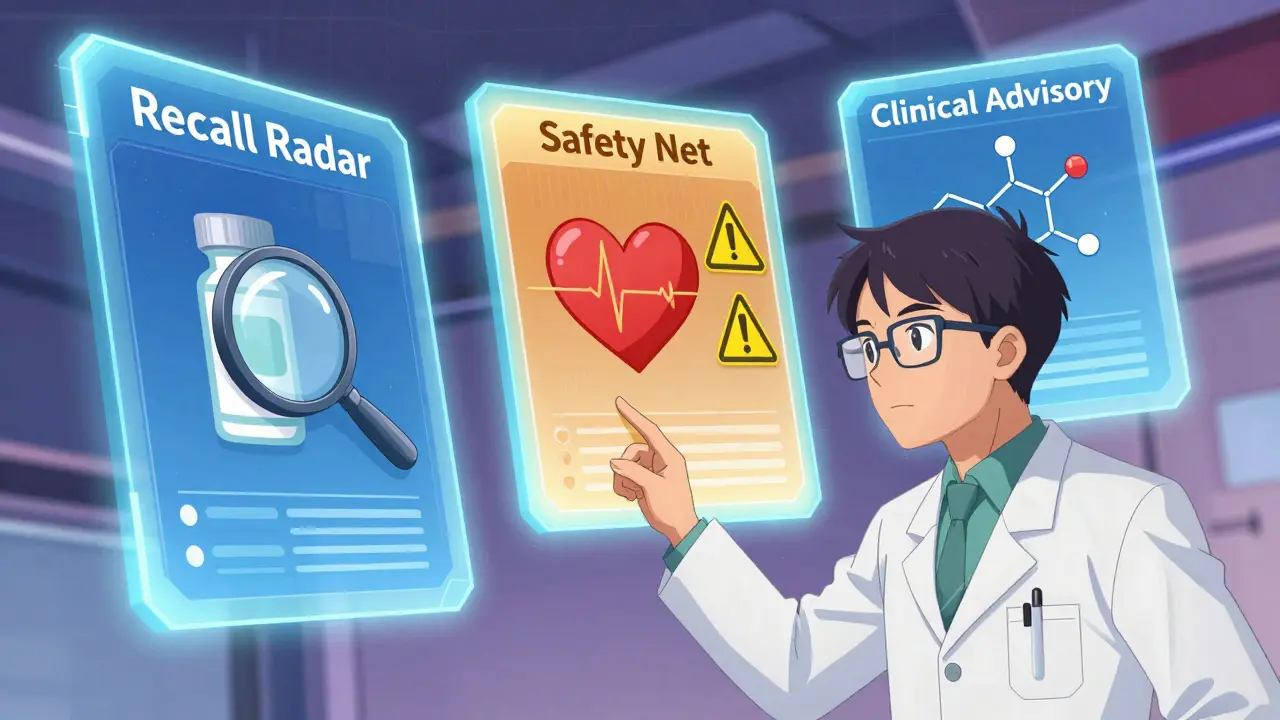
The FDA doesn't have one single "on" switch for alerts. Instead, they use three distinct systems, each designed for a different type of urgency. If you only pick one, you might miss a critical update. Here is how they break down:
- Enforcement Report Subscription Service: Think of this as the "Recall Radar." It focuses on the removal of products from the market. It's the best tool for tracking specific contaminated batches or faulty medical devices.
- MedWatch: This is the broader safety net. It's a portal for reporting and receiving alerts about serious adverse events and unexpected side effects. It uses a mix of email, RSS feeds, and social media.
- Drug Safety Communications: These are more like "clinical advisories." They deal with safety issues that might not trigger a full recall but require a change in how a drug is prescribed or used.
| Service | Primary Focus | Key Feature | Best For |
|---|---|---|---|
| Enforcement Report | Product Recalls | Custom Keywords | Pharmacists & Inventory Mgrs |
| MedWatch | Adverse Events | Broad Reach (RSS/Twitter) | General Public & Clinicians |
| Drug Safety Comms | Clinical Risks | Drug Class Filtering | Prescribing Physicians |
Step-by-Step Subscription Guide
Getting set up is relatively quick, but because the forms are on different pages, it's easy to get confused. Follow these steps to ensure you're fully covered.
Setting up the Enforcement Report (Recalls)
This is the most technical of the three because it allows for high customization. If you have a specific allergy or a high-risk patient population, this is where you spend your time.
- Go to fda.gov/enforcement-report-subscription.
- Enter your email address.
- Select your product categories. While you can pick food or cosmetics, most people prioritize "Drugs" and "Medical Devices."
- Set your frequency. Choose "Daily" if you manage a pharmacy or "Weekly" if you just want a summary.
- Pro Tip: Use Keywords. You can enter up to five keywords. For example, if you manage a clinic specializing in diabetes, enter "insulin." If you are a parent with a child's peanut allergy, enter "peanut." This filters out the noise and only alerts you to what actually matters.
Joining the MedWatch E-list
MedWatch is less about specific keywords and more about a general stream of safety data. It's the fastest way to see what's trending in the world of adverse reactions.
- Navigate to the MedWatch email list page at fda.gov/medwatch-email-list.
- Fill out the basic contact form.
- For those who hate email clutter, follow @FDAMedWatch on X (formerly Twitter) for real-time snapshots of alerts.
Subscribing to Drug Safety Communications
This system is for the "long game." These alerts often discuss new studies or updated labeling requirements that change the standard of care.
- Visit the Drug Safety and Availability section of the FDA website.
- Look for the "Sign up for email alerts" button.
- Choose the drug classes or medical specialties relevant to your practice or health needs.
Why Bother? The Real-World Impact
You might wonder if these emails are just more digital clutter. The data says otherwise. A study from the University of Michigan found that FDA alerts typically hit inboxes within 4.2 hours of a recall being determined-nearly twice as fast as most commercial alternatives. For a pharmacist, those four hours can be the difference between dispensing a contaminated vial and stopping it at the door.
Clinicians who use these tools see a tangible difference in patient outcomes. The American Medical Association found that 72% of physicians who subscribe to Drug Safety Communications actually changed how they managed their patients based on the alerts. Compare that to only 41% for those who didn't subscribe. Essentially, the information directly influences the quality of care.
Common Pitfalls and How to Handle Them
The biggest complaint from users is "alert fatigue." When you subscribe to everything, your inbox becomes a flood of technical jargon. To stop this from happening, don't just check every box. Be surgical with your keywords in the Enforcement Report and limit your Drug Safety Communications to only the specialties you actually practice or a health condition you actually have.
Another common point of confusion is the overlap between systems. If you see an alert in MedWatch and then a similar one in the Enforcement Report, don't panic. MedWatch often reports the *problem* (e.g., "Patients are reporting rashes"), while the Enforcement Report handles the *solution* (e.g., "Batch #123 is being recalled").

Looking Ahead: What's Changing in 2025-2026
If you've found the current system fragmented, you're not alone. The FDA is currently overhaulling these services. By late 2025, the agency plans to merge the Enforcement Report, MedWatch, and Drug Safety Communications into one single, unified platform. The goal is to use machine learning to prioritize alerts based on clinical urgency, so you don't get a "low-risk" label change in the same priority as a "life-threatening" recall.
Additionally, the long-awaited mobile app integration is arriving in 2025. This means you'll finally get push notifications on your phone instead of having to check your email. For those who struggle with language barriers, Spanish-language alerts are also scheduled to roll out by Q3 2025, making this critical safety data accessible to a much wider portion of the population.
Are these FDA subscription services free?
Yes, all official FDA drug safety alerts and subscription services are completely free. You only need a valid email address to sign up. Be cautious of third-party services that charge a monthly fee for "FDA tracking," as the primary data is provided for free by the government.
How many keywords can I use for alerts?
Currently, the Enforcement Report Subscription Service allows for up to five custom keywords per account. However, the FDA has announced plans to expand this limit to ten keywords by December 2025 to allow for more granular filtering.
What is the difference between a MedWatch alert and a recall?
A MedWatch alert is often an early warning about a potential safety issue or a reported adverse event. A recall, tracked via the Enforcement Report, is a formal action to remove a specific product from the market because it is defective or potentially harmful.
Can I get alerts for medical devices, or just drugs?
You can get both. The Enforcement Report Subscription Service covers all FDA-regulated products, including prescription and over-the-counter drugs, biologics, and medical devices.
How do I stop receiving alerts?
Every FDA alert email contains an "unsubscribe" link at the bottom. You can also manage your preferences or delete your account by returning to the specific subscription page where you originally signed up.
Next Steps for Different Users
For Patients: Start with the MedWatch E-list and the Enforcement Report. Use the keyword feature for any chronic medications you take or severe allergies you have. This gives you a safety net without overwhelming your inbox.
For Pharmacists: You should subscribe to all three. Set your Enforcement Report frequency to "Daily" and use keywords for your highest-volume medications. This ensures you can pull recalled stock before it reaches a patient.
For Physicians: Focus heavily on Drug Safety Communications. Use the specialty filters to stay updated on the latest clinical risks associated with the drugs you prescribe most often, ensuring your patient management remains evidence-based and safe.
11 Responses
The integration of pharmacovigilance data into a unified platform is a long-overdue move for the FDA since the current fragmented infrastructure often leads to suboptimal signal detection and delayed risk mitigation strategies in clinical settings
they only tell you after they already know and the damage is done
Imagine thinking a few emails can fix the systemic failure of Western medicine when our own systems in India are evolving so much faster 🇮🇳🇮🇳 why should we trust a fragmented US system when we have the brilliance of the east 🚩
It's really about finding a balance between staying informed and not letting the anxiety of potential risks take over our peace of mind man
honestly the whole idea of having to sign up for three different things just to make sure i dont accidentally poison myself is just a complete joke and honestly typical of how these bureaucratic nightmares operate where they make you do all the heavy lifting just to get basic safety info that should just be a push notification for everyone by default in this day and age
Glad to see these resources being highlighted 🌟 Definitely helps people feel more in control of their health journey ✨
Thnx for sharin this!! I didnt know there was a way to get alerts for specific things like allergies’ it really helps out
One must prioritize these subscriptions immediately. Efficiency in healthcare is paramount.
OMGGGGG I cannot believe I just found this out!! 😱 I'm signing up for everything right now because my health is my absolute priority and we all deserve to be safe!!! 💖💪✨
Just take it one step at a time everyone, no need to rush and get overwhelmed by the options, just pick what fits your life best
This is a fantastic roadmap for navigating the FDA's digital maze. It is truly impressive how the author managed to distill such a convoluted process into a streamlined guide that even a novice could follow without getting lost in the weeds of government terminology. I have seen many attempts at explaining this, but the breakdown of the three distinct systems is particularly enlightening and provides the necessary clarity to avoid the dreaded alert fatigue mentioned. It's a masterclass in utility and accessibility, ensuring that patients and providers alike can safeguard their health with precision and confidence. I'm genuinely thrilled to see such a comprehensive resource available for the community, as it bridges the gap between regulatory data and actual patient safety in a way that is both practical and empowering. Truly a gold-standard guide for anyone who values their longevity and wellness in an era of complex pharmaceutical supply chains. I'll be sharing this with my entire network to ensure no one misses out on these life-saving notifications. Bravo for the effort put into this layout, especially the comparison table which makes the decision process a complete breeze for the user. This is exactly the kind of high-value content that makes the internet a useful place for health literacy. Keep it up!