
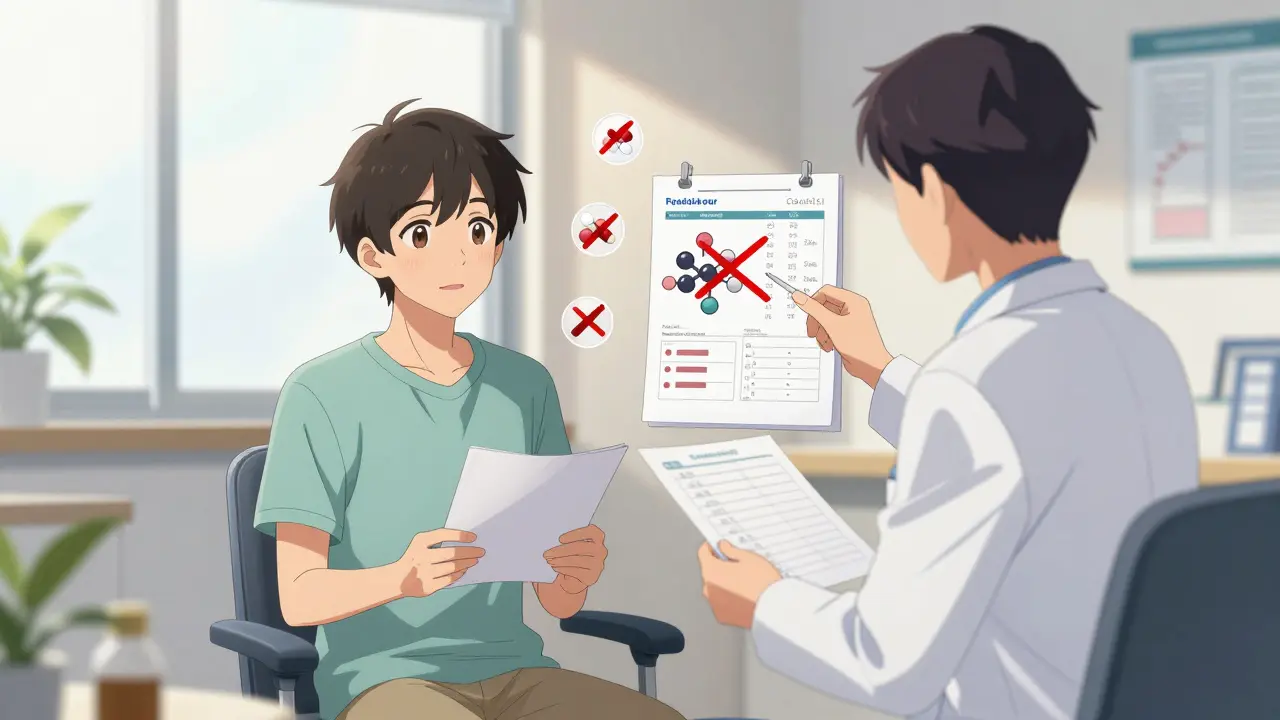
Many people believe they’re allergic to antibiotics-especially penicillin-because they had a rash, nausea, or felt dizzy after taking it years ago. But here’s the truth: penicillin allergy is often misdiagnosed. About 10% of Americans say they’re allergic to penicillin. Yet when tested properly, less than 1% actually are. That means millions of people are avoiding a safe, cheap, and effective antibiotic because of a mistake. And that mistake has real consequences: they end up on stronger, more expensive drugs that fuel antibiotic resistance and cost thousands more per year.
If you’ve been told you’re allergic to an antibiotic, and you’re tired of being stuck with less effective options, allergy testing could change everything. But you can’t just walk into a clinic and ask for it. You need to prepare. And the preparation matters just as much as the test itself.
Stop Taking Antihistamines Before Your Test
The biggest mistake people make? Keeping their allergy meds on hand. Antihistamines-like Benadryl, Zyrtec, Claritin, and Allegra-block the body’s allergic response. That sounds helpful, right? Wrong. If you’re taking them before your test, the results will be wrong. You might think you’re not allergic… when you actually are.
You need to stop all first-generation antihistamines-diphenhydramine, hydroxyzine-at least 72 hours before your appointment. For second-generation ones-cetirizine, loratadine, fexofenadine, levocetirizine-you need to stop for a full 7 days. That’s longer than most people expect. If you’re on doxepin (a tricyclic antidepressant with antihistamine effects), you’ll need to stop 14 days out. No exceptions. Your allergist will ask you for a full list of everything you’re taking. Be honest. Missing one could mean a false negative.
Keep Your Other Medications-But Tell Your Doctor
You don’t need to stop everything. Blood pressure meds, diabetes drugs, thyroid pills-keep taking them. But there’s one group you need to flag: beta-blockers. These are common for heart conditions and high blood pressure. The problem? They can hide the early warning signs of anaphylaxis. If your heart starts racing or your throat tightens, beta-blockers might mute those signals. That’s dangerous. Your allergist needs to know you’re on them so they can watch you more closely during testing.
Also mention ACE inhibitors. These are used for heart failure and kidney protection, but they can make an allergic reaction harder to treat. If you’re on lisinopril, enalapril, or similar drugs, your doctor will adjust their emergency plan. Don’t assume they’ll know. Bring your pill bottles or a printed list. It saves time-and could save your life.
What Happens During the Test
Antibiotic allergy testing isn’t one thing. It’s three steps, done in order. If you pass the first, you move to the next. If you fail, you stop. That’s how it’s done safely.
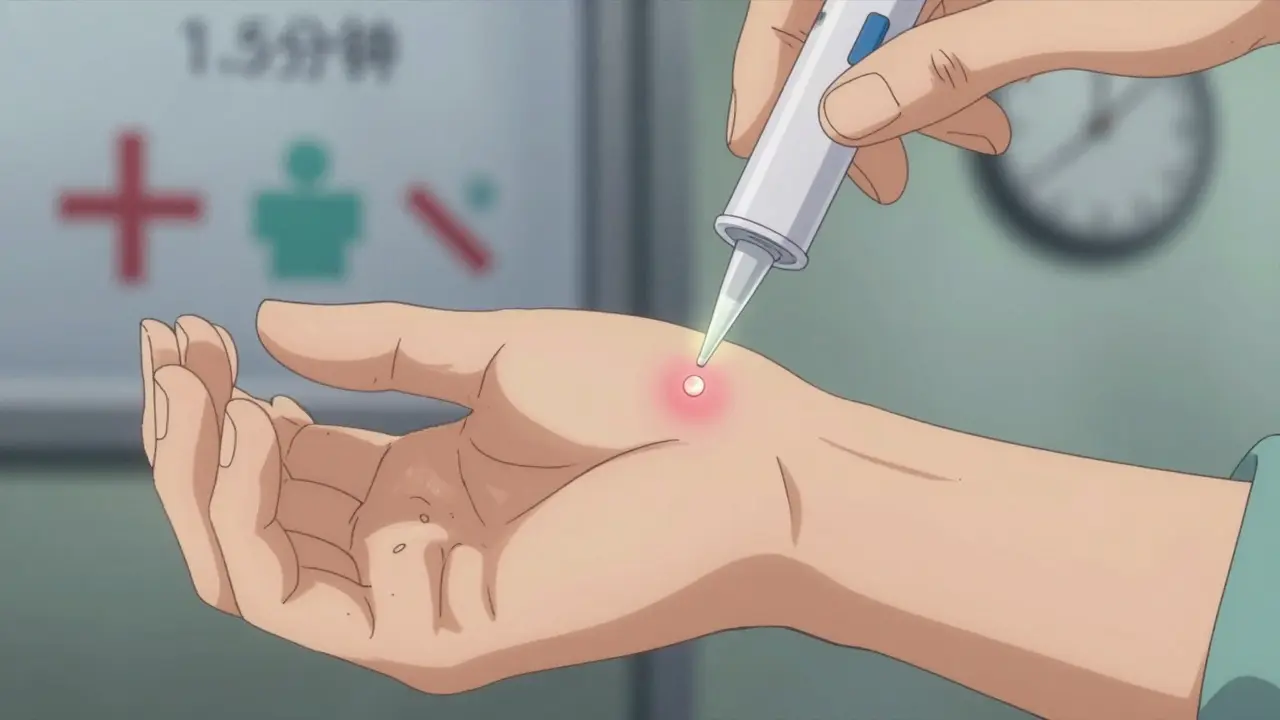
Step one: the skin prick test. A tiny drop of penicillin solution is placed on your forearm or back. A small plastic device lightly pricks the skin through the drop. It doesn’t hurt-most people say it feels like a mosquito bite. You wait 15 minutes. If nothing happens, you’re good to go to step two.
Step two: the intradermal test. If the skin prick is negative, a small amount of penicillin is injected just under the skin. It makes a tiny bubble, like a mosquito bite with a bump. You wait again. A red, swollen bump larger than 3mm means a positive result. That’s a true allergy. If it’s smaller or nothing, you move to step three.
Step three: the oral challenge. This is where most people get nervous. You swallow a small dose of the antibiotic-usually penicillin or amoxicillin. It’s a pill, same as you’d take for an infection. You’re watched for 30 minutes. Then you take the full dose. You’re monitored for another 60. You might feel a little queasy. Maybe a mild itch. But if you’re not allergic, you’ll feel fine. The risk of a serious reaction? Less than 0.06%. That’s lower than the chance of being struck by lightning in a year.
What a Positive Result Means
If your skin test shows a raised, red bump over 3mm, you’re likely truly allergic. That’s not a guess. It’s backed by a 95-98% accuracy rate. You’ll be advised to avoid that antibiotic and all similar ones. You’ll get a medical alert bracelet. You’ll carry an epinephrine auto-injector.
But here’s something many don’t know: allergies fade. If you had a severe reaction 10 years ago, there’s an 80% chance you’re no longer allergic. That’s why retesting is so important-even if you’ve been told you’re allergic for life. Kids outgrow it. Adults lose it. The immune system changes. A test today might give you a different answer than one from 15 years ago.
What a Negative Result Means
If all three steps come back negative? You’re not allergic. Not just “probably not.” Not “likely not.” You’re not allergic. That’s it. You can take penicillin again. No fear. No side notes on your chart. No extra cost.
That’s powerful. You’ll be able to use first-line antibiotics that work better, cost less, and are safer for your body. One patient in a 2023 study switched from daptomycin-$1,850 per dose-to penicillin-$12 per dose-for a bone infection. Their annual antibiotic bill dropped from $67,525 to $4,380. That’s not a typo. That’s the real impact.

What to Expect After the Test
Most people feel fine right after. But some notice something hours later. About 15% of people get a delayed reaction: redness, itching, or a rash at the test site. It’s not an allergic reaction-it’s just irritation. It fades in a day or two. Hydrocortisone cream helps. No need to panic.
Some people report feeling anxious or having a stomach upset during the oral challenge. That’s common. It doesn’t mean you’re allergic. It just means your body reacted to the idea of taking a drug you’ve been told to fear. Your doctor will know the difference.
And if you get a positive result? Don’t be upset. You now have clarity. You know what to avoid. You can plan. You can protect yourself. That’s better than living in uncertainty.
Why This Test Matters More Than You Think
This isn’t just about you. It’s about everyone. When people avoid penicillin because they think they’re allergic, doctors reach for broader-spectrum antibiotics. Those drugs kill more good bacteria. They cause more side effects. They make superbugs stronger. Every time you’re given the wrong antibiotic, you’re helping create a future where common infections become untreatable.
Testing cuts that cycle. Every confirmed non-allergy prevents 670 extra days of broad-spectrum antibiotics over a patient’s lifetime. It saves $5.70 for every $1 spent on testing. It shortens hospital stays by nearly two days per person. It saves lives.
And it’s accessible. More hospitals are starting formal allergy de-labeling programs. In 2023, 42% had them. By 2027, that number will hit 75%. Telemedicine is helping too. In pilot studies, patients in rural areas safely completed oral challenges at home-with a doctor on video. The future of antibiotic testing isn’t just in big-city clinics. It’s coming to your town.
What If You Can’t Get Tested?
Not everyone can get to an allergist. In rural areas, 63% of counties have no allergy specialist. If that’s you, talk to your doctor. Ask if they can refer you to a nearby hospital with a testing program. Some primary care offices are starting to offer basic skin testing. Others can connect you with telehealth allergy services.
Don’t accept “we don’t do that here” as the final answer. Push. Ask for the Infectious Diseases Society of America’s guidelines. Ask if they’ve heard of the 2022 joint guidelines from AAAAI and IDSA. You’re not asking for a favor-you’re asking for evidence-based care.
And if you’re still unsure? Start by stopping your antihistamines. Write down your reaction history. Make a list of all your meds. That’s the first step. The rest will follow.
Can I take my regular meds before allergy testing?
You can keep most of your regular medications, including blood pressure pills, diabetes drugs, and thyroid meds. But you must stop all antihistamines-both first- and second-generation-for 3 to 7 days before testing. Tricyclic antidepressants like doxepin need to be stopped 14 days out. Always tell your allergist about everything you’re taking, especially beta-blockers and ACE inhibitors, as they can affect how your body responds during testing.
Is penicillin allergy testing painful?
The skin prick test feels like a light pinch-like a mosquito bite. The intradermal test creates a small bump under the skin, which may itch slightly. The oral challenge is just swallowing a pill. Most patients say the discomfort is far less than they expected. The anxiety is usually worse than the test itself.
How long does the whole process take?
The entire testing process takes about 2 to 3 hours. Skin testing takes 30 minutes. If negative, intradermal testing adds another 30 minutes. The oral challenge takes 90 minutes total-30 minutes after the first dose, then 60 more after the full dose. You’ll be monitored the whole time. Most people finish by early afternoon.
What if I have a reaction during testing?
Reactions during testing are rare and managed immediately. All testing is done in a medical setting with epinephrine, antihistamines, and oxygen ready. Mild reactions-like itching or redness-are common and treated on the spot. Severe reactions (anaphylaxis) happen in about 0.06% of cases. If one occurs, your team will respond right away. This is why testing must be done in a clinic, not at home.
Can I get tested for antibiotics other than penicillin?
Currently, penicillin and related beta-lactam antibiotics (like amoxicillin and ampicillin) are the only ones with standardized testing protocols. Testing for other antibiotics-like sulfa drugs or vancomycin-is not reliable and not routinely done. If you think you’re allergic to another drug, your allergist will evaluate your history and may suggest a supervised oral challenge, but it’s not as accurate or standardized as penicillin testing.
Will my insurance cover allergy testing?
Most insurance plans in the U.S. cover antibiotic allergy testing because it’s proven to reduce overall healthcare costs. The test itself may cost $150-$400, but it saves thousands by avoiding expensive alternative antibiotics. Always check with your provider, but coverage is common. In the UK, testing is typically covered under the NHS if referred by a GP or specialist.
13 Responses
Man, I never knew so many folks think they allergic to penicillin just cause they got a rash once. I had a rash after amoxicillin when I was 12, but my doc said it was probably just a virus. Turns out I’m fine now-got a full test last year. Best decision ever.
Stopping antihistamines is critical. Many patients don’t realize how long they need to be off them. I’ve seen people show up with Zyrtec still in their system and wonder why the test was inconclusive. Clear instructions save time and prevent false negatives.
Yeah right, like we’re all just waiting to be told we’re not allergic. I’ve been told I’m allergic since I was five. My mom cried when I got the diagnosis. You think I’m gonna just trust some skin prick test after 30 years?
THIS. I did this test last month. I thought I was doomed to take expensive antibiotics forever. I got the all-clear. I cried in the waiting room. My pharmacy bill dropped by 90%. If you’ve been told you’re allergic, PLEASE get tested. It’s life-changing.
It’s... fascinating... how the immune system... evolves... over time... isn’t it? I mean, we’re not static organisms... we’re... adaptive... and yet... we cling to labels... like... old scars... that... no longer... serve us... and... what if... the test... is... wrong...?
Penicillin de-labeling is one of the most cost-effective interventions in modern medicine. The data is robust. The risk-benefit ratio is overwhelmingly favorable. Systemic adoption is not optional-it’s imperative.
I’m a nurse. I’ve watched patients suffer because they were mislabeled. One woman got clindamycin for a UTI-ended up with C. diff and spent 3 weeks in the hospital. She’s fine now, but she didn’t need to go through that. If you think you’re allergic, talk to your doctor. Don’t wait.
In Nigeria, most people never even hear about this. Antibiotics are sold over the counter. If someone says they’re allergic, no one checks. We need more global awareness. This isn’t just a US problem-it’s a global public health issue.
OMG I JUST GOT MY RESULTS AND I’M NOT ALLERGIC!!! I’VE BEEN TAKING CLARITHROMYCIN FOR YEARS BECAUSE I THOUGHT I WAS ALLERGIC TO PENICILLIN!!! I JUST SPENT $12,000 ON DRUGS I DIDN’T NEED!!! I’M SO ANGRY AND SO RELIEVED AT THE SAME TIME!!!
The sensitivity of the intradermal test is approximately 92% for IgE-mediated penicillin allergy, with a specificity of 85%. However, false positives may occur due to non-IgE-mediated reactions or cross-reactivity with beta-lactamase inhibitors. The oral challenge remains the gold standard for definitive diagnosis.
People are too lazy to read the instructions. They think they know better. I’ve been in this field for 20 years. If you don’t stop your antihistamines, you’re not just wasting your time-you’re putting others at risk by forcing doctors to use worse antibiotics. This isn’t complicated. It’s basic.
Thank you for writing this. I’m a physician, and I’ve seen the consequences of mislabeled allergies firsthand. It’s heartbreaking to prescribe a drug that’s less effective, more toxic, and more expensive simply because a patient was told they were allergic decades ago. This is why we need more allergists in primary care settings. Not every patient needs a specialist referral-some can be safely evaluated with protocols. We’re making progress, but we need more awareness.
Just a heads-up: if you’re on beta-blockers, tell your doctor BEFORE you even schedule the test. I forgot to mention mine, and they had to reschedule because they needed to adjust monitoring. Don’t be like me. Write it down. Bring your meds. It’s not a big deal, but it saves everyone time.