
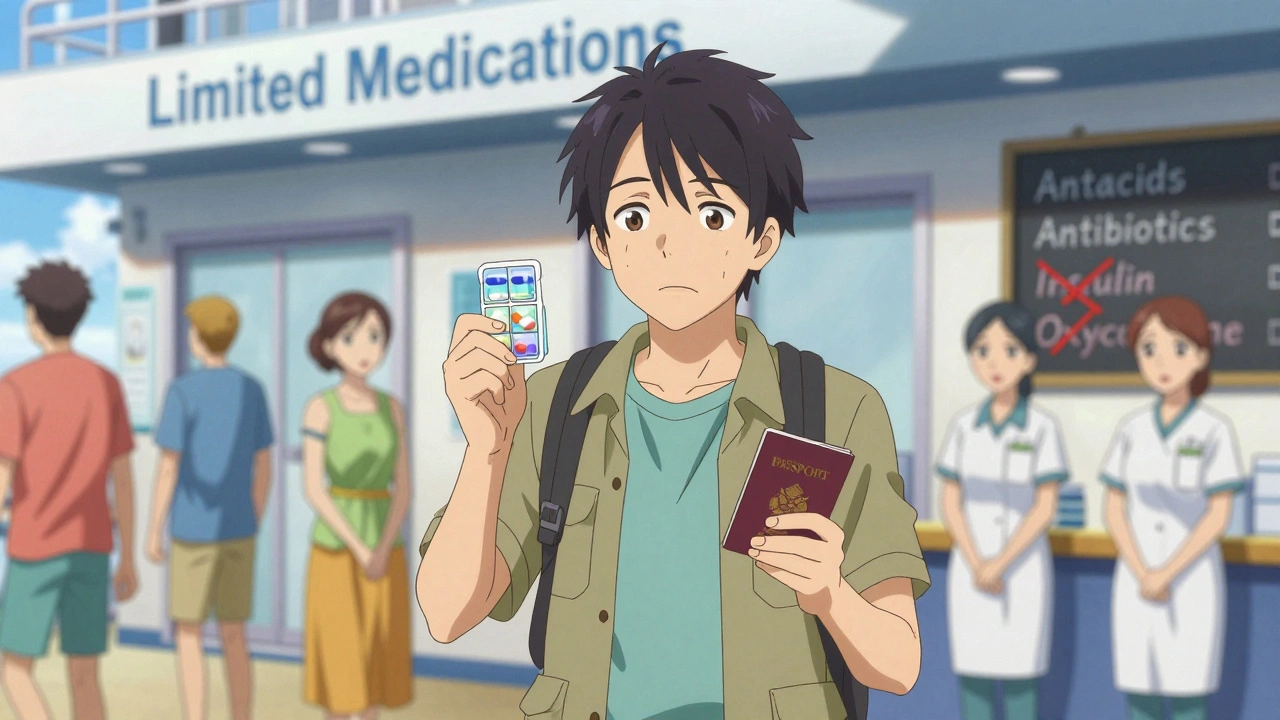
When you're on a cruise, the last thing you want is to run out of your regular medication-or worse, get sick and find the ship’s medical center doesn’t have what you need. Cruise ship medical centers aren’t hospitals. They’re infirmaries. That means they can handle seasickness, minor cuts, colds, or stomach bugs, but they can’t refill your specialty prescriptions like insulin, blood pressure meds, or painkillers unless they happen to have them in stock. And even then, you’ll pay a lot more than you would at home.
Don’t Rely on the Ship’s Pharmacy
Most cruise lines carry a basic selection of medications: antacids, anti-nausea pills, antibiotics like amoxicillin, pain relievers, and maybe a few heart or diabetes meds. But if you’re on a 14-day cruise and need your daily blood pressure tablet, don’t assume they’ll have it. According to Cruise Critic’s 2023 analysis, only larger ships carry more than 50 different drugs-and even then, it’s never a full list. Storylines, a residential cruise line, is an exception. They stock more and even compound medications, but they require you to submit prescriptions six to twelve months in advance. For everyone else? Assume nothing.Bring Enough-Plus Extra
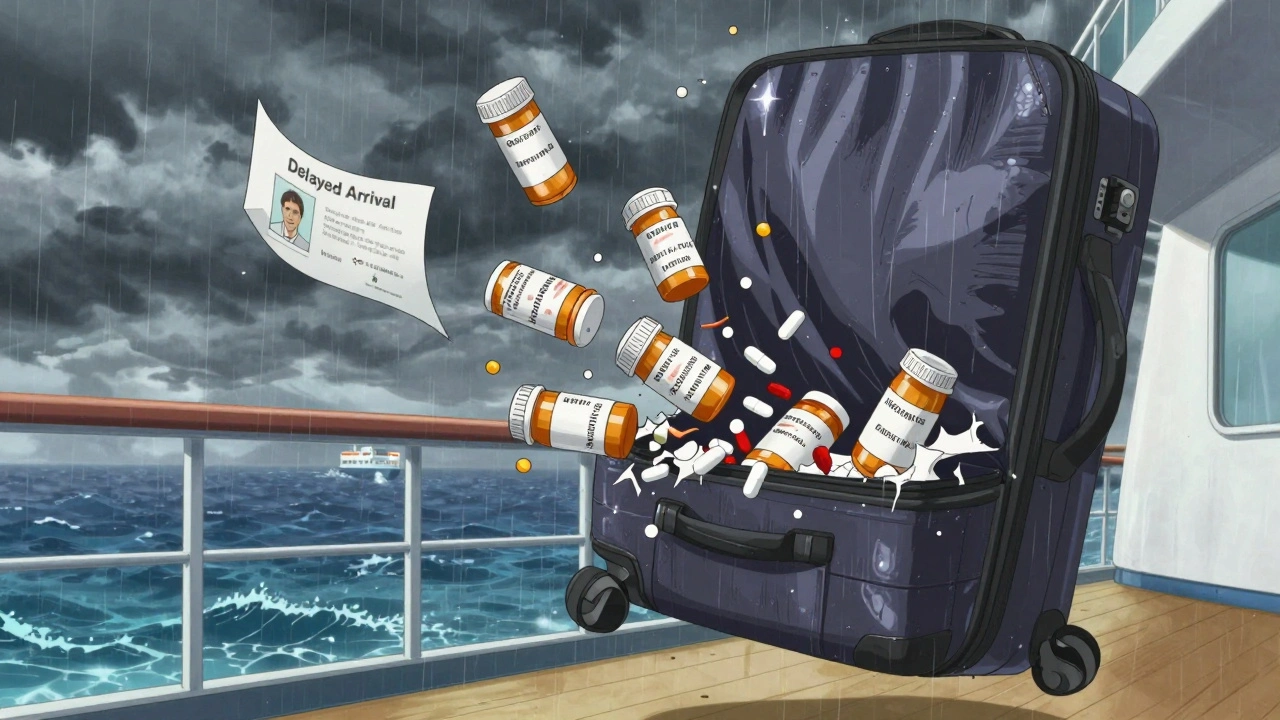
The rule is simple: bring enough for your entire trip, plus at least three to five extra days. Why? Delays happen. Ports get canceled. Weather shuts down shore pharmacies. One Reddit user shared how their 14-day cruise got extended by two days because of a storm. Their blood pressure pills ran out on day 12. The ship didn’t carry it. The next port’s pharmacy was closed. They spent two days feeling dizzy and anxious. Pack your meds in your carry-on. Never check them. If your luggage gets lost, you’re not stuck. Also, keep them in their original bottles with the pharmacy label. Cruise staff will ask to see them. If your name on the bottle doesn’t match your passport, you could be denied access-even if it’s your own medicine. International travel adds another layer: some countries restrict certain drugs. Check your destination’s rules before you go.Know What’s Available-and What Isn’t
Cruise medical centers stock what’s common: antibiotics, antidiarrheals, antihistamines, and motion sickness meds. Many ships even give out free seasickness pills at the front desk or medical center. That’s a lifesaver on day one. But here’s what they almost never have:- Narcotics (oxycodone, hydrocodone)
- Insulin (unless it’s a very common type like Humalog)
- Specialty biologics (like Humira or Enbrel)
- CPAP machine supplies (unless you’re on Storylines)
- Birth control pills (some lines carry them, but not reliably)
Costs Are High-Very High
Even if they have your medication, you’re not getting a deal. A single dose of an antibiotic might cost $35 on board. At a U.S. pharmacy? $12. A 30-day supply of a common blood pressure pill? $120 on the ship. $25 at CVS. That’s a 400% markup. You’re paying for convenience, storage, and limited supply. Some passengers say it’s worth it if you’re in pain or can’t get off the ship. But if you can wait until the next port, you might save hundreds.Prepare for Chronic Conditions
If you have diabetes, heart disease, asthma, or any condition requiring daily meds, talk to your doctor before you sail. Get a letter explaining your condition and meds. Carry a list of your medications with dosages and prescribing doctors. If you use insulin, bring syringes, alcohol wipes, and a backup pen. Bring extra batteries for glucose monitors. If you use a CPAP machine, pack distilled water and an extension cord. Storylines recommends this for long-term residents. Even regular cruise lines advise it. Don’t forget your emergency meds. If you have an EpiPen, bring two. If you have nitroglycerin for angina, bring your own. The ship’s medical center won’t have it. And if you need oxygen? You’re responsible for bringing your own tank and arranging delivery before boarding. Most lines won’t provide it.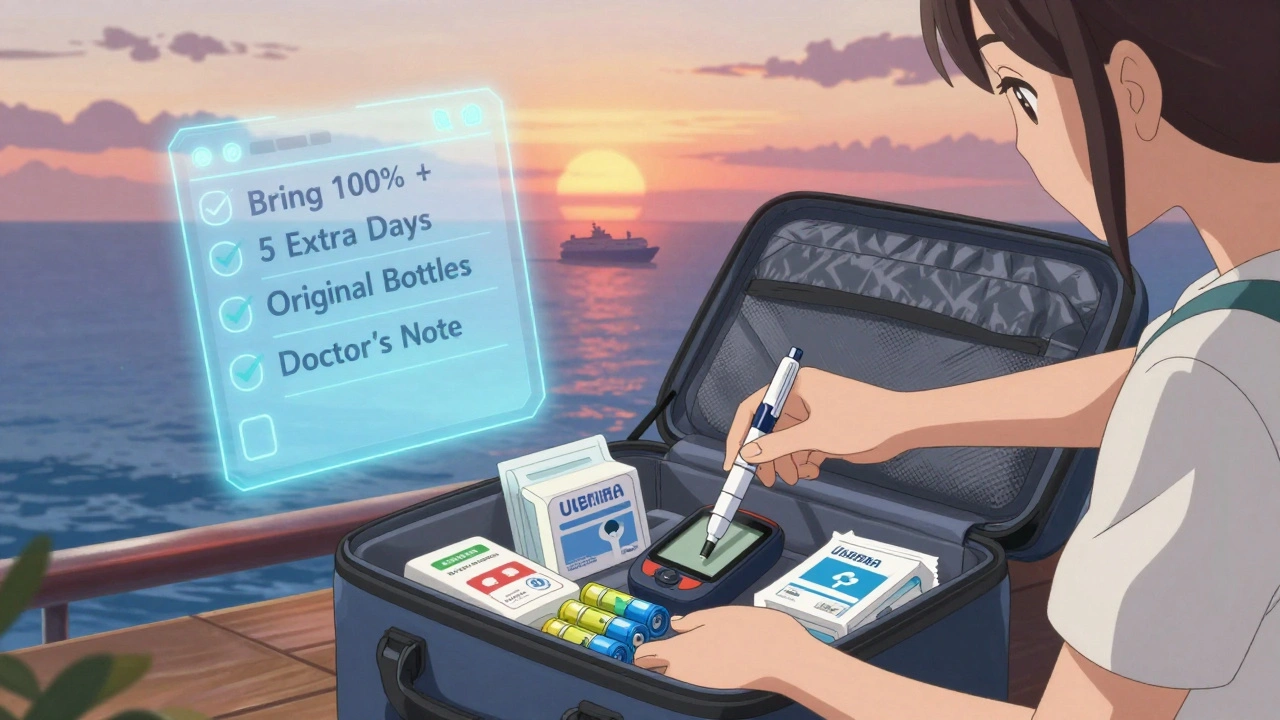
Telemedicine Is Starting-But Don’t Count on It
Royal Caribbean announced in 2024 that some ships now offer telemedicine. That means you can video-call a doctor on land who might help adjust your meds. But it’s not available on every ship. And even if you get connected, they can’t mail you prescriptions. They can only advise. You still need to have your meds on board.What to Do If You Run Out
If you’re out of meds and the ship doesn’t have them:- Go to the medical center immediately. They might have a substitute.
- Ask if they can contact the next port’s pharmacy. Sometimes they’ll call ahead and arrange a pickup.
- If you’re in port, go to a local pharmacy. Bring your original prescription bottle and a doctor’s note. Some countries require a translation.
- If you’re stuck at sea, wait. Don’t skip doses unless your doctor told you to.
Bottom Line: Plan Like a Pro
Cruise ship medical centers are great for emergencies and minor issues. But they’re not pharmacies. Don’t treat them like one. Here’s your checklist:- Bring 100% of your meds in original bottles
- Add 3-5 extra days’ supply
- Keep them in your carry-on
- Match bottle names to your passport
- Bring a printed list of meds and dosages
- Carry doctor’s notes for insulin, CPAP, or controlled substances
- Know your cruise line’s policy (check their website)
- Don’t assume anything is available
Can I get my prescription refilled on a cruise ship?
Usually not. Cruise ship medical centers carry a limited selection of common medications. They can’t refill most prescriptions unless they already have the exact drug in stock. Even then, they may charge 200-300% more than a land-based pharmacy. Always bring enough for your entire trip plus extra days.
Do I need to bring my medications in original bottles?
Yes. Cruise staff will ask to see your bottles to verify the medication and dosage. Unlabeled pills may be confiscated, even if they’re yours. Make sure the name on the bottle matches your passport exactly, especially for international travel.
What if I need insulin or other specialty drugs?
Bring your own. Most cruise ships don’t carry insulin or specialty biologics. Even if they do, it’s rare and expensive. Always carry a doctor’s note explaining your need for insulin, along with syringes, alcohol wipes, and backup pens. Store insulin in a cooler bag with ice packs.
Are seasickness pills free on cruise ships?
Yes, many cruise lines offer complimentary seasickness medication at the front desk or medical center. These are usually over-the-counter antihistamines like dimenhydrinate or meclizine. They’re available 24/7 and are one of the few medications you can count on.
Can I get painkillers like oxycodone on a cruise?
Almost never. Narcotics are strictly controlled on cruise ships. Even Storylines, which has the most advanced pharmacy, says these are only available in extreme emergencies. If you rely on them, bring your own supply with a doctor’s note. Never assume they’ll be available.
What should I do if my cruise is delayed and I run out of meds?
If you’ve packed extra days’ supply, you’re covered. If not, go to the medical center first. They might have a substitute. If you’re in port, visit a local pharmacy with your original bottle and doctor’s note. If you’re stuck at sea, contact your cruise line’s guest services-they may help coordinate with the next port.
Do cruise ships carry blood pressure or diabetes meds?
Some larger ships carry a few common ones, like metformin or lisinopril, but availability is never guaranteed. Don’t rely on it. Bring your own supply, even if you think you’ll only need it for a few days. It’s better to have too much than too little.
Is telemedicine available on cruise ships?
Some newer ships, like those from Royal Caribbean, offer telemedicine for remote consultations. But this doesn’t mean you can get a new prescription mailed to you. It’s for advice only. You still need to have your meds on board. Don’t plan your trip around this service.
8 Responses
Just got back from a 10-day Alaska cruise and forgot my blood pressure meds 😅. Thought I’d be fine-turns out the ship had one pill left and charged me $50 for it. I’m lucky I didn’t pass out. Bring extra. Like, a lot extra. 🙏
It’s not merely a matter of packing pills-it’s a profound indictment of modern healthcare commodification. We’ve outsourced our bodily autonomy to corporate cruise conglomerates that treat medicine like a luxury amenity, priced not by need but by convenience and captive clientele. The very notion that a diabetic must carry insulin in a cooler bag while sailing is a grotesque metaphor for how society abandons the chronically ill in the name of profit. And yet, we still smile and board the ship like obedient tourists. Where is our collective outrage?
bro i had to get my thyroid med in mexico port n the pharmacy guy didnt speak english. i showed him the bottle and he just nodded. paid 15 bucks. ship wanted 90. next time im bringing a translator. or a drone. 🤷♂️
Let me get this straight-you’re telling me that in 2024, with AI, satellite tech, and quantum computing, a human being on a floating palace with 5,000 passengers can’t get a damn prescription refill without begging a 19th-century pharmacy on a dock? This isn’t a cruise. It’s a floating dystopia. And the fact that people accept this as normal? That’s the real tragedy. I’m not even mad. I’m just… disappointed. Like a philosopher who just saw a TED Talk on blockchain.
so i brought my insulin in a cooler with ice packs, but the ship staff said i couldnt bring it into the medical center cuz 'regulations'. i had to hide it in my sock drawer. then the nurse asked if i had my bottle label. i said 'its in my sock' and she just stared. we all had a moment. 😅
People who don’t bring extra meds are not just careless-they’re irresponsible. You’re not just risking your health; you’re risking the crew’s time and the ship’s resources. If you’re too lazy to pack properly, don’t book a cruise. Stay home. Or better yet, get a job that lets you live on land. This isn’t a survival show. It’s a vacation. Act like it.
I think about the quiet desperation of someone on day 11 with no insulin, watching the horizon, wondering if the next port will be open, if the pharmacy will be open, if the language barrier will prevent them from explaining what they need. We talk about logistics, but we rarely talk about the fear. The fear that your body might betray you in the middle of the ocean, and the only thing standing between you and collapse is a plastic bottle in your carry-on. That’s not just preparation. That’s love. For yourself. For the people who care about you. Bring the extra pills. Not because it’s smart. Because you deserve to feel safe.
Oh sweetie, you brought your meds in the original bottles? How… quaint. Did you also pack your 1998 passport and a handwritten note from your grandmother? 🙄 I just had my pills laser-etched into my forearm. Next cruise, I’m bringing a drone that drops insulin mid-ocean. You’re welcome, future generations.