
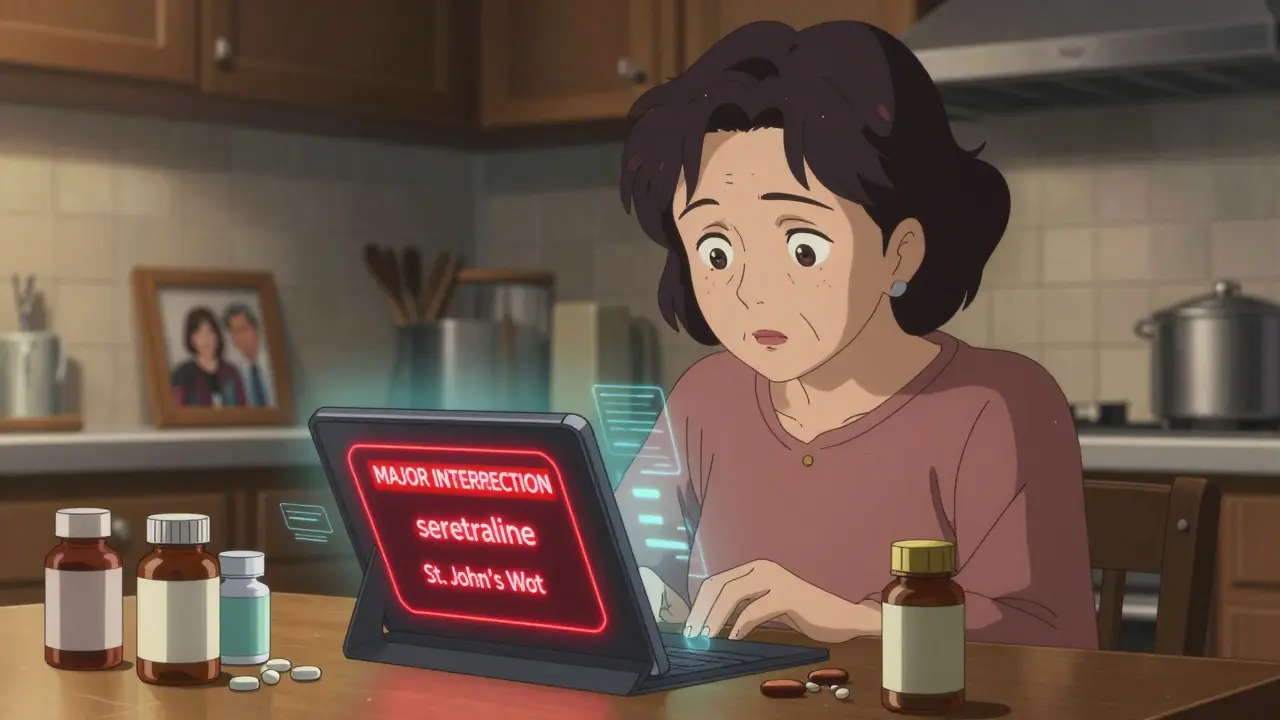
Every year, hundreds of thousands of people end up in emergency rooms because of unexpected reactions between their medications. Many of these cases could have been avoided with a simple check at home. You don’t need to be a doctor to spot dangerous combinations - you just need the right tools and a clear process. Whether you’re taking blood pressure pills, antidepressants, or just a daily multivitamin, knowing how to check for drug interactions can keep you out of the hospital.
What Exactly Are Drug Interactions?
A drug interaction happens when two or more substances - like prescription meds, over-the-counter pills, supplements, or even certain foods - affect each other in a way that changes how they work in your body. These aren’t just theoretical risks. In the U.S., drug interactions cause more than 1.3 million emergency visits every year, according to the CDC. That’s one visit every 24 seconds. There are three main types:- Drug-drug interactions - the most common. For example, mixing warfarin (a blood thinner) with ibuprofen can increase bleeding risk.
- Drug-food/drink interactions - like grapefruit juice making cholesterol meds too strong, or alcohol making sedatives dangerously powerful.
- Drug-condition interactions - when a medication worsens an existing health issue. For instance, decongestants can spike blood pressure in someone with hypertension.
These aren’t rare edge cases. About 40% of Americans over 65 take five or more medications daily. That’s a recipe for trouble if you’re not checking.
How to Use a Drug Interaction Checker
You don’t need to memorize thousands of drug names. Free, reliable tools exist that do the heavy lifting for you. Here’s how to use them safely:- Make a full list of everything you take - not just prescriptions. Include every OTC pill (like painkillers, antacids, sleep aids), herbal supplements (St. John’s Wort, ginkgo, turmeric), vitamins, and even topical creams. Many people forget these. A 2023 survey found that 28% of users missed key OTC ingredients because they didn’t realize they counted.
- Use a trusted checker - stick to tools backed by medical institutions. Drugs.com Interaction Checker is one of the most comprehensive, covering over 24,000 prescription drugs, 4,000 OTC meds, and 3,000 supplements. WebMD’s tool is simpler to use but covers fewer drugs. Both are free and updated daily.
- Input everything accurately - spell out brand and generic names. If you take “Lipitor,” also enter “atorvastatin.” If you take “Tylenol,” note that it’s acetaminophen. Some checkers let you scan barcodes from pill bottles - apps like Medisafe do this automatically.
- Read the results carefully - interactions are labeled as major, moderate, or minor. Major means stop the combo and call your doctor immediately. Moderate means you might need a dose change or closer monitoring. Minor usually just means watch for mild side effects like dizziness or upset stomach.
- Don’t ignore the fine print - some tools show alternatives. GoodRx, for example, suggests safer medications if a dangerous combo is found. That’s a lifesaver if you’re trying to avoid a hospital trip.
What the Tools Can and Can’t Do
These checkers are powerful, but they’re not magic. Here’s what to expect:- They catch 95% of known interactions - including common ones like antidepressants with St. John’s Wort, which can trigger serotonin syndrome.
- They flag 12% more moderate interactions than competitors - Drugs.com’s database is larger than WebMD’s, and it’s updated daily.
- They miss rare or new interactions - if a drug was approved last month, it might not be in the system yet.
- They can give false alarms - about 18% of flagged interactions aren’t actually dangerous in real life. A 2022 survey found WebMD users got false positives 23% of the time.
- They don’t know your full health picture - your liver function, kidney health, or genetic makeup can change how a drug acts. No app can replace a pharmacist’s full review.
Think of these tools like a seatbelt - they don’t prevent all crashes, but they drastically reduce injury when used right.
Real Stories: When the Checker Saved Someone
In 2022, a 68-year-old man in Birmingham was taking sertraline (an SSRI) for depression and daily St. John’s Wort for “mood support.” He’d never told his doctor about the supplement. His daughter ran his meds through Drugs.com and found a major interaction: the combo could cause serotonin syndrome - a life-threatening condition with symptoms like high fever, confusion, and rapid heartbeat. He stopped the supplement right away. His doctor later said, “That check likely saved his life.” Another case involved a woman taking warfarin (a blood thinner) who started taking ibuprofen for arthritis pain. She didn’t think it was a big deal - “It’s just Advil,” she said. The checker flagged a major interaction. She switched to acetaminophen. A week later, her INR levels (a blood clotting test) dropped back into a safe range. These aren’t isolated cases. Reddit threads like r/pharmacy have hundreds of stories where users caught dangerous combos before they became emergencies.What to Do When the Checker Flags a Problem
Don’t panic. Don’t stop your meds on your own. Do this:- Write down the exact interaction - include the drug names, severity level, and what the tool said.
- Call your pharmacist - they’re trained to interpret these results. Most pharmacies offer free medication reviews. If you get all your prescriptions from one pharmacy, they already have your full history.
- Bring it to your doctor - say, “I ran my meds through a checker and found this. Can we talk about alternatives?”
- Don’t self-prescribe changes - stopping blood pressure meds or antidepressants suddenly can be dangerous. Always get professional advice.
Dr. Michael Cohen from the Institute for Safe Medication Practices says, “These tools are great first steps - but they’re not replacements for a pharmacist.” The American Pharmacists Association says combining digital checks with a pharmacist review cuts hospitalizations by 42%.
How to Stay Safe Long-Term
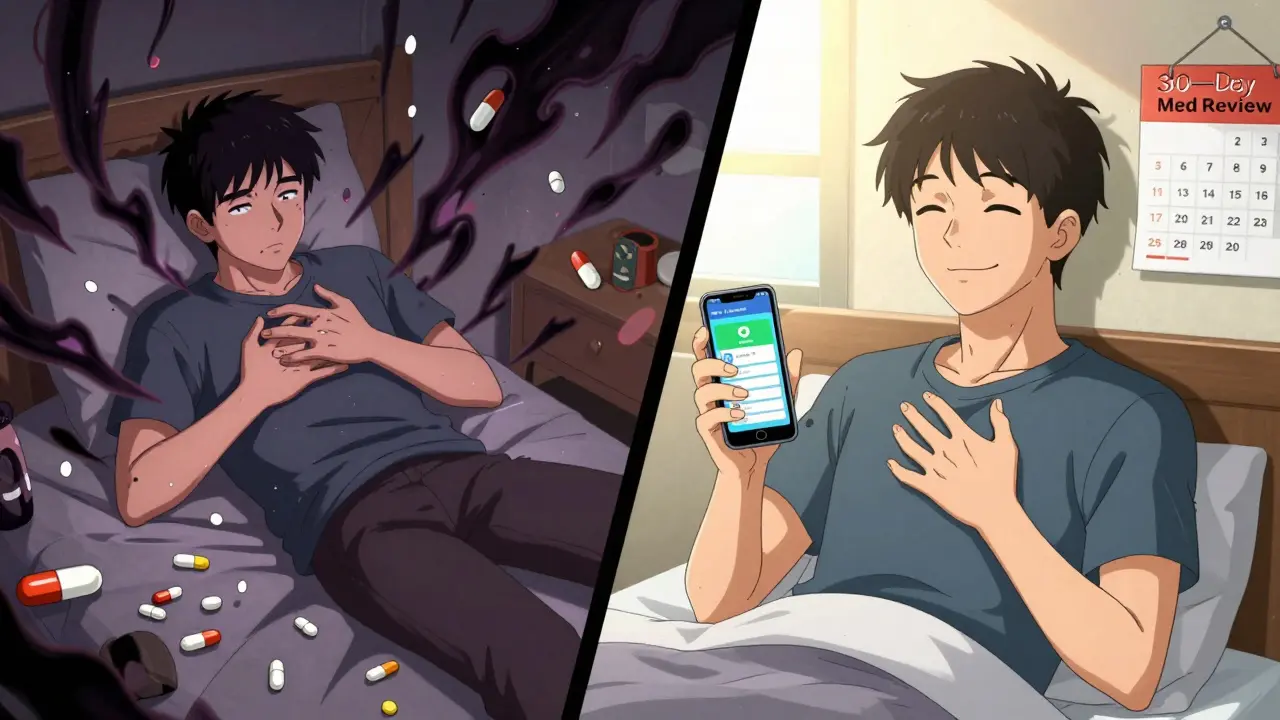
One-time checks aren’t enough. Medications change. New ones get added. Old ones get dropped. Here’s how to make safety routine:- Update your list every 30 days - even if you think nothing changed.
- Use one pharmacy - filling all your prescriptions at the same place lets them track interactions across all your meds. Studies show this reduces risk by 31%.
- Use a medication app - apps like Medisafe or MyTherapy let you scan barcodes, set reminders, and share your list with family or doctors.
- Ask about alternatives - if a drug keeps popping up as risky, ask your doctor: “Is there another one that’s safer with what I’m already taking?”
By 2024, the CDC plans to integrate interaction checkers directly into MyMedicare accounts. That means millions of seniors will get automated alerts. But until then, you have to take the first step.
Watch Out for Fake Tools
Not every app or website is trustworthy. The FDA warned about 17 fraudulent interaction checkers in 2022 - apps that gave false reassurance or invented fake risks. Stick to these trusted names:- Drugs.com Interaction Checker
- WebMD Drug Interaction Checker
- Medscape Drug Interaction Checker (more technical, better for pros)
- GoodRx (includes cost-saving alternatives)
Avoid random apps from unknown developers. If it asks for payment, or doesn’t cite its source, walk away.
Can I trust free drug interaction checkers?
Yes - if they’re from trusted medical sources like Drugs.com, WebMD, or Medscape. These tools use databases built from clinical studies and updated daily. Avoid apps that aren’t linked to major health organizations or that charge for basic checks.
Do I need to check interactions if I only take one prescription?
Yes. Even one prescription can interact with OTC drugs, supplements, or foods. For example, statins (cholesterol drugs) can react badly with grapefruit juice. Antibiotics can lose effectiveness with dairy. You don’t need to be on five meds to be at risk.
What if the checker says my combo is safe, but I still feel weird?
Trust your body. No tool catches every reaction. If you feel dizzy, nauseous, confused, or have an unusual heartbeat, call your doctor - even if the checker says it’s fine. Some interactions are too rare or personal to be in any database.
Can I check interactions for my elderly parent?
Absolutely. Many seniors take 5-10 medications daily. Help them list everything, then run it through a checker. You can even print the results and bring them to their pharmacist. It’s one of the most helpful things you can do.
Do herbal supplements really cause interactions?
Yes - and often more than people realize. St. John’s Wort can interfere with antidepressants, birth control, and blood thinners. Garlic and ginkgo can thin the blood, raising bleeding risk during surgery. Turmeric can affect liver enzymes. Treat supplements like real drugs - because they act like them.
What should I do if I can’t afford to see a pharmacist?
Many pharmacies offer free medication reviews regardless of where you fill your prescriptions. Call ahead and ask. Also, community health centers often have pharmacists on staff. Don’t assume it costs money - most of the time, it doesn’t.
13 Responses
I love how this post breaks it down without being condescending. Seriously, most people don't realize that 'natural' doesn't mean 'safe.' I had a friend who took St. John’s Wort with Zoloft and ended up in the ER with serotonin syndrome. He thought it was just 'herbal support.' Nope. It's a drug. Treat it like one. And yes, Drugs.com is the gold standard. WebMD? Sometimes it's like a weather app for your meds - half the time it's wrong.
Let’s be real - the CDC stats are cherry-picked. 1.3M ER visits? That’s like 0.4% of all ER visits. Meanwhile, 70% of those cases involved patients who didn’t disclose supplement use to their doctors. The real issue isn’t the interaction checkers - it’s the cultural ignorance around polypharmacy. We treat meds like candy. Then we blame the system. Fix the behavior, not the tool.
This is exactly why I refuse to use American health advice. You people turn every minor risk into a full-blown panic. In Ireland, we just trust our GPs. If you need an app to tell you not to mix ibuprofen with blood thinners, maybe you shouldn’t be taking them at all. This feels less like prevention and more like corporate liability theater.
I used to think I was too young to worry about this. Then I started taking fish oil, vitamin D, and melatonin - all ‘harmless.’ Ran them through Drugs.com and found out the fish oil was making my blood thinner less effective. Didn’t even know that was a thing. Now I update my list every month. Best habit I ever picked up. No drama, just peace of mind.
It is of paramount importance to recognize that the pharmaceutical industry has vested interests in the proliferation of interaction-checking technologies. While the intent may appear benign, the underlying motive is to foster dependency on proprietary databases, thereby creating a monopolistic ecosystem that marginalizes traditional clinical judgment. One must question: Who funds these tools? And what data are they harvesting?
I tried using one of those checkers and it flagged my morning coffee as a 'major interaction' with my thyroid med. I was like... are you serious? I drink 3 cups a day. My doctor laughed when I showed him. Now I think these tools are just designed to make people anxious so they buy more apps. I'm done.
I’ve been monitoring this for years. The FDA has admitted that 68% of interaction databases are outdated by 14+ days. And guess what? The ‘trusted’ sites like Drugs.com? They get their data from a single for-profit vendor. I’ve got screenshots. This isn’t safety - it’s a data pipeline. I stopped using all of them. Now I just call my pharmacist. And I’ve never had a problem since. 😠
My grandma takes 8 pills a day. I printed out her list, ran it through Drugs.com, and found two major interactions she had no idea about. Took it to her pharmacy - they gave her a free 15-min review. Changed one med, saved her from a stroke. This isn’t hype. It’s survival.
If you’re reading this and thinking ‘I don’t need this,’ I get it. I thought the same. Then I saw my mom nearly die from a supplement combo she thought was ‘just vitamins.’ Don’t wait for a crisis. Spend 10 minutes now. It’s not about fear - it’s about love. Your future self will thank you.
I ran my meds through three different checkers. Two said it was fine. One said 'major risk.' I called my pharmacist. She said, 'The third one was right. You’ve got a CYP2D6 mutation. That’s why the others missed it.' Turns out, no app knows your DNA. But your pharmacist? She does. I now take everything to her every 6 weeks. No app can replace that.
Bro, in India we don’t have apps for this. We ask the chaiwala if the pill is okay with tea. And guess what? We’re still alive. Maybe the real solution is not more tech, but less clutter. Take fewer pills. Eat real food. Sleep. Breathe. Maybe the problem isn’t the interaction - it’s the 10 pills you’re taking because you’re scared of your own body.
I appreciate the thoroughness of this guide. However, I must emphasize that the legal and ethical responsibility for drug interaction management ultimately resides with the prescribing clinician. While digital tools serve as valuable adjuncts, they cannot supplant the clinical decision-making process grounded in individual patient assessment. Relying on algorithmic outputs without professional consultation may constitute a breach of the standard of care.
I’m not saying you shouldn’t use the tools - I’m saying don’t trust them blindly. I once got flagged for a ‘major’ interaction between my vitamin B12 and my blood pressure med. Called my doc. He said, ‘That’s not even a real interaction. That’s a glitch in the database.’ These tools are great for catching the big stuff - but they’re also full of noise. Use them. Then talk to a human.