
Have you ever picked up a prescription bottle, glanced at the label, and assumed it was safe because you’ve taken that medication before? It’s a common mistake. While food labeling laws in the United States are strict-requiring clear declarations of the nine major allergens like milk, peanuts, and sesame-medication labeling operates in a regulatory gray area. The Food Allergen Labeling and Consumer Protection Act (FALCPA) protects us in the grocery aisle, but it does not extend to your medicine cabinet. This gap means that inactive ingredients, which make up the bulk of many pills, can harbor hidden allergens without any standardized warning on the front label.
For the millions of people managing food or drug allergies, this distinction is critical. A reaction to a medication isn’t always caused by the active drug itself; often, it’s the filler, binder, or dye that triggers the immune response. Understanding how to navigate these labels requires a shift in strategy. You can’t just scan for bold text like you do on cereal boxes. Instead, you need to know what to look for, who to ask, and how to verify the contents of every single pill you take.
Understanding the Hidden Risks: Active vs. Inactive Ingredients
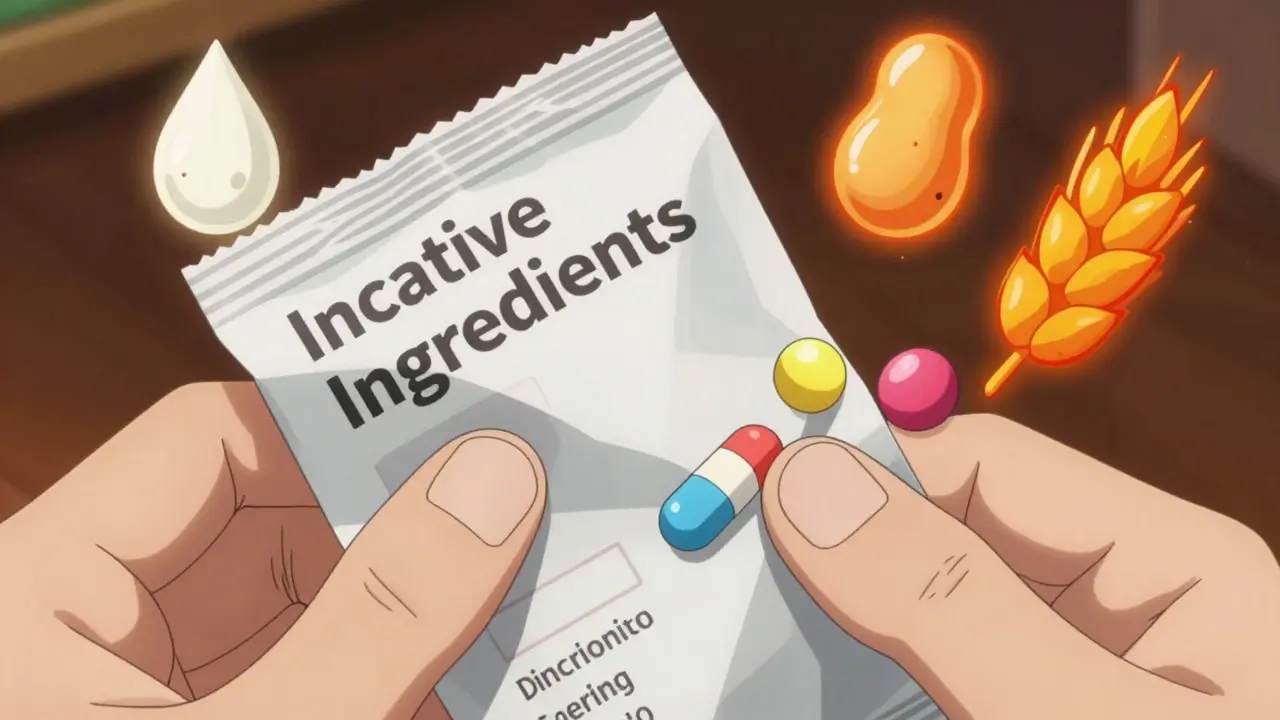
To check for allergens effectively, you first need to understand what you’re looking at. Every medication contains two types of components: active ingredients and inactive ingredients. The active ingredient is the part that treats your condition. If you take ibuprofen for pain, ibuprofen is the active ingredient. However, the active ingredient is usually only a small fraction of the pill’s weight.
The rest consists of inactive ingredients, also known as excipients. These substances serve specific functions: they bind the powder together so it forms a tablet, coat the pill to help it dissolve in your stomach, preserve the medication from spoiling, or even add color and flavor. Common inactive ingredients include lactose (a milk sugar), cellulose (derived from plants), magnesium stearate, and various dyes. For someone with a severe dairy allergy, a capsule filled with lactose-based fillers can be dangerous, yet the label will rarely highlight "milk" in bold text like a food package would.
| Ingredient Name | Function in Medication | Potential Allergen Source |
|---|---|---|
| Lactose | Filler/Binder | Milk derivative (not casein/whey, but still a concern for severe intolerance) |
| Soy Lecithin | Emulsifier/Coating | Soy (one of the 9 major food allergens) |
| Titanium Dioxide | Coloring agent | Generally safe, but some sensitivities exist |
| Shellac | Glossy coating | Derived from lac insects (crustacean shellfish cross-reactivity risk) |
| Propylene Glycol | Solvent/Humectant | Can cause skin reactions or sensitivity in some individuals |
The problem is that manufacturers are not required to list these inactive ingredients on the external prescription label-the sticker on the bottle you receive from the pharmacy. They are required to list them in the official prescribing information (the package insert), but that document is buried inside the box or available only online. This disconnect creates a significant safety hazard for patients who rely on visual checks for safety.
Why Prescription Labels Differ from Food Labels
If you buy a bag of chips, federal law mandates that if it contains wheat, soy, or eggs, it must say so clearly. This is due to the FALCPA and the more recent FASTER Act, which added sesame to the list of major allergens. These laws were designed to protect consumers because food is consumed daily and often in larger quantities. Mislabeling in food accounts for nearly 40% of all food recalls in the U.S.
Medications, however, fall under different regulations governed by the FDA’s Center for Drug Evaluation and Research (CDER). There is no equivalent "FASTER Act" for drugs. Consequently, there is no standardized system for declaring allergens in medications. A manufacturer might use peanut oil as a solvent in an injectable drug or lactose as a filler in a tablet without any prominent warning on the packaging. According to Consumer Med Safety, this lack of standardization forces patients to become their own investigators.
This regulatory gap is particularly dangerous for generic drugs. When a brand-name drug loses its patent, multiple companies can produce generic versions. Each generic manufacturer may use different inactive ingredients. One generic version of an antibiotic might contain lactose, while another version of the exact same drug uses corn starch. If you switch pharmacies or if your insurance changes the preferred generic supplier, you could unknowingly ingest a new allergen.
Step-by-Step Guide to Checking Your Medication
Since you cannot rely on the bottle label alone, you need a systematic approach to verify the safety of your prescriptions. Here is a practical workflow to ensure you avoid hidden allergens.
- Ask Your Pharmacist Directly: This is the most crucial step. Do not assume the pharmacist knows about your allergies unless you have explicitly stated them in your profile. When picking up a new prescription, ask: "Does this medication contain [specific allergen] in its inactive ingredients?" Pharmacists have access to detailed monographs that list every component of the drug.
- Request the Package Insert: Every prescription box contains a folded paper called the package insert. Look for the section titled "Inactive Ingredients." Read this list carefully. If the box is empty, ask the pharmacist to print out the inactive ingredient list for you.
- Use Reliable Online Databases: If you don’t have the box handy, use reputable resources like the DailyMed website (run by the National Library of Medicine) or Drugs.com. Search for the drug name and dosage, then scroll down to the "Ingredients" section. Note that these databases reflect the specific manufacturer listed.
- Check for Manufacturer Variations: If you are prescribed a generic drug, ask the pharmacist which company manufactures it. Compare the inactive ingredients of that specific manufacturer against others. If one manufacturer uses an allergen you avoid, ask if an alternative manufacturer’s version is available.
- Update Your Pharmacy Profile: Ensure your pharmacy has your allergy history documented. Most modern pharmacy systems will flag potential interactions or allergens when a new prescription is entered. However, human verification is still essential.
Remember, formulations can change. A drug that was safe last year might have a new formula today. Always re-check the label or ask your pharmacist every time you refill a prescription, especially if you notice a change in the pill’s color, shape, or imprint code.
Decoding Technical Terms on Ingredient Lists
One of the biggest challenges in reading medication labels is recognizing allergens by their scientific names. Manufacturers often use technical terms that don’t immediately scream "allergy." Here are some common aliases to watch for:
- Milk/Dairy: Lactose, casein, whey protein hydrolysate, calcium caseinate.
- Soy: Soy lecithin, glycerol (if derived from soy), hydrogenated vegetable oil (check source).
- Eggs: Ovalbumin, egg white powder (rare in meds, but possible in vaccines).
- Gluten/Wheat: Starch (wheat-derived), maltodextrin (can be wheat-derived), dextrin.
- Shellfish: Chitin, chitosan, shellac (derived from insect secretions, but cross-reactive for some).
Be cautious with terms like "natural flavors" or "vegetable oil." Unlike food labels, where "natural flavors" might trigger scrutiny, in medications, these terms are less regulated for allergen disclosure. If you see "vegetable oil," it could be soy, corn, or cottonseed oil. You must ask the pharmacist or manufacturer to clarify the source.
When to Seek Alternatives
If you discover that your prescribed medication contains an allergen you cannot tolerate, don’t just stop taking it. Talk to your doctor. Often, there are alternatives. Your healthcare provider can prescribe a different formulation, such as a liquid suspension instead of a tablet, or a brand-name drug that uses different inactive ingredients. In some cases, compounding pharmacies can create custom medications free of specific allergens, though this can be more expensive and may not be covered by insurance.
It’s also important to distinguish between a true IgE-mediated allergy and a sensitivity. For example, lactose intolerance is common, but true milk allergy is rarer. If you have a mild intolerance, a small amount of lactose in a pill might not cause issues. However, if you have a history of anaphylaxis, even trace amounts matter. Discuss your medical history with both your doctor and pharmacist to determine the level of risk.
Frequently Asked Questions
Do prescription bottles list inactive ingredients?
No, standard prescription labels on the bottle typically only list the active ingredient, strength, dosage instructions, and expiration date. Inactive ingredients are not required to be listed on the external label. You must refer to the package insert inside the box or ask your pharmacist for this information.
Can generic drugs have different allergens than brand-name drugs?
Yes. While the active ingredient must be identical, generic manufacturers can use different inactive ingredients (fillers, binders, dyes). This means a generic version of a drug might contain an allergen like lactose or soy that the brand-name version does not. Always check the specific manufacturer’s inactive ingredient list.
Is lactose in medication safe for people with milk allergies?
It depends on the severity of the allergy. Lactose is a sugar found in milk, distinct from the proteins (casein and whey) that usually trigger milk allergies. Many people with milk allergies can tolerate lactose. However, if you have a severe anaphylactic reaction to any milk product, you should avoid medications containing lactose and consult your doctor for alternatives.
Where can I find the inactive ingredients list for my medication?
You can find the inactive ingredients list in the package insert (the paper included in the drug box), on the DailyMed website (dailymed.nlm.nih.gov), or by asking your pharmacist. Reputable drug information websites like Drugs.com also provide this data based on the manufacturer.
Are 'may contain' warnings used on medication labels?
Unlike food products, medications do not use standardized "may contain" advisory statements for allergens. Cross-contamination risks in pharmaceutical manufacturing are controlled through Good Manufacturing Practices (GMP), but these risks are not typically disclosed on consumer-facing labels. You must rely on the explicit list of inactive ingredients.