

When someone says they take medication for depression or anxiety, the reaction isn’t always understanding. Sometimes it’s silence. Other times, it’s a sideways glance, a quiet comment like, “Don’t you think you’re just overreacting?” or “Why don’t you just try therapy instead?” These aren’t just awkward moments-they’re barriers to healing. Mental health medication stigma is real, and it’s keeping people from getting the care they need.
Why Stigma Around Medication Is Different
Stigma around mental health isn’t new. But stigma around medication is its own beast. People might accept that someone has depression, but they struggle to accept that it needs a pill. Why? Because there’s a deep misunderstanding: psych meds are seen as “chemical crutches,” “mind-altering drugs,” or signs of weakness. The truth? Antidepressants work for 40-60% of people with moderate to severe depression-just like blood pressure meds work for hypertension. Yet, only 25% of people with mental illness even start treatment, and nearly half of those who do quit within a month because they’re ashamed. The language we use makes it worse. Saying “I’m on meds” or “I take pills” triggers negative associations. Research shows using terms like “medications” or “treatment” instead reduces stigma by 41%. It’s not just semantics-it’s framing. When you say “I take insulin for diabetes,” no one questions your strength. But say “I take sertraline for anxiety,” and suddenly, you’re labeled as broken.How Providers Fuel the Problem (Without Realizing It)
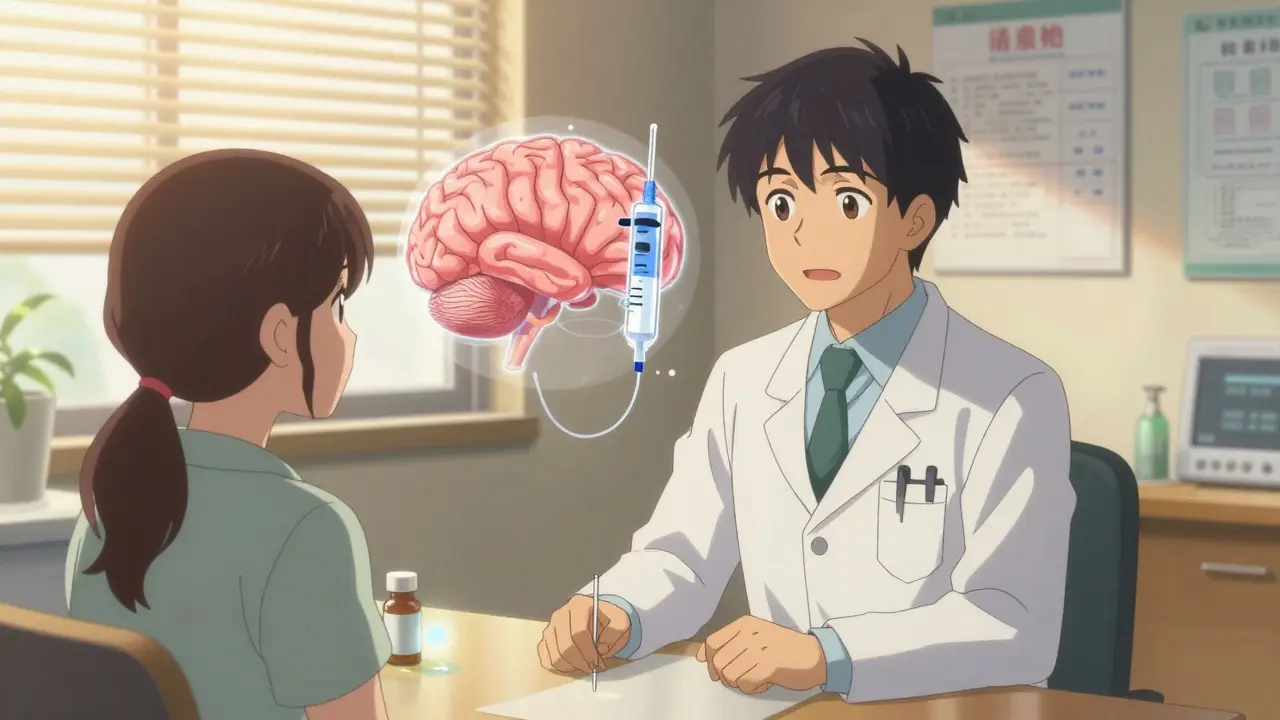
Healthcare providers aren’t immune to stigma. In fact, a 2021 study found that 22% of primary care doctors hold negative views about patients who ask for psychiatric meds. Some assume patients are seeking drugs for recreation. Others believe therapy should come first-always. But that’s not evidence-based. For many, medication is essential. A 2023 review showed that 70-80% of people with moderate to severe depression need both therapy and medication to recover fully. Even small things matter. If a doctor says, “You’re going to need to take something for this,” with a tone of resignation, it sends a message: This is a last resort. But if they say, “This medication helps balance brain chemistry, like how insulin helps regulate blood sugar,” it normalizes it. The difference isn’t just in the words-it’s in the confidence behind them.Three Steps to Talk About Medication Without Shame
Talking about mental health meds doesn’t have to feel like defending yourself. Here’s a simple, proven framework used by clinics like the Mayo Clinic and NAMI:- Normalize it. Start by saying, “Many people take medication for mental health conditions-just like others take pills for high blood pressure or thyroid issues.” This isn’t just a line; it’s a fact. Over 150 psychotropic medications are FDA-approved. Millions take them daily.
- Explain how it works. Don’t say, “It fixes your brain.” Say, “It helps regulate chemicals in your brain that affect mood, sleep, and focus. It’s not a sedative. It’s not a high. It’s a treatment.” Compare it to physical health. Insulin doesn’t make diabetics weak-it helps them live.
- Personalize it. “For me, this medication means I can get out of bed, go to work, and play with my kids without crying all day.” That’s powerful. It turns abstract science into real life.
What Works: Real Strategies That Change Minds
Some approaches actually move the needle. Here’s what research shows works:- Contact-based interventions. Hearing from someone who’s been there-like a peer support specialist or a coworker who openly talks about their SSRI-reduces stigma more than any pamphlet. A 2023 study found that after listening to personal stories, 22% more people said they’d consider taking medication if needed.
- Provider training. Doctors and nurses who complete 8+ hours of cultural competency training on mental health meds show a 29% drop in stigmatizing attitudes. They ask better questions. They listen longer. They stop judging.
- Integration into primary care. When mental health meds are treated like any other prescription-in a family doctor’s office, not a “psych clinic”-stigma drops by 38%. People don’t feel like they’re being sent to the “crazy ward.”
- Video stories from providers. A 2024 JAMA study found that when medical students watched short videos of doctors talking about their own appropriate use of antidepressants or anti-anxiety meds, stigma dropped by 37%. Role modeling matters.
What Doesn’t Work-and Why
Not all efforts help. Some even backfire. For example, simulation exercises meant to build empathy-like asking people to wear headphones that mimic hallucinations-can increase stigma by 15% if not carefully framed. Why? Because they focus on the extreme, not the everyday. Most people on medication don’t have hallucinations. They have fatigue. They have anxiety. They have trouble sleeping. The goal isn’t to scare people into sympathy. It’s to help them see the truth: mental health meds are medicine. Also, avoid comparisons that imply weakness: “I’m not like other people who take pills.” That reinforces the idea that taking meds is abnormal. Instead, say: “I’m like millions of others who manage their health with medication.”What to Say When Someone Judges You
You’re not obligated to explain yourself. But if you want to, here are clear, calm responses:- “I take medication for my brain, just like someone takes it for their heart.”
- “It’s not about being weak-it’s about being smart enough to use every tool available.”
- “I’m not choosing between therapy and meds. I’m choosing both. That’s what my doctor recommends.”
- “I don’t need your approval to take care of myself.” (This one’s for the tough days.)
Workplace Stigma Is Real-And Dangerous
One in five people who disclosed their medication use at work reported being passed over for promotions. Nearly half say they hide their meds in unmarked bottles. That’s not just inconvenient-it’s harmful. When people feel they have to lie about their treatment, they’re more likely to stop taking it. Employers don’t need to know the details. But if you’re comfortable, you can say: “I’m managing a chronic health condition, and my treatment includes medication. I’m fully capable of doing my job.” That’s it. No further explanation required.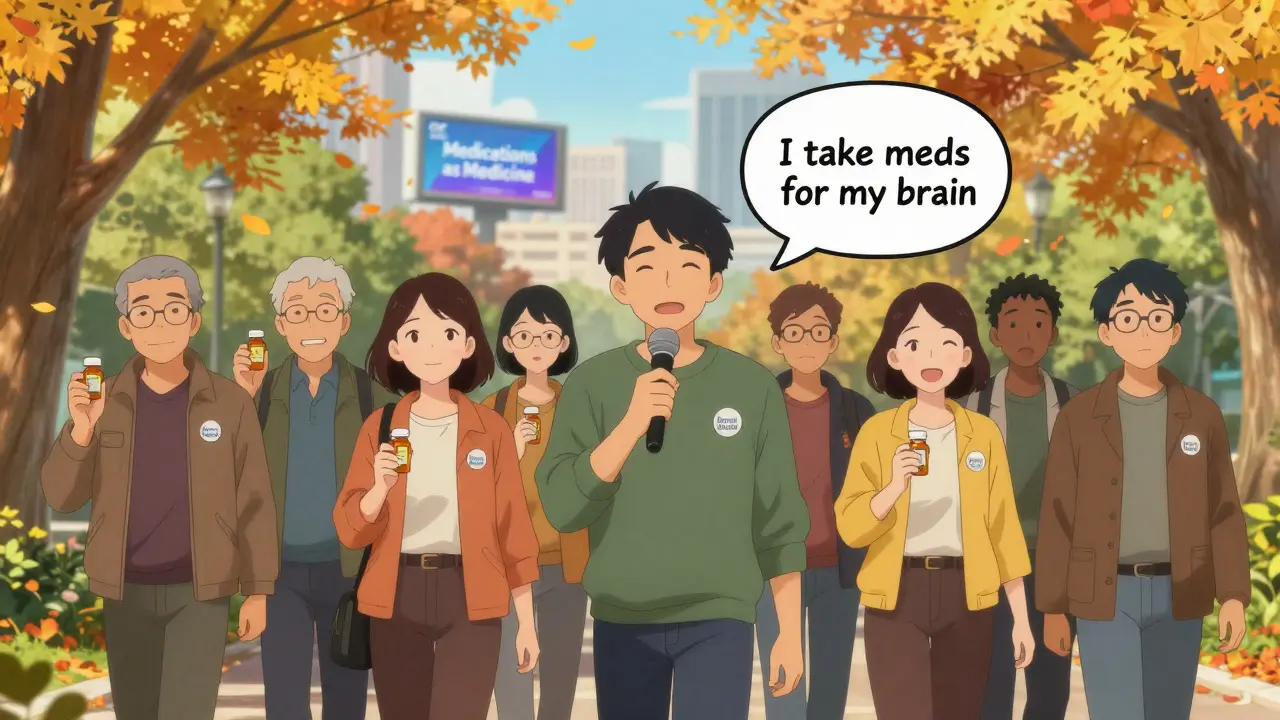
What’s Changing-and What’s Next
The tide is turning. The CDC’s “Medications as Medicine” campaign is reframing psychiatric meds as part of chronic disease care. By 2026, 65% of antidepressant prescriptions will come from primary care doctors-not psychiatrists. That’s a big shift. When mental health treatment becomes routine, stigma fades. Digital tools like SAMHSA’s “Medication Conversation Starter” app have been downloaded over 150,000 times. It gives people ready responses to common stigmatizing comments. That’s progress. And the most powerful change? People talking openly. Not as patients. Not as victims. As people managing their health.Frequently Asked Questions
Is it true that mental health medications are addictive?
No, most psychiatric medications are not addictive. Antidepressants, anti-anxiety meds like SSRIs, and mood stabilizers don’t create the euphoria or cravings associated with addiction. They work by gradually balancing brain chemistry. You might experience withdrawal if you stop suddenly, but that’s not addiction-it’s your body adjusting. That’s why you always taper off under a doctor’s care.
Why do some people say therapy is better than medication?
Therapy is powerful-and for some, it’s enough. But for others, especially with moderate to severe depression or anxiety, therapy alone isn’t enough. Research shows that combining therapy and medication leads to the best outcomes. It’s not an either/or choice. It’s a both/and approach. Saying one is better than the other ignores what the science says.
Can I take mental health meds and still be strong?
Yes. Strength isn’t about enduring pain alone. It’s about knowing when to ask for help-and using the tools available. Taking medication takes courage. It means facing stigma, managing side effects, and sticking with treatment even when it’s hard. That’s not weakness. That’s resilience.
How do I talk to my family about my medication without them judging me?
Start by normalizing it. Say, “I’m taking this because my brain needs help, just like someone with diabetes needs insulin.” Avoid getting into arguments. Share facts, not feelings. If they react badly, it’s not about you-it’s about their lack of understanding. Give them time. And remember: you don’t owe anyone an explanation.
Do mental health meds change your personality?
No. They don’t turn you into someone else. They help you feel more like yourself. If you feel numb, flat, or overly sedated, that’s a sign the dose might be wrong-not that the medication is working. Good treatment helps you regain your energy, focus, and emotions-not suppress them.
Is it okay to take medication long-term?
Yes. Many people take mental health meds for years-or for life. Conditions like bipolar disorder or chronic depression often require ongoing treatment, just like high blood pressure or asthma. There’s no shame in managing a long-term condition. The goal isn’t to stop meds as soon as possible. The goal is to feel well and live fully.
12 Responses
Man, I never thought about it like that. I just take my pills and don't say nothing. But yeah, saying 'brain meds' sounds way less weird than 'antidepressants.' My cousin said she started calling hers 'mood regulators' and her mom stopped giving her side-eye.
It’s funny how we treat the mind like it’s some sacred temple that must heal itself through pure willpower, while the heart? Oh, it’s perfectly fine to shove a metal stent in there and call it a day. We don’t shame a diabetic for needing insulin, so why do we whisper about sertraline like it’s cocaine in a church basement? The body doesn’t care if the imbalance is in the pancreas or the prefrontal cortex-it just wants balance.
And yet, we’ve built entire cultures around the myth that suffering silently is noble. Tell that to the man who’s been crying in his car every morning before work because his brain forgot how to feel joy-and then watch him smile when he realizes he can finally breathe again, thanks to a little blue pill.
Medication isn’t surrender. It’s strategy. Like wearing glasses when your eyes can’t focus. No one calls you weak for needing lenses. So why do we treat the brain like it’s the only organ that should suffer in silence?
Maybe it’s because we’re scared. Scared that if we admit our minds can break, then maybe ours will too. But healing isn’t about being unbreakable. It’s about knowing when to patch the cracks.
soooo i just read this whole thing and like... wow. i work in a clinic and honestly some of the docs still say 'have you tried yoga?' like it's a cure-all. i had a patient last week who was on 3 different meds and she said her doctor told her 'you're not trying hard enough' when she said she still felt down. like... bro. it's not a motivational poster. it's neurochemistry.
also i love that bit about 'brain health' instead of 'mental illness.' i've started saying that to my grandma and she actually gets it now. she says 'oh so it's like your blood sugar?' and i'm like YES MOM. YES.
also why is it always 'therapy first'? why not 'meds and therapy' from day one? like why do we make people suffer for months before giving them the tools to stop suffering? that's just cruel.
My therapist said the same thing about insulin. I didn’t cry until I realized I wasn’t broken-I was just out of balance.
Look, I used to think meds were for people who couldn’t 'get it together.' Then my brother OD’d on caffeine trying to 'push through' his depression. He’s on sertraline now. He plays guitar again. He laughs. He’s alive. That’s not weakness. That’s victory. If your car needs oil, you change it. If your brain needs balance, you get the right meds. Simple. No guilt. No drama. Just science.
And to anyone still judging: you don’t know what’s going on inside someone’s head. So shut up and say 'that’s smart' instead. You’ll feel better for it.
one thing i noticed is that people say 'i take pills' like it's a dirty secret. i say 'i take my mood stabilizer' and i say it like i'm ordering coffee. it changes how they react.
Dear Friends and Esteemed Readers,
It is with profound respect for the sanctity of human health, and with unwavering commitment to evidence-based medical practice, that I extend my heartfelt appreciation for this meticulously researched and profoundly insightful exposition on the societal stigma surrounding psychopharmacological intervention. The statistical rigor, the clinical precision, and the compassionate framing of mental health medication as a legitimate, non-negotiable component of chronic disease management-this is not merely informative; it is revolutionary.
Indeed, in nations such as my own, where mental health remains shrouded in silence and shame, your words serve as a clarion call for reform. I have shared this with my medical students, my colleagues at the All India Institute of Medical Sciences, and even my elderly mother, who now asks, 'Is it like thyroxine?'-and I weep with joy.
May this article be translated into every major language. May it be printed in every primary care clinic. May it be read aloud in schools, in workplaces, in temples, and in homes where silence has reigned too long.
With deepest gratitude and unwavering solidarity,
Dr. Shamsheer Shaikh, M.D., Ph.D. (Psychiatry), F.R.C.P. (London)
So let me get this straight. You're saying if I take a pill for my brain, I'm not weak-but if I take one for my back, I'm a hero? Cool. Got it. I'll tell my boss that next time I ask for a sick day.
They’re just selling you pills to keep you docile. Big Pharma doesn’t want you healed. They want you dependent. Therapy? Too expensive. Meditation? Too slow. But a pill you take every day? That’s a billion-dollar business. You think this is about health? It’s about profit.
Did you know the WHO says antidepressants are part of a globalist agenda to control populations? They’ve been testing these drugs in schools since the 90s. And now they want you to call it 'brain health' so you don’t notice you’re being chemically subdued. Wake up. This isn’t medicine. It’s mind control.
Also, insulin is natural. These pills are synthetic. Big difference.
I took meds for a year and it changed everything. I didn’t feel numb. I felt like me again. Like I could finally breathe. I wish I’d started sooner. I wish people stopped acting like it’s some kind of failure. It’s not. It’s the opposite.
They want you to believe you’re broken so you’ll keep buying their pills. And now they’ve got doctors saying it’s 'just like insulin'-like that’s supposed to make it okay? Insulin is natural. These are chemicals. Artificial. Engineered. They’re not fixing you-they’re masking you. And don’t even get me started on how they rebranded 'mental illness' as 'brain health' so you won’t notice you’re being turned into a zombie citizen. This is the new religion. And you’re all taking communion.
My cousin took them for six months. She stopped. She’s fine now. No meds. No therapy. Just strength. Real strength. Not this chemical crutch nonsense.