
Medication Risk Calculator for Older Adults
How Aging Affects Medication Risks
As we age, our bodies process medications differently. This calculator helps you understand your risk of side effects based on age and specific medications.
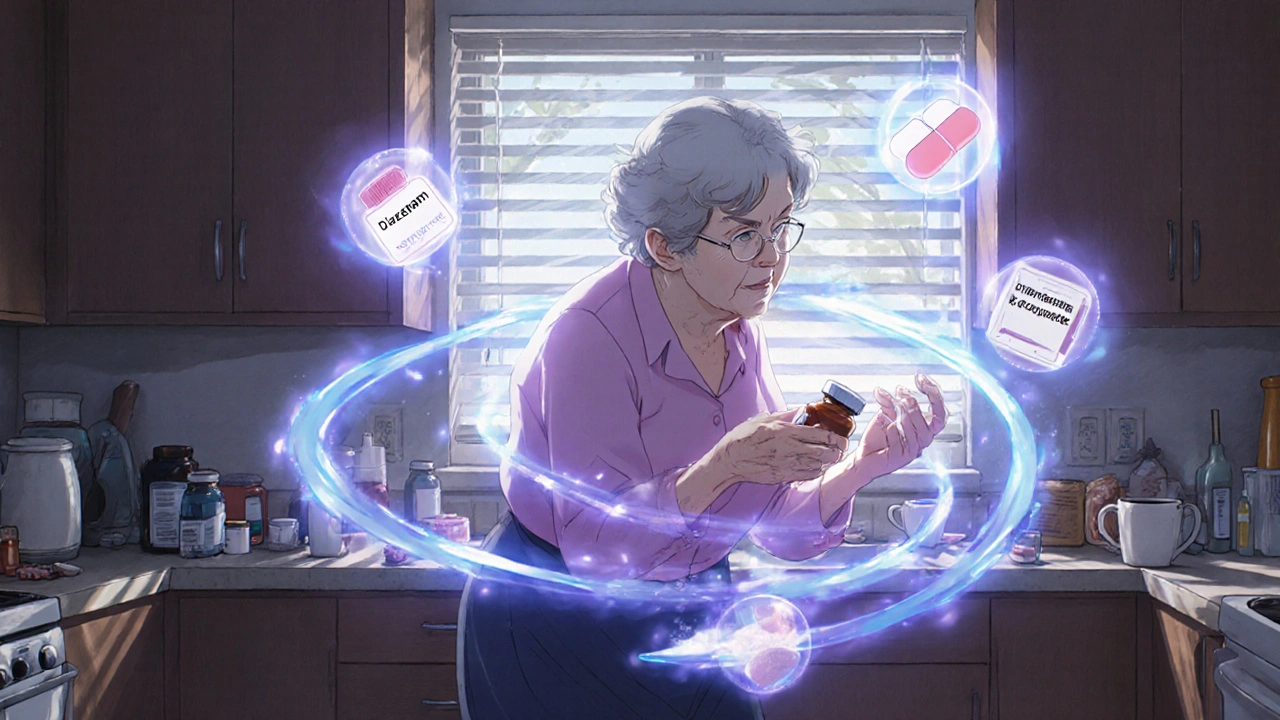
When you’re 70, a pill that once helped you sleep might leave you confused, dizzy, and on the floor. That’s not just bad luck-it’s biology. As we age, our bodies change in ways that make medications behave differently, often turning helpful treatments into serious risks. Older adults aren’t just smaller versions of younger people when it comes to drugs. Their bodies process, respond to, and tolerate medications in ways that demand a completely different approach.
Why Older Bodies Handle Drugs Differently
Your body doesn’t just slow down with age-it reorganizes. Between ages 25 and 80, total body water drops by about 15%, while body fat increases from 25% to nearly 50% in women. This changes how drugs spread through your system. Water-soluble drugs like lithium or digoxin become more concentrated because there’s less fluid to dilute them. Fat-soluble drugs like diazepam or fluoxetine stick around longer because they’re stored in fat tissue, slowly leaking back into the bloodstream. Your kidneys, which filter most medications out of your blood, lose about 1% of their filtering power every year after 40. By 75, many people have lost half their kidney function. That means drugs like antibiotics, painkillers, and heart medications stay in the body longer than they should. If you’re taking a standard dose meant for a 40-year-old, you could be getting a toxic amount without even knowing it. The liver, which breaks down drugs like warfarin, statins, and beta-blockers, also slows down. Blood flow to the liver drops by 20-40% between ages 25 and 65. This reduces the liver’s ability to clear drugs before they enter circulation. For medications that rely on first-pass metabolism-like propranolol or verapamil-this means more of the drug reaches your bloodstream, increasing the chance of side effects. Even your brain changes. Older adults are far more sensitive to drugs that affect the central nervous system. A dose of diazepam that makes a 30-year-old feel calm might make a 75-year-old feel dazed, forgetful, or unsteady. Studies show older adults experience 50% more sedation and memory problems from the same blood levels of these drugs. That’s why a sleeping pill that works fine for your neighbor might send you to the ER.The Real Cost: Falls, Confusion, and Hospital Trips
These biological changes don’t just mean discomfort-they mean danger. About 35% of hospital admissions for people over 65 are caused by medication side effects. Half of those could be avoided. The most common culprits? Dizziness, confusion, falls, and bleeding. Take anticholinergics-medications like diphenhydramine (Benadryl) or oxybutynin for overactive bladder. These drugs block a brain chemical called acetylcholine. In younger people, that might mean a dry mouth. In older adults, it can mean full-blown delirium. A 2023 University of Florida study found people over 75 were 4.2 times more likely to experience delirium from these drugs than those under 65. One Reddit user, 78, started taking amitriptyline for nerve pain and ended up needing a catheter within days because of urinary retention-a known but often overlooked side effect. Benzodiazepines like lorazepam or zolpidem (Ambien) are another major problem. They increase the risk of falls and hip fractures by 2-3 times in older adults. Zolpidem causes 80% more next-day drowsiness in people over 65. And yet, these drugs are still prescribed regularly for sleep problems-even though guidelines say they should be avoided in this age group. Anticoagulants like warfarin or apixaban carry higher bleeding risks. Older adults need 20-30% lower doses just to stay in the safe range. But without regular monitoring, INR levels can swing dangerously. One caregiver shared how her 82-year-old mother fractured her hip after being prescribed the same blood pressure dose used for 50-year-olds. The result? Orthostatic hypotension-blood pressure dropping when standing-led to a fall.The Polypharmacy Trap
It’s not just one drug. It’s five, ten, sometimes more. Nearly half of adults over 65 take five or more prescription medications every month. That’s called polypharmacy. And the more pills you take, the higher your risk of dangerous interactions, duplicate prescriptions, and side effects. A 2022 JAMA Internal Medicine study found that when pharmacists did a “Brown Bag Review”-where patients brought in all their medications, including over-the-counter and supplements-they found an average of 3.2 medication errors per person. One patient was taking three different drugs for the same condition. Another was on a blood thinner and an NSAID, increasing bleeding risk. Many didn’t even know what the pills were for. The Beers Criteria, updated in 2023 by the American Geriatrics Society, lists 56 medications that should be avoided or used with extreme caution in older adults. These include anticholinergics, benzodiazepines, NSAIDs like ibuprofen, and certain antidepressants like amitriptyline. Yet, a 2019 study found that 42% of older adults were still taking at least one of these risky drugs.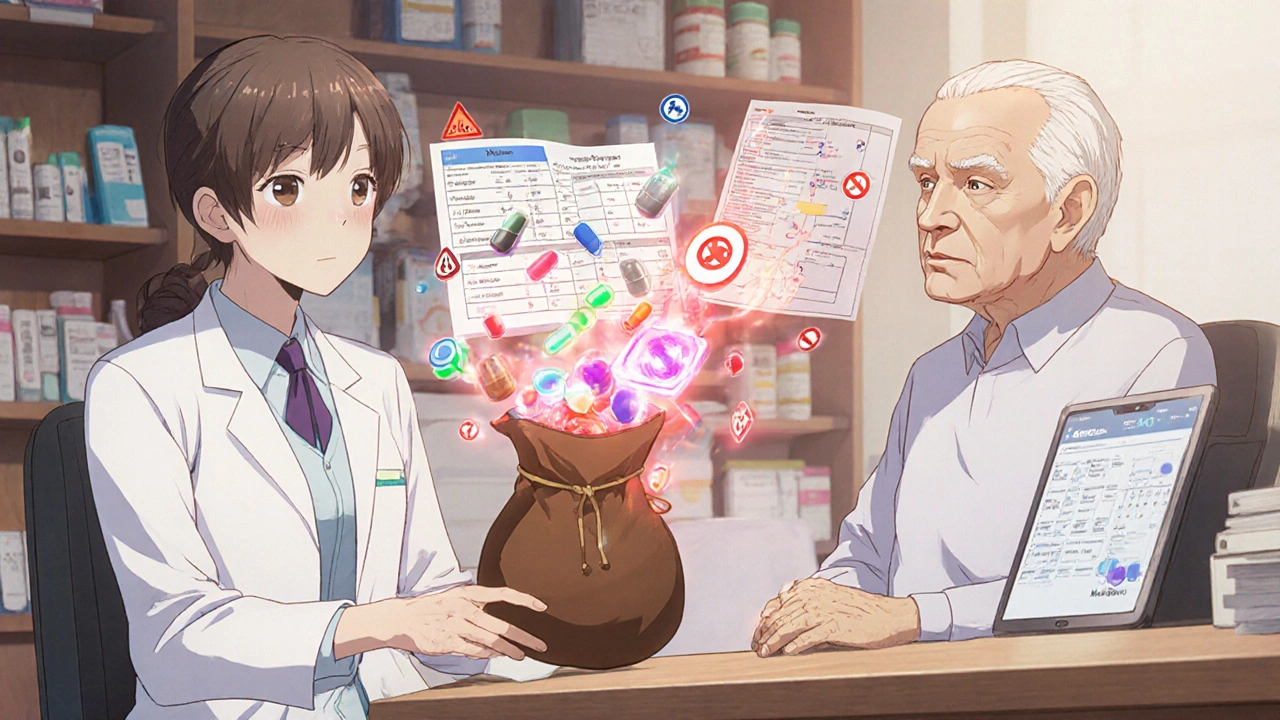
What Should Be Done? A Practical Guide
The solution isn’t stopping all meds-it’s using them smarter. Here’s what works:- Start low, go slow. For most medications, begin at 25-50% of the standard adult dose. Increase gradually only if needed.
- Review every 3-6 months. Ask your doctor: “Is this still helping? Could it be causing harm?”
- Use eGFR, not just creatinine. Kidney function should be measured using the CKD-EPI equation. If your eGFR is below 60, many drugs need dose adjustments.
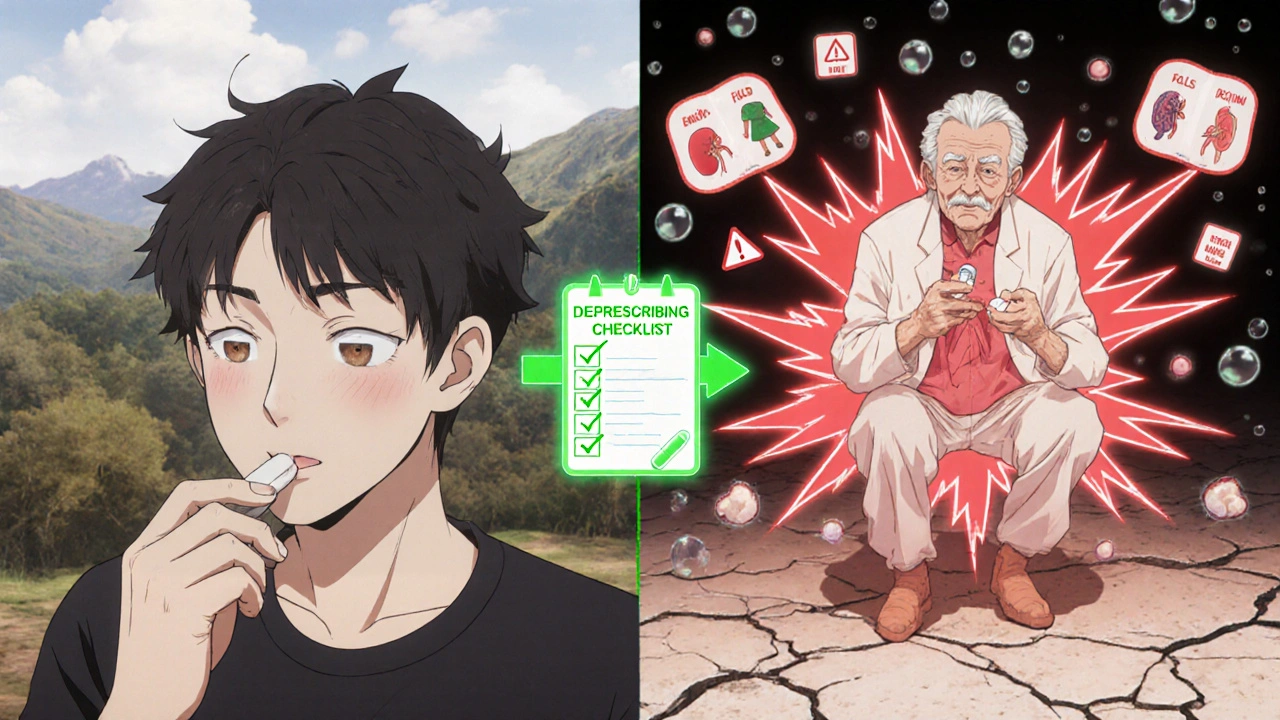
- Ask about deprescribing. If you’re on a medication for a condition that’s no longer active-like a cholesterol drug after a heart attack that’s years in the past-it might be safe to stop.
- Bring all your meds to every appointment. Include vitamins, herbal supplements, and OTC drugs. Many interactions happen with these.
Tools and Resources That Help
There are real tools available to make this easier:- The Beers Criteria app is free and used by over 125,000 clinicians. It tells you which drugs to avoid in older adults.
- The STOPP/START criteria help doctors decide what to stop and what to start. STOPP identifies inappropriate prescriptions; START identifies missing ones, like vaccines or bone-strengthening drugs.
- Pharmacogenomic testing is becoming more common. Testing for genes like CYP2D6 and CYP2C19 can show how your body metabolizes antidepressants or painkillers, reducing side effects by up to 35%.
- AI tools like MedAware flag dangerous interactions before prescriptions are filled. Johns Hopkins found it cut errors by 42%.
The Bigger Picture
This isn’t just a medical issue-it’s a societal one. The U.S. spends $30 billion a year treating preventable drug reactions in older adults. With 1 in 5 Americans expected to be over 65 by 2040, the problem will only grow. Clinical trials still mostly exclude people over 75, so we’re often guessing how drugs will affect them. But change is happening. The FDA now encourages including older adults in trials. Medical schools are teaching geriatric pharmacology. Hospitals are being penalized for high readmission rates due to medication errors. And more doctors are learning to ask: “What’s the goal here? Is this helping, or just adding risk?”What You Can Do Today
If you or someone you care for is over 65 and taking multiple medications:- Write down every pill, vitamin, and supplement you take.
- Ask your doctor: “Could any of these be causing my dizziness, confusion, or falls?”
- Ask: “Is there a safer alternative?”
- Ask: “Can we stop one or two?”
- Don’t assume a prescription is always safe just because it’s from a doctor.
Why do older adults have more side effects from medications?
Older adults experience more side effects because their bodies change with age: kidneys and liver process drugs slower, body fat and water ratios shift, and the brain becomes more sensitive to certain medications. These changes mean drugs stay in the system longer, reach higher concentrations, and trigger stronger reactions-even at standard doses.
What medications should older adults avoid?
The Beers Criteria lists 56 medications to avoid or use with caution in older adults. Key examples include benzodiazepines (like diazepam), anticholinergics (like diphenhydramine), NSAIDs (like ibuprofen), and certain antidepressants (like amitriptyline). These drugs increase risks of falls, confusion, kidney damage, and bleeding.
Is polypharmacy always dangerous for seniors?
Not always-but it’s risky. Taking five or more medications increases the chance of harmful interactions, duplicate prescriptions, and side effects. About 48% of adults over 65 take five or more prescriptions. Regular medication reviews can identify unnecessary drugs and reduce risks.
How can I tell if a medication is causing side effects?
Watch for new symptoms that started after beginning or changing a medication. Common signs include dizziness, confusion, memory loss, unexplained falls, constipation, urinary problems, or sudden weight changes. If you notice these, don’t ignore them-talk to your doctor or pharmacist.
What is deprescribing, and is it safe?
Deprescribing is the planned process of stopping medications that are no longer beneficial or may be causing harm. It’s safe when done under medical supervision. Studies show 30-50% of medications in nursing homes are unnecessary. Stopping them can improve quality of life and reduce side effects.
Should older adults get genetic testing for medications?
It’s not required for everyone, but it can help. Testing for genes like CYP2D6 and CYP2C19 shows how your body breaks down certain drugs, especially antidepressants and painkillers. A 2023 University of Florida study found this testing reduced side effects by 35% in older adults.
Can I stop a medication on my own if I think it’s causing problems?
No. Stopping some medications suddenly-like blood pressure drugs, antidepressants, or steroids-can be dangerous. Always talk to your doctor first. They can help you taper safely or switch to a better option.
For older adults, medication safety isn’t about taking less-it’s about taking better. The goal isn’t to avoid treatment. It’s to make sure every pill serves a purpose-and doesn’t become a risk.
8 Responses
My grandma took Benadryl for allergies and ended up in the ER thinking her cat was the FBI. She kept telling us the cat was "wearing a suit and taking notes." Turned out it was the anticholinergic brain fog. We stopped it cold. She’s been way more herself since. These drugs aren’t harmless just because they’re OTC. 😵💫
It is imperative to acknowledge that the American healthcare system’s failure to adapt pharmacological protocols to geriatric physiology constitutes a systemic dereliction of duty. The persistence of prescribing benzodiazepines to individuals over 65, despite overwhelming clinical evidence to the contrary, reflects a pathological adherence to outdated paradigms. This is not negligence-it is institutionalized elder abuse.
You think this is bad? Wait till you see what happens when someone’s on 12 meds and their "care coordinator" is a 22-year-old intern who thinks "polypharmacy" is a type of pasta. We’re not just medicating the elderly-we’re turning them into pharmacological pinatas.
Western medicine is reductionist. You blame the drug, not the bio-ecological collapse of the aging phenotype. In Nigeria, we use herbs, fasting, and ancestral protocols. No one takes 8 pills a day. We treat the body, not the symptom. Your system is broken because you commodify illness.
This post is incredibly important. I’ve seen too many older relatives confused by meds they don’t understand. I’m going to print this out and take it to my dad’s next appointment. He’s on five things and doesn’t know why. Just asking the right questions can save lives.
Let me tell you something real: my uncle, 81, was on Ambien for 7 years because the doctor said "it’s just a sleep aid." He didn’t fall-he floated. Like a ghost in his own house. Then we did the brown bag review. Found he was on two different blood pressure meds, one of which was expired since 2019. Stopped the Ambien, started melatonin, and now he’s playing chess with his grandkids again. It’s not magic-it’s just paying attention. You don’t need a PhD to ask, "What’s this for?" But you do need courage. And maybe a list. Write it down. Bring it. Don’t let them rush you. Your life isn’t a 10-minute visit.
My mom started on amitriptyline for neuropathy and went from "I’m fine" to "I don’t know where I am" in 3 days 😢 We switched to gabapentin and now she remembers my birthday again. I wish we’d known about the Beers Criteria sooner. Everyone says "trust your doctor" but no one tells you to question them. You got to be your own advocate. And yes, bring all the bottles. Even the gummy vitamins. They count too 🙏
Just had this conversation with my 76-year-old neighbor last week. She was on 7 meds, including one for something she didn’t even have anymore. We sat down with her pill organizer and called her pharmacist together. Turns out two were duplicates. One was for a heart condition she’d fixed with surgery 10 years ago. She cried because she felt stupid for not asking. But she didn’t need to feel that way. We all get overwhelmed. Just asking "Is this still needed?" is a superpower.