
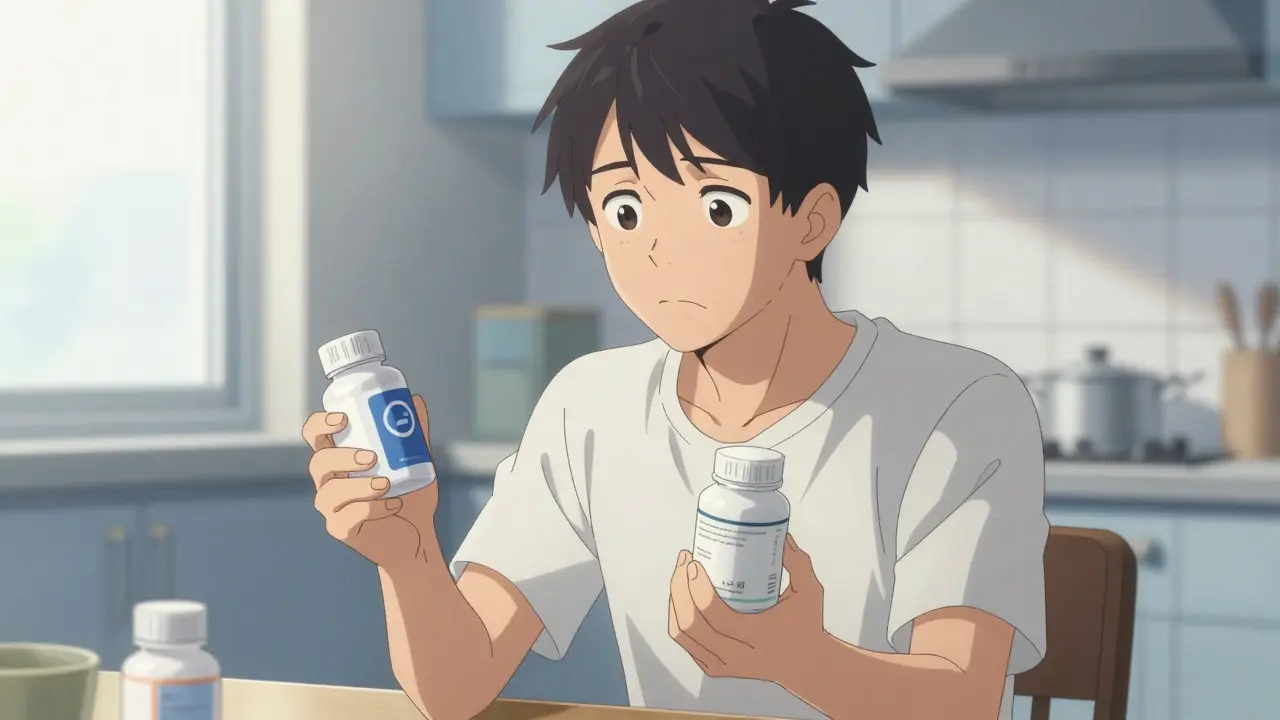
Have you ever switched from a brand-name medication to its generic version and felt like something was off? Maybe your headache didn’t go away as quickly, or perhaps you developed a new stomach ache. You aren't alone in feeling this way. A significant number of patients report experiencing different or worse side effects after making the switch. But here is the million-dollar question: are these adverse reactions actually caused by the generic drug itself, or is it all in our heads?
The short answer is that for the vast majority of people, generic drugs are just as safe and effective as their brand-name counterparts. However, the reality is more nuanced than a simple yes or no. While regulatory bodies insist on strict equivalence, individual biology, manufacturing variances, and psychological factors play complex roles in how we react to medication. Let’s break down what the science says about generic side effects, why some people feel worse, and when you might need to stick with the original brand.
What Actually Makes a Drug "Generic"?
To understand the safety profile, we first need to define what a generic drug is a pharmaceutical product containing the same active ingredients as a brand-name drug but sold under chemical names after patent expiration. When a brand-name drug’s patent expires, other manufacturers can produce their own versions. These generics must contain the exact same active ingredient-the part of the pill that does the medical work-in the same dose and strength.
However, they don't have to look identical. The color, shape, taste, and inactive ingredients (like fillers, binders, and coatings) can differ. This is where the confusion often starts. Patients see a differently colored pill and assume it's a different medicine. But legally and scientifically, the core therapeutic agent remains unchanged.
The Bioequivalence Standard: Is It Good Enough?
The U.S. Food and Drug Administration (FDA is the federal agency responsible for protecting public health by ensuring the safety of drugs) requires all generic drugs to demonstrate bioequivalence to the brand-name version. This means the generic must deliver the same amount of active ingredient into your bloodstream within roughly the same timeframe.
Here is the catch: the FDA allows a variation window. The 90% confidence interval for the generic’s absorption rate must fall between 80% and 125% of the brand-name drug’s pharmacokinetic parameters. In simpler terms, if the brand releases 100 units of medicine into your blood, the generic could theoretically release anywhere from 80 to 125 units and still be considered equivalent.
For most medications, this 20% variance is clinically insignificant. Your body handles the fluctuation without issue. But for certain sensitive conditions, that gap might matter. This standard was established under the 1984 Hatch-Waxman Act to encourage competition while maintaining safety, and it has been the cornerstone of generic regulation ever since.
What Do Clinical Studies Say About Safety?
If you look at large-scale clinical data, the picture leans heavily toward safety. A comprehensive 2018 study published in PLOS Medicine by Dr. Aaron Kesselheim and his team examined 38 clinical trials involving cardiovascular drugs. They found no evidence of inferior efficacy or safety for generic versions compared to brand-name drugs. Patients taking generics had similar rates of heart attacks, strokes, and hospitalizations as those on brand-name medications.
Another major analysis from the National Institutes of Health (NIH) looked at over 27,000 adverse event reports for common drugs like amlodipine, metoprolol, losartan, and simvastatin. The study used Reporting Odds Ratios (RORs) to compare patterns. While there were statistically significant differences in reporting patterns for some brands versus generics, the actual clinical outcomes didn't show a clear danger signal for the generic versions. In fact, for simvastatin, patients were significantly more likely to stop taking the brand-name version due to intolerance, suggesting the generic was better tolerated.
| Study Source | Drug Class | Key Finding | Safety Verdict |
|---|---|---|---|
| PLOS Medicine (2018) | Cardiovascular | No difference in clinical endpoints or hospitalization rates | Equivalent Safety |
| Nature Scientific Reports (2020) | Cardiac/Cerebrovascular | Lower major cardiac events in generic users (51.3 vs 83.6 per 1000 patient-years) | Generic Advantage |
| Harvard Health (2019) | Blood Pressure | 8-14% increase in ER visits after generic switch (causation unclear) | Inconclusive |
| Ohio State University (2022) | Mature Generics (India-manufactured) | 54% higher severe adverse events compared to US-made equivalents | Manufacturing Variance Risk |

The Nocebo Effect: When Expectations Cause Symptoms
One of the biggest drivers of reported side effects isn't chemistry-it's psychology. This is known as the nocebo effect is a phenomenon where negative expectations about a treatment lead to increased reporting of adverse effects. If you believe a generic drug is "lesser" or "weaker," your brain may amplify minor sensations into full-blown symptoms.
A striking 2012 study demonstrated this clearly. Participants were given identical placebo pills. Half were told they contained the brand-name drug; the other half were told they contained the generic. The group labeled as "generic" reported significantly more side effects (mean 1.83) compared to the "brand" group (mean 0.87), even though both groups took sugar pills. Another study in the European Journal of Public Health found that 54% of patients discontinued medication early when they knew they were taking a generic, compared to only 33% who thought they were taking the brand name.
This doesn't mean your pain isn't real. The nocebo effect triggers genuine physiological responses. Stress hormones rise, pain perception increases, and anxiety spikes. So, when you say you feel worse on the generic, you are feeling worse-but the cause may be your expectation rather than the molecule itself.
When Generics Might Truly Be Different
While the nocebo effect explains many complaints, there are legitimate scenarios where generics behave differently. The primary culprit is usually not the active ingredient, but the inactive ingredients are non-medical components like fillers, binders, dyes, and preservatives used in drug formulation. Some patients have allergies or sensitivities to specific dyes or gluten-based fillers used by certain generic manufacturers.
More critically, drugs with a narrow therapeutic index is a characteristic of drugs where small changes in dose or concentration can lead to toxicity or lack of efficacy require extreme precision. These include:
- Levothyroxine (for thyroid conditions)
- Warfarin (blood thinner)
- Phenytoin (seizure medication)
- Lithium (mood stabilizer)
For these medications, a 20% variance in absorption isn't just inconvenient-it can be dangerous. Switching between different generic manufacturers of warfarin, for example, can cause unstable INR levels (a measure of blood clotting time). The American Medical Association recommends that doctors specify "Dispense as Written" for these drugs to ensure patients stay on one consistent manufacturer, whether brand or generic.

Manufacturing Origin and Quality Control
Where your generic drug is made also matters. The FDA oversees approximately 1,700 generic manufacturing facilities worldwide, with 63% located outside the United States. India accounts for 32% of these facilities, and China for 18%.
A controversial 2022 study from Ohio State University found that generic drugs manufactured in India were linked to 54% higher rates of severe adverse events-including hospitalization and death-compared to equivalent drugs produced in the U.S. The researchers noted that this disparity was driven primarily by "mature" generics that had been on the market for longer periods. The FDA disputes this interpretation, arguing that facility location doesn't automatically dictate quality, and that rigorous inspections are conducted globally.
However, the trend highlights a valid concern: supply chain complexity. With economic pressures pushing costs down, some manufacturers may cut corners on quality control. Regulatory initiatives like the Generic Drug User Fee Amendments (GDUFA) have increased FDA inspections from 42 in 2010 to 317 in 2022, aiming to close these gaps. Still, variability exists.
What Should You Do If You Experience Side Effects?
If you switch to a generic and feel unwell, don't just suffer in silence. Here is a practical approach:
- Track your symptoms. Note when they start, how long they last, and their severity. This helps distinguish between a true reaction and temporary adjustment.
- Check for inactive ingredients. Ask your pharmacist if the generic contains any allergens you’re sensitive to, such as lactose, gluten, or specific dyes.
- Consider the nocebo factor. Remind yourself that the active ingredient is identical. Anxiety can worsen physical symptoms.
- Talk to your doctor. If symptoms persist, ask if you can try a different generic manufacturer. Pharmacies often stock multiple sources. Sometimes, switching from Manufacturer A to Manufacturer B resolves the issue because the inactive ingredients differ.
- Stick with one source. For narrow therapeutic index drugs, consistency is key. Try to get your prescription filled at the same pharmacy every time to avoid accidental switches between manufacturers.
Conclusion: Trust, But Verify
Are adverse reactions more likely with generics? Statistically, no. For the average person taking common medications for high blood pressure, cholesterol, or diabetes, generics are safe, effective, and save thousands of dollars annually. The consensus among major health organizations, including the American College of Physicians, is that the benefits of generic substitution outweigh potential risks for nearly all medications.
However, "nearly all" isn't "all." If you take a narrow therapeutic index drug, have known allergies to fillers, or consistently feel worse despite reassurance, advocate for yourself. Request a specific manufacturer or ask your doctor about staying on the brand name if cost allows. Your health is personal, and while the data supports generics broadly, your body’s response is the final verdict.
Are generic drugs exactly the same as brand-name drugs?
They contain the same active ingredient in the same dose and strength. However, they may differ in inactive ingredients (fillers, colors, flavors) and appearance. The FDA requires them to be bioequivalent, meaning they perform similarly in the body, but allows a small variance in absorption rates.
Why do I feel worse on my generic medication?
This could be due to the nocebo effect (negative expectations causing real symptoms), sensitivity to inactive ingredients like dyes or fillers, or natural fluctuations in your condition. For most people, the active ingredient works the same, but psychological factors and minor formulation differences can influence perception.
Which medications should not be switched to generics?
Drugs with a narrow therapeutic index require precise dosing and may not tolerate the slight variations allowed in generics. These include levothyroxine (thyroid), warfarin (blood thinner), phenytoin (seizures), and lithium (mood stabilization). Doctors often recommend sticking to one consistent manufacturer for these drugs.
Does the country where a generic is made affect its safety?
Most generics are manufactured globally, with many coming from India and China. While the FDA inspects these facilities, some studies suggest higher adverse event rates for generics made in certain countries compared to U.S.-made ones. However, the FDA maintains that rigorous standards apply everywhere, and location alone doesn't guarantee poor quality.
Can I ask my pharmacist for a specific generic manufacturer?
Yes. If you experience side effects with one generic brand, you can ask your pharmacist if they carry another manufacturer's version. Different companies use different inactive ingredients, which might resolve issues related to allergies or sensitivities. For narrow therapeutic index drugs, consistency with one manufacturer is crucial.