
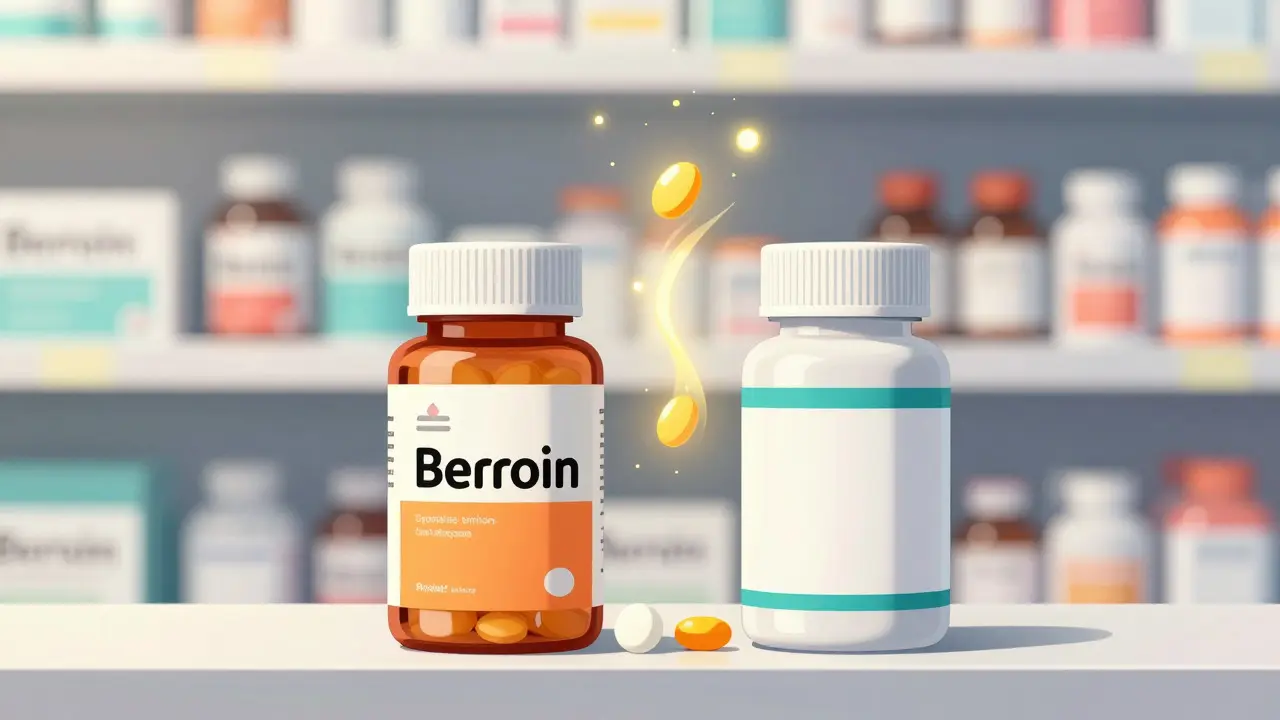
You might have heard the argument that generic drugs are just "cheap copies" of brand-name medications. It’s a common worry, especially when you see a different color or shape in your pill bottle. But does that difference mean lower quality? The short answer is no. In fact, the standards for generic drugs in the United States are incredibly strict. If a generic drug doesn’t meet specific federal requirements, it simply never reaches your pharmacy shelf.
The system we use today was created by the Hatch-Waxman Act of 1984, officially known as the Drug Price Competition and Patent Term Restoration Act. This legislation balanced two competing needs: protecting patents for innovator companies while creating a clear pathway for affordable competition. Today, more than 90 percent of prescriptions filled in the U.S. are generics. That massive shift hasn’t lowered safety standards; instead, it has saved the healthcare system an estimated $37 billion annually, according to 2022 data from the Food and Drug Administration (FDA).
What Does Pharmaceutical Equivalence Mean?
Before a generic drug can even begin clinical testing, it must prove it is pharmaceutically equivalent to the brand-name reference listed drug (RLD). This isn’t a vague concept. It requires precise matching of several key attributes.
To achieve pharmaceutical equivalence, the generic version must contain:
- Identical active ingredients: The same chemical compound responsible for the therapeutic effect.
- Same strength: For example, if the brand is 500mg, the generic must be exactly 500mg.
- Identical dosage form: A tablet must remain a tablet; a liquid suspension cannot become a capsule.
- Same route of administration: If the brand is taken orally, the generic must also be oral.
- Equivalent labeling: Instructions for use, warnings, and indications must match the original.
You might notice differences in inactive ingredients-things like dyes, binders, or flavorings. These are allowed because they don’t affect how the drug works in your body. However, manufacturers must ensure these excipients don’t cause allergic reactions or interact negatively with the active ingredient. Minor variations in color, shape, and scoring are permitted, which is why your new prescription might look different from the one you took last year.
Bioequivalence: The Core of Generic Testing
If pharmaceutical equivalence ensures the drug looks and contains the right stuff, bioequivalence is the proof that it works the same way inside your body. This is where the real science happens. The FDA requires rigorous studies to demonstrate that the rate and extent of absorption of the generic drug are not significantly different from the brand-name counterpart.
For most small-molecule drugs, this involves single-dose pharmacokinetic studies conducted on 24 to 36 healthy volunteers. Researchers measure two critical metrics in the blood:
- Cmax (Maximum Concentration): How high the drug levels peak in the bloodstream.
- AUC (Area Under the Curve): The total amount of drug absorbed over time.
The statistical bar here is high. The 90% confidence interval for the ratio of geometric means between the generic (test) and brand (reference) for both Cmax and AUC must fall within a narrow acceptance range of 80% to 125%. If the results fall outside this window, the application is rejected. This tight margin ensures that any variation is clinically irrelevant for the vast majority of patients.
| Attribute | Brand-Name Drug | Generic Drug |
|---|---|---|
| Active Ingredient | Original formulation | Must be identical |
| Clinical Trials | Large-scale Phase I-III trials required | Bioequivalence study (usually 24-36 subjects) |
| Manufacturing Standards | cGMP compliance | cGMP compliance (same standards) |
| Inactive Ingredients | Proprietary mix | Can differ, but must not affect efficacy/safety |
| Approval Pathway | New Drug Application (NDA) | Abbreviated New Drug Application (ANDA) |
Current Good Manufacturing Practices (cGMP)
Getting the formula right is only half the battle. Making it consistently safe is the other half. Both brand-name and generic manufacturers must adhere to Current Good Manufacturing Practices (cGMP), codified in 21 CFR Parts 210 & 211. These regulations apply equally to everyone.
cGMP mandates strict oversight from the moment raw materials arrive at the factory until the finished product ships out. Key requirements include:
- Validated Methods: Every test used for quality control must be proven reliable.
- Written Procedures: Clear, step-by-step instructions for production that are strictly followed.
- Monitoring Critical Parameters: Temperature, humidity, and pressure during manufacturing are tracked continuously.
- Batch Testing: Every single production lot must be tested for identity, strength, purity, and quality before release.
The FDA conducts approximately 3,500 inspections annually across global manufacturing facilities to enforce these standards. Interestingly, about 50 percent of generic drugs are actually manufactured by the same big pharmaceutical companies that make the brand-name versions, often in the exact same facilities. This overlap reinforces the idea that quality infrastructure is shared, not diluted.

The ANDA Process and Review Timelines
To get a generic drug approved, manufacturers submit an Abbreviated New Drug Application (ANDA). Unlike brand-name drugs that require extensive human clinical trials to prove safety and efficacy from scratch, generics rely on the existing data of the reference listed drug. They only need to prove equivalence.
The review process is coordinated by the FDA’s Office of Generic Drugs (OGD) within the Center for Drug Evaluation and Research (CDER). As of 2023, the OGD employs 750 staff members dedicated solely to reviewing these applications. Thanks to the Generic Drug User Fee Amendments (GDUFA), first implemented in 2012 and reauthorized through GDUFA III in 2022, review timelines have tightened significantly. The standard goal for a complete ANDA is now 10 months.
In fiscal year 2022 alone, the FDA approved 892 original ANDAs. However, the process is not automatic. The agency issued 478 complete response letters that same year, indicating areas where applicants needed to provide more data or correct deficiencies. This rigorous back-and-forth ensures that only products meeting all criteria reach the market.
Challenges with Complex Generics
While simple tablets and capsules are straightforward to test, complex drug products pose unique challenges. Inhalers, long-acting injectables, topical creams, and transdermal patches don’t always behave predictably in standard blood tests. For these products, demonstrating bioequivalence via Cmax and AUC might not tell the whole story.
Dr. Charles Ganley, former Director of the Office of Generic Drugs, noted in a 2019 article that "demonstrating equivalence for products like topical creams or inhalers requires more sophisticated testing approaches than simple blood level measurements." To address this, the FDA has developed product-specific guidances. As of May 2023, there were 2,143 such guidances covering 1,528 unique drug products.
These guidelines may require additional physicochemical and structural characterization tests to demonstrate "Q3 sameness"-ensuring the physical structure of the generic matches the reference drug closely enough to deliver the medication effectively. In 2023, the FDA released 27 new guidances for complex generics and allocated $15.7 million specifically for research into novel methodologies for these difficult-to-copy drugs. About 17% of complex product categories still require testing beyond standard bioequivalence protocols.

Patient Perspectives and Narrow Therapeutic Index Drugs
Despite the rigorous science, patient experiences vary. A 2022 Consumer Reports survey found that 89% of adults were satisfied with their generic medications, and 62% actively chose them to save money. On online forums like Reddit’s r/pharmacy, 83% of respondents reported no noticeable difference between brand and generic versions.
However, issues do arise, particularly with Narrow Therapeutic Index (NTI) drugs. These are medications where a small change in dose can lead to serious side effects or lack of efficacy. Examples include levothyroxine (for thyroid conditions), warfarin (blood thinner), and certain seizure medications. A 2021 study in JAMA Internal Medicine found that 12.3% of patients switched between different generic versions of levothyroxine experienced thyroid level fluctuations requiring dose adjustments.
This highlights a nuance in the system: while all FDA-approved generics are therapeutically equivalent to the *brand*, switching between *different generic manufacturers* can sometimes introduce variability. Patients on NTI drugs should communicate closely with their pharmacists and doctors to maintain consistency in their supply source whenever possible.
Stability Testing and Shelf Life
Quality isn’t just about the day the drug is made; it’s about ensuring it remains stable throughout its shelf life. Generic applications must include comprehensive stability data. This typically involves:
- Accelerated Studies: Storing samples at 40°C and 75% relative humidity for six months to simulate long-term degradation.
- Long-Term Studies: Monitoring samples at recommended storage conditions for 12 to 24 months.
This data proves that the drug will retain its potency, purity, and physical integrity until the expiration date printed on the bottle. Without this evidence, the FDA will not approve the proposed shelf life.
Are generic drugs really as safe as brand-name drugs?
Yes. FDA-approved generic drugs must meet the same stringent standards for safety, efficacy, and quality as brand-name drugs. They must contain the same active ingredient, strength, and dosage form, and demonstrate bioequivalence through rigorous testing.
Why do my generic pills look different from the brand name?
Generic drugs can have different colors, shapes, and inactive ingredients (like fillers or dyes) because these do not affect the therapeutic effect. The active ingredient, which treats your condition, is identical to the brand-name version.
What is bioequivalence?
Bioequivalence means that the generic drug enters your bloodstream at a similar rate and to a similar extent as the brand-name drug. The FDA requires that the difference in absorption falls within a narrow range (80-125%) to ensure comparable performance.
Do generic drugs go through clinical trials?
Most generic drugs do not require large-scale Phase I-III clinical trials like brand-new drugs. Instead, they undergo bioequivalence studies involving 24-36 healthy volunteers to prove they perform identically to the already-approved brand-name drug.
Should I avoid switching generic manufacturers?
For most drugs, switching manufacturers is safe. However, for Narrow Therapeutic Index (NTI) drugs like levothyroxine or warfarin, some patients experience sensitivity to minor variations. If you take such medications, consult your doctor about maintaining consistency with one manufacturer.