
Respiratory Depression Risk Calculator
Risk Assessment Tool
This tool helps you understand your individual risk of respiratory depression when using gabapentinoids with opioids based on key health factors. Note: This is for informational purposes only and should not replace professional medical advice.
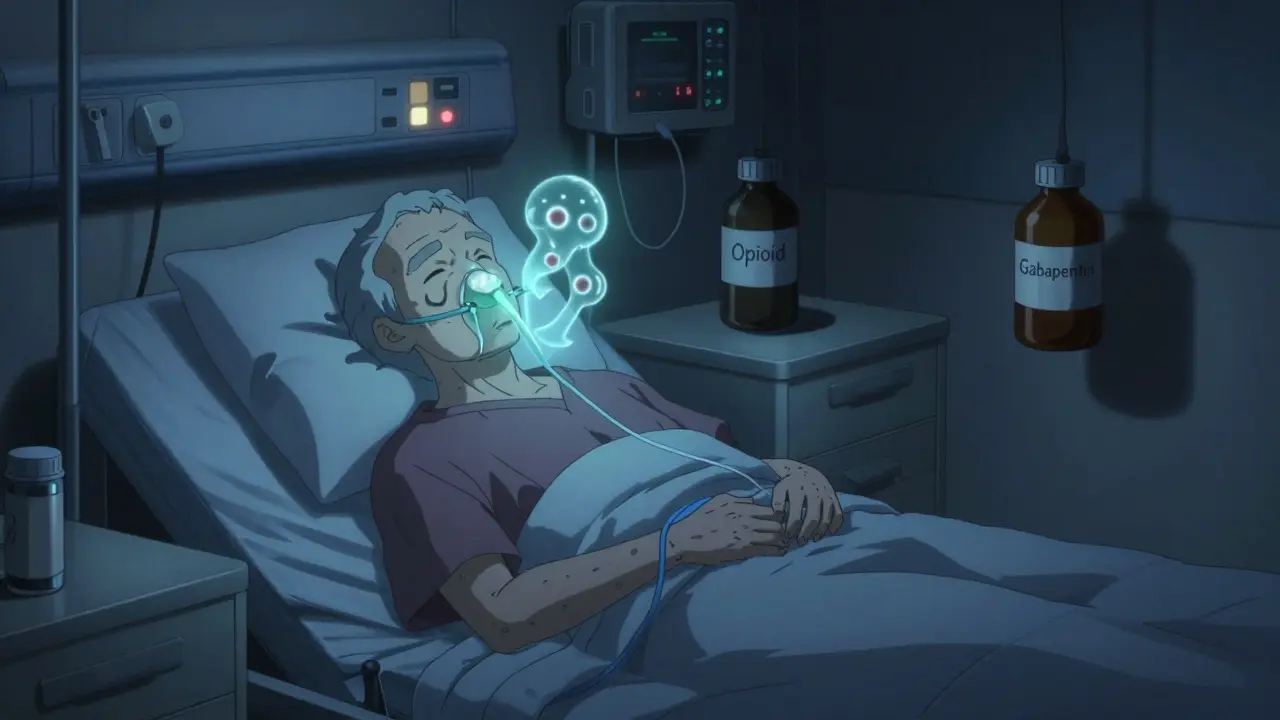
Combining gabapentinoids like gabapentin or pregabalin with opioids might seem like a smart way to manage pain-less opioid needed, better control, fewer side effects. But what if this combo is more dangerous than doctors once thought? Since 2019, the FDA has required stronger warnings on these drugs because of a growing body of evidence showing that mixing them can lead to life-threatening respiratory depression and extreme sedation. This isn’t just a theoretical risk. Real patients in hospitals and at home have stopped breathing after taking both together-even at standard doses.
Why Doctors Used to Prescribe This Combo
For years, gabapentinoids were seen as helpful sidekicks to opioids. They were used after surgery, for nerve pain, or in chronic conditions like fibromyalgia. The idea was simple: if you give someone gabapentin or pregabalin, they might need 20-30% less opioid to feel the same pain relief. That sounded like a win-fewer opioids meant lower risk of addiction, constipation, and overdose. Many studies in the 2010s showed promising results. Hospitals started including them in standard post-op pain protocols. By 2017, prescriptions for gabapentinoids combined with opioids had jumped 64% in just five years.The Hidden Danger: How These Drugs Work Together
The problem isn’t just that both drugs make you sleepy. They attack breathing from two different angles. Opioids slow down the brainstem’s response to rising carbon dioxide levels. That’s why overdoses cause people to stop breathing. Gabapentinoids do something similar but through a different pathway-they reduce how sensitive the brain’s breathing center is to CO2. When you put them together, the effect isn’t just added-it’s amplified. There’s also a sneaky pharmacokinetic twist. Opioids slow down gut movement. That means gabapentinoids stay in the intestines longer, getting absorbed more efficiently. One study found this boosts gabapentin levels by up to 44%. So even if you take the same dose you always have, your body might be getting more than you think. That’s why someone on a stable opioid dose can suddenly become dangerously sedated after adding gabapentin-even if they’ve taken it before without issue.Who’s at Highest Risk?
Not everyone who takes this combo will have problems. But certain groups are far more vulnerable:- People over 65
- Those with sleep apnea or COPD
- Patients with kidney problems (gabapentinoids are cleared by the kidneys)
- Anyone already on high-dose opioids
- People taking other sedatives like benzodiazepines or alcohol
What the Experts Are Saying Now
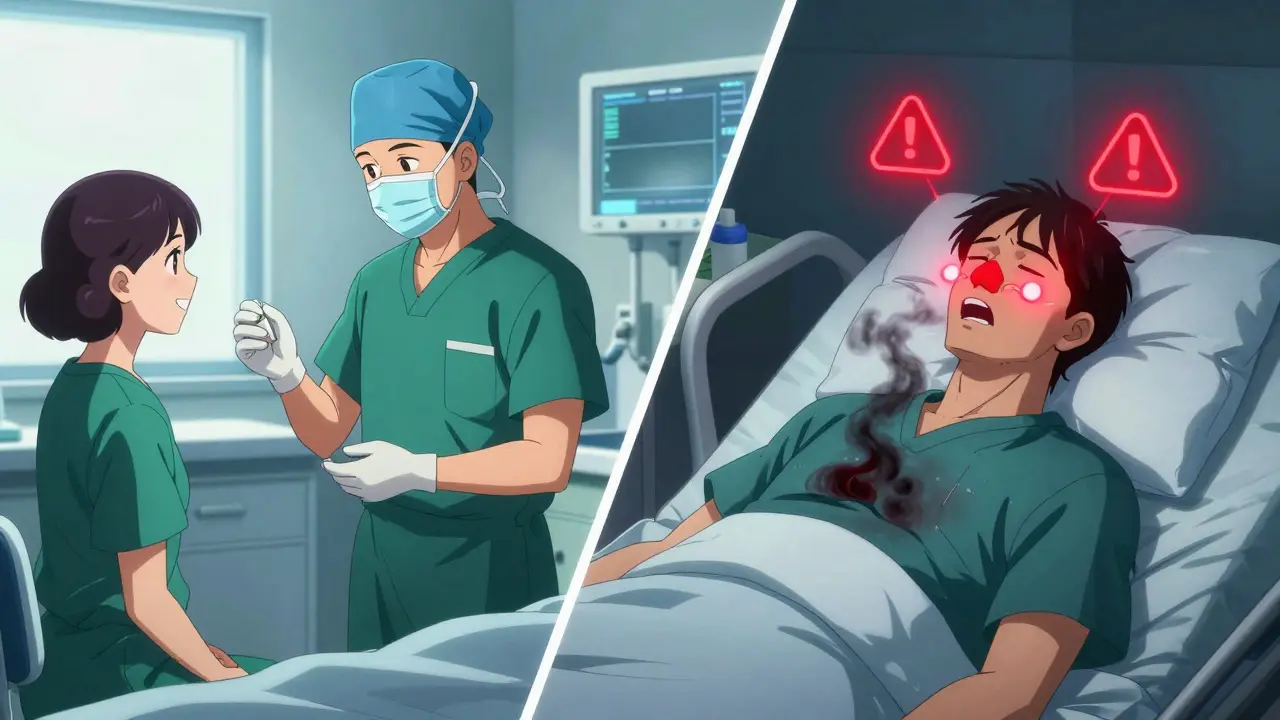
The American Geriatrics Society’s Beers Criteria, updated in 2019, says this combination should be avoided in older adults. The UK’s Medicines and Healthcare products Regulatory Agency (MHRA) issued a safety alert in 2022 confirming that gabapentin alone can cause severe respiratory depression-even without opioids. The FDA’s 2019 warning was based on over 100 case reports of death or life-threatening events linked to this combo. Dr. Janet Woodcock, former FDA deputy commissioner, said bluntly: “There are serious consequences of this co-use, including respiratory depression and increased risk of opioid overdose death.” Dr. Michael Brennan, lead author of a major 2020 study, added: “Patients who receive gabapentinoids with opioids for postoperative analgesia should be closely monitored.” And here’s the catch: just because large randomized trials haven’t proven a massive spike in breathing problems doesn’t mean it’s safe. As Dr. Harrogate from the University of Toronto pointed out, we can’t ethically test this combo in high-risk patients to prove harm. So we rely on real-world data-and that data is alarming.Real-World Changes in Practice
Hospitals are starting to change. One UK hospital reported a 40% drop in emergency respiratory events after banning gabapentinoids in opioid-treated patients with sleep apnea. The National Institute for Health and Care Excellence (NICE) updated its guidelines in 2023 to recommend against routinely using gabapentinoids with opioids for back pain. In the U.S., prescriptions for gabapentinoids dropped 12% in co-prescribing with opioids between 2018 and 2021. The American Society of Anesthesiologists now says gabapentinoids “may be considered for multimodal analgesia but require careful patient selection and enhanced monitoring when combined with opioids.” That’s not a green light-it’s a cautious yellow.What Should You Do If You’re on This Combo?
If you’re taking both an opioid and a gabapentinoid, don’t stop suddenly. Talk to your doctor. Ask:- Is this combination still necessary for my pain?
- Could I try lowering the dose of one or both drugs?
- Am I in a high-risk group (age, lung disease, kidney issues)?
- Have I been monitored for sedation or breathing changes?

12 Responses
this is wild i had my grandpa on this combo and he nearly died in his sleep no one told us anything 😭
this is why i always ask my dr for alternatives 🙏 i had a friend who went into a coma from this combo. we need more awareness. 💔
of course the FDA waited until it was too late. doctors are lazy and prescribe like they're ordering coffee. this isn't a breakthrough-it's a tragedy waiting to be ignored again.
The pharmacokinetic interaction between opioids and gabapentinoids is underappreciated in clinical practice. The 44% increase in gabapentin absorption due to slowed gastric motility is a critical, evidence-based concern that warrants immediate reassessment of co-prescribing protocols.
This isn't just about risk-it's about respect. We're treating patients like lab rats with a checklist instead of humans with fragile biology. The fact that capnography isn't standard in post-op care is criminal. We know how to save lives. Why aren't we doing it?
my mom was on this combo after knee surgery. she was fine until the gabapentin kicked in. we didn't know until she stopped breathing for 12 seconds. scary as hell. now she's off both
this is what happens when you let big pharma write your prescriptions. doctors don't care. they get paid to prescribe. people die. again. and again. and again. wake up.
i'm a nurse in a rural hospital and we stopped giving gabapentin with opioids 2 years ago. no more codes. no more panic. just better sleep for our patients. 🙌 it's not magic-it's common sense
the fact that we still don't have routine capnography in post-op units is a systemic failure. oxygen saturation misses early CO2 retention. we're using 1980s tools to monitor 2020s drug interactions.
my dad died from this. no warning. no consent. just a script.
it's strange how we accept risk when it's invisible. we screen for everything else-allergies, heart conditions, liver function-but we hand out this combo like candy because the danger doesn't show up on a lab test. maybe we need to stop trusting numbers and start trusting bodies.
This is precisely why we must demand accountability-not just from physicians, but from regulatory bodies that delay action until bodies pile up. The FDA's 2019 warning was a PR move, not a policy revolution. And until we mandate capnography, require genetic screening for α2δ-1 variants, and ban this combo outright in high-risk populations, we are complicit in the slaughter of the vulnerable. 🚨