
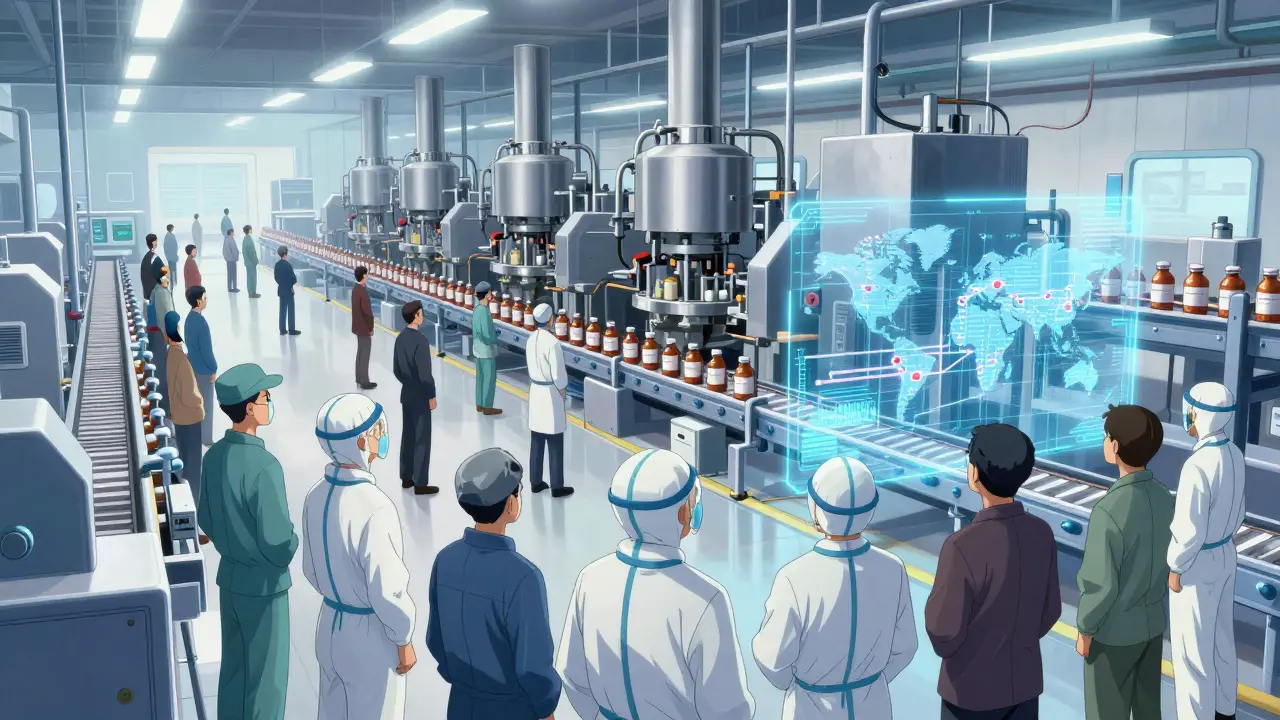
Most of the pills in your medicine cabinet were likely made thousands of miles away. About 90% of the generic prescriptions filled in the United States come from overseas facilities, with India and China producing the vast majority of active ingredients. This global supply chain keeps costs down, but it raises a serious question: how does the U.S. Food and Drug Administration (FDA) ensure these drugs are safe when they cannot be there every day to check them? For years, the answer was a patchwork of advance-notice inspections that allowed manufacturers time to clean up before regulators arrived. That system is changing fast.
In May 2025, the FDA announced a major shift toward unannounced inspections for foreign facilities, aiming to close the gap between domestic and international oversight. This move comes after investigations revealed that foreign facilities had higher rates of data integrity issues and contamination control failures compared to their U.S. counterparts. Understanding this new landscape is crucial for anyone relying on generic medications, as well as for industry professionals navigating stricter compliance requirements.
How FDA Oversees Foreign Generic Manufacturers
The core of FDA’s regulatory power lies in Current Good Manufacturing Practices (cGMP), which are standards that require all drug manufacturers to implement comprehensive quality systems monitoring every production step. These rules apply equally to factories in Ohio and plants in Hyderabad. Under cGMP, manufacturers must document everything, from personnel training logs to equipment maintenance records. They must also conduct in-process testing to catch errors before a batch is finished.
However, enforcement has historically been uneven. The FDA conducts roughly 12,000 inspections annually within the United States, most of which are unannounced. In contrast, the agency performs only about 3,000 inspections across more than 90 countries each year. Until recently, foreign facilities typically received eight to twelve weeks’ notice before an inspection team arrived. This lead time created a significant loophole: managers could temporarily boost staffing, polish records, and hide non-compliant areas until the inspectors left.
The technical framework for oversight involves three main pillars:
- Facility Inspections: Investigators walk the floor, checking contamination controls, water purity systems, and sterile processing areas.
- Documentation Review: Auditors examine batch records to ensure data integrity-meaning no backdated entries or deleted failed tests.
- Product Testing: Samples are taken to verify potency and purity against established specifications.
When violations are found, inspectors issue a Form 483, listing observations that may violate the Federal Food, Drug, and Cosmetic Act. While the standards are identical, the ability to enforce them remotely has been the FDA’s biggest challenge.
The "Double Standard" Problem
Data from the FDA’s 2024 Inspectional Performance Summary highlights a stark disparity. Foreign facilities had a violation rate of 38.7% for data integrity issues, compared to just 17.2% at domestic facilities. Critical observations related to contamination control appeared in 22.4% of foreign inspections versus 9.8% domestically. Why such a gap?
The primary driver was the notice period. With weeks to prepare, some foreign manufacturers engaged in "inspection theater." ProPublica’s 2024 investigation into Sun Pharma in India exposed this reality. The FDA had banned one of Sun Pharma’s facilities from exporting drugs in 2021 due to severe quality violations. Yet, by 2024, four drugs from that same facility were entering the U.S. market. Senators Kirsten Gillibrand and Tim Scott demanded an investigation, citing cases where the Center for Drug Evaluation and Research allegedly overrode safety enforcement actions recommended by the Office of Inspections and Investigations.
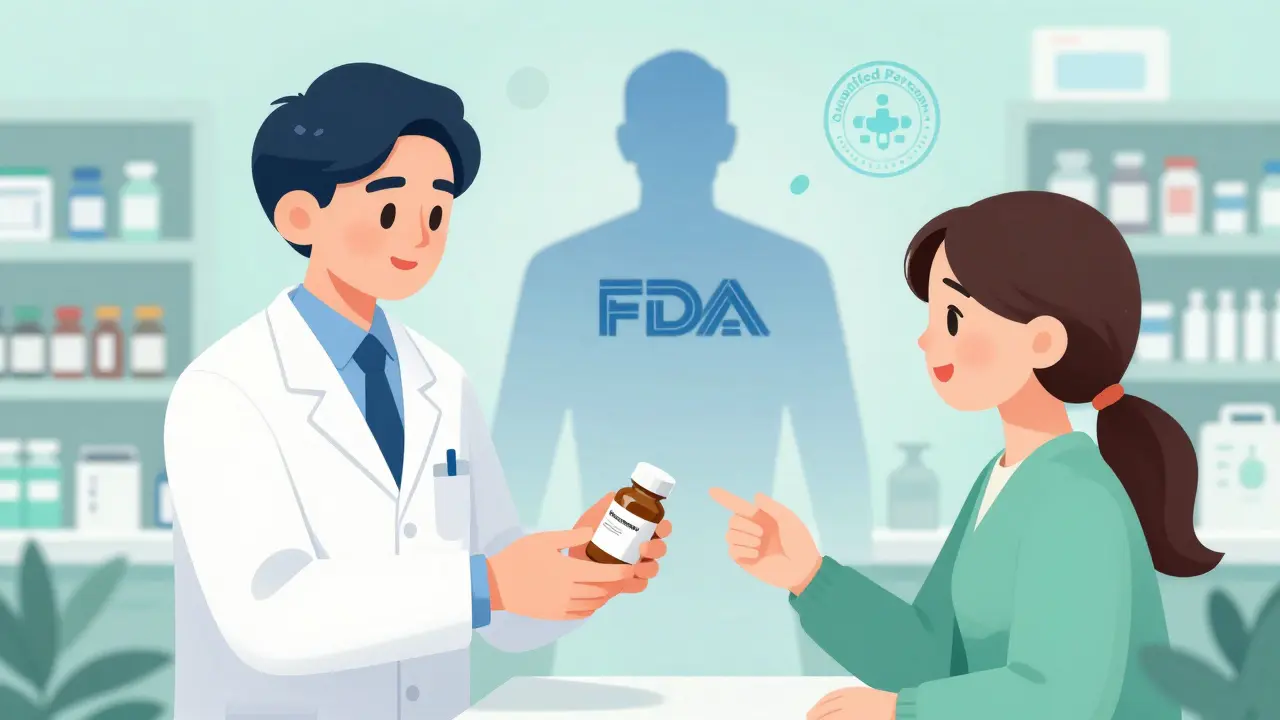
This discrepancy isn’t just a statistical anomaly; it represents a systemic risk. Dr. Ameet Sarpatwari of the Brookings Institution noted that the U.S. system relies too heavily on manufacturer self-policing. Without the pressure of surprise audits, the incentive to maintain rigorous daily compliance diminishes. The European Union handles this differently, requiring a "Qualified Person" physically located in Europe to certify each batch meets GMP standards before release. The U.S. lacks this importer-level verification layer, leaving a gap that bad actors can exploit.

New Rules: Unannounced Inspections and Executive Orders
The tide turned in May 2025. President Trump signed Executive Order 14135, directing the FDA to eliminate the inspection disparity between domestic and foreign facilities within 18 months. On May 6, 2025, FDA Commissioner Marty Makary announced that unannounced inspections would become the norm for high-risk foreign facilities. The goal is to increase unannounced foreign inspections from approximately 15% to at least 50% of all foreign inspections by the second quarter of 2026.
What does this mean for manufacturers? The old buffer of eight weeks is gone. Facilities may now receive as little as 24 to 48 hours’ notice before an inspection team arrives. Refusal to permit entry can trigger import alerts, effectively blocking all products from that facility from entering the U.S. market. This creates immediate operational pressure. Companies must maintain real-time compliance documentation rather than curating records for audit season.
Industry analysts at White & Case recommend that foreign facilities conduct mock inspections, review documentation protocols, and update staff training immediately. The learning curve is steep. Adapting to this new regime typically requires six to nine months of preparation, including retraining staff on proper documentation practices and reinforcing contamination control protocols.
| Metric | Domestic Facilities | Foreign Facilities |
|---|---|---|
| Annual Inspections Conducted | ~12,000 | ~3,000 |
| Advance Notice Period | None (Unannounced) | Historically 8-12 weeks (Changing) |
| Data Integrity Violation Rate | 17.2% | 38.7% |
| Contamination Control Issues | 9.8% | 22.4% |
| Primary Regulatory Focus | Process Compliance | Documentation & Infrastructure |
Impact on Supply Chains and Costs
Tighter oversight inevitably impacts economics. The foreign generic drug manufacturing sector is valued at $150 billion, supplying the bulk of affordable medication in the U.S. A survey by the Parenteral Drug Association (PDA) found that 68% of foreign manufacturers believe the new unannounced inspection policy will increase compliance costs by 15-25%. Smaller facilities face particular challenges, as they lack the resources to maintain pristine, audit-ready conditions around the clock.
There is also a risk of short-term supply disruption. Evaluate Pharma warns that increased inspection frequency could initially disrupt supply chains, potentially affecting 15-20% of generic drug availability in the near term. If a facility fails an unannounced inspection, its exports halt while deficiencies are corrected. For critical medications, this can create sudden shortages. However, long-term projections suggest that implementing stricter oversight could reduce foreign facility violations by 30-40%, according to Brookings Institution research. This would stabilize the supply chain by reducing the likelihood of catastrophic quality failures later on.
To mitigate these risks, the FDA’s Office of Inspections plans to hire 200 additional foreign inspection specialists by 2026, increasing its international inspection capacity by 40%. Additionally, international regulatory cooperation is expanding. The FDA shares inspection findings through Mutual Recognition Agreements with agencies like the European Medicines Agency (EMA) and Japan’s Pharmaceutical and Medical Devices Agency (PMDA). This collaboration helps pool resources and share intelligence on non-compliant manufacturers.
What This Means for Patients and Consumers
For patients, the shift toward unannounced inspections is a net positive for safety. It reduces the chance that contaminated or subpotent drugs reach pharmacy shelves. The FDA’s Office of Pharmaceutical Quality (OPQ) is working to implement a uniform approach to pharmaceutical quality, ensuring that a pill made in Mumbai meets the same rigorous standards as one made in Maine.
However, consumers should remain vigilant. If you experience unexpected side effects or notice changes in the appearance of your generic medication, report them to the FDA’s MedWatch program. While the system is tightening, vigilance remains the best defense. The transition period may see occasional delays in prescription fulfillment as facilities adapt to new scrutiny, but the long-term benefit is a more reliable, safer drug supply.
Future Outlook: The Qualified Person Model
Looking beyond inspections, experts are debating structural reforms. The EU’s "Qualified Person" model, where an independent expert certifies each batch, offers a compelling alternative to pure government inspection. Dr. Sarpatwari proposes adapting this for the U.S., requiring importers to designate a qualified individual who verifies GMP compliance before drugs enter the country. This would shift some responsibility from the FDA to private sector stakeholders, creating a financial incentive for importers to vet their suppliers thoroughly.
The FDA’s Foreign Supplier Verification Program (FSVP), established under the Food Safety Modernization Act of 2011, provides a precedent for this approach in food safety. Extending similar accountability to pharmaceuticals could bridge the gap between global production and local regulation. As the FDA ramps up its inspection workforce and enforces unannounced visits, the industry is being forced to mature. The era of hiding behind paperwork is ending; the future belongs to manufacturers who embed quality into every step of their process, not just for the camera.
Why does the FDA inspect foreign facilities less often than domestic ones?
The FDA faces logistical constraints, including staffing shortages and the complexity of coordinating travel across 90+ countries. Historically, they conducted ~12,000 domestic inspections annually but only ~3,000 foreign ones. This disparity was exacerbated by the practice of giving foreign facilities weeks of advance notice, which reduced the effectiveness of those limited inspections.
What are the consequences if a foreign facility refuses an unannounced FDA inspection?
Refusal to permit entry can trigger import alerts, which block all products from that specific facility from entering the U.S. market. This effectively shuts down their export business to the United States until compliance is demonstrated and trust is restored.
How do cGMP standards protect consumers?
cGMP standards require manufacturers to implement comprehensive quality systems that monitor every production step. This includes in-process testing, strict contamination controls, and thorough documentation. By enforcing these rules, the FDA ensures that drugs are consistently produced to meet identity, strength, quality, and purity specifications.
Will stricter FDA inspections cause drug shortages?
There is a risk of short-term disruptions. Analysts estimate that increased inspection frequency could affect 15-20% of generic drug availability initially as non-compliant facilities are paused. However, long-term stability is expected to improve as overall quality rises and catastrophic failures decrease.
What is the "Qualified Person" model proposed for the U.S.?
Used in the European Union, this model requires an independent expert (the Qualified Person) to physically verify and certify that each batch of drugs meets GMP standards before release. Experts propose adapting this for U.S. importers to add a layer of private-sector accountability to the existing FDA inspection system.