
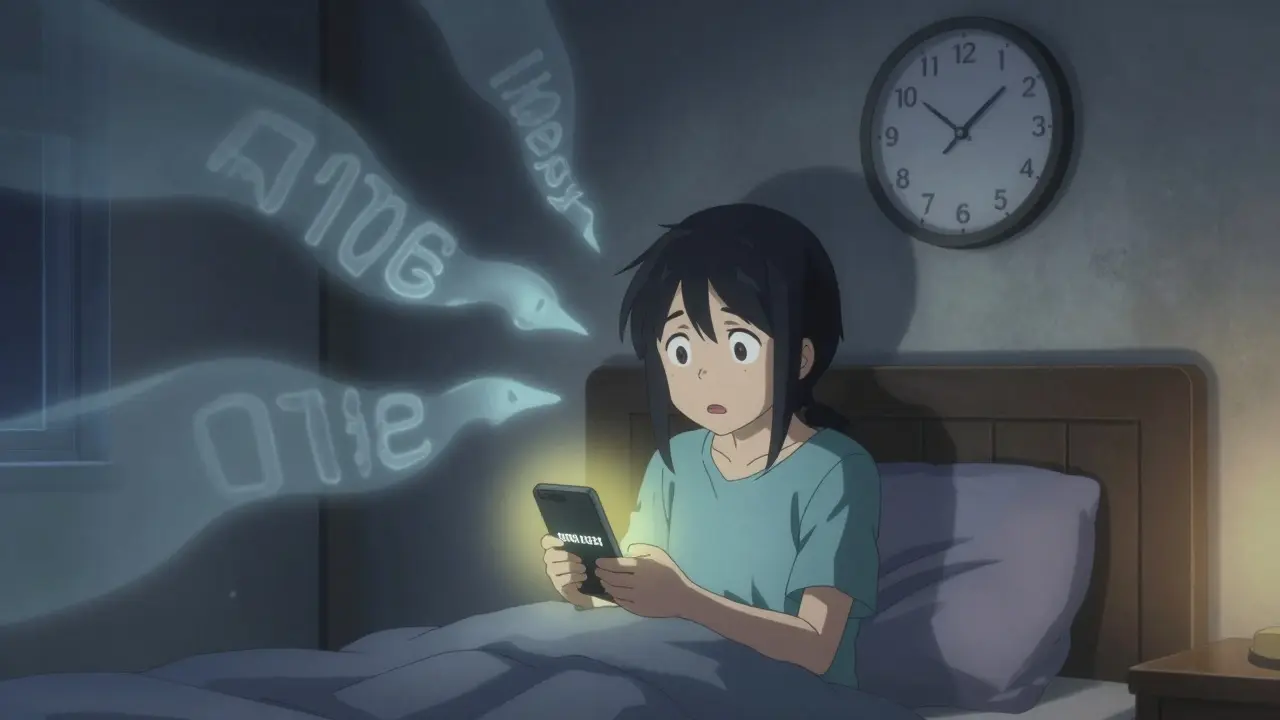
When someone experiences their first episode of psychosis, everything changes-instantly. They might hear voices no one else can hear, believe things that aren’t true, or struggle to speak clearly. It’s terrifying-for them, and for everyone who loves them. But here’s the truth most people don’t know: first-episode psychosis is not a life sentence. With the right help, quickly given, most people don’t just recover-they rebuild their lives.
What Exactly Is First-Episode Psychosis?
First-episode psychosis (FEP) isn’t a diagnosis itself. It’s the first time someone’s brain starts misfiring in a way that blurs the line between reality and imagination. Symptoms include hearing or seeing things that aren’t there (hallucinations), holding strong false beliefs (delusions), speaking in ways that don’t make sense, or acting in ways that seem strange or withdrawn. It usually hits between ages 15 and 35. Young adults. Students. New workers. People just starting out. It’s not schizophrenia, though it can lead to it. It’s not drug use, though drugs can trigger it. It’s a biological event-a brain in crisis-that needs medical attention, not judgment. And the clock starts ticking the moment symptoms appear.The 12-Week Window: Why Timing Matters More Than You Think
The World Health Organization says treatment should begin within 12 weeks of the first signs. Why? Because the brain is still trying to adapt. This is called the ‘window of opportunity.’ After six months without treatment, the chances of full recovery drop sharply. Studies show that delays longer than 3-6 months can cause irreversible damage to social and work skills. Take the RAISE project, launched by the National Institute of Mental Health in 2008. It compared two groups: one got standard care-meds, maybe a therapist, if they could get it. The other got coordinated specialty care (CSC). After two years, the CSC group had 25% better quality of life, 32% fewer psychotic symptoms, and 40% higher rates of returning to school or work. That’s not a small difference. That’s life-changing. And here’s the kicker: people who got help within six months of symptoms started showing improvement in just weeks. Those who waited longer? They struggled for years.What Is Coordinated Specialty Care (CSC)?
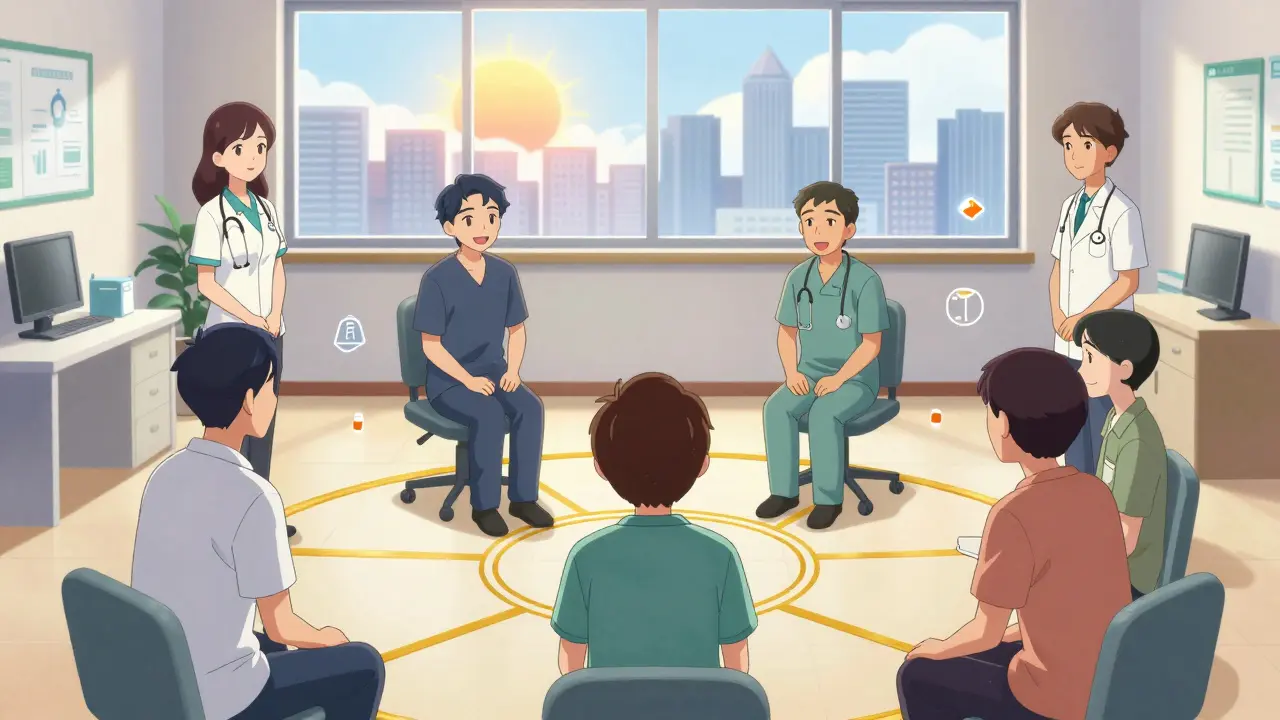
CSC isn’t one treatment. It’s five treatments working together, under one team. Think of it like a soccer squad-each player has a role, but they pass the ball, communicate, and win as a unit.- Case management: Someone helps you navigate doctors, appointments, housing, insurance. They call you twice a week during the worst times.
- Medication management: Doctors start with low doses of antipsychotics-never high doses. The National Institute for Health and Care Excellence (NICE) says doses over 400mg chlorpromazine equivalent do more harm than good. Side effects like weight gain, diabetes, and fatigue are real. Monitoring starts on day one.
- Recovery-focused therapy: Cognitive behavioral therapy (CBT) tailored for psychosis. Not to ‘fix’ the person, but to help them understand what’s happening and build coping tools. Weekly sessions. For at least six months.
- Family psychoeducation: This is where most programs fail. Families are told to ‘stay calm’ or ‘ignore it.’ That’s not enough. Family sessions teach loved ones how to respond without panic, how to recognize early warning signs, and how to reduce stress at home. Studies show this cuts relapse rates by 25%.
- Supported employment and education: The goal isn’t just to feel better-it’s to live again. Individual Placement and Support (IPS) helps people get back to school or a job. In CSC programs, 50-60% find competitive work. In regular care? Only 20-30%.
Why Family Support Isn’t Optional-It’s Essential
Families aren’t bystanders. They’re frontline caregivers. And they’re exhausted. A mother in Birmingham told me her son stopped sleeping, started talking to the TV, and wouldn’t leave his room. She didn’t know if he was high, possessed, or just broken. She called the GP three times. Each time, she was told to wait. Two months passed. He lost his apprenticeship. Then, a crisis team arrived. Within days, he was in CSC. Family sessions didn’t just teach her how to talk to him. They taught her how to stop blaming herself. How to set boundaries without shutting him out. How to recognize when he was slipping-and act before it became a crisis. The data backs this up: when families are involved, hospital stays drop. Relapses drop. People stay in treatment longer. But here’s the problem: only 55% of eligible families stick with it. Why? Lack of time. Lack of transport. Lack of awareness. Some programs now use telehealth. In Louisiana, mobile crisis teams show up in under 14 days. In Washington State, 95% of teams meet fidelity standards.What’s Working-and What’s Still Broken
There are 347 certified CSC programs across the U.S. as of 2023. That’s up from 15 in 2010. Good progress. But only 18% of people with first-episode psychosis get help within the 12-week window. Two out of three rural counties have no access at all. Cost is a barrier. CSC costs $8,000-$12,000 per person per year. Standard care? $5,000-$7,000. But untreated psychosis costs the U.S. $155 billion a year-mostly from lost jobs, emergency rooms, and homelessness. CSC cuts that cost by more than 80%. Workforce shortages are real. Only 35% of U.S. counties have a certified team. Turnover in CSC teams hits 22% a year. Training takes 40 hours of classroom learning plus 120 hours of supervised practice. It’s hard to find people who can do it. Medicaid covers CSC in only 31 states. Insurance companies still push for quick meds and quick discharges. That’s not care. That’s triage.
The Future: Digital Tools, Research, and Hope
New tools are emerging. The ‘PRIME Care’ app lets people log mood, sleep, and symptoms daily. If something spikes, the team gets an alert. Early trials show 30% fewer hospitalizations. The National Institute of Mental Health is pouring $50 million into finding biological markers for psychosis-blood tests, brain scans-that could catch it before the first episode. Imagine screening teens during routine check-ups. Preventing it before it starts. And the RAISE-2 study proved: keeping people in CSC for four years, not two, keeps them working, learning, and connected. That’s the goal-not just survival, but thriving.What You Can Do Right Now
If you or someone you love is showing signs of psychosis:- Don’t wait. Don’t assume it’s ‘just stress’ or ‘a phase.’
- Call a crisis line. Text HOME to 741741 in the U.S. or contact your local mental health service.
- Ask: ‘Is there a Coordinated Specialty Care program nearby?’ Use the EPINET registry to find one.
- Bring a family member. Even one person who understands makes a difference.
- Insist on low-dose medication and metabolic monitoring. Don’t accept high doses without a clear reason.
What are the early warning signs of first-episode psychosis?
Early signs include social withdrawal, trouble sleeping, declining school or work performance, unusual thoughts or beliefs, suspiciousness, talking to oneself, or hearing faint voices. These often appear weeks or months before a full psychotic episode. They’re subtle-easily mistaken for teen angst or burnout. But if they persist, they need attention.
Can someone recover fully from first-episode psychosis?
Yes. With coordinated specialty care, up to 80% of people experience significant improvement within a year. Many return to school, work, and relationships. Recovery doesn’t mean never having symptoms again-it means learning to manage them and living a meaningful life. The earlier the treatment, the higher the chance of full recovery.
Are antipsychotic medications dangerous for young people?
They can have side effects-weight gain, fatigue, metabolic changes-but the risk is far lower with low-dose, guideline-based treatment. First-generation antipsychotics are rarely used now. Second-generation ones are preferred, but dosing starts at half the usual adult dose. Regular monitoring of weight, blood sugar, and cholesterol is required. The real danger is not taking medication when it’s needed-untreated psychosis causes more harm than the drugs.
How do I find a Coordinated Specialty Care program near me?
Visit the Early Psychosis Intervention Network (EPINET) registry online or call your state’s mental health department. Many states have hotlines. If you’re in the U.S., SAMHSA’s National Helpline (1-800-662-HELP) can connect you. Don’t settle for general counseling-ask specifically for CSC or FEP services.
What if my family doesn’t believe psychosis is real?
Start with facts. Bring them to a family psychoeducation session. Many programs offer these even if the person with psychosis isn’t ready to participate. Education helps families understand it’s a medical condition-not laziness, rebellion, or spiritual crisis. Seeing data on recovery rates and brain changes often shifts their perspective.
Is CSC covered by insurance?
Medicaid covers CSC components in 31 states as of 2023. Private insurance varies. Many programs help families navigate billing. If coverage is denied, ask for a medical necessity letter from the treatment team. Federal grants also fund many CSC programs, so cost shouldn’t be a barrier to access.
15 Responses
So let me get this straight-you’re telling me the government’s got this magical 12-week window where we can fix psychosis like it’s a software bug? 🤔 Meanwhile my cousin got labeled 'schizophrenic' after one bad trip and now he’s on 5 meds and can’t hold a job. Coincidence? I think not.
The RAISE study had a 2-year follow-up? That’s not longitudinal, that’s a toddler’s attention span. Real recovery data needs 10+ years. Also, 'low-dose antipsychotics'-nice PR spin. 400mg chlorpromazine equivalent is still a chemical lobotomy for a 19-year-old. You’re glorifying pharmaceutical control disguised as 'care'.
Wait-so you’re saying families are 'frontline caregivers'? That’s cute. But who’s really running the show? The pharmaceutical companies. The insurance companies. The state mental health bureaucracies. They don’t want you to know that psychosis is a symptom of electromagnetic poisoning from 5G towers. It’s all connected. They’re silencing the truth with 'CBT' and 'medication management'.
Oh, lovely. Another American think-piece pretending they’ve invented mental health care. In the UK, we’ve had community mental health teams since the 70s. We don’t need a fancy acronym like 'CSC'-we just need more funding, not more PowerPoint slides. And your '50 million research grant'? That’s pocket change compared to what we spend on drone surveillance. Priorities, darling.
I’ve worked in a CSC program for 6 years. This article? Spot on. The family sessions? Life-changing. One mom cried because she finally understood her son wasn’t 'being dramatic'-his brain was sick. We had a guy go from not leaving his room to working at a coffee shop in 5 months. It’s not magic. It’s teamwork. And yeah, it’s hard to find staff. But it works.
People need to stop romanticizing psychosis like it’s some kind of spiritual awakening. It’s not 'just a brain glitch'. It’s a breakdown. And if you’re not medicated and in therapy, you’re a danger to yourself and others. I’ve seen people jump off balconies because they thought the neighbors were spying on them with microwave beams. No, I’m not exaggerating.
csc is legit. i had a bro go through it. first 3 weeks he was in a hospital, then they hooked him up with a team-case manager, therapist, even helped him get his old job back. meds were low dose, they monitored his sugar like it was a bomb. he’s been stable for 3 years now. no one talked about this when we were growing up. why’s it still so hard to find these programs?
If you or someone you love is showing signs-DO NOT WAIT. I lost my brother because we thought he was just 'going through a phase'. He stopped sleeping, stopped talking, started writing weird symbols on the walls. We thought it was teenage angst. By the time we got help? It was too late. Please. Don’t make the same mistake. Early intervention saves lives. I’m not saying it’s easy-but it’s possible.
I’m not convinced the 12-week window is as rigid as portrayed. My neighbour’s daughter had symptoms for 14 months before diagnosis. She’s now a graduate student. Recovery isn’t linear. And frankly, the obsession with 'fidelity scores' and 'certified programs' feels more like corporate compliance than human care.
CSC sounds great on paper, but let’s be real-most people don’t have the luxury of a team. I work two jobs and can’t afford to miss a day. Who’s gonna drive my sister to weekly therapy? Who’s gonna call her twice a week? The system’s broken. We need telehealth, mobile units, and more funding-not another glossy report.
This is the kind of post that gives me hope. Not because it’s perfect, but because it’s honest. People need to know psychosis isn’t a life sentence. Recovery isn’t just possible-it’s happening every day, quietly, in living rooms and college dorms and coffee shops. We just need to stop pretending it’s someone else’s problem.
I read this at 2 a.m. after my roommate started talking to the ceiling fan again. Didn’t know what to do. This actually helped. I’m calling the crisis line tomorrow. Thanks.
The ontological framing of psychosis as a 'biological event' is a neoliberal reductionism that pathologizes existential dislocation. The brain isn’t 'misfiring'-it’s resonating at a frequency the hegemonic paradigm refuses to acknowledge. Your 'CSC' model merely reterritorializes the subject into a managed, docile citizenry under the gaze of the psychiatric-industrial complex. The real cure? Deconstruct the epistemic violence of diagnostic categories.
I’ve been on the other side of this. I had my first episode at 19. I thought I was chosen by aliens. Turned out I was just exhausted, lonely, and untreated. CSC didn’t 'fix' me. It gave me space to breathe, to learn, to fail without being thrown away. I’m not 'cured'. I’m becoming. And that’s enough.
To anyone reading this who’s scared: you’re not alone. I’ve been where you are. I held my sister’s hand when she thought the walls were whispering. I didn’t know what to say. But I showed up. Every day. Even when she didn’t talk. Even when I was terrified. That’s all it takes. Not a program. Not a pill. Just someone who won’t leave.