
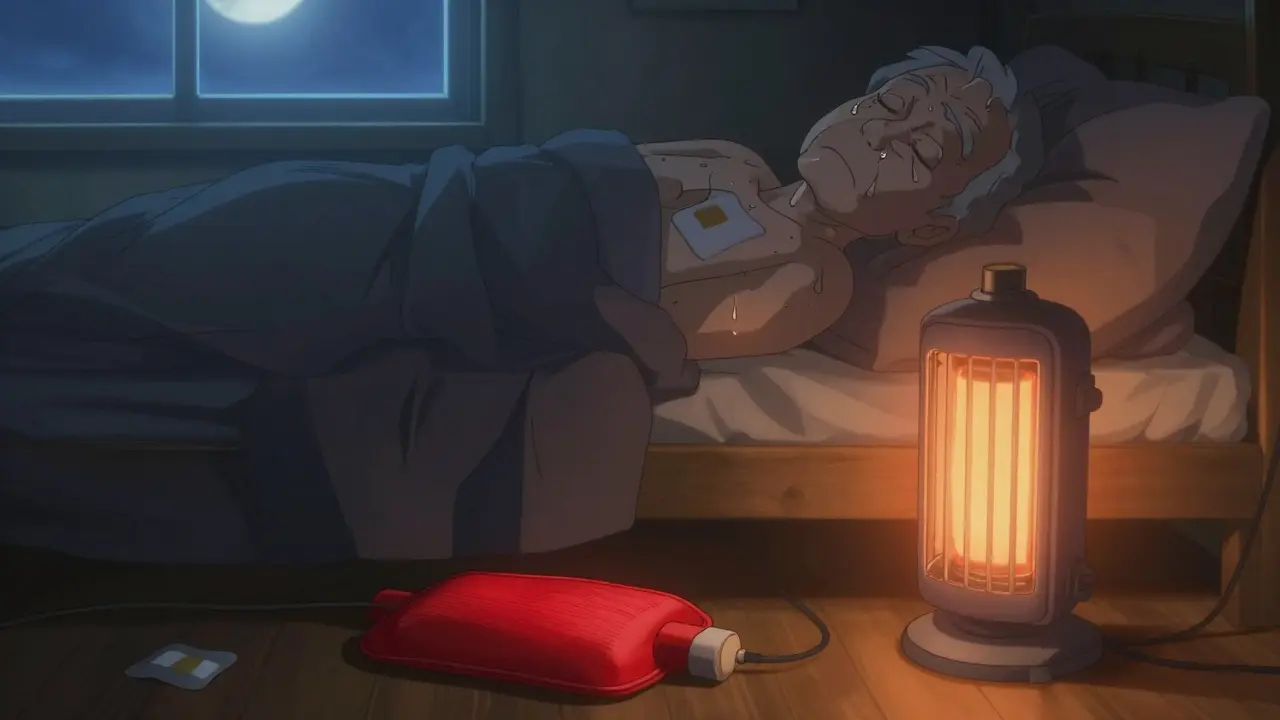
Using a fentanyl patch isn’t like taking a regular pain pill. It’s a powerful, slow-release opioid designed for severe, long-term pain-often for people with cancer or other chronic conditions who’ve tried everything else. But because it delivers such a strong dose steadily over three days, the risks are serious if things go wrong. Overdose can happen fast. Withdrawal can be brutal. And even a used patch left on the floor can kill a child.
How Fentanyl Patches Work (and Why That’s Dangerous)
Fentanyl patches stick to your skin and slowly release the drug into your bloodstream over 72 hours. That’s the point: steady pain control without the highs and lows of oral opioids. But that same design is what makes them so risky. Unlike a pill you swallow and digest, the patch keeps feeding fentanyl into your body even after you take it off. If you’re not used to opioids, even one patch can stop your breathing.
The FDA says fentanyl is 50 to 100 times stronger than morphine. A 25 mcg/hour patch delivers more opioid than most people can safely handle without prior tolerance. That’s why these patches are only approved for patients already taking daily opioids-people who’ve built up a tolerance. If you’ve never taken opioids before, or if you’re taking other sedatives like benzodiazepines or alcohol, your risk of overdose skyrockets.
Heat makes it worse. A hot bath, a heating pad, or even a fever can cause your body to absorb fentanyl faster. In 2013, the FDA warned that heat exposure has led to fatal overdoses. One man in his 60s, using a patch for back pain, took a hot shower and died within hours. His blood fentanyl level was four times the lethal threshold.
Fentanyl Patch Overdose: What to Watch For
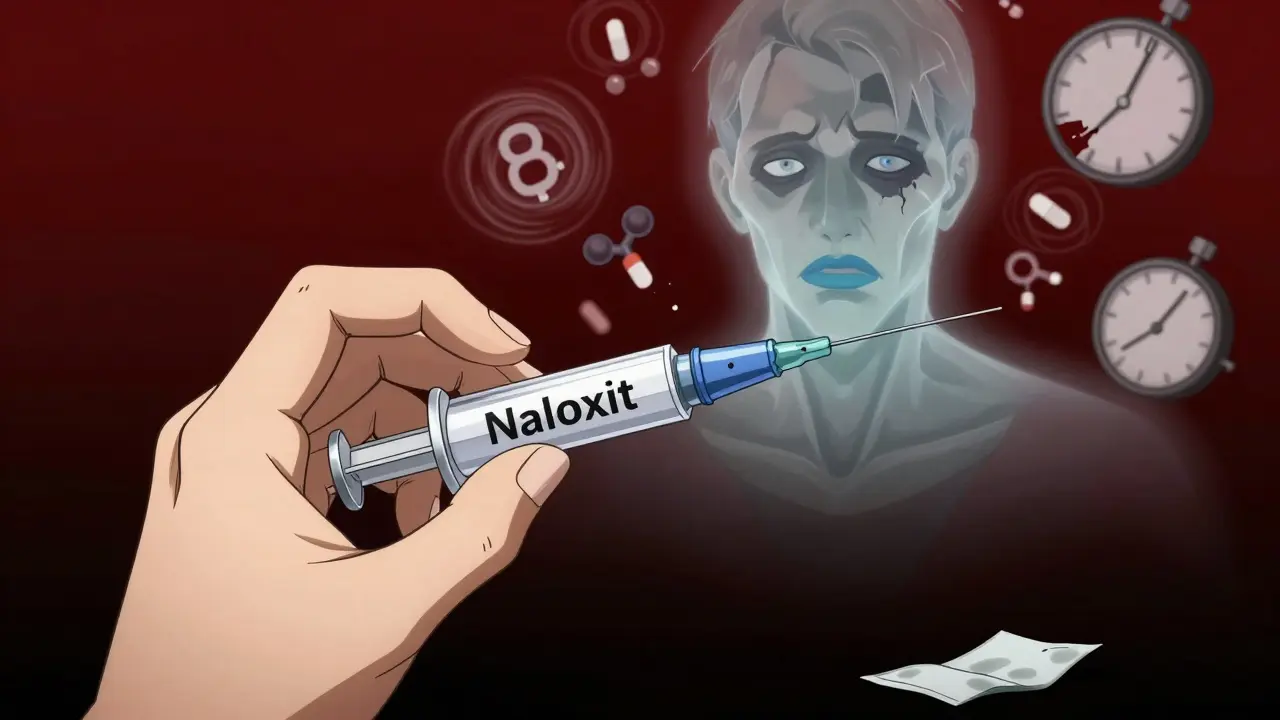
Overdose doesn’t always come with a dramatic crash. Often, it’s quiet. You might notice someone becoming unusually sleepy, hard to wake up, or breathing very slowly. Their skin turns cold and clammy. Their lips or fingernails may look blue. Their pupils shrink to pinpoints. They might stop responding entirely.
These signs aren’t just "feeling tired." They mean your body is shutting down. Fentanyl suppresses your brain’s drive to breathe. Without oxygen, brain damage can happen in minutes. Death follows quickly.
According to the FDA, between 1997 and 2012, 32 children died after finding and sticking on discarded or unused patches. One child found a patch on the floor of a hospital room and put it on his chest. He died within hours. That’s why every prescription comes with strict disposal instructions: fold the sticky sides together, flush it down the toilet, or take it to a drug take-back site. Never throw it in the trash where kids or pets can find it.
If you suspect an overdose-whether it’s you or someone else-act immediately. Remove the patch. Call 911. If you have naloxone (Narcan), use it. Naloxone can reverse the overdose, but because fentanyl is so strong, you may need more than one dose. Emergency responders will still need to treat the person, even after naloxone is given.
The FDA now recommends that all patients prescribed fentanyl patches be given naloxone at the same time. It’s not optional anymore. It’s part of the safety plan.
Fentanyl Withdrawal: When Stopping Isn’t Simple
Stopping fentanyl patches suddenly is dangerous. Even if you feel fine, your body has adapted. Your nervous system is counting on the drug to function normally. When you cut it off, your body goes into overdrive.
Withdrawal symptoms start 8 to 24 hours after your last patch is removed. You might feel restless, anxious, or irritable. Your muscles ache. You sweat. You get chills. You can’t sleep. Your stomach cramps. You vomit or have diarrhea. Your heart races. Blood pressure spikes. These symptoms peak around 72 hours and can last up to two weeks.
It’s not usually life-threatening like an overdose, but it’s excruciating. People describe it as the worst flu of their life-combined with panic attacks and insomnia. And because the pain that brought them to the patch in the first place often returns, many feel forced to restart opioids just to feel normal again.
The NHS and the FDA both warn: never stop fentanyl patches cold turkey. If you’ve been using them for more than a few weeks, your doctor must create a tapering plan. That means slowly reducing the dose over weeks or even months. For someone on a 100 mcg/hour patch, a safe taper might mean dropping 10% every two weeks. Rushing it can lead to severe dehydration, electrolyte imbalances, heart rhythm problems, and even seizures.
And here’s something few people talk about: after you’ve stopped, your tolerance drops. If you go back to using opioids-even a small amount-you’re at high risk of overdose. A 2021 Johns Hopkins study found that 37% of fatal overdoses in former opioid users happened because they thought they could handle the same dose they used before quitting. Their bodies couldn’t.

Who Should Never Use Fentanyl Patches
These patches are not for everyone. They’re not for acute pain, like after surgery. They’re not for occasional pain. They’re not for people who’ve never taken opioids before.
The CDC’s 2022 guidelines say you must already be taking at least 60 mg of morphine per day for at least a week before you can be prescribed a fentanyl patch. That’s a high bar. Most doctors now see fentanyl patches as a last resort-after physical therapy, nerve blocks, non-opioid painkillers, and other long-acting opioids have failed.
Even then, there are red flags. If you have breathing problems like sleep apnea, liver or kidney disease, or a history of substance use disorder, your doctor should think twice. The American Medical Association found that 78% of physicians now avoid fentanyl patches unless absolutely necessary-up from 52% just eight years ago.
Safety Rules You Can’t Ignore
If you’re prescribed a fentanyl patch, treat it like a loaded gun. Here’s what you must do:
- Apply it only to clean, dry, intact skin-no cuts, rashes, or burns.
- Avoid heat: no hot tubs, saunas, heating pads, or prolonged sun exposure.
- Never cut, puncture, or microwave the patch.
- Store patches out of reach of children and pets. Lock them up if needed.
- After use, fold the sticky sides together and flush down the toilet or return to a pharmacy take-back program.
- Tell every doctor, dentist, or surgeon you’re using a fentanyl patch before any procedure.
- Keep naloxone on hand-and make sure someone you live with knows how to use it.
- Never share your patches. Never use someone else’s.
These aren’t suggestions. They’re life-or-death rules. The FDA’s REMS program requires prescribers to educate patients on these risks. If your doctor didn’t go over them, ask again.
What’s Changing Now
Prescriptions for fentanyl patches have dropped 42% since 2016. That’s not because they’re gone-it’s because doctors are more careful. New patches are being tested in clinical trials to reduce accidental exposure, like ones that only release drug when the skin is at normal temperature.
The FDA’s 2023 update now requires all opioid prescriptions to include a discussion about naloxone. The European Medicines Agency still says the benefits outweigh the risks-if used correctly. But they also stress that patient education is the most important tool we have.
There’s no magic fix. Fentanyl patches help some people live with pain. But they’re not a casual tool. They’re a high-stakes medical device. Use them right, and they can improve your life. Use them wrong, and the consequences are permanent.
Can you die from fentanyl patch withdrawal?
Withdrawal from fentanyl patches is extremely uncomfortable but rarely fatal on its own. However, severe vomiting and diarrhea can lead to dangerous dehydration and electrolyte imbalances, which may cause heart problems if untreated. Medical supervision during tapering reduces these risks significantly.
How long does a fentanyl patch stay in your system?
Even after you remove the patch, fentanyl continues to be absorbed for up to 24 hours. It takes about 2 to 4 days for most of the drug to leave your body. But traces can be detected in urine for up to 3 days, and in hair for weeks. The effects on your nervous system-like tolerance and withdrawal risk-last much longer.
Can you use a fentanyl patch for breakthrough pain?
No. Fentanyl patches are designed for continuous, around-the-clock pain. They take 12 to 24 hours to reach full effect and last 72 hours. Using them for sudden pain spikes is ineffective and dangerous. Breakthrough pain should be treated with fast-acting opioids prescribed separately.
What happens if a child touches a used fentanyl patch?
Even a used patch still contains 50% or more of its original fentanyl. If a child sticks it on their skin, they can absorb a lethal dose within hours. Between 1997 and 2012, 32 children died from accidental exposure to discarded patches. Always fold the sticky sides together and flush or return used patches immediately.
Is it safe to drink alcohol while using a fentanyl patch?
No. Alcohol, along with benzodiazepines, sleep aids, and other sedatives, can multiply the risk of respiratory depression and death when combined with fentanyl. Even one drink can be dangerous. Doctors strictly advise avoiding all alcohol while using these patches.
What should you do if you miss a patch change?
If you forget to change your patch, put on a new one as soon as you remember. Don’t double up. If you’re more than 24 hours late, contact your doctor. Missing doses can cause withdrawal symptoms and make pain worse. Your doctor may adjust your schedule to prevent this.
Next Steps If You’re Using or Considering Fentanyl Patches
If you’re currently using a fentanyl patch, talk to your doctor about your tapering plan-even if you feel fine. Don’t wait until you run out. If you’re worried about withdrawal or overdose risks, ask for naloxone. Keep it in your wallet, your car, or your kitchen drawer.
If you’re thinking about starting one, ask your doctor: "Have I tried all other options?" "Am I truly opioid-tolerant?" "Do I have someone who can help me if something goes wrong?""
These patches save lives when used correctly. But they’ve also taken lives-too many. The difference isn’t the drug. It’s the care around it.
11 Responses
People still don’t get it. This isn’t medicine-it’s a death sentence wrapped in a Band-Aid. If you’re not a cancer patient with no other options, you shouldn’t even be near this stuff. And don’t even get me started on doctors who prescribe it like it’s Advil.
Ah yes, the great opioid paradox: we give people a drug so potent it can kill a child who finds it on the floor… and then blame the victim for not being ‘tolerant’ enough. What a civilized society we are. The real tragedy isn’t the patch-it’s the fact that we’ve turned human suffering into a corporate profit margin disguised as ‘pain management.’ 🤡
EVERYONE knows the government lets these patches out because they want us hooked. Think about it-why else would they let them be sold in pharmacies? It’s all part of the big pharma agenda. They’re using your pain to control you. And don’t even mention naloxone-that’s just a placebo to make you feel safe while they drain your bank account. 🔍
This is such an important post. I’ve worked in hospice for 12 years and seen firsthand how these patches can give someone dignity in their final months-if used right. The key is education and supervision. If you’re prescribed one, make sure your whole family knows the safety rules. And yes, keep naloxone in the house. It’s not paranoia-it’s preparedness. 💪
OMG I just cried reading this. 😭 Like… I had my grandma on one after her diagnosis and I swear I had nightmares about her falling asleep and never waking up. And then she left the patch on the nightstand and my cousin’s dog licked it?? 😱 We had to rush to the ER. I’ll never forget it. Please, if you’re using these… TREAT THEM LIKE A GUN. 🙏
Life is pain. But suffering? That’s optional. Fentanyl patches aren’t evil-they’re tools. Like a chainsaw. You don’t blame the chainsaw when someone cuts their foot off. You blame the person who didn’t wear gloves. The system failed these people. Not the drug. Let’s fix the system, not fear the tool. 🌱
so like… i got my patch changed last week and my doc didnt even mention naloxone?? like wtf?? i had to google it myself. and now im paranoid every time i take a shower. also my cat keeps licking my leg and now im scared shes gonna die. 😭
Let’s deconstruct the pharmacological hegemony embedded in the fentanyl patch paradigm. The neoliberal biomedical apparatus has pathologized chronic pain into a bioeconomic transaction, where the body becomes a conduit for corporate capital via controlled-release opioid delivery systems. The FDA’s REMS protocol? A performative regulatory gesture masking the commodification of suffering. The real crisis isn’t overdose-it’s the epistemic violence of reducing human experience to pharmacokinetic curves. And don’t get me started on the myth of ‘tolerance’-it’s a construct designed to justify escalation. We need a post-opioid phenomenology of pain. 🧠
I’m so glad someone wrote this. My brother was on one for back pain after a car crash and he didn’t know any of this. He got a fever from the flu and ended up in the hospital. We were lucky he made it. Since then, I keep naloxone in my glovebox and my mom’s purse. I even taught my 14-year-old nephew how to use it. It’s not morbid-it’s responsible. If you’re on this stuff, please, please, please talk to someone about it. You’re not alone.
As a nurse who’s seen too many overdoses, I want to say: if you’re reading this, you’re already doing better than most. Don’t wait until it’s too late to ask for help. Ask for naloxone. Ask for a taper plan. Ask your doctor if there’s another way. You deserve to live without fear. And if you’re caring for someone on a patch-don’t be afraid to speak up. Your voice could save a life. 💙
so like… i just found out my ex is on a patch and he never told me?? and now im scared he’s gonna OD in his sleep?? like why would you hide that?? also he drinks wine every night… omg i think i’m gonna throw up 🤢