
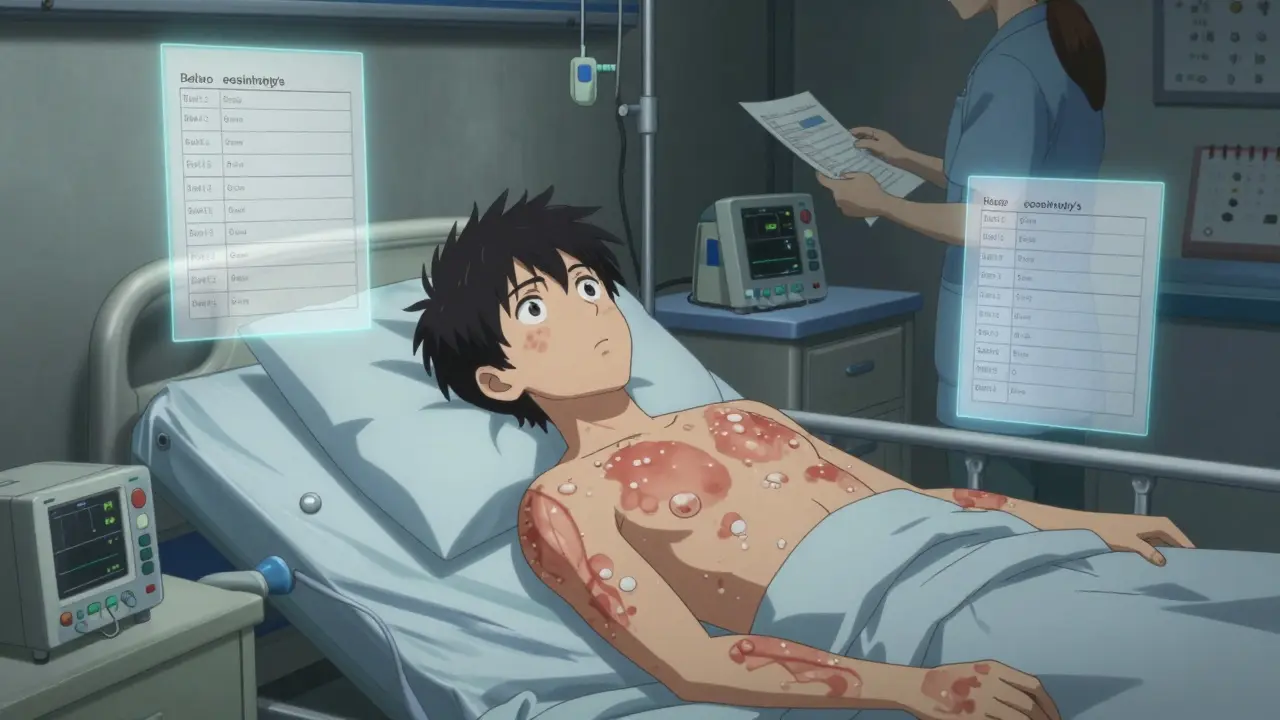
When a medication you’ve been taking for weeks suddenly triggers a full-body crisis, it’s not just a rash-it could be DRESS syndrome. This rare but deadly drug reaction doesn’t act like a typical allergy. It creeps up slowly, mimics a virus, and can shut down your liver, kidneys, or lungs before you even realize something’s wrong. In the UK alone, hundreds of people are diagnosed each year after taking common drugs like allopurinol or carbamazepine. Most don’t survive without fast action. Here’s what actually happens-and how to spot it before it’s too late.
What Is DRESS Syndrome?
DRESS stands for Drug Reaction with Eosinophilia and Systemic Symptoms. It’s also called DIHS (Drug-Induced Hypersensitivity Syndrome). This isn’t just a skin rash. It’s a full-body immune meltdown triggered by certain medications. The body overreacts, attacking its own organs. Eosinophils-a type of white blood cell-spike to dangerous levels. Fever hits. Lymph nodes swell. And your liver? It can go from normal to failing in days.
First identified in the 1930s, DRESS was only recognized as its own distinct condition in the 1980s. Today, it’s classified as a Severe Cutaneous Adverse Reaction (SCAR)-the same category as Stevens-Johnson Syndrome (SJS) and Toxic Epidermal Necrolysis (TEN). But unlike those conditions, DRESS doesn’t cause massive skin peeling. Instead, it silently damages internal organs. About 1 in 1,000 to 1 in 10,000 people who take a triggering drug will develop it. That sounds rare, but with millions taking these drugs annually, that’s thousands of cases every year in the US and UK combined.
How Do You Know You Have It?
The signs don’t show up right away. This is what makes DRESS so dangerous. Most people start feeling off 2 to 8 weeks after beginning a new medication. Sometimes it’s as late as 16 weeks. You might think you’ve got the flu: fatigue, sore throat, fever above 38°C. Then, within a day or two, a rash appears. It’s usually morbilliform-like measles-covering large areas of the body. Around 80% of cases look like this. Others may have blisters, purple spots, or peeling skin.
But the rash is just the warning sign. The real danger is what’s happening inside. Blood tests will show:
- Eosinophils over 700 cells/μL (or more than 10% of your white blood cells)-seen in 95% of cases
- Atypical lymphocytes-present in 85%
- Elevated liver enzymes (ALT often over 1,000 U/L)
- High creatinine levels, meaning kidney trouble
Organ damage isn’t rare-it’s expected. Liver involvement happens in 70-90% of cases. Kidneys fail in 10-30%. Lungs get inflamed in 10-20%. Even your thyroid can go haywire later. One patient in a 2023 case report developed Graves’ disease five weeks after the rash cleared. That’s not coincidence-it’s a known long-term effect.
Which Drugs Cause It?
Not every drug triggers DRESS. But some are notorious. The top three culprits:
- Allopurinol (used for gout): Causes 40-50% of all cases. Especially dangerous if you have kidney disease. People with eGFR under 60 are 50 times more likely to react.
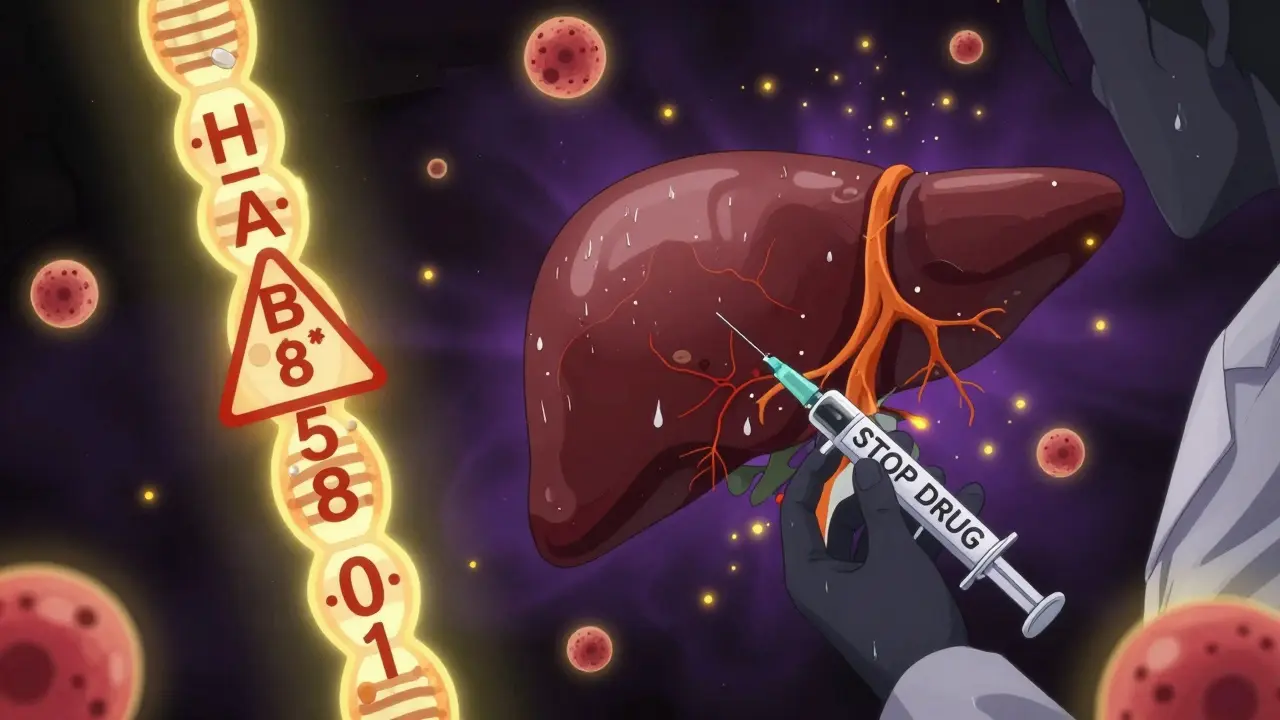
- Antiepileptics: Carbamazepine, phenytoin, lamotrigine. Responsible for 20-30% of cases. Genetic testing for HLA-B*58:01 can prevent this in Asian populations.
- Sulfonamides: Antibiotics like trimethoprim-sulfamethoxazole. Cause 10-15% of cases.
Other triggers include minocycline, vancomycin, and some antivirals. If you’ve started any new medication in the last two months and now have fever + rash, DRESS should be on the doctor’s radar.
DRESS vs. SJS/TEN: What’s the Difference?
People often confuse DRESS with SJS or TEN. But they’re different beasts.
| Feature | DRESS Syndrome | SJS / TEN |
|---|---|---|
| Latency period | 2-8 weeks (up to 16 weeks) | 1-4 weeks |
| Primary skin rash | Morbilliform, widespread | Target lesions, blistering |
| Epidermal detachment | Minimal to none | 10-30% (SJS), >30% (TEN) |
| Mucosal involvement | 30-50% | >90% |
| Key immune cells | CD4+ T cells + eosinophils | CD8+ T cells + granulysin |
| Organ involvement | Liver, kidneys, lungs, heart | Mainly skin and mucous membranes |
| Mortality rate | ~10% | SJS: 5-10%, TEN: 30-40% |
DRESS is slower, sneakier, and hits deeper organs. SJS/TEN are faster, more dramatic, and destroy the skin. But both need emergency care.
Why Is It So Hard to Diagnose?
Because it looks like everything else. Viral infections. Autoimmune flare-ups. Even Lyme disease. Many patients see three or more doctors before someone says, “This could be DRESS.”
A 2020 study found only 35% of internal medicine residents could correctly identify a DRESS case. That’s terrifying. The key is the combination: fever + rash + eosinophilia + recent drug use + organ damage. If you’re missing one piece, it’s easy to miss entirely.
Another clue: HHV-6 reactivation. In 60-70% of DRESS cases, this common herpes virus wakes up 2-4 weeks after symptoms start. It doesn’t cause the reaction-but it makes it worse. Testing for HHV-6 DNA in blood can help confirm the diagnosis.
What Happens If You Don’t Act Fast?
Mortality is about 10%. Most deaths come from liver failure-massive necrosis, where the liver shuts down. Kidney failure, sepsis from secondary infections, and heart inflammation are other killers.
One patient’s story from the National Organization for Rare Disorders tells it all: after starting allopurinol for high uric acid, she developed a rash and fever. Her doctor said “allergy” and told her to take antihistamines. Two weeks later, her AST hit 2,840 U/L (normal is under 40). She spent 45 days in intensive care. She survived. But her liver took months to recover.
And it doesn’t end there. About 20-30% of survivors have permanent organ damage. Kidney function doesn’t bounce back. Some need lifelong dialysis. Thyroid disease, diabetes, or lung scarring can appear months later. That’s why follow-up care is non-negotiable.
How Is It Treated?
There’s no magic pill. But speed saves lives.
- Stop the drug immediately. This is the single most important step. Delaying even 48 hours can raise your death risk from 5% to 15%.
- Hospitalization. You need monitoring. Daily blood tests. Liver and kidney checks. Infection screens.
- Steroids. Most patients need prednisone (0.5-1 mg/kg/day) for 4-8 weeks, then slowly tapered. Some get methylprednisolone IV if things are severe.
- Infection control. Your skin is broken. Your immune system is overwhelmed. You’re at high risk for E. coli, MRSA, or Candida infections. Antibiotics and antifungals are often needed.
- Experimental treatments. In severe cases, doctors are now using anakinra (an IL-1 blocker) or tocilizumab (an IL-6 blocker). Early trials show hospital stays drop from 18 to 11 days.
There’s no cure. But with early treatment, survival jumps from 90% to 98%. That’s why recognizing it fast matters more than anything.
Can It Be Prevented?
Yes-for some people.
If you’re of Asian descent and your doctor wants to prescribe allopurinol, ask about HLA-B*58:01 genetic testing. This gene variant makes you 55 times more likely to develop DRESS. In Taiwan, since they started testing before prescribing, allopurinol-DRESS cases dropped by 75%.
For others, the best prevention is awareness. If you have kidney disease, allopurinol might not be the right choice. Febuxostat is now recommended as first-line for patients with eGFR under 60. It doesn’t carry the same risk.
And if you’ve ever had a serious rash after a drug-write it down. Tell every doctor. Keep a list. That history could save your life next time.
What Happens After You Recover?
You can’t just go back to normal. DRESS leaves scars-literally and figuratively.
- Most patients need 3-6 months to fully recover. Fatigue lingers.
- Autoimmune diseases like thyroiditis or lupus can appear months later.
- Some develop permanent kidney damage. One survey found 27% of survivors needed ongoing nephrology care.
- You must avoid all drugs in the same class. If allopurinol caused it, you’ll never take another xanthine oxidase inhibitor.
There’s a DRESS Syndrome Foundation in the US that helps patients navigate follow-up care. They’ve helped over 1,200 people since 2018. Their patient navigator program cuts diagnostic delays by 60%. If you’ve had it, reach out. You’re not alone.
Final Thought: Don’t Wait for the Rash
If you’ve taken a new medication in the last two months and you feel off-really off-don’t brush it off. Fever, swollen glands, a rash that won’t go away? It’s not just “something you ate.” It could be DRESS. And if you’re not in a hospital with a specialist looking at your blood work, you’re playing Russian roulette with your organs.
Doctors aren’t always trained to see it. You have to be your own advocate. Write down every drug you’ve taken. Note when symptoms started. Bring your blood test results. Ask: “Could this be DRESS?”
Because when it comes to this condition, time isn’t just money-it’s your liver, your kidneys, your life.
Can DRESS syndrome be fatal?
Yes. DRESS syndrome has a mortality rate of about 10%, primarily due to liver failure from massive hepatic necrosis. Other causes include kidney failure, sepsis from secondary infections, and heart inflammation. Early recognition and stopping the triggering drug can reduce death risk from 15% to under 5%.
How long after taking a drug does DRESS syndrome appear?
Symptoms typically begin 2 to 8 weeks after starting the medication, but cases have been reported as early as 1 week or as late as 16 weeks. This long latency period is one of the key reasons DRESS is often missed-it doesn’t look like a typical allergic reaction.
Is DRESS syndrome the same as a regular drug allergy?
No. A regular drug allergy usually causes hives, itching, or anaphylaxis within minutes to hours. DRESS is a delayed, systemic immune response involving eosinophils and T-cells. It affects multiple organs and can take weeks to develop. It’s far more complex and dangerous than a typical allergy.
Can you get DRESS syndrome from over-the-counter drugs?
Yes. While most cases come from prescription drugs like allopurinol or antiepileptics, some over-the-counter medications-especially those containing sulfonamides (like certain pain relievers or antibiotics)-have triggered DRESS. Always consider any new medication, even if it’s sold without a prescription.
What should you do if you suspect you have DRESS syndrome?
Stop taking the suspected drug immediately and go to the emergency room. Tell them you suspect DRESS syndrome and mention your recent medication use. Request blood tests for eosinophil count, liver enzymes (AST/ALT), and kidney function (creatinine). Bring a list of all drugs you’ve taken in the past two months. Do not wait for a specialist appointment-this is an emergency.
Are there genetic tests to prevent DRESS syndrome?
Yes. For allopurinol, testing for the HLA-B*58:01 gene variant can prevent DRESS in high-risk individuals, especially those of Asian descent. This test is now recommended by the FDA before prescribing allopurinol to patients with kidney disease. If you’re planning to start allopurinol and have reduced kidney function, ask your doctor about genetic screening.
Can DRESS syndrome come back after you recover?
DRESS itself doesn’t recur, but if you take the same drug again-even years later-it can trigger another episode, often more severe. You must avoid all drugs in the same class permanently. Some patients develop autoimmune conditions like thyroid disease or lupus months after recovery, which can mimic a recurrence.
What are the long-term effects of DRESS syndrome?
About 20-30% of survivors have lasting organ damage, especially to the kidneys or liver. Some develop autoimmune diseases like Graves’ disease, lupus, or type 1 diabetes months or years later. Fatigue, joint pain, and reduced stamina can persist for over a year. Lifelong monitoring is often needed.
Is DRESS syndrome more common in older adults?
Yes. The risk increases with age, especially in people over 60. This is because older adults are more likely to take multiple medications-including high-risk drugs like allopurinol for gout-and have reduced kidney function, which increases susceptibility. By 2030, DRESS cases are projected to rise by 25% due to rising use of these drugs in aging populations.
Can DRESS syndrome be diagnosed with a skin biopsy?
A skin biopsy can support the diagnosis by showing eosinophil infiltration and tissue damage, but it’s not enough on its own. DRESS is diagnosed through a combination of clinical symptoms, lab results (eosinophilia, elevated liver enzymes), timing of drug exposure, and exclusion of other conditions. The RegiSCAR criteria require at least three of seven specific features, including organ involvement and prolonged hospitalization.
10 Responses
This is why I refuse to take allopurinol. My uncle died from this exact thing. They told him it was just a rash. Two weeks later, his liver was gone. No one even tested for eosinophils. This isn't rare-it's a systemic failure of medical education. If you're prescribing this to anyone over 50 without genetic screening, you're playing God with their organs.
And don't get me started on how the FDA still doesn't mandate HLA-B*58:01 testing before prescribing. We have the data. We have the test. We have the lives to save. But bureaucracy moves slower than a snail on sedatives.
I’m Nigerian and I’ve seen firsthand how lack of access to testing changes outcomes. In my village, a man took sulfamethoxazole for a UTI and developed DRESS. He was treated with local herbs because no one knew what it was. He survived, but lost his kidneys. This isn’t just an American problem-it’s a global inequity. We need low-cost screening programs in LMICs. Not just awareness pamphlets. Real infrastructure.
been on carbamazepine for 12 years. no issues. but i read this and now i’m paranoid. my doc said i’m fine but now i keep checking my skin for rashes. maybe i need a second opinion. or maybe i’m just overthinking it. either way, thanks for the heads up.
As someone who works in hospital pharmacy, I’ve seen too many cases where the drug was stopped too late. The key is not just recognizing DRESS-it’s knowing which drugs to suspect. Allopurinol is the big one, but lamotrigine catches people off guard because the rash looks so benign at first. I always ask: ‘When did you start this?’ If it’s been more than 14 days? Flag it. Always.
And yes, HHV-6 reactivation is a silent marker. We’re starting to test for it routinely now. It’s not perfect, but it helps.
There’s something deeply human here. We’re told to trust our doctors. But when the system doesn’t train them to see this, we’re left to be our own first responders. I’ve had patients ask me, ‘How do I know if this is serious?’ And I say: ‘If you feel like you’re dying and no one believes you-that’s the moment to push harder.’
DRESS doesn’t care if you’re rich or poor, young or old. It only cares if you’re silent. Speak up. Keep a list. Save your own life before the system catches up.
This is why I hate how liberal medicine is. People take drugs like candy. They don’t read labels. They don’t research. They just pop pills and expect miracles. And now we have a whole syndrome because of laziness? You think this is rare? It’s rare because most people don’t take dumb risks. Stop blaming the drugs. Start blaming the people who don’t think before they swallow.
my cousin had this. they said it was chicken pox. turned out it was lamotrigine. he was in the icu for 3 weeks. now he cant work. cant even walk far. and the doctor who prescribed it? still prescribing it. no punishment. no apology. just more patients. this system is broken.
As a nurse in Lagos, I’ve seen how the lack of lab access makes DRESS a death sentence. We don’t have eosinophil counters. We don’t have HHV-6 PCR. We have fever, rash, and a prayer. But here’s what we do: we ask every patient, ‘What did you take in the last six weeks?’ Even if it’s a herbal tea from the market. We document everything. We don’t wait for a diagnosis-we act on suspicion. It’s not perfect, but it saves lives. We need global solidarity. Not just guidelines. Real tools. Real training. Real equity.
And yes, I’ve had patients develop Graves’ disease months later. We didn’t know why until now. Thank you for this post. It validates what we’ve been seeing.
Stop the drug. That’s it. Everything else is noise. If you’re not sure? Stop it. Go to the ER. Don’t wait. Don’t email your doc. Don’t check WebMD. Go. Now. Your liver doesn’t care about your schedule.
Thank you for this meticulously detailed and clinically accurate overview. The integration of epidemiological data, diagnostic criteria, and therapeutic pathways represents a significant contribution to public health literacy. I have shared this with my medical students as a case study in delayed hypersensitivity reactions. The emphasis on HLA-B*58:01 screening and the HHV-6 reactivation marker is particularly valuable for early clinical suspicion. This is the kind of evidence-based communication that bridges the gap between academic medicine and patient empowerment.