
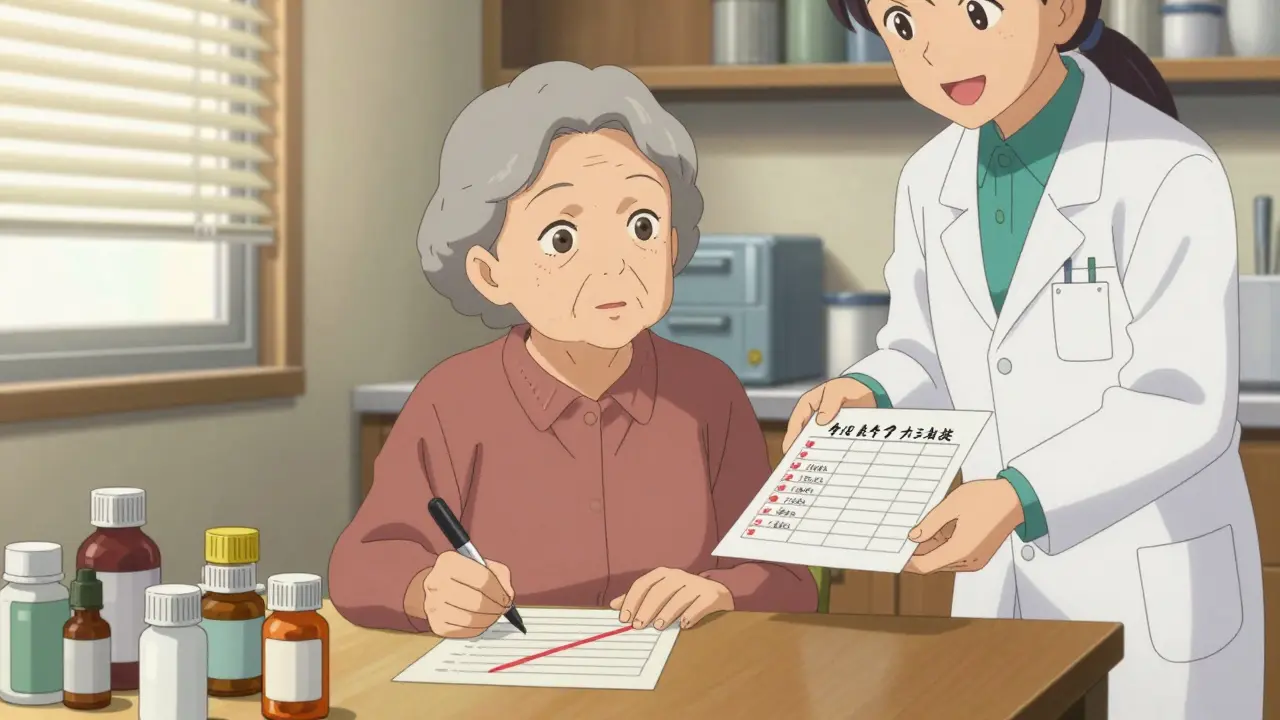
Deprescribing Risk Assessment Tool
Medication Risk Assessment
This tool helps you identify medications that may need deprescribing based on evidence-based guidelines for older adults. Select which medications you're currently taking or know about to learn more about potential risks.
High-Risk Medication Classes
Proton-pump inhibitors (PPIs)
High RiskOften prescribed long-term for heartburn, but studies show most people don't need them after 4-8 weeks. Long-term use raises the risk of bone fractures, kidney damage, and infections like C. diff.
Benzodiazepines & Sleep Aids
Moderate RiskUsed for anxiety or insomnia, but these drugs increase fall risk by 40% in older adults. They also blur thinking and worsen memory.
Antipsychotics
Moderate RiskSometimes prescribed for behavioral symptoms in dementia, even though they're not approved for that use. They can cause stiffness, tremors, and even sudden death.
Antihyperglycemics
Moderate RiskBlood sugar drugs like sulfonylureas can cause dangerous low blood sugar in older patients, especially if they eat irregularly or have kidney problems.
Opioid Painkillers
High RiskOften continued long after surgery or injury heals. They cause constipation, confusion, and addiction risk—even in older adults.
Your Results
Every year, millions of older adults take more medications than they need. Some of these drugs were prescribed years ago for a condition that’s now resolved. Others were added to treat side effects from earlier drugs. The result? A daily pill burden that’s not just inconvenient-it’s dangerous. For many, the real health risk isn’t the illness they’re treating, but the medicines meant to treat it.
Why Deprescribing Isn’t Just Stopping Pills
Deprescribing isn’t about randomly cutting drugs. It’s a careful, step-by-step process of reviewing every medication to ask: Is this still helping, or is it hurting? The goal isn’t to stop everything-it’s to stop what’s no longer necessary, harmful, or mismatched with the patient’s current health goals. This approach became a formal clinical practice around 2012, led by researchers in Canada. Since then, evidence has piled up: reducing unnecessary meds cuts hospital stays, lowers fall risk, and improves quality of life. A 2023 study in JAMA Internal Medicine tracked 372 older adults (average age 76) who underwent structured deprescribing. Despite cutting an average of 1.8 medications per person, their rate of adverse events didn’t rise. In fact, many felt better-less dizziness, fewer stomach issues, more energy.The Five Medication Classes That Need the Most Attention
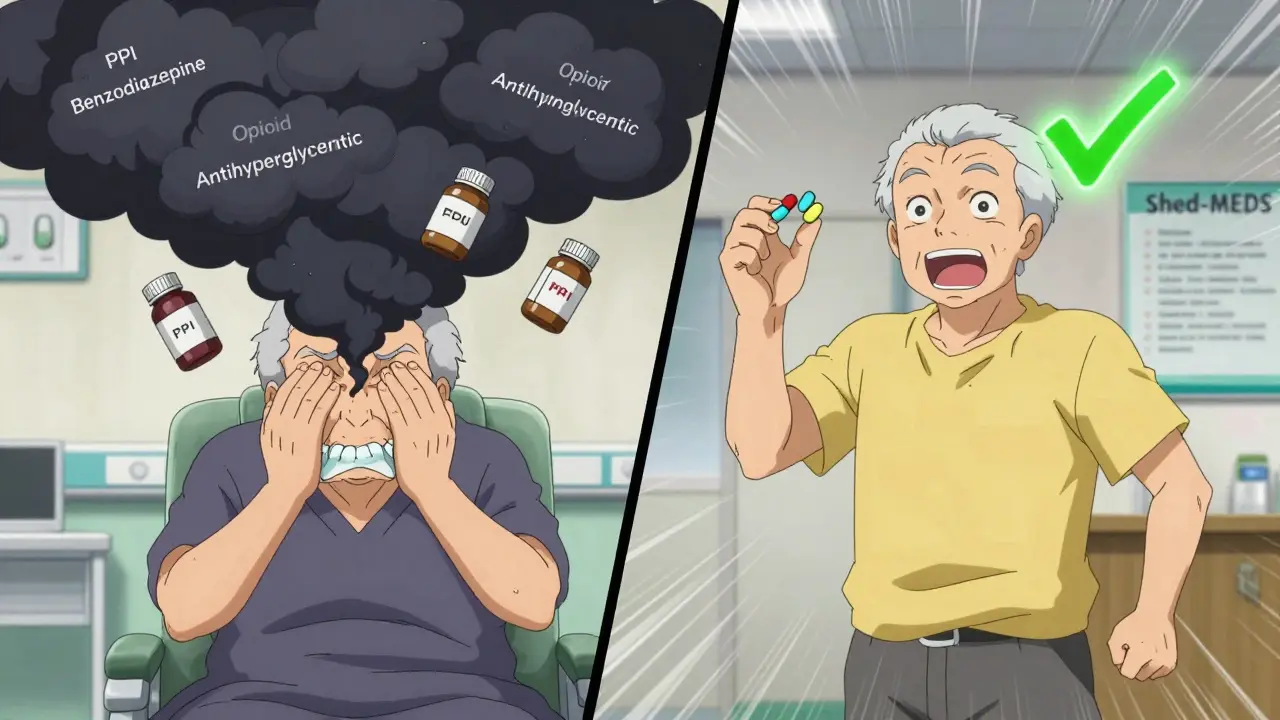
Not all drugs are equally risky. Experts have focused on five classes where deprescribing makes the biggest difference:- Proton-pump inhibitors (PPIs) - Often prescribed long-term for heartburn, but studies show most people don’t need them after 4-8 weeks. Long-term use raises the risk of bone fractures, kidney damage, and infections like C. diff.
- Benzodiazepines and sleep aids - Used for anxiety or insomnia, but these drugs increase fall risk by 40% in older adults. They also blur thinking and worsen memory.
- Antipsychotics - Sometimes prescribed for behavioral symptoms in dementia, even though they’re not approved for that use. They can cause stiffness, tremors, and even sudden death.
- Antihyperglycemics - Blood sugar drugs like sulfonylureas can cause dangerous low blood sugar in older patients, especially if they eat irregularly or have kidney problems.
- Opioid painkillers - Often continued long after surgery or injury heals. They cause constipation, confusion, and addiction risk-even in older adults.
How It Works: The Shed-MEDS Framework
One of the most tested methods is called Shed-MEDS. It stands for:- Best Possible Medication History - Get a full list of everything the patient takes, including over-the-counter pills, supplements, and herbal remedies. Many patients forget these.
- Evaluate - Use tools like STOPP/START criteria to flag drugs that are inappropriate or missing. STOPP tells you what to avoid. START tells you what to add if needed.
- Deprescribing Recommendations - Decide which meds to cut, in what order, and how fast. Prioritize the riskiest ones first.
- Synthesis - Put it all together in a clear plan, share it with the patient, and schedule follow-ups.
Who Should Do It? Pharmacists Are Key
Doctors are stretched thin. A typical primary care visit lasts just over 7 minutes. That’s not enough time to review 12 medications, talk about goals, and answer fears. That’s where pharmacists come in. Studies show deprescribing succeeds 35-40% more often when pharmacists lead it. They have the training, the time, and the tools. In Canada, where pharmacist-led deprescribing is routine, over 60% of clinics have formal protocols. In the U.S., it’s under 30%. Pharmacists trained in medication therapy management (MTM) spend hours with patients. They map out drug interactions, check kidney and liver function, and explain why stopping a pill might be safer than keeping it. One pharmacist in Ontario reported successfully tapering 18 out of 22 elderly patients off benzodiazepines-with only two having mild withdrawal.The Hidden Barriers: Time, Tools, and Fear
Even with solid evidence, deprescribing isn’t easy. Three big barriers stand in the way:- Time - Most doctors don’t have 30 minutes to sit down with a patient and untangle a medication list. Electronic health records don’t help-they’re built for adding meds, not removing them.
- Tools - Only 32% of U.S. clinicians feel their EHR systems support deprescribing. No alerts. No prompts. No easy way to track taper schedules.
- Fear - Patients (and sometimes doctors) worry that stopping a drug will cause a relapse. A 2022 study found 22% of older adults felt anxious about discontinuing medications they’d taken for decades. Many think, “If it was prescribed, it must be necessary.”
What’s Changing in 2026?
Change is coming fast. In June 2024, the American Medical Association passed its first official policy: “Physicians should routinely assess the continuing appropriateness of all medications.” That’s huge. Starting in 2026, Medicare will start measuring deprescribing in its payment system. Hospitals and clinics will be scored on how often they reduce inappropriate prescriptions. The goal? Cut medication-related hospitalizations by 40% by 2035. New AI tools are also being tested. One system at a Boston hospital now flags patients on five or more meds and automatically suggests three drugs to review. It doesn’t decide-just nudges. Clinicians are still in charge. But now, they have a reminder.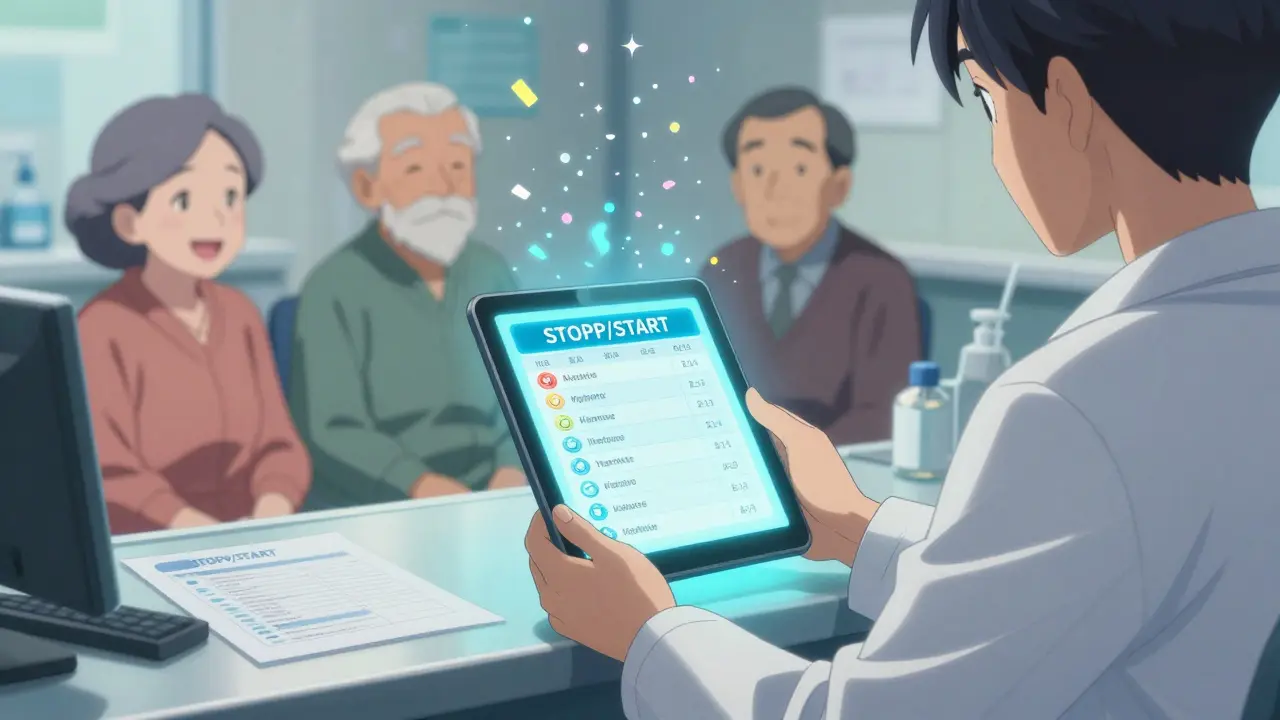
What Patients Should Know
If you or a loved one is on five or more medications, ask these questions:- Which of these drugs are still treating a real problem?
- Is this medication helping me feel better-or just adding side effects?
- Have we talked about what would happen if I stopped one of these?
- Can I try reducing the dose slowly to see how I feel?
What’s Missing? The 500+ Gaps
Here’s the hard truth: we have clear guidelines for five drug classes. But there are over 500 combinations of medications used in older adults with no evidence-based deprescribing advice. Anticoagulants. Antidepressants. Blood pressure drugs used with kidney disease. We’re still in the early days. The National Institutes of Health is funding research to build guidelines for eight more classes by 2027. Until then, clinicians must rely on clinical judgment, patient goals, and careful monitoring.Final Thought: It’s Not About Less Medicine. It’s About Better Medicine.
Deprescribing isn’t anti-medication. It’s pro-safety. It’s pro-clarity. It’s about matching treatment to the person-not the protocol. A 78-year-old with dementia doesn’t need a statin to lower cholesterol if she’s not living to 90. A 72-year-old with mild arthritis doesn’t need three painkillers if one works fine. And a patient who’s been on a PPI for 10 years? Maybe they’ve forgotten why they started it in the first place. The future of care isn’t more pills. It’s smarter pills. Fewer, but better chosen. And that starts with asking: Do I still need this?Is deprescribing safe for older adults?
Yes, when done properly. A 2023 clinical trial of 372 older adults showed no increase in adverse events-even after cutting nearly two medications per person. The key is gradual tapering, monitoring symptoms, and involving a pharmacist. Stopping abruptly or without review can be risky, but a structured deprescribing plan is proven safe.
Which medications are most commonly deprescribed?
The five most common are proton-pump inhibitors (PPIs), benzodiazepines and sleep aids, antipsychotics, antihyperglycemics (like sulfonylureas), and opioid painkillers. These are flagged because they carry high risks-falls, confusion, kidney damage, low blood sugar, or addiction-with diminishing benefits in older adults.
Can I stop my medication on my own?
No. Some medications, like blood pressure drugs or antidepressants, can cause serious withdrawal effects if stopped suddenly. Always talk to your doctor or pharmacist first. They’ll help you create a safe, step-by-step plan tailored to your health needs.
Why don’t more doctors deprescribe?
Time and tools are the biggest barriers. Most primary care visits are under 10 minutes, making it hard to review 10+ medications. Electronic health records aren’t designed to support deprescribing-they push prescribing instead. Plus, many clinicians lack training in how to approach the topic with patients who fear stopping long-used drugs.
Are there free tools to help with deprescribing?
Yes. Deprescribing.org offers free, evidence-based algorithms for five major drug classes. The STOPP/START criteria (version 3, 2021) and the American Geriatrics Society’s Beers Criteria (2023 update) are also publicly available. These tools help clinicians identify inappropriate meds and plan safe reductions.
11 Responses
While I appreciate the theoretical framework, I must emphasize that deprescribing, as currently promoted, is a dangerous oversimplification of complex pharmacological interactions. The notion that a single algorithm can safely replace clinical judgment is not only naive-it is ethically reckless. Pharmaceutical companies have spent decades cultivating dependency on these medications, and the systemic incentives to maintain prescribing patterns are deeply entrenched. To suggest that reducing medications is universally beneficial ignores the fact that many patients rely on these drugs for functional stability, not just symptom suppression.
Furthermore, the emphasis on pharmacist-led interventions reveals a troubling trend: the erosion of physician authority in favor of administrative roles. Pharmacists, while valuable, are not trained to manage the nuanced interplay of comorbidities, cognitive decline, and polypharmacy that define geriatric care. This is not a checklist-it is a clinical art form.
And let us not ignore the psychological dimension: patients who have taken medications for decades often form an emotional attachment to them. To abruptly reframe these as ‘unnecessary’ is to invalidate their lived experience. A 78-year-old woman on a statin may not live to 90-but she may live to 85 with fewer hospitalizations, fewer falls, and a sense of control over her health. That is not trivial.
The data cited is cherry-picked. Studies showing improved outcomes rarely account for long-term rebound effects or the increased risk of cardiovascular events after discontinuing antihypertensives. The JAMA study? It excluded patients with dementia, heart failure, or renal impairment-precisely the populations most in need of careful review. This is not medicine. It is ideology dressed in peer-reviewed clothing.
I urge clinicians to proceed with extreme caution. Deprescribing is not a public health victory. It is a policy-driven experiment with real human consequences.
Wait-so you’re telling me the pharmaceutical industry, the FDA, the AMA, AND the CDC are all in on this?!!
They’re pushing deprescribing because they’re secretly replacing pills with microchips implanted in your brain via 5G networks! I’ve seen the leaked documents-there’s a hidden clause in the Medicare policy that says ‘after deprescribing, patients will be enrolled in the BioSync Initiative’-which is just a fancy name for mind-control trials using AI-driven neurofeedback!
And don’t get me started on pharmacists-they’re not healers-they’re data harvesters! They’re scanning your prescriptions, linking them to your social security number, and selling the patterns to Big Pharma for predictive behavioral targeting! That’s why they want you to ‘ask questions’-it’s a trap! To make you think you’re in control!
I stopped my PPI last week. Within 48 hours, my Wi-Fi signal dropped, my smart fridge started playing classical music at 3 a.m., and my cat stopped purring. Coincidence? I think NOT.
Someone needs to investigate this. I’m filing a FOIA request. And if you’re reading this and you’re on more than 3 meds-you’re already part of the experiment. Wake up.
Let me be perfectly clear: this entire deprescribing movement is a textbook case of medical arrogance masquerading as patient-centered care. You claim to be ‘pro-safety,’ yet you disregard the fundamental principle of medical ethics: primum non nocere. Removing medications without robust, individualized risk-benefit analysis is not care-it is negligence dressed in flowcharts.
Moreover, the suggestion that pharmacists are the ideal leaders of this process is absurd. Pharmacists are trained to dispense, not to diagnose. They do not possess the clinical acumen to evaluate whether a patient’s hypertension is truly controlled, or whether their depression is being managed effectively with an SSRI. To outsource this to pharmacy technicians armed with STOPP/START criteria is to reduce human health to a spreadsheet.
And let’s not forget: many of these medications are prescribed for reasons that are not listed in the guidelines. A PPI may be given not for acid reflux, but for aspirin-induced gastritis in a patient with coronary disease. A benzodiazepine may be the only thing preventing a 75-year-old from having panic attacks severe enough to trigger a myocardial infarction. These are not ‘unnecessary’-they are context-dependent lifelines.
The evidence you cite is observational, retrospective, and statistically fragile. Where are the RCTs with hard endpoints-mortality, hospitalization, quality-adjusted life years? Where is the long-term follow-up? You’re promoting a paradigm shift on the basis of convenience, not science.
Do not mistake policy for progress. This is not innovation. It is institutional laziness.
For anyone reading this who’s on five or more meds and wondering if deprescribing is right for them: it often is, but only if done right. The key is not to stop things quickly, but to stop things intentionally.
Start with one drug at a time. Pick the one with the highest risk and lowest benefit-usually a PPI or a sleep aid. Talk to your pharmacist. Ask for a taper schedule. Keep a symptom journal. Note changes in energy, digestion, balance, or mood.
Many patients feel better within weeks-not because they stopped a drug, but because they stopped a cascade of side effects. Dizziness from a beta-blocker? Reduced. Constipation from an opioid? Gone. Confusion from a benzodiazepine? Lifted.
And yes, it’s safe. The 2023 JAMA study wasn’t an outlier. It replicated findings from 12 other trials across three continents. The risk isn’t in stopping-it’s in not asking the question.
Don’t fear change. Fear stagnation.
man i just read this and i gotta say… i’ve been on 6 pills for 8 years and no one ever asked if i needed em
my doc just kept adding more when i had side effects like dizziness and constipation
last month i asked my pharmacist if i could cut one and she said sure lets try the ppi first
3 weeks later i feel like a new person
no more bloating no more brain fog and i sleep like a baby
why didnt anyone do this sooner
ps i still take my blood pressure med and my thyroid pill
just the ones that werent doing anything
Deprescribing is a Trojan horse. The AMA’s policy, Medicare’s new metrics, the AI tools-they’re all part of a coordinated effort to reduce healthcare spending by minimizing pharmaceutical revenue. This isn’t about patient safety. It’s about cost containment disguised as innovation.
Who benefits? Insurance companies. Medicare Advantage plans. Pharmacy benefit managers. Not patients. Not doctors. Not pharmacists who are now being pushed into administrative roles instead of clinical ones.
The ‘evidence’ is manipulated. Studies exclude high-risk patients. Trials are funded by organizations with ties to insurers. The narrative is manufactured: ‘less is better.’ But what if less kills? What if stopping a beta-blocker leads to a fatal arrhythmia? What if a patient’s anxiety returns and they self-medicate with alcohol?
This isn’t medicine. It’s accounting.
And if you’re being told to ‘ask your doctor,’ remember: your doctor doesn’t control the system. The algorithm does.
Simple truth: if you’re on 5+ meds, at least one of them is probably not helping anymore.
Not because you’re old. Not because someone’s trying to save money.
Because your body changed. Your needs changed.
One guy I worked with was on 11 pills. He had heart disease, diabetes, and a bad knee. He took a sleep pill, a stomach pill, a nerve pill, a cholesterol pill, and three different pain pills.
We cut the sleep pill first. He slept better. Then the stomach pill. No more bloating. Then one pain pill. Still managed his knee fine.
Now he’s on 7. Feels younger. Walks farther. Doesn’t nap after lunch.
It’s not magic. It’s just paying attention.
This is the kind of conversation we need more of.
Too many people think ‘more meds = better care.’ But sometimes, less is more-not because we’re cutting corners, but because we’re finally listening.
I’ve seen patients regain their balance, their memory, their appetite-just by stopping one unnecessary pill.
It’s not about fear. It’s about clarity.
And it starts with asking: ‘Do I still need this?’
My grandma cut her PPI and her energy shot up overnight. She said she felt like she could breathe again.
She’s 81. No drama. No panic. Just… better.
Why are we scared to try this?
Let’s be honest: this whole deprescribing thing is just Big Pharma’s way of getting you hooked on new drugs later. First they get you on 10 pills. Then they tell you to stop 3. Then they sell you 5 new ones to ‘fix the rebound.’
It’s a cycle. A racket.
And they’re using ‘evidence-based’ studies to make it look legit.
Don’t fall for it.
They want you dependent. Not healthy.
Stay vigilant.
The evidence supporting deprescribing is robust, consistent, and increasingly actionable. The frameworks-Shed-MEDS, STOPP/START, Beers Criteria-are not theoretical; they are operational tools used daily in geriatric clinics across Canada, Australia, and parts of Europe.
What makes them work is not ideology, but structure: systematic review, patient-centered goals, and longitudinal follow-up.
Yes, some patients experience transient withdrawal. Yes, some require careful titration. But the overwhelming majority experience improved function, reduced falls, and enhanced autonomy.
The barrier is not clinical-it’s cultural. We have built a system that equates prescribing with caring. The more complex the regimen, the more we feel we’ve done our job.
True care is knowing when to stop.