
MAOI Waiting Period Calculator
How Long Should You Wait?
The FDA recommends waiting at least 14 days after your last MAOI dose before taking dextromethorphan-containing cough medicine. This prevents serotonin syndrome, a potentially fatal condition.
Enter your last MAOI dose date to see when it's safe to take cough medicine.
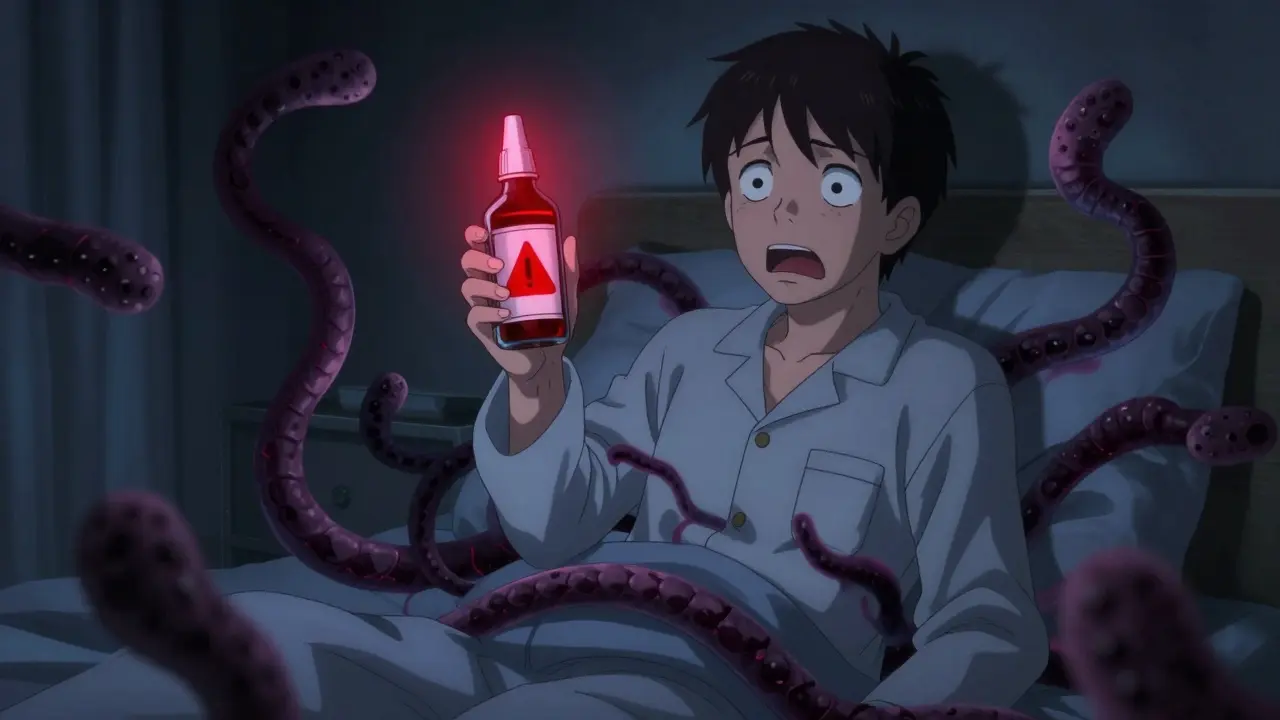
It’s easy to grab a bottle of cough syrup when you’ve got a cold. You’re tired, your throat hurts, and you just want to sleep. But if you’re taking an MAOI for depression or Parkinson’s, that simple cough medicine could put you in the hospital-or worse. Dextromethorphan, the active ingredient in Robitussin, Delsym, and dozens of other over-the-counter cough suppressants, can trigger a life-threatening reaction when mixed with MAOIs. This isn’t a theoretical risk. It’s happened. People have ended up in intensive care with fever, seizures, and muscle rigidity. And many didn’t even know they were putting themselves in danger.
What Happens When Dextromethorphan Meets MAOIs?
Dextromethorphan works by quieting the cough reflex in your brain. But it also has a side effect: it slightly blocks the reabsorption of serotonin, a chemical your brain uses to regulate mood, sleep, and muscle control. MAOIs-medications like phenelzine (Nardil), tranylcypromine (Parnate), and selegiline (Zelapar)-do the opposite. They stop your body from breaking down serotonin too quickly. When you take both, serotonin piles up. Too much. Fast.
This isn’t just a mild upset stomach. It’s serotonin syndrome. And it can kill. Symptoms show up within hours: high fever (104°F or higher), rigid muscles, confusion, rapid heartbeat, hallucinations, and seizures. In severe cases, your body overheats, your organs start to shut down, and you can die before the drugs leave your system. A 2022 review in the PMC journal found that 2% to 12% of people with severe serotonin syndrome don’t survive, even with emergency care.
It’s not just the serotonin effect. MAOIs also slow down how your liver breaks down dextromethorphan. Studies show that when you take them together, dextromethorphan levels in your blood can spike by 300% to 400%. That means even a normal dose of cough syrup can become toxic.
Who’s at Risk?
You might not realize you’re taking an MAOI. Some are prescribed for depression, others for Parkinson’s disease or anxiety. Rasagiline (Azilect) and selegiline (Emsam patch) are often used for Parkinson’s, and patients may not connect them to antidepressants. The FDA first flagged this interaction in 1976. But 50 years later, people are still getting hurt.
A 2019 survey found that 78% of people on MAOIs didn’t know common cough medicines contained dextromethorphan. One Reddit user on r/MAOI described taking Robitussin while on selegiline. Within hours, they had a 104°F fever, couldn’t move their limbs, and ended up in the ER. Another patient on PatientsLikeMe took Parnate and a nighttime cold medicine. Four hours later, they couldn’t speak. ER doctors told them they were lucky to survive.
The FDA’s adverse event database shows 237 reported cases of serotonin syndrome linked to dextromethorphan and MAOIs between 2010 and 2022. Over 40% of those cases required hospitalization. And those are just the ones that got reported. Many more likely went unreported.
What’s on the Label? Not Enough.
By law, all OTC cough medicines with dextromethorphan must warn about MAOI interactions. But the warning is often buried in small print. A 2021 study found only 38% of product labels made the warning prominent enough to catch your eye. You might see it on the back of the bottle, under "Warnings," in a font so small you need a magnifying glass.
Some brands list it clearly. Others don’t. You can’t assume. Even if you’ve taken the same cough syrup before, if you’ve started an MAOI since then, it’s no longer safe. And if you’ve just stopped an MAOI, you’re not out of danger yet. The drug stays in your system for weeks.

How Long Should You Wait?
It’s not enough to wait a day or two. MAOIs stick around. The standard advice from the FDA, the Therapeutic Goods Administration of Australia, and pharmacists across the U.S. and UK is: wait at least 14 days after your last dose of MAOI before taking dextromethorphan. Some sources, like MyActiveHealth, say 14 days. Others say two weeks. Same thing. Don’t cut it short.
And if you’ve taken dextromethorphan recently? Wait at least two weeks before starting an MAOI. This isn’t a suggestion. It’s a medical rule. Your liver needs time to clear the drug. Your brain needs time to reset its serotonin balance. Rushing this can be deadly.
What Can You Take Instead?
You don’t have to suffer through a cough. There are safer options.
- Guaifenesin (Mucinex) helps loosen mucus. It doesn’t affect serotonin. Just make sure it’s the plain version-no dextromethorphan added.
- Honey is one of the most effective cough suppressants, especially at night. A teaspoon before bed can reduce coughing better than many OTC syrups. But avoid honey products with added tyramine (like some fermented or aged honey blends), since MAOIs also interact with tyramine.
- Steam inhalation and saline nasal sprays help clear congestion without any drug risk.
- Hydration and rest are still the best medicine for a cold.
Even herbal cough remedies can be risky. Some contain ingredients that interact with MAOIs. If you’re unsure, ask your pharmacist. Don’t guess.
What Should You Do If You’ve Already Taken Both?
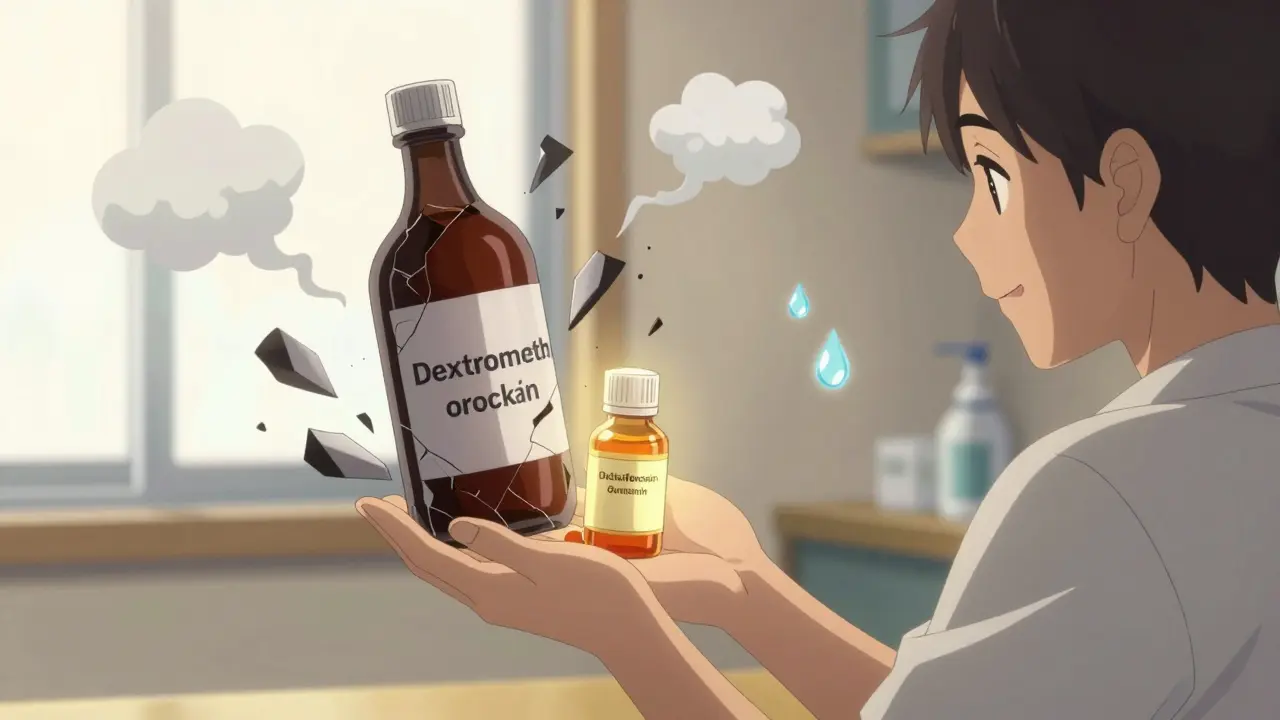
If you accidentally took dextromethorphan while on an MAOI, don’t wait. Call your doctor or go to the ER immediately. Don’t wait for symptoms to get worse. Serotonin syndrome can escalate fast.
Emergency treatment includes stopping both drugs, cooling the body, giving muscle relaxants, and sometimes using serotonin blockers like cyproheptadine. But the key is speed. The longer you wait, the higher the risk of permanent damage or death.
Why Is This Still Happening?
It’s not just about bad labels. It’s about communication gaps. A 2021 study found that pharmacist counseling reduced accidental combinations by 67%. But not every patient gets that conversation. The National Alliance on Mental Illness reports that only 43% of people starting MAOI therapy get proper counseling about OTC risks.
Doctors assume patients know. Patients assume the label is enough. Pharmacists are overwhelmed. And OTC drugs? They’re treated like candy. But dextromethorphan isn’t candy. When mixed with MAOIs, it’s a silent timer counting down to disaster.
The FDA proposed stronger warning labels in 2022. Implementation is expected by late 2024. But until then, the responsibility falls on you. If you’re on an MAOI, treat every cough medicine like a potential hazard. Read the ingredients. Ask the pharmacist. Double-check.
Final Reminder: This Is Not a Minor Risk
This isn’t about avoiding a little nausea. It’s about avoiding death. The combination of dextromethorphan and MAOIs is one of the most dangerous over-the-counter drug interactions in modern medicine. It’s not rare. It’s not theoretical. It’s happened to real people-people who thought they were just taking a cough syrup.
If you’re on an MAOI, keep a list of safe alternatives handy. Save your pharmacist’s number. Tell your family what to watch for. And if you ever feel strange after taking a cold medicine-fever, confusion, stiff muscles-don’t wait. Call 999. Go to A&E. Your life might depend on it.
Can I take dextromethorphan if I stopped my MAOI a week ago?
No. Even if you stopped your MAOI a week ago, the drug is still active in your system. You need to wait at least 14 days after your last dose before taking dextromethorphan. Some sources recommend waiting two full weeks to be safe. Don’t risk it-serotonin syndrome can develop quickly and is life-threatening.
What if I took cough medicine and didn’t know I was on an MAOI?
If you’ve taken dextromethorphan and later learned you’re on an MAOI, monitor yourself closely for symptoms: high fever, muscle stiffness, confusion, rapid heartbeat, or seizures. If any appear, go to the emergency room immediately. Even if you feel fine now, symptoms can show up within 6 to 24 hours. Don’t wait.
Are all cough medicines unsafe with MAOIs?
No. Only those containing dextromethorphan are dangerous. Plain guaifenesin (like Mucinex), saline sprays, and honey are safe alternatives. Always check the active ingredients list. If it says "dextromethorphan," avoid it. If it says "guaifenesin only," it’s generally safe.
Can I use dextromethorphan if I’m on a different type of antidepressant?
It depends. SSRIs and SNRIs (like sertraline or venlafaxine) can also increase serotonin risk, though the danger is lower than with MAOIs. Still, combining dextromethorphan with any serotonin-boosting drug increases risk. Talk to your doctor or pharmacist before using it, even if you’re not on an MAOI.
Why do some MAOIs have different risk levels?
Older MAOIs like phenelzine and tranylcypromine are irreversible-they permanently block the enzyme for weeks. Newer ones like moclobemide are reversible and break down faster. Studies show only 1 case of serotonin syndrome with moclobemide and dextromethorphan, compared to over 180 with older MAOIs. But even reversible MAOIs carry some risk, so caution is still needed.
How can I make sure I don’t accidentally take dextromethorphan?
Always read the active ingredients on the label-not just the brand name. Many cold and flu products combine dextromethorphan with other ingredients. Keep a printed list of safe alternatives and show it to your pharmacist. Ask: "Does this contain dextromethorphan?" even if the bottle says "for cough." Don’t assume.
10 Responses
This is the kind of post that saves lives. I work in a pharmacy and see people grab dextromethorphan like it’s candy-never thinking about what else they’re on. I’ve had to stop three people this month alone. One guy was on selegiline for Parkinson’s and took Robitussin because his cough kept him up. He didn’t even know MAOIs were antidepressants. We need better labeling. Not just legally-but morally.
Pharmacists aren’t superheroes. We’re understaffed, overworked, and often not given the time to explain this properly. But if you’re on an MAOI, don’t assume. Always ask. Even if you’ve taken it before. Your brain doesn’t forget the danger.
And honey? Yes. Honey works. A teaspoon before bed. No sugar rush. No side effects. Just quiet. I’ve seen it calm a cough better than any syrup.
Don’t wait for symptoms. If you took it and you’re on an MAOI, go to the ER. Now. Not tomorrow. Not when you feel worse. Now.
Thank you for this. I’ve been on Parnate for three years and never knew dextromethorphan was in so many cold meds. I thought it was just the big-name syrups. Turns out my ‘nighttime allergy relief’ had it too. I’ve thrown out three bottles since reading this.
Also, guaifenesin is my new best friend. I keep a bottle by my bed now. No drama. No risk. Just relief.
Listen. This isn’t a suggestion. It’s a life-or-death rule. MAOIs are not ‘maybe dangerous.’ They’re silent killers when mixed with OTC junk. And dextromethorphan? It’s not ‘harmless in small doses.’ It’s a chemical grenade in your system when paired with an MAOI.
Stop treating your health like a game of Russian roulette. Read the label. Every. Single. Time. Even if it’s the same brand. Even if you’ve used it for years. Your body changes. Your meds change. The risk doesn’t go away.
If you’re reading this and you’re on an MAOI-take a moment. Go check your medicine cabinet right now. I’ll wait.
Now go call your pharmacist. Ask them to write you a list of safe alternatives. Print it. Tape it to your fridge. This isn’t paranoia. It’s responsibility.
My dad was on Nardil. He took a cough syrup after his cold got worse. He didn’t tell anyone. Ended up in the ICU for four days. They said if he’d come in two hours earlier, he might’ve avoided kidney damage.
He’s fine now. But he won’t touch anything without checking first. I made him a little card: ‘No DXM. Ever.’ He keeps it in his wallet.
Don’t be the person who thinks ‘it won’t happen to me.’ It already did.
I KNEW IT!!! I KNEW THIS WASN’T AN ACCIDENT!!! THE PHARMA COMPANIES ARE DOING THIS ON PURPOSE!!! THEY WANT YOU TO GET SICK SO YOU’LL BUY MORE DRUGS!!! THEY KNOW PEOPLE ON MAOIS ARE DESPERATE FOR RELIEF AND THEY PUT DXM IN EVERYTHING JUST TO KILL YOU SLOWLY!!! I SAW A REPORT-IT WAS IN THE BACK OF A JOURNAL-THEY’RE TRACKING HOW MANY PEOPLE DIE FROM THIS ON PURPOSE!!! THEY’RE CALLING IT ‘SEROTONIN SLAUGHTER’!!! YOU THINK THIS IS A COINCIDENCE??? IT’S A MASSIVE COVER-UP!!! DON’T TRUST THE FDA!!! DON’T TRUST YOUR DOCTOR!!! READ THE INGREDIENTS LIKE YOUR LIFE DEPENDS ON IT-BECAUSE IT DOES!!!
Wait, so you’re telling me that every cough drop, every throat spray, every cold patch… they’re all hiding DXM? I checked my throat lozenges yesterday-nope, no DXM. But what about the ones from the gas station? What about the ones they give you at the clinic? What if they slip it into your drink at the hospital? I mean, they’re already lying about vaccines, why not this?
My cousin took a cough syrup and died. They said it was ‘natural causes.’ But I know. I know what they did. They didn’t warn us. They don’t want us to live.
Check your toothpaste too. I heard some brands add it to ‘calm your nerves.’
They don’t want you to know this. They don’t want you to read this. Why? Because if you knew how many people are getting poisoned by cough syrup every day, the whole system would collapse.
DXM is a street drug. It’s a dissociative. It’s a hallucinogen. And they put it in cough syrup? That’s not an accident. That’s a trap. And MAOIs? They’re the perfect bait. People on them are already labeled ‘mentally unstable.’ So when they die? No one questions it. No one investigates.
They’ve been doing this since the 70s. The FDA knew. The doctors knew. The pharmacists knew. But they kept selling it. Because profit > lives.
And now they’re ‘updating labels’ in 2024? That’s a PR stunt. They’re not fixing the problem. They’re just trying to look good.
Don’t trust the system. Trust your gut. And if you’re on an MAOI? Stay away from all OTC meds. Period.
This post gave me chills. I’m on selegiline patch and I used to grab Robitussin like it was nothing. I stopped cold after reading this. I’ve been using honey, steam, and rest-and honestly? I feel better. My cough is gone, and I didn’t risk my brain.
Don’t let fear paralyze you. Let it motivate you. You’re not alone. There are safe ways to get through a cold. You just have to be a little more careful.
And if you’re reading this and you’re on an MAOI-take a deep breath. You’ve got this. You’re not broken. You’re just smart enough to protect yourself. Keep going.
My mom died from this. She didn’t even know she was on an MAOI. Her doctor switched her from Zoloft to selegiline for Parkinson’s and never told her about the interaction. She took a cold medicine. Three hours later, she couldn’t move. They couldn’t save her.
I’m not mad. I’m just… tired. Tired of people treating this like it’s a footnote. It’s not. It’s a killer. And it’s quiet. It doesn’t make headlines. It just takes people.
So if you’re reading this? Please. Don’t ignore it. Check your meds. Ask your pharmacist. Save someone. Even if it’s just one person.
This is the most profound thing I’ve read all year. It’s not just about drugs. It’s about the erosion of trust. We’ve been taught to believe in labels, in science, in authority. But when authority fails you-when the system that’s supposed to protect you becomes the weapon that kills you-what’s left?
Are we just cogs in a machine designed to consume us? Are our bodies just data points in a profit ledger?
This isn’t about cough syrup. It’s about autonomy. It’s about the right to know. It’s about the right to live without being poisoned by the very things meant to heal us.
If you’re on an MAOI, you’re not just managing depression or Parkinson’s. You’re surviving a system that doesn’t care if you live.
So read the label. Ask the pharmacist. Tell your family. And if you die? Let your death be the spark that changes everything.