
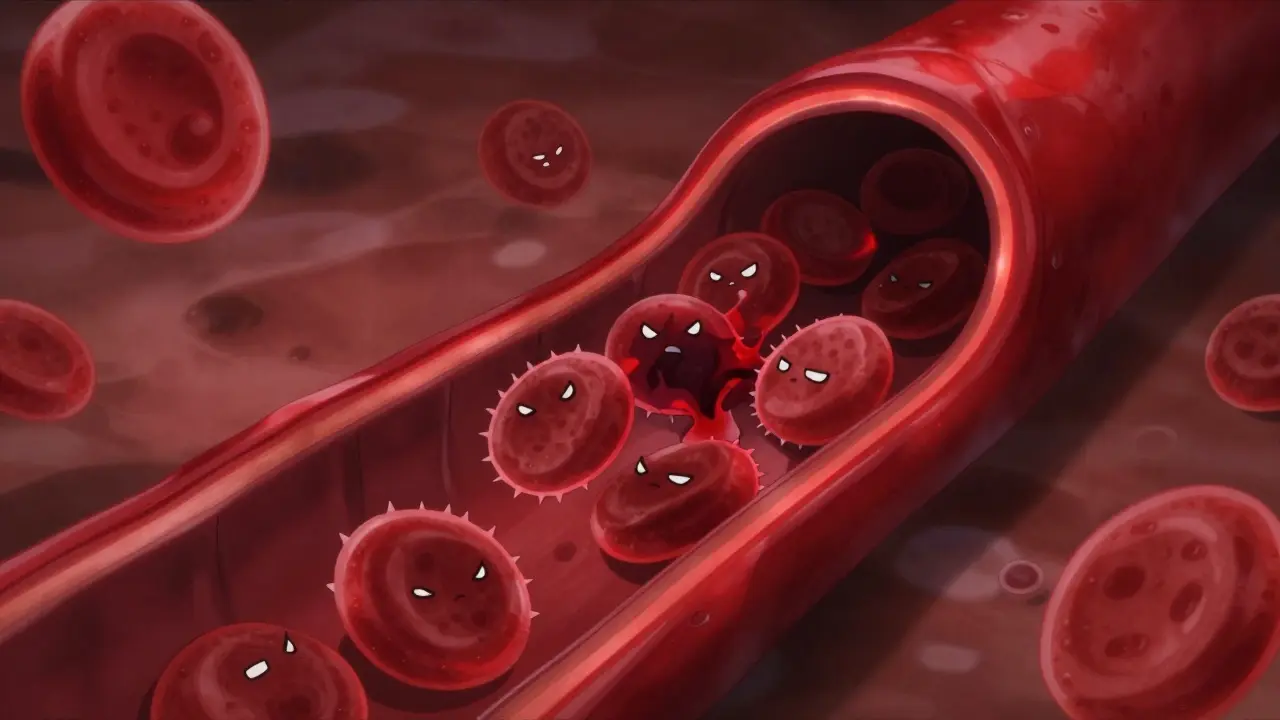
Heart attacks and strokes are terrifying events. When they happen, doctors prescribe antiplatelet medications that prevent blood clots by stopping platelets from sticking together to keep you alive. Drugs like aspirin, clopidogrel, and ticagrelor save millions of lives every year. But there is a heavy price to pay for this protection. These powerful drugs thin your blood, which significantly raises the risk of serious internal bleeding, particularly in your stomach and intestines.
If you have been prescribed these life-saving pills, you might be worried about black stools or abdominal pain. You are not alone. Gastrointestinal (GI) bleeding is the most common major side effect of antiplatelet therapy. The good news? You do not have to choose between protecting your heart and protecting your stomach. With the right strategy, including specific protective medications and careful monitoring, you can stay safe on both fronts.
Understanding How Antiplatelet Drugs Work
To understand the risk, we first need to look at how these drugs function. Platelets are tiny cells in your blood that rush to any injury site to form a clot. In a healthy person, this stops bleeding quickly. In someone with cardiovascular disease, however, these same platelets can stick together inside arteries, causing blockages that lead to heart attacks or strokes.
Aspirin is a cyclooxygenase inhibitor that irreversibly blocks thromboxane A2 production. It has been used since the 1970s and remains the cornerstone of therapy. It works by permanently disabling platelets for their entire lifespan, which is about 7 to 10 days. This means even if you miss a dose, the effect lingers, but it also means new platelets must be produced before full clotting ability returns.
Then there are the P2Y12 inhibitors, a newer class of drugs. Clopidogrel (Plavix), prasugrel (Effient), and ticagrelor (Brilinta) block a different receptor on the platelet. They are often stronger than aspirin alone. Clopidogrel is irreversible like aspirin, while ticagrelor is reversible, meaning its effects wear off faster once you stop taking it. Doctors often prescribe two of these together-a regimen known as dual antiplatelet therapy (DAPT)-especially after a stent is placed. This combination is incredibly effective at preventing stent thrombosis but dramatically increases bleeding risk.
The Hidden Danger: Gastrointestinal Bleeding
Your stomach lining is tough, but it is constantly exposed to acid. Normally, your body produces mucus and bicarbonate to protect itself. Platelets play a surprising role here too. They release growth factors that help heal minor erosions in the stomach lining. When you take antiplatelet drugs, you suppress this healing mechanism.
Research shows that approximately 1% of patients experience overt gastrointestinal bleeding within the first 30 days of starting therapy. That number sounds small, but when you consider that tens of millions of people take these drugs, it translates to hundreds of thousands of hospitalizations annually. A 2023 study published in JAMA Network Open involving nearly 5,000 patients post-procedure confirmed this risk. Even more concerning, a prospective cohort study found that up to 50% of patients on clopidogrel or DAPT develop progressive gastrointestinal injury over 6 to 12 months, even if they don't bleed visibly.
Clopidogrel actually carries a higher risk of GI injury progression compared to aspirin, with a hazard ratio of 1.8. This is because it specifically impairs gastric ulcer healing by suppressing platelet-derived growth factor. Newer agents like prasugrel and ticagrelor are even more potent against clots but carry an even higher bleeding risk-ticagrelor increases risk by 30% compared to clopidogrel according to the PLATO trial data.
Protecting Your Stomach: The Role of PPIs
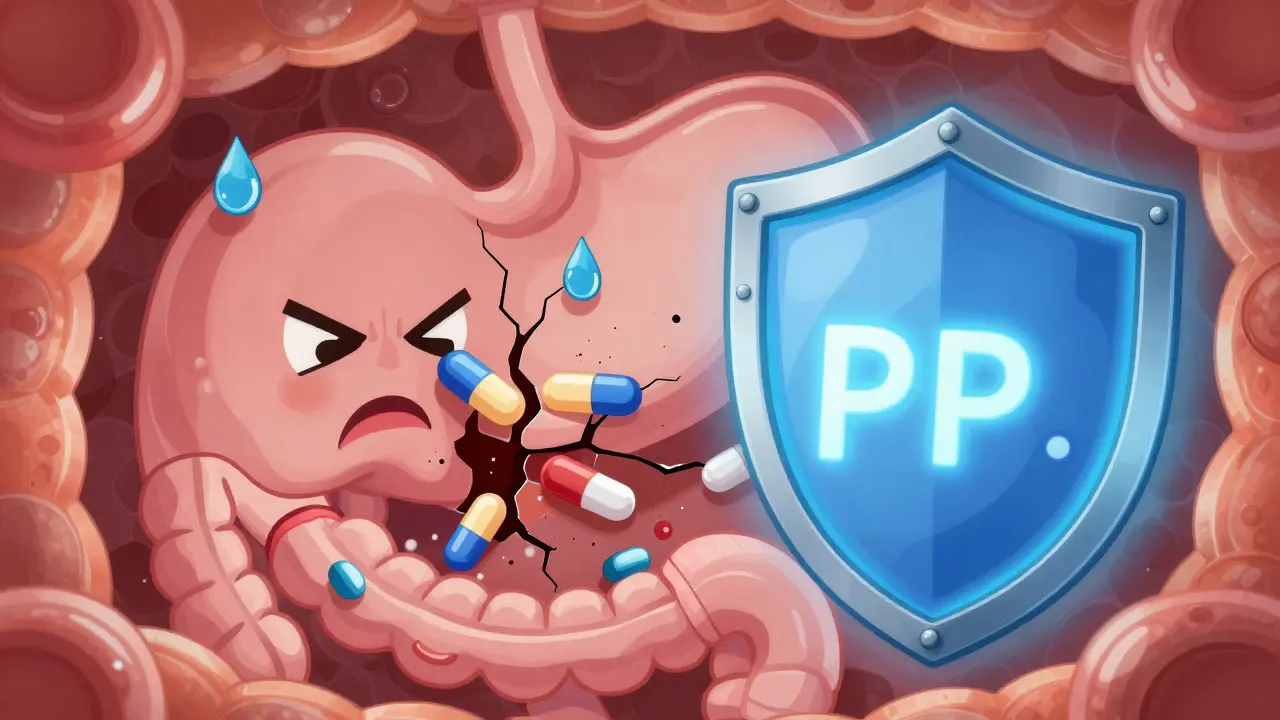
If you are on antiplatelet therapy, especially with additional risk factors, your doctor will likely prescribe a proton pump inhibitor (PPI). Proton pump inhibitors are medications that reduce stomach acid production to allow ulcers to heal. Common examples include omeprazole, esomeprazole, and pantoprazole.
This isn't just a precaution; it's evidence-based medicine. A survey of over 1,200 gastroenterologists revealed that 89% routinely prescribe PPIs for patients on antiplatelet therapy who have a history of ulcers. For those with multiple risk factors-such as being over 65, taking NSAIDs like ibuprofen, or having an H. pylori infection-62% extend this protection. Case series have shown that high-dose esomeprazole (40mg daily) can achieve a 92% ulcer healing rate at 8 weeks, even in patients who must continue clopidogrel.
There is a long-standing debate about whether certain PPIs interfere with clopidogrel. Omeprazole, specifically, can inhibit the enzyme CYP2C19, which is needed to activate clopidogrel. In theory, this makes the blood thinner less effective. However, the FDA’s Division of Cardiovascular and Renal Products stated in 2010 that the clinical relevance of this interaction remains uncertain. Most current guidelines suggest using pantoprazole or rabeprazole, which have minimal interaction with CYP2C19, to balance GI protection with cardiac efficacy.
| Medication | Class | GI Bleeding Risk | Key Consideration |
|---|---|---|---|
| Aspirin | Cyclooxygenase Inhibitor | Moderate | Safest option for prior GI bleeders; systemic effects persist 7-10 days. |
| Clopidogrel | P2Y12 Inhibitor | High | Impairs ulcer healing; potential interaction with omeprazole. |
| Prasugrel | P2Y12 Inhibitor | Very High | More potent than clopidogrel; higher bleeding risk; not recommended for elderly >75kg without caution. |
| Ticagrelor | P2Y12 Inhibitor | Very High | Reversible binding; causes dyspnea; 30% higher GI risk than clopidogrel. |
What To Do If Bleeding Occurs
Spotting blood in your stool or vomit is a medical emergency. But what happens to your heart medication? Many patients panic and stop taking their antiplatelet drugs immediately. This is a dangerous mistake.
The American College of Gastroenterology (ACG) and Canadian Association of Gastroenterology published updated guidelines in May 2023 addressing this exact scenario. Their strongest recommendation? Continue aspirin. Stopping aspirin during a GI bleed does not improve bleeding outcomes but may increase mortality by 25%, based on a 2017 randomized controlled trial published in The Lancet. Your heart needs that protection now more than ever.
For P2Y12 inhibitors like clopidogrel or ticagrelor, the approach is slightly different. Guidelines suggest holding the medication for 5 to 7 days during active bleeding, then restarting as soon as clinically possible. Delaying restart increases the risk of stent thrombosis, which can be fatal. One Reddit discussion among physicians highlighted three cases where patients discontinued clopidogrel due to mild GI symptoms, resulting in stent thrombosis within 30 days.
Another critical point: avoid platelet transfusions unless absolutely necessary. Dr. Robert Sidbury, Chair of the ACG Guidelines Committee, noted that platelet transfusions appear to increase mortality in these patients. A small cohort study showed 27% mortality in transfused patients versus 12% in non-transfused patients. Transfusing platelets essentially overrides the drug’s protective effect, potentially triggering a heart attack.

Risk Stratification: Who Is Most Vulnerable?
Not everyone faces the same level of risk. Doctors use tools like the AIMS65 score to assess severity during a bleeding event. This score looks at Albumin levels (<3.0 g/dL), INR (>1.5), Mental status changes, Systolic BP (≤90 mmHg), and Age (≥65 years). A score of 2 or higher indicates high mortality risk and requires aggressive management.
Even before bleeding starts, you can identify your risk profile. You are at higher risk if you:
- Are over age 65
- Have a history of peptic ulcers or GI bleeding
- Test positive for H. pylori infection
- Take NSAIDs (ibuprofen, naproxen) regularly
- Use corticosteroids or anticoagulants (like warfarin or apixaban) concurrently
- Smoke or consume alcohol heavily
If you fall into these categories, proactive GI protection is essential. This usually means testing for and eradicating H. pylori before starting long-term antiplatelet therapy, and maintaining lifelong PPI use.
Navigating Treatment Decisions
Choosing the right antiplatelet regimen is a balancing act. Clopidogrel remains the most prescribed P2Y12 inhibitor globally, with annual sales contributing to a $12.5 billion market. Its generic cost ($25/month) makes it accessible compared to ticagrelor ($450/month). However, accessibility doesn't always mean suitability.
For patients with prior GI bleeding, aspirin monotherapy is often the safest choice for continued cardiovascular protection. It minimizes rebleeding risk while still offering significant cardiac benefits. For those requiring DAPT, shortening the duration is key. Recent trends favor shorter DAPT courses (1 to 3 months) followed by single antiplatelet therapy, reducing cumulative exposure to bleeding risks.
Future directions look promising. Personalized medicine based on CYP2C19 genotyping is becoming more common. This test identifies "clopidogrel non-responders" who get little benefit from the drug but still suffer its side effects. For them, switching to prasugrel or ticagrelor might be better, despite the higher GI risk, because the cardiac protection is superior. Additionally, novel agents like selatogrel are in Phase III trials, showing 35% lower gastrointestinal injury in preclinical models compared to ticagrelor.
Dr. Lauren B. Gerson of Stanford University predicts that within five years, biomarkers like serum pepsinogen and gastrin-17 will help identify patients at highest GI risk, allowing for targeted protective strategies rather than blanket prescriptions. Until then, open communication with your cardiologist and gastroenterologist is your best defense.
Should I stop taking my antiplatelet medication if I see blood in my stool?
No, do not stop taking your medication without consulting your doctor immediately. Stopping aspirin can increase your risk of death by 25% during a bleeding episode. For other drugs like clopidogrel, your doctor may advise pausing for 5-7 days, but self-discontinuation can lead to life-threatening stent thrombosis. Seek emergency care right away.
Does enteric-coated aspirin prevent stomach bleeding?
Enteric-coated aspirin reduces direct irritation to the stomach lining, but it does not eliminate the risk of bleeding. Aspirin works systemically by inhibiting prostaglandins throughout the body, which weakens the stomach's protective mucosal barrier regardless of where the pill dissolves. You still need GI protection if you have risk factors.
Can I take ibuprofen or naproxen while on antiplatelet therapy?
It is strongly discouraged. NSAIDs like ibuprofen and naproxen independently damage the stomach lining and inhibit platelet function, compounding the bleeding risk of antiplatelet drugs. If you need pain relief, acetaminophen (paracetamol) is generally safer, though you should always check with your physician first.
Which PPI is best to take with clopidogrel?
Pantoprazole and rabeprazole are preferred because they have minimal interaction with the CYP2C19 enzyme required to activate clopidogrel. Omeprazole and esomeprazole may reduce clopidogrel's effectiveness, so they are often avoided in patients relying on clopidogrel for cardiac protection.
How long do I need to take a PPI for GI protection?
If you have a healed ulcer, guidelines recommend continuing PPI therapy for at least 8 weeks after healing. For patients with a history of complicated ulcers or multiple risk factors (age >65, H. pylori history), indefinite continuation is often recommended as long as you remain on antiplatelet therapy.
What are the signs of gastrointestinal bleeding I should watch for?
Watch for black, tarry stools (melena), bright red blood in the toilet bowl, vomiting blood or material that looks like coffee grounds, unexplained fatigue, dizziness, or shortness of breath. These symptoms indicate active bleeding and require immediate medical attention.