

Imagine your throat suddenly closes up while you're eating lunch. Your skin turns red, your heart races, and breathing becomes a struggle. This isn't just a bad tummy ache or a mild rash; it is Anaphylaxis, a life-threatening systemic hypersensitivity reaction that can develop within minutes. If left untreated, this severe allergic response can lead to shock and death. The single most critical tool in fighting this emergency is Epinephrine, the body's natural 'fight or flight' hormone, available in medical settings as an injection and for home use in devices like EpiPen.
Many people confuse anaphylaxis with a standard allergy. While a sneeze or a hives outbreak might be annoying, anaphylaxis is a medical crisis. It affects multiple body systems at once-your lungs, your heart, and your blood vessels. Understanding the difference between a manageable reaction and a fatal one is the first step in staying safe. This guide breaks down what happens inside your body during an attack, how to recognize it instantly, and exactly how to use epinephrine when every second counts.
Understanding Anaphylaxis: More Than Just Hives
Anaphylaxis is defined by the rapid onset of symptoms involving two or more organ systems after exposure to a likely allergen. It is not a gradual process. It hits fast. According to the National Institute of Allergy and Infectious Diseases, the reaction typically begins within minutes to hours of contact with the trigger. The term itself comes from Greek roots meaning 'without protection,' highlighting how the body’s immune system overreacts to a harmless substance, releasing massive amounts of histamine and other chemicals.
The danger lies in the speed and severity. Unlike a localized reaction where only the skin is involved, anaphylaxis compromises your airway and circulation simultaneously. You might experience urticaria (hives) or angioedema (swelling) in 80-90% of cases, but these are often the least dangerous signs. The real killers are respiratory distress and cardiovascular collapse. If your blood pressure drops sharply (hypotension) or your airway swells shut, you have very little time to react. This is why waiting to see if symptoms get better is the most common mistake patients make.
Common Triggers and Who Is at Risk
You don't need a pre-existing diagnosis to suffer from anaphylaxis, though certain groups are higher risk. The most frequent culprits fall into three categories:
- Foods: Peanuts, tree nuts, shellfish, milk, and eggs account for the vast majority of food-induced cases. In the US, peanut allergies alone affect about 1.4% of children.
- Insect Stings: Venom from bees, wasps, and hornets triggers anaphylaxis in roughly 9.5% of emergency department visits related to stings.
- Medications: Antibiotics like penicillin are the leading cause of drug-induced anaphylaxis, responsible for about 75% of these cases.
Interestingly, there is no perfect predictor. Some people have no known history of allergies and still react severely. However, having asthma significantly increases the risk of a fatal outcome. If you have both a food allergy and uncontrolled asthma, your risk profile changes dramatically. Doctors often prescribe epinephrine auto-injectors to anyone who has had a previous anaphylactic episode or those with multiple high-risk factors, such as a combination of food allergy and asthma.
Recognizing the Signs: What To Look For
Because anaphylaxis moves so quickly, pattern recognition is your best defense. You are looking for a cluster of symptoms appearing together shortly after exposure. Here is what to watch for:
- Skin Changes: Pale, cold, clammy skin, or widespread flushing and hives. Swelling of the lips, tongue, or face (angioedema).
- Respiratory Distress: Wheezing, shortness of breath, tight chest, or a feeling of throat closure. Stridor (a high-pitched sound when breathing in) is a grave sign of upper airway obstruction.
- Circulatory Issues: Dizziness, lightheadedness, fainting, or a weak, rapid pulse. In severe cases, blood pressure drops dangerously low.
- Gastrointestinal Symptoms: Sudden nausea, vomiting, or cramping abdominal pain. These often accompany food-induced reactions.
A key diagnostic rule of thumb: if you have acute onset of illness involving skin/mucosal tissue plus either respiratory compromise or reduced blood pressure, treat it as anaphylaxis. Do not wait for all symptoms to appear. A single severe symptom, like difficulty breathing after eating peanuts, is enough to warrant immediate action.
Why Epinephrine Is the Only First-Line Treatment
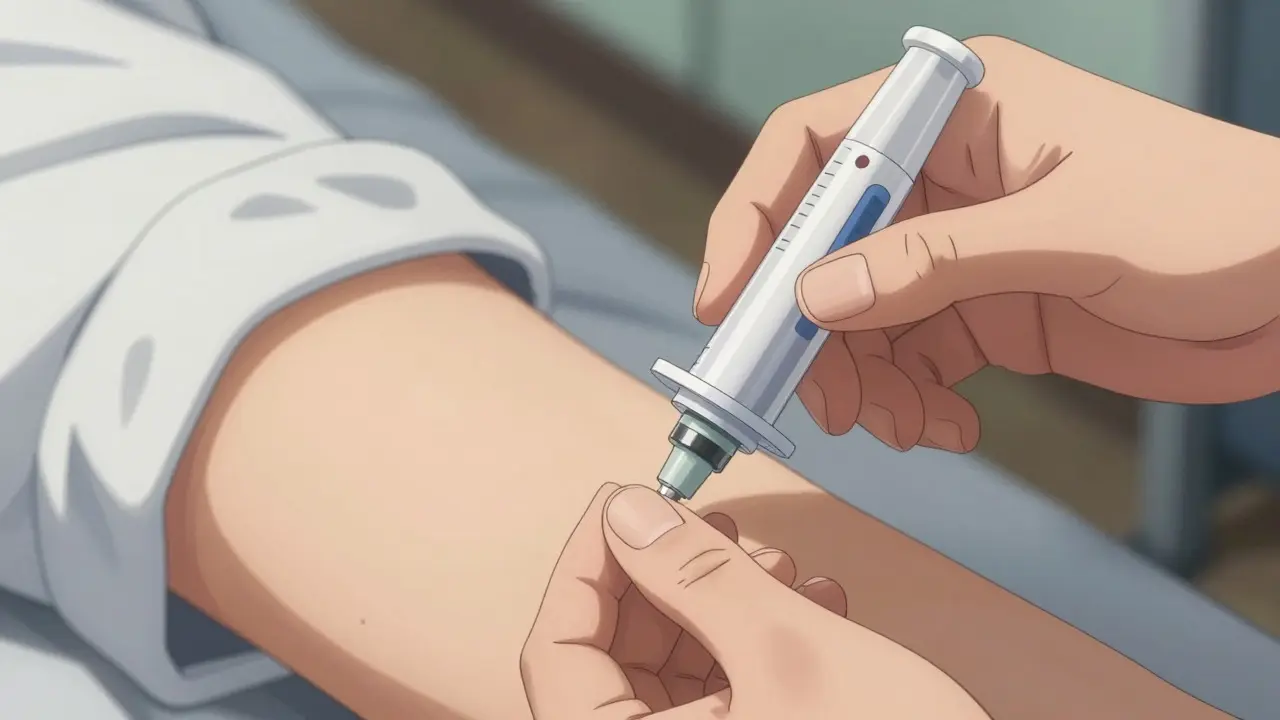
When anaphylaxis strikes, adrenaline is flooding your system, but not enough to save you. You need a boost. Epinephrine works on two fronts: it constricts blood vessels (raising blood pressure) and relaxes the muscles in your airways (opening them up). No other medication does this as effectively or as quickly.
There is a persistent myth that antihistamines like diphenhydramine can stop anaphylaxis. They cannot. Antihistamines help with itching and hives, but they do nothing to fix a collapsing airway or a dropping blood pressure. Corticosteroids are also useless in the acute phase; they take hours to work and are only used later to prevent a secondary wave of symptoms. Studies show that delaying epinephrine is the single greatest predictor of poor outcomes. Every minute without epinephrine increases the risk of complications.
| Medication | Primary Action | Time to Effect | Role in Anaphylaxis |
|---|---|---|---|
| Epinephrine | Vasoconstriction & Bronchodilation | Minutes (IM) | First-line, life-saving |
| Antihistamines | Blocks Histamine Receptors | 30-60 Minutes | Adjunctive (symptom relief only) |
| Corticosteroids | Anti-inflammatory | Hours | Prevents biphasic reaction (not acute) |
How to Use an Epinephrine Auto-Injector
If you or your child has been prescribed an auto-injector, you must know how to use it before you need it. The most common device is the EpiPen, but others like Auvi-Q and Adrenaclick exist. Despite brand differences, the core technique remains similar.
- Stand Up or Sit Down: Try to stand if possible, as lying down can worsen hypotension. If dizzy, lie flat with legs raised.
- Remove the Cap: Pull off the safety cap (usually blue or orange).
- Position the Device: Hold the injector at a 90-degree angle to the outer thigh. You can inject through clothing if necessary.
- Inject: Press firmly until you hear a click. Hold it in place for 3 seconds to ensure full delivery.
- Massage: Gently massage the injection site for 10 seconds to aid absorption.
Why the thigh? The muscle there (vastus lateralis) absorbs epinephrine faster than the arm or buttocks. Peak plasma concentrations are reached in about 8 minutes via intramuscular injection, compared to 20 minutes if injected subcutaneously (under the skin), which is too slow for an emergency. Remember: it is better to inject slightly off-target in the thigh than to miss entirely or delay the shot.
What Happens After the Injection?
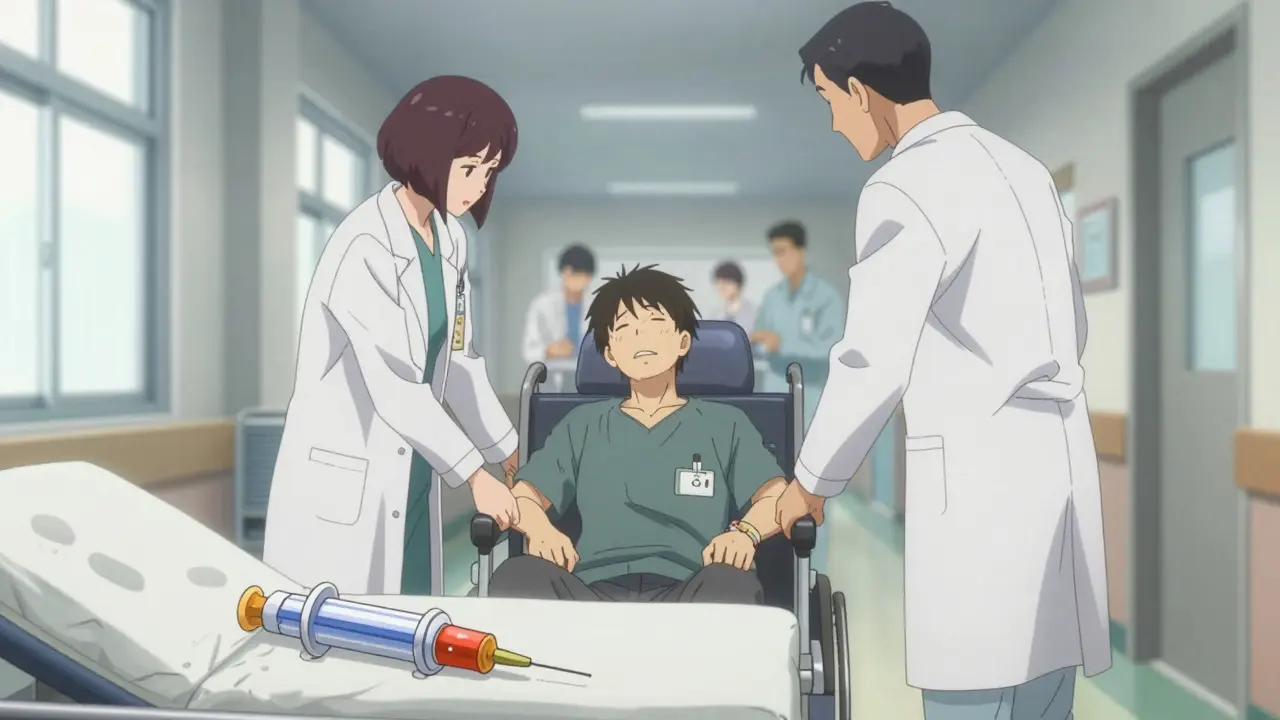
Using epinephrine is not the end of the story. It is the beginning of recovery. After injecting, call emergency services immediately. Even if symptoms improve rapidly, you must go to the hospital. Why? Because of the risk of a 'biphasic reaction.' This is a second wave of symptoms that can return hours later, sometimes up to 24 hours after the initial event.
Hospital staff will monitor you for at least 12 hours if you are considered high-risk (e.g., you have asthma, needed multiple doses, or had severe initial symptoms). During this time, they may administer additional treatments like IV fluids, oxygen, or steroids. Do not leave against medical advice. A biphasic reaction outside the hospital is far more dangerous because you won't have immediate access to IV epinephrine or advanced airway management.
Practical Tips for Daily Life
Living with anaphylaxis risk requires preparation. Here are some practical steps to reduce anxiety and increase safety:
- Carry Two Injectors: Always carry a pair. One for the initial dose, one if symptoms persist after 5-15 minutes or if a second wave occurs.
- Check Expiration Dates: Set a phone reminder to check your auto-injectors monthly. Expired epinephrine loses potency.
- Store Correctly: Keep devices at room temperature (20-25°C / 68-77°F). Avoid leaving them in hot cars or freezing freezers.
- Practice with Trainers: Most manufacturers provide practice trainers. Use them to build muscle memory. 68% of users demonstrate incorrect technique during simulated emergencies, so practice is crucial.
- Wear Medical ID: A bracelet or necklace indicating your allergy and the fact that you carry epinephrine can help bystanders act quickly.
Education is also vital. Tell teachers, coaches, and close friends about your condition. Provide them with a written action plan. Many schools now stock epinephrine, but knowing who has access and where it is stored can save lives.
Frequently Asked Questions
Can I use an expired EpiPen in an emergency?
Yes. An expired auto-injector is still better than no treatment. While potency may decrease, studies suggest that even expired epinephrine retains significant activity for several years past the date. If you have no other option, use it and seek medical attention immediately.
Where should I inject the epinephrine if the person is wearing thick clothes?
You can inject through clothing. The needle is designed to penetrate fabric. Aim for the outer mid-thigh. Do not waste time removing pants or jackets if the situation is urgent. The goal is speed.
Do I need to go to the hospital if the symptoms stop after using epinephrine?
Always go to the hospital. Improvement does not mean the danger has passed. Biphasic reactions can occur hours later. Hospital observation ensures you are monitored for a second wave and receive any necessary follow-up care, such as steroids to reduce inflammation.
Is it okay to give epinephrine to someone who might not be having anaphylaxis?
Yes. The risks of giving epinephrine to someone who doesn't need it (temporary increased heart rate, jitters) are far lower than the risks of withholding it from someone who does (death). When in doubt, especially if respiratory or circulatory symptoms are present, err on the side of caution and administer the dose.
How long does epinephrine last in the body?
The effects of intramuscular epinephrine peak around 10-15 minutes and wear off within 30-60 minutes. This is why a second dose may be needed if symptoms persist or return after 5-15 minutes. It is not a long-term cure, but a bridge to stabilization.