
Serotonin Syndrome Washout Period Calculator
Medication Selection
Select your SSRI to calculate the recommended washout period before taking 5-HTP or other serotonergic supplements.
Recommended washout period: 2 weeks
After this period, your body should have cleared the SSRI, reducing serotonin syndrome risk when taking 5-HTP.
Important Safety Warning
Even after the washout period, 5-HTP should not be combined with SSRIs without direct medical supervision. The risk of serotonin syndrome is real and potentially fatal.
How This Works
SSRIs have different half-lives in your body. The washout period is the time needed for the medication to clear from your system before you safely take 5-HTP. This period varies by SSRI:
- Fluoxetine: Up to 4 weeks (sometimes longer)
- Paroxetine: Up to 4 weeks
Important: These are general guidelines. Individual metabolism varies. Always consult your doctor before making any changes to your medication regimen.
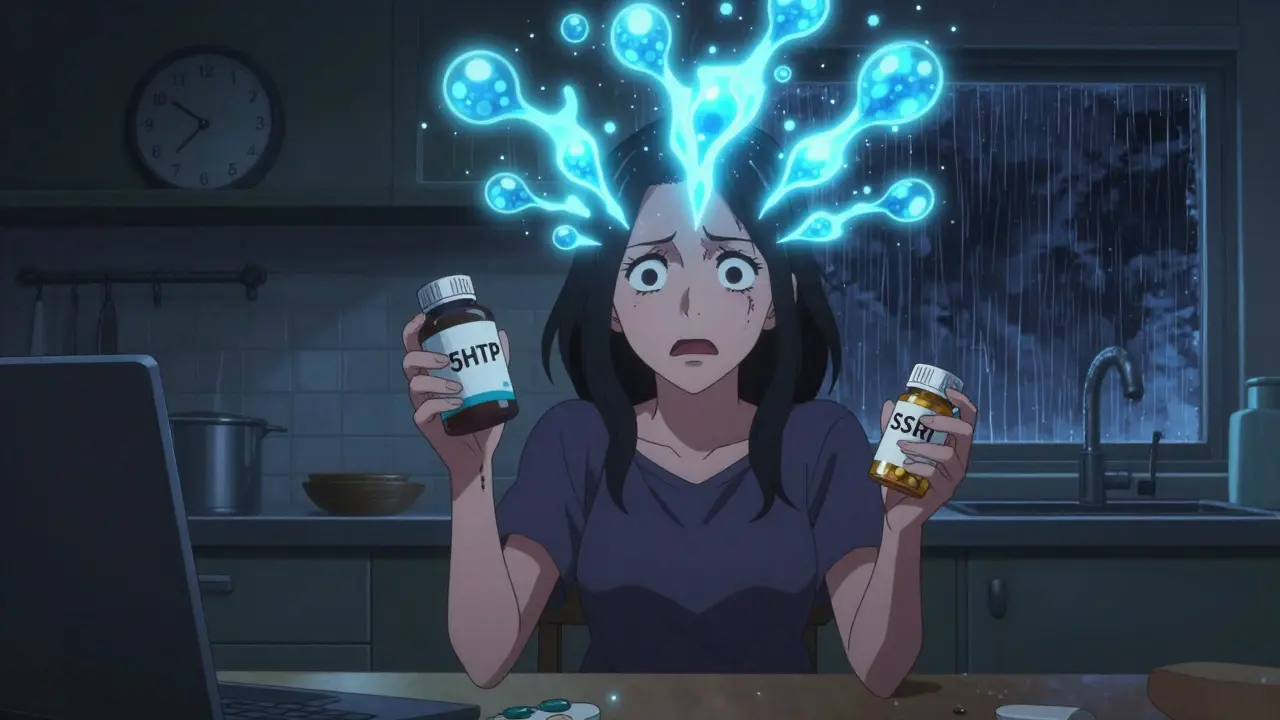
Combining 5-HTP with SSRIs isn’t just a bad idea-it’s dangerous. Thousands of people take 5-HTP supplements hoping to boost mood or sleep, often without realizing they’re mixing it with antidepressants like fluoxetine, sertraline, or escitalopram. What they don’t know could land them in the emergency room. Serotonin syndrome isn’t a myth. It’s a real, life-threatening reaction that happens when too much serotonin builds up in your brain. And 5-HTP plus SSRIs is one of the most common triggers.
How 5-HTP and SSRIs Work Together-And Why That’s a Problem
SSRIs, or selective serotonin reuptake inhibitors, work by stopping your brain from reabsorbing serotonin. That leaves more of the chemical floating around in your synapses, which helps lift mood over time. 5-HTP, on the other hand, is a direct building block for serotonin. When you take it, your body converts it into serotonin-fast and without the usual controls. So while SSRIs keep serotonin from being cleared out, 5-HTP floods your system with more of it. It’s like turning on a faucet while plugging the drain.
This isn’t theoretical. A 2021 review in CNS Drugs found zero high-quality evidence supporting the safety of combining these two. Meanwhile, the FDA received 127 adverse event reports between 2015 and 2019 involving 5-HTP and SSRIs, including nine deaths. The American College of Medical Toxicology says this combination is contraindicated. That means doctors are told outright: don’t do it.
What Serotonin Syndrome Actually Looks Like
People often mistake serotonin syndrome for anxiety, the flu, or a bad reaction to caffeine. But the symptoms are specific-and they escalate quickly.
- Mild: Shivering, sweating, restlessness, diarrhea, tremors
- Moderate: Muscle rigidity, overactive reflexes, high blood pressure, fast heart rate, confusion
- Severe: Fever above 106°F (41.1°C), seizures, unconsciousness, organ failure
One case reported on Reddit involved a woman who took 100 mg of 5-HTP with her 20 mg daily dose of fluoxetine. Within hours, her temperature spiked to 104°F. She ended up in the ER with muscle breakdown, kidney stress, and a white blood cell count nearly double the normal level. That’s not an outlier. A 2019 study in the Journal of Medical Toxicology found that 2-12% of severe serotonin syndrome cases are fatal.
The Hunter Criteria are the gold standard for diagnosis. If you have one of these three things-spontaneous clonus, inducible clonus plus agitation or diaphoresis, or tremor plus hyperreflexia-you likely have serotonin syndrome. No lab test confirms it. Diagnosis is based on symptoms and history. That’s why so many cases go missed.
Why Supplements Like 5-HTP Are Especially Risky
Unlike prescription drugs, supplements like 5-HTP aren’t tested for safety before they hit shelves. The FDA doesn’t approve them. They’re regulated under the Dietary Supplement Health and Education Act of 1994, which means manufacturers don’t have to prove their products are safe or even accurate.
A 2022 test by ConsumerLab.com found that 31% of 5-HTP supplements contained doses that were off by more than 25%. One bottle labeled “100 mg” had 128 mg. Another had only 72 mg. That’s not just inconsistent-it’s unpredictable. Someone might take what they think is a safe dose, only to accidentally overload their system because the pill they bought had 50% more than advertised.
And most people don’t even tell their doctors they’re taking it. A 2022 Healthline survey showed 41% of supplement users believe “natural” means “safe.” Nearly 30% of people on antidepressants were using 5-HTP without medical supervision. That’s a ticking time bomb.

How Big Is This Problem?
The numbers are growing. In 2010, only 7% of serotonin syndrome cases involved supplements like 5-HTP. By 2020, that number jumped to 22%. Dr. David Juurlink, a leading expert in drug safety at Sunnybrook Hospital, calls this one of the fastest-growing categories of toxic reactions.
Why? Because 5-HTP is easy to get. You can buy it at Walmart, CVS, or Amazon without a prescription. It’s marketed as “natural serotonin support,” “mood booster,” or “sleep aid.” People think it’s harmless because it’s not a pill from a doctor. But the chemistry doesn’t care where it comes from. Your brain reacts the same way whether the serotonin comes from a prescription or a capsule labeled “organic.”
According to the 2022 National Health Interview Survey, about 4.3 million Americans on antidepressants are also taking 5-HTP. Most are women between 35 and 54. That’s not a small group. That’s a public health blind spot.
What About People Who Say It Worked for Them?
You’ll find stories online-people who say they tapered off their SSRI using 5-HTP and felt better. Some even claim they reduced their antidepressant dose by half. But these aren’t clinical trials. They’re anecdotes. No one’s measuring serotonin levels. No one’s tracking brain activity. No one’s controlling for placebo effects or natural mood fluctuations.
Dr. Kent Holtorf argues in his book that 5-HTP can be safely combined with SSRIs under supervision. But he’s an outlier. Not one major medical organization agrees with him. The American Psychiatric Association, Mayo Clinic, FDA, and American Society of Health-System Pharmacists all warn against it. The few pilot studies suggesting safety are tiny, unreplicated, and use experimental methods like EEG monitoring-far from standard care.
When someone says “it worked for me,” they’re often confusing correlation with causation. Maybe their mood improved because they started walking more, sleeping better, or reducing stress. Maybe the 5-HTP was a placebo. Or maybe they got lucky and didn’t cross the serotonin threshold. But luck isn’t a medical strategy.
What Should You Do If You’re Taking Both?
If you’re currently taking an SSRI and thinking about starting 5-HTP-stop. Don’t do it. If you’re already taking both, don’t quit cold turkey. Talk to your doctor.
The Mayo Clinic recommends a minimum two-week washout period between stopping an SSRI and starting 5-HTP. But that’s not enough for all SSRIs. Paroxetine, for example, stays in your system for up to four weeks. If you start 5-HTP too soon, you’re still at risk.
There’s no safe dose of 5-HTP while on an SSRI. Not 25 mg. Not 50 mg. Not 100 mg. The risk isn’t linear-it’s exponential. Even small amounts can tip you over the edge.
Doctors are often unaware of this risk. A 2020 survey found only 38% of primary care physicians correctly identified 5-HTP as a serotonin syndrome trigger. That means many patients are being given bad advice-or no advice at all.
What Are the Alternatives?
If you’re on an SSRI and still struggling with low mood, anxiety, or sleep issues, there are safer options:
- Therapy: CBT and other evidence-based therapies have been shown to be as effective as medication for mild to moderate depression.
- Exercise: Just 30 minutes of brisk walking five times a week can boost serotonin naturally without risk.
- Light therapy: Especially helpful in winter months, 10,000-lux light boxes regulate circadian rhythm and mood.
- Omega-3s: High-dose fish oil (2-4 g EPA/DHA daily) has strong evidence supporting mood support in depression.
- Melatonin: For sleep, it’s far safer than 5-HTP and doesn’t interact with SSRIs.
And if you’re thinking about reducing your SSRI dose-talk to your prescriber. Never do it on your own. Tapering too fast can cause withdrawal symptoms that mimic serotonin syndrome.
What to Do If You Think You Have Serotonin Syndrome
If you’re on an SSRI and start experiencing:
- Sudden tremors or muscle spasms
- High fever with sweating
- Confusion or agitation
- Rapid heartbeat or high blood pressure
Stop taking 5-HTP immediately. Go to the ER. Tell them you’re on an SSRI and took a supplement. Don’t say “I took something for mood.” Say “I took 5-HTP.”
At the hospital, they’ll likely give you cyproheptadine-an antihistamine that blocks serotonin receptors. It’s the antidote. They’ll also give you fluids, cool you down, and monitor your heart and kidneys. Recovery can take hours to days, depending on severity.
Don’t wait. Don’t hope it gets better. Serotonin syndrome can kill in under 24 hours if untreated.
The Bottom Line
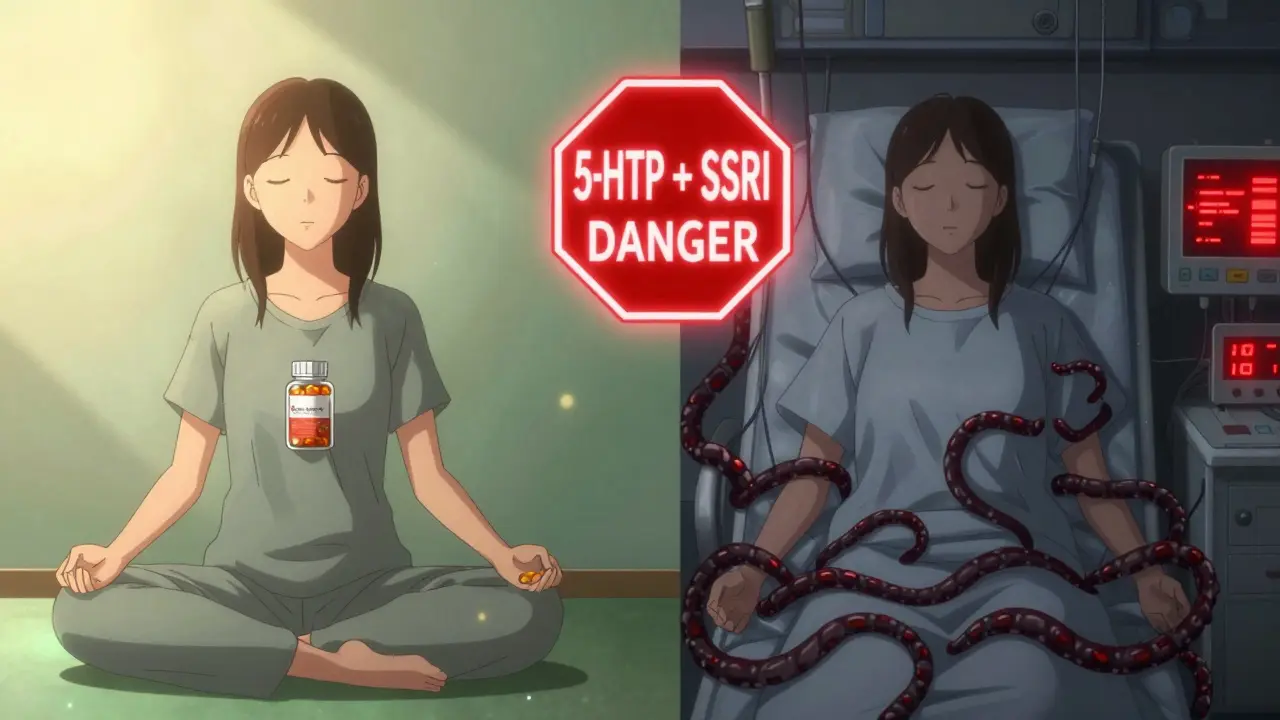
5-HTP and SSRIs don’t mix. Not even a little. There’s no safe way to combine them. The risks aren’t theoretical-they’re documented, measured, and deadly. Supplements aren’t regulated. Doctors aren’t always aware. And patients are being misled by marketing that calls 5-HTP “natural” and “safe.”
If you’re on an SSRI, skip 5-HTP. Period. If you’re already taking both, talk to your doctor today. Don’t wait for symptoms to show up. Prevention is the only reliable strategy.
This isn’t about being scared of supplements. It’s about understanding how chemistry works. Your brain doesn’t care if something comes from a pharmacy or a health food store. If it increases serotonin and you’re already blocking its clearance, you’re playing with fire.
Can I take 5-HTP with a low dose of SSRI?
No. Even low doses of SSRIs like 5 mg of escitalopram or 10 mg of sertraline still block serotonin reuptake. Adding 5-HTP increases serotonin production, and the combination can still trigger serotonin syndrome. There is no safe threshold for this interaction.
How long should I wait after stopping an SSRI before taking 5-HTP?
Wait at least two weeks, but longer for some SSRIs. Paroxetine and fluoxetine have long half-lives-up to four weeks. For fluoxetine, a 4-6 week washout is recommended. Always check with your doctor, as individual metabolism varies.
Is St. John’s Wort safer than 5-HTP when taking SSRIs?
No. St. John’s Wort also increases serotonin and carries a 2.3% risk of serotonin syndrome when combined with SSRIs-lower than 5-HTP, but still dangerous. It’s not a safe alternative. Both should be avoided.
Can I take 5-HTP if I’m not on an SSRI but take other antidepressants?
If you’re on SNRIs (like venlafaxine), MAOIs (like phenelzine), or tricyclics (like amitriptyline), the risk is even higher. 5-HTP should be avoided with all serotonergic antidepressants. Always disclose all supplements to your prescriber.
Are there any supplements that are safe to take with SSRIs?
Yes. Omega-3 fatty acids, magnesium glycinate, vitamin D, and melatonin have no known serotonin-related interactions with SSRIs. Always check with your doctor, but these are generally considered safe for mood and sleep support.
What should I do if I accidentally took 5-HTP with my SSRI?
Stop taking 5-HTP immediately. Monitor for symptoms like shivering, rapid heartbeat, or muscle stiffness. If you experience any of these, go to the ER. Even if you feel fine, contact your doctor to discuss whether you need monitoring. Don’t wait for symptoms to worsen.
Supplements aren’t harmless just because they’re natural. The body doesn’t distinguish between pharmaceuticals and plant extracts-it responds to chemistry. And when it comes to serotonin, the margin for error is razor-thin.
8 Responses
Wow. Someone actually wrote a novel about why you shouldn’t mix pills and supplements. Next up: ‘Why breathing oxygen while taking aspirin might cause existential dread.’
i’ve been taking 5-htp for months with my zoloft and feel amazing 😊 but i’ll probs stop just in case… my mom said ‘natural’ doesn’t mean ‘no side effects’ and she’s kinda smart
The science here is rock-solid. SSRIs inhibit serotonin reuptake; 5-HTP is a direct precursor to serotonin synthesis. The pharmacokinetic overlap is not just theoretical-it’s quantifiable. Even sub-therapeutic doses of 5-HTP can push synaptic serotonin concentrations beyond the safety threshold, especially with long-half-life SSRIs like fluoxetine. The Hunter Criteria remain the most reliable diagnostic framework, and clinical vigilance is non-negotiable. This isn’t alarmism; it’s pharmacology.
Oh honey, you’re telling me the same people who buy ‘detox tea’ and ‘quantum energy bracelets’ are now popping serotonin capsules like M&Ms? 😭 I’ve seen my cousin’s aunt’s yoga instructor take this stuff with Lexapro and then ‘manifest’ a fever. Bless her heart.
It is imperative to underscore, with the utmost gravity, that the concomitant administration of 5-HTP and SSRIs constitutes a pharmacologically indefensible risk profile. The synergistic potentiation of serotonergic activity, coupled with the absence of regulatory oversight in the dietary supplement industry, creates a perfect storm for iatrogenic harm. Empirical data from the FDA’s FAERS database corroborates this concern. Prophylactic patient education, physician awareness, and pharmacovigilance are not optional-they are ethical imperatives.
STOP. JUST STOP. I’ve seen people in the ER because they thought ‘natural’ meant ‘safe.’ You’re not a biochemist. You’re not a doctor. You’re not special. Your ‘gut feeling’ won’t save you. If you’re on an SSRI and you’re thinking about 5-HTP-walk away. Now. Go talk to your prescriber. Or don’t. But don’t blame me when your heart starts racing at 3 a.m.
OMG I JUST TOOK 5-HTP YESTERDAY 😱 I’M ON 10MG SERTRALINE!! I’M SO SCARED!! I’M GOING TO THE DR NOW!! 🙏❤️
Thanks for writing this. I’m a nurse, and I’ve seen three cases in the last year. People always say, ‘But my friend took it and it worked!’-and I always say, ‘I’m glad your friend is okay. But what if they weren’t?’ This isn’t about shaming. It’s about awareness. Please share this with someone who needs to hear it.